Rav Shlomo Zev Zweigenhaft of Hanover and Lower Saxony zt"l
הרב שלמה זאב צווייגענהאפט זצ"ל
Tammuz 26 , 5765
Father's Name: Moshe Chaim Zweigenhaft
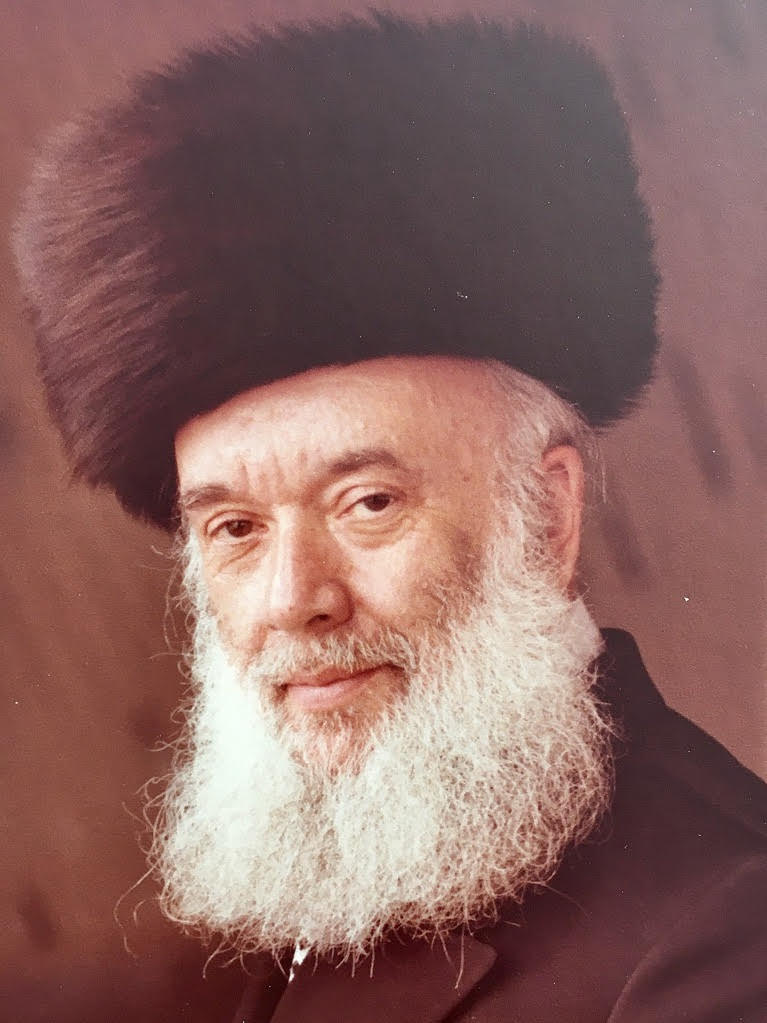
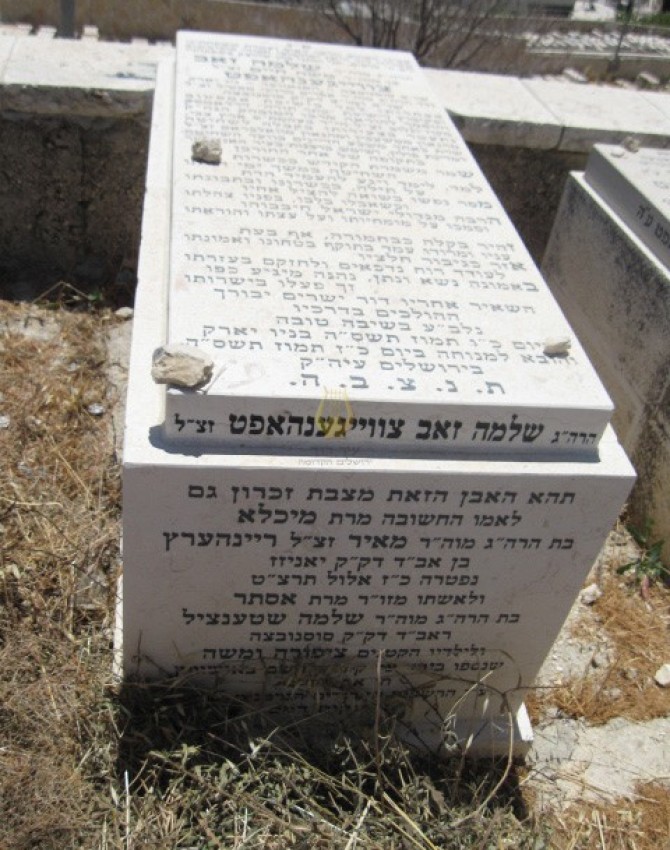
Rav Shlomo Zev Zweigenhaft of Hanover and Lower Saxony zt"l
He was a renown Shechita expert. A Talmud of the Eretz Tzvi, of Koshligov, from whom he was among only 5 students received Heter HoRoah from. He was a member of the Vaad HaShechita for the Arba Arotzos.
Niftar on 26 Tammuz 5765.
Shlomo Zev Zweigenhaft (Hebrew: הרב שלמה זאב צווייגענהאפט) was a rabbi who was Rosh Hashochtim of Poland (overseeing the country's kosher slaughterers) before the Holocaust. After the Holocaust he was Chief Rabbi of Hanover and Lower Saxony. After emigrating to the United States he was a Rav Hamachshir (kosher certifier) and was described as the "foremost authority on shechita" (kosher slaughter). Zweigenhaft was orphaned at the age of two and was raised by his paternal grandfather, Efraim Mordechai Mottel Zweigenhaft, who was a posek and shochet in Sosnowiec and a descendant of the Taz Rav David HaLevi Segal and the Bach Rav Yoel Sirkis.
Rabbi Zweigenhaft's father, grandfather and great-grandfather were shochtim. As a young boy Zweigenhaft had been privy to his family's masorah (transmission of Jewish religious tradition) of shechita stretching back hundreds of years. When Zweigenhaft was 14 years old and still studying in Amstov, the shochtim of the city encountered a halachic difficulty and summoned Dov Berish Einhorn for assistance. Einhorn asked Zweigenhaft to accompany him on his walk to the slaughterhouse. When they arrived, Einhorn began to contemplate the problem that the shochtim presented to him. Zweigenhaft then proceeded to deftly pick up the chalef (shechitah knife) and demonstrated how to perform the shechitah and resolved their issue. Einhorn was so impressed that from then on he would only eat meat if it was slaughtered by Zweigenhaft despite his youth. Shortly thereafter, Rabbi Einhorn proudly told Yitzchok Mordechai Rabinowicz (Chief Rabbi of Polavno) about Zweigenhaft. Rabinowicz requested that Einhorn send Zweigenhaft to him and then proceeded to teach Zweigenhaft the masorah of shechita that he had learned from his grandfather the Tiferes Shlomo of Radomsk. Thereafter, the Radomsker Rebbe would only eat meat from Zweigenhaft's Shechita. Year later, when the Minchas Elazar of Munkach visited Sosnowiec, he too would only eat from Zweigenhaft's shechitah.
By the time he was 20, he was the shochet of several cities in Poland, including Radomsk, Polavno, Amstov, Volbrum, Elkish and Tchebin, and was the Rosh Hashochtim of Sosnowiec.
In the mid-1930s Zweigenhaft was appointed one of the seven members of the Vaad Roshei Hashochtim of Poland and Lithuania a board of seven rabbis overseeing thousands of shochtim throughout Poland. In 1936, a bill outlawing Shechitah was introduced in the Sejm (Polish legislature). Despite being the youngest member of the Vaad, Zweigenhaft was selected to perform Shechita in front of the assembled legislators and demonstrate that shechitah was a quick humane form of animal slaughter. Together with an intense lobbying effort, this led to the Sejm allowing the practice to continue, although it was restricted with a maximum quota.
Zweigenhaft was later appointed to be the head of the Vaad.
Rosh Hashochtim of British Occupation Zone of Germany
Zweigenhaft survived the Holocaust and was liberated in Bergen Belsen on April 11, 1945. Zweigenhaft retreiced a chalef (shechitah knife) from a museum in Hamburg and on August 21, 1945, he performed the first known kosher slaughter in Germany since it was outlawed by the Nazis in 1933. Thereafter, the British Chief Rabbi's Religious Emergency Council appointed Zweigenhaft to be the Rosh Hashochtim of the British Zone of Germany.
Rav Hamachshir of Bergen-Belsen
On November 7, 1945, the British Chief Rabbi's Religious Emergency Council established two large kitchens in Celle to provide kosher food for the thousands of Jewish survivors living in the nearby Bergen-Belsen D.P. Camp and appointed Zweigenhaft to be the Rav Hamachshir of Bergen-Belsen.
Vaad Harabonim of The British Zone and Rabbi of Various Communities
Zweigenhaft was appointed to be one of the rabbis on the Vaad Harabonim (Board of Rabbis) of The British Zone, which was established and led by Yoel Halpern. Since Zweigenhaft was constantly traveling throughout the zone to oversee and make arrangements related to shechitah, he was tasked by the Vaad to serve as the rabbi of several smaller Jewish communities in the British Zone that did not have their own rabbi.
Chief Rabbi of Hannover and Lower Saxony
In the months after the liberation of Bergen Belsen, Jewish survivors slowly began to leave the D.P. Camp and settle in towns and cities throughout the British Zone. When the nascent community of Jewish survivors in Hannover became large enough to warrant its own Rabbi, Zweigenhaft recommended to the British Chief Rabbi's Religious Emergency Council to appoint his friend (and future brother-in-law) Chaim Pinchas Lubinsky to the position. In January 1946 Lubinsky was appointed Chief Rabbi of Hannover. The community continued to grow and additional rabbinical leadership was required. On a few rare occasions, the Vaad Harabonim of the British zone convened a Bais Din in Hannover under the leadership of Yoel Halpern consisting of various rabbis of the Vaad including Lubinsky, Yisroel Moshe Olewski and Zweigenhaft. However, a more permanent solution was required and the community subsequently appointed Zweigenhaft as an additional rabbi of Hannover.
In 1949, when the British occupation of North-West Germany ended, the British Chief Rabbi's Religious Emergency Council and its appointees were required to conclude operations in Germany. The newly independent Jewish community in Hannover then selected Zweigenhaft as the only rabbi of their city. Thereafter, smaller Jewish communities in Lower Saxony appointed Zweigenhaft as their rabbi as well and he became Chief Rabbi of Hannover and Lower Saxony.
Leader of Agudas Yisroel of the British Zone
Zweigenhaft (center) at Pöppendorf D.P. Camp with Captain Ike Aronowicz (left) of the SS Exodus in 1947
Zweigenhaft, Yirsoel Moshe Olewski, and Efraim Londoner[11] were the leaders of Agudas Yisroel of the British Zone. Zweigenhaft regularly engaged in advocating for both the spiritual and physical needs of the Jews in the zone. In 1947 Zweigenhaft provided supplies to the former passengers of the Exodus in Hamburg before they were forced to disembark.
Rav Hamachshir in America
In 1952 Zweigenhaft emigrated to America and was asked by Eliezer Silver to be the Rosh Hashochtim of the two kosher slaughterhouses in Cincinnati, Ohio. In 1953 Zweigenhaft moved to New York where he was shocked by what he considered to be low kosher standards of shechita and began to advocate for improvements. In time, Zweigenhaft became the Rav Hamachshir of several kosher slaughterhouses. And instituted reforms previously unknown in America. Some rabbis would not eat meat unless it was certified by Zweigenhaft. Over the years many of Zweigenhaft's reforms took root in the industry.
The Orthodox Union certifies certain species of quail as kosher based on Zweigenhaft's masorah (tradition).
Rav Zweigenhaft was niftar 26 Tammuz 5765 New York City August 2, 2005, and was buried the next day on Har HaZeisim in Yerushalayim.