
Rav Shlomo Halberstam of Bobov zt"l
הרב שלמה בן בן ציון האלבערשטאם זצ"ל
Av 1 , 5760
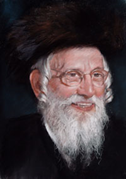
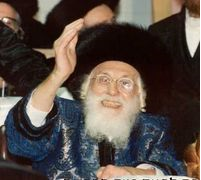
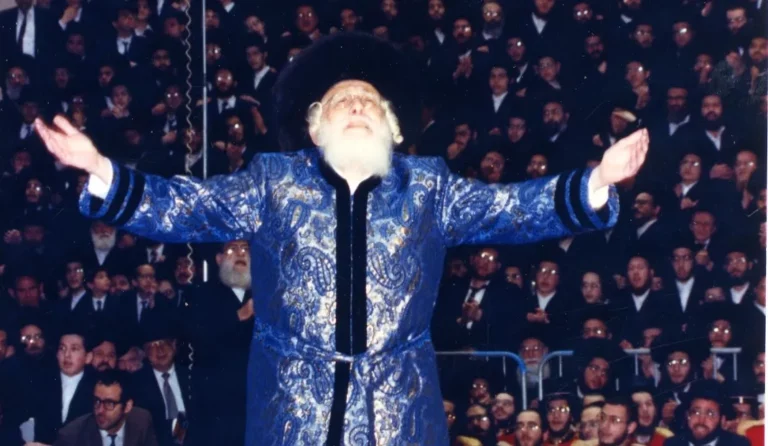
Rav Shlomo Halberstam of Bobov zt"l
Rav Shlomo Halberstam (1908-2000), son of Rav Bentzion, grandson of Rav Shlomo, founder of the Bobov dynasty. At the outbreak of World War II, he and his father escaped to Lemberg. On the fourth of Av 1942 his father was killed, and Rav Shlomo escaped to the Bochnia Ghetto. In Bochnia, the Rav lost his Rebbetzin and two children. He managed to escape with his only surviving child, Naftali, to Budapest, and then to Bucharest. Rav Shlomo is believed to have been the last remaining Chassidic rabbi to have survived the Holocaust. Born in the Galicia region of central Europe, Rav Halberstam arrived in the United States in 1946, alone and indigent after his group was largely obliterated by the Nazis. During the war, Rav Halberstam dressed up as a nun in order to rescue other Jews, hiding them in the false bottom of a coal truck. Rav Halberstam is widely credited with rebuilding the Bobover community in the United States.
Stories of Rav Shlomo Halberstam of Bobov zt"l

Growing up in Irvington, New Jersey, and being a student at Mesivta Torah Vodaath, we teenagers from the Newark area were fortunate to have a number of rabbanim that had a special influence on us. One such person, was Rav Eliyahu Chaim Carlebach, zt’l, the twin brother of the famous singer and composer, Reb Shloma Carlebach, zt’l. Rav Eliyahu Chaim served as mara d’asra of the nearby Hillside Kehilla and was a shochet in Newark.
He was married to the former Hadassah Schneerson, shetichyeh, daughter of Rav Zalman Schneerson, zt’l, who saved numerous nefashos during the Holocaust. (See story on Nathan Berney in the June 18th Monsey Mevaser issue.) Rav Eliyahu Chaim was a Chassidishe Rav with a Shtreimel and headed the Machon Zecher Naftoli organization, which has produced hundreds of sefarim.
Every Chol Hamoed Pesach and Sukkos he would take a group of us teens on a trip to Crown Heights to the Bobover Rebbe’s tisch. It was a trip we looked forward to, gaining an uplifting experience each time. The warmth exuded by this vibrant, totally accessible ‘oveid Hashem’ included his outstanding ahavas Yisroel which touched all who came in contact with him.
The author recalls sitting at the tisch with his friends, one of whom was a baal teshuva that had gone back to college to get his masters in English literature. He had removed his levush and beard and was clean-shaven. The ‘Rav’, as the Rebbe was known in Bobov, gave out cups of wine ‘and when he gave one to this friend he said: ”A kos for the bochur from Newark. This bochur from Newark will yet have a beard. And then the ‘Rav’ added emphatically: “This bochur from Newark has ‘bekavana’ yet to wear a beard.”
My friend today lives in Meah Shearim and is attired in what I call ‘shmona begadim’- the typical Meah Shearim levush. We get together very often when I have the zechus to be in Israel to visit my children and grandchildren. Many years ago, my friend related that the ‘Rav’ came to Yerushalayim and held a ‘tisch’ at the ‘Chayeh Olam Hall’ on Kikar Shabbas. Thousands of persons came to see the Bobover ‘Rav’, as, this was one of the few times the Rav came to Israel.
As the ‘Ruv’ comes into the hall, my friend, in his shtreimel, sticks his head through the crowd and identifies himself as the bochur from Newark. The Rav stops and grabs his hand and arm in arm he escorts him to the dais and seats him next to him for the entire tisch. The Ruv himself was in awe that his brocha was mekuyam with this bochur. Subsequently, my friend was zoche to marry off his nine children to the finest families in Yerushalayim. I relate this story as an example of the power of a brocha from the holy Bobover Rebbe.
When we were teens, we did not realize the Gadlus of this lovable Manhig Yisroel, who sacrificed so much for the klal. Let’s get a glimpse of his background:
Yisroel Safrin author. As featured in Monsey Mevaser, 'Klal Personalities' series.
Any tribute to the Bobover Rav, zy’a will fall short of the mark. For those who knew him and basked in his light, there is no need to eulogize. And for those who did not know or see him, any written hesped will not begin to describe the magnificence of this gadol and tzaddik.
After the Bobover chassidus was shattered in the horrors of the Holocaust, it was rebuilt in the United States by Rav Shlomo Halberstam. The Bobover Rebbe himself endured plenty of tribulations during the war and found himself staring into the jaws of death on several occasions.
To quote his nephew, Rabbi Aaron Twerski, esq, “The intensity and brilliance of his Torah; the awe inspiring avoda, which was central to his life; the unbounded ahavas Yisroel that touched the lives of tens of thousands; the regal presence that he projected; the unending humility that permeated his every act- all need to be addressed in some sequential fashion. But they were not separate parts of his being. Those who were fortunate to experience him sensed the total integration of all of his attributes into this quintessential oveid Hashem. For he was at one and the same time royal and humble, profound and simple, totally accessible and yet light years removed in a spiritual plane all alone.”
Yisroel Safrin author. As featured in the Monsey Mevaser 'Klal Personalities' series.
The Bobover Rav, zt’l was born on Rosh Chodesh Kislev, 5768 (1907) to his father Rav Benzion, hy’d and his mother Chaya Fradel, a’h. His grandfather, Reb Shlomo, zt’l, whose name he bore, was orphaned as a young child and was raised by the Divrei Chaim, the holy Sanzer Rav, zt’l as his own child. His home reflected the aristocracy of Torah and Chassidus, an integral part of his life blood.
The first Bobover Rav, Rav Shlomo founded and organized the first yeshiva in Galicia. Up to that time, bochurim studied in shtieblech, as small groups under the tutelage of a maggid shiur. Reb Shlomo, an outstanding gaon, decided that with the advent of the haskala, the formal structure of a yeshiva Gedola was necessary if Torah was to remain vibrant. Indeed, he believed that the traditional role of rebbe had to change, for he saw his charge to be a marbitz Torah, first and foremost. He drew thousands of bochurim to him. Merging with himself the roles of Rebbe and Rosh Yeshiva.
When he passed away in 1905 at the age of 58, the mantle of leadership fell to his son, Rav Benzion, who was then a young man of 31.Though reluctant at first to assume the role of Rebbe, the Chassidim insisted, and he finally acquiesced to their entreaties. After several tranquil years as Rebbe and Rosh Yeshiva, his life was shattered by the outbreak of World War 1. Galicia was invaded by the Russians, virulent anti-semites. The Bobover Yeshiva ceased to exist, and Rav Benzion and his family fled to Austria, where they lived in exile.
The war had wreaked havoc on the entire structure of Torah life in Galicia. Into this world the Bobover Rav, zt’l was born. If the world was in turmoil, his father was not. There was no room in his life for one moment of self indulgence. The Rav witnessed his father’s uncompromising commitment to Klal Yisroel. The lesson was not lost on him. He was his father’s greatest Chossid, and as time would reveal, he was his greatest disciple.
In his youth he studied in his father’s yeshivah and went on to receive semichah from HaRav Shmuel Firer, zt’l, Rav of Krass, who remarked that the young man possessed the wisdom of Shlomo HaMelech. He received semichah again from HaRav Alter Yechiel Nebenzahl, zt’l. The rebbe married Rebbitzen Bluma Rochel, hy’d, daughter of Rav Chaim Yaakov Teitelbaum of Limnov, zt’l. In 1931 he was appointed the official Rav of Bobov and its Rosh Yeshivah. Alongdside his father, he established 40 branches of the yeshivah throughout Galicia.
When World War II began, Rav Shloma fled from city to city, while he worked in many ways to save Jewish lives. His wife and children were murdered by the Nazis, with the exception of his young son, Naftali Tzvi (later his successor as Bobover Rebbe), who survived miraculously. After the war, he went to Italy and from there to London. He worked tirelessly to bring the many Jewish war orphans back to their traditions, and to breathe new life into their weary bones. Here are some of the details of the escapes.
Yisroel Safrin author. As featured in Monsey Mevaser 'Klal Personalities' series.
At the begin of the war, the Rebbe and his family escaped from Poland to the border of Romania and Russia. When the Russians invaded the area, the Halberstams returned to Lemberg. With the help of a hefty bribe, Rav Shlomo obtained a government job that enabled him to continue his Torah learning undisturbed. He eventually returned to Bobov, but was informed that he was wanted by the authorities and hurriedly escaped to Bochnia, where a large ghetto containing thousands of Jews had been established. He found many of his Chassidim in the ghetto, and they attempted to procure a work permit for him. He remained there until late 1942, showering the other Jews with encouragement and bolstering their emunah. He even established a yeshiva for bochurim in the ghetto.
Finally, armed with forged papers showing that he was a Hungarian citizen, Rav Shlomo escaped from Bochnia and made his way to Kashau and then to Budapest. After the Nazi conquest, he travelled to Grosswardein. He had suffered terribly in Bochnia, losing his wife and two of his children. After his arrival in Romania, he worked tirelessly to assist and rescue other Jews.
In Romania, the Rebbe obtained papers attesting that he was an Italian citizen. Using those documents, he escaped to the city of Bari in Southern Italy. In the camps established in Italy, the Rebbe was surrounded by dozens of bochurim and yungeleit who had been separated from their families. He made sure to have a qualified shochet from Rome provide them with meat, and he obtained clothing and shoes for the young men drawn into his orbit, The Rebbe served as a compassionate and caring father figure for the refugees, breathing new life into them and forging close bonds with all of them.
In part two, we examine some of the facets of his greatness and including some of the tense moments when the Rebbe prepared, along with his young son, to surrender his life ‘Al Kiddush Hashem.’
Yisroel Safrin author. As featued in the Monsey Mevaser 'Klal Personalities' series.
When the first light of morning began to shine, the rebbe and his son realized that the time of their deaths was near. There was a bit of water in their cell, and the rebbe washed his hands and davened with enormous kavana, for what seemed to be the final Shacharis of his life. He davened quickly to have time for Mussaf as well. As soon as he finished davening, there was a knock on the door, just as he expected. Two soldiers entered the room and ordered the rebbe and his young son to follow them.
They were taken to the head of the Gestapo. On the way, the rebbe was given a hint of what was to come. “I have never seen the commander in a mood like this,” the deputy commented. Was that a good sign? They would soon find out. They entered the room and the Nazi official announced, “Your documents show that you are a Hungarian citizen. You will have to pay a fine for violating the law, and you must return to Bochnia.” The rebbe struggled to maintain his composure. He realized immediately that an incredible miracle had been performed for him.
“You have been saved this time,” the commander added, “but if you do this again, the punishment will be extremely severe.” “I didn’t know it was forbidden to go to Neumark, and I will not do it again,” the rebbe said. The Nazi ordered him to pay a fine of 1,000 zlotys, but the rebbe’s possessions were worth only about 600. The officer agreed to accept that sum, and he handed the rebbe a document that read “The Hungarian Jew named Shlomo Halberstam was captured by the SS in Neumark and is being sent to the SS in Bochnia.” The officer signed his name and then took the rebbe and his son in his car to the train station, where he purchased train tickets with the money the rebbe had given them. He accompanied them to the train and made sure they boarded it.
The emotions the rebbe must have felt as he boarded the train defy imagination. He was with his son, but his wife and other children were not with him. He had just been spared from what seemed to be certain death, and he was on his way to freedom.
Yisroel Safrin author. As featured in the Monsey Mevaser 'Klal Personalities' series.
The rebbe and his son boarded the train and sat facing each other. When the train reached Kalvaria, a German police officer boarded the train and spotted Naftoli. “Jude” he exclaimed. Naftoli avoided looking at his father, to avoid arousing the officer’s suspicion. The policeman began interrogating him: “Where did you come from? Where are you going? Who are your parents?” When the rebbe saw his son was in danger, he quickly stood up and stood between the police officer and his son. “I am the father of this boy,” he announced. The policeman stared at him. “Are you also a Jew?” he asked. “You don’t look like a Jew at all.” The rebbe was dressed in casual attire and was wearing a green cap with a feather. “Yes” the rebbe replied “I am a Hungarian Jew and these are my documents.” He showed the forged papers to the German officer. The tension in the train car at that moment was thick enough to be cut with a knife. Once again, the rebbe and his son were facing the threat of imminent death.
The officer guffawed:”I recognize these papers from Bochnia” he shouted. “They are forged!” In a haughty tone, the officer described an incident that had taken place on the previous night, unaware that his words would shatter the rebbe’s noble heart. “Last night”, he related, I captured a group of three women from Bochnia who were headed toward the border along with their children. I imprisoned them and brought them back to Gestapo headquarters in Crakow.”
The rebbe had no doubt about the identity of those women. They were his mother, his wife, and his mother-in-law. In horror, he envisioned the torments they were certainly suffering at the hands of the Gestapo in Cracow.
“That is exactly what I am going to do with you,” the officer added. The rebbe struggled to remain calm despite his turbulent emotions. He produced the document he received from the Gestapo commander and said “I was already held by the Gestapo in Neumark. They decided to send me back to Bochnia.: Here is the letter that the commander wrote to the SS in Bochnia.”
The German officer took the document, examined it, and then suddenly snapped to attention. He recognized the signature; the man was his own commander’s superior. “Herr Kondissar is the chief commander” he announced. Of course, he did not utter a word of apology; a German never apologized to a Jew. Then he turned on his heel and left the rebbe and his son alone.
Yisroel Safrin author. As featured in the Monsey Mevaser 'Klal Personalities' series.
Upon arriving in Bochnia, the Bobover Rebbe met Rav Shloma Strauch, a Bobover chossid who shared the story behind this miracle. Reb Shloma Strauch had maintained friendships with a number of Polish police officers, friendships that evolved into key connections that enabled him to save many Jews. He had even forged a connection with the deputy commander of the Gestapo in Bochnia. In an incredible stroke of Hashgacha Pratis, Reb Shloma had been in the room when the deputy commander received a call from Neumark with a request for information about the ‘Rabbiner Shlomo Halberstam.’ Reb Shloma immediately became alarmed and said to the deputy, “That is our rebbe! Tell them that he is a citizen in Bochnia and that he should be sent here.”
It sounds simple enough in retrospect, but it took unimaginable courage for Reb Shloma to deliver this ultimatum. The German official could easily have found a simple solution to the threat. He could have killed Reb Shloma and no one would have ever questioned him. After all, how much was a Jew’s life worth to any German officer? But a miracle took place: Reb Shloma pushed the officer towards the phone and he picked up the receiver and said: “Halberstam and his son are Hungarian citizens who received permits to travel to Neumark. Please release them and have them return to Bochnia.”
Reb Shloma Strauch thanked the official profusely, apologizing for his audacity!
In Adar of 1946, the Rebbe arrived in New York, where many of his father’s chassidim awaited him. His life was shattered. He had lost his wife, Blima Ruchel and two children in the Holocaust. His father, his brother and three brothers-in-law were brutally murdered in Lemberg and another brother Chaim Shea, died in a Siberian prison. Hashem Yinakem Damam.
Here, he began to restore the crown of the Bobover chassidus to its glory. He founded Yeshivas Bnei Tzion of Bobov, named for his father, and Mesifta Eitz Chaim, named for the Divrei Chaim.
Shortly after his arrival, the Rav travelled to Milwaukee for a reunion with his sister, Rebbitzen Devora Leah Twerski, and her husband, the Milwaukee Rebbe, Rabbi Yaakov Yisroel Twerski. The tears that flowed in that encounter would have sufficed to create a large river. He spent the entire Pesach in Milwaukee and conducted ‘tischen’ throughout.
His first order of business in America was to obtain visas for the many survivors in Eastern Europe who were destitute and longed to immigrate to the United States where a better material life was available. The American immigration authorities would not allow them, for fear they would become a welfare burden. The chairman of the House Foreign Affairs Committee in those days was a Jew named Sol Bloom. Despite many entreaties, Bloom refused to bend the law to permit more Jews to immigrate.
The rebbe decided that he too would try his luck and scheduled an appointment with Bloom in his office. He arrived in Washington the night before and since he had nowhere to stay, he spent the night in a shul. Early the next morning he stood outside of Bloom’s office in his crumpled clothes. He was told that he would be given five minutes with the congressman. When the time arrived, he was ushered into Bloom’s office. Bloom took several minutes before he even looked up to see who was there. “Who are you?” he asked. The Kolbosaver Rav, Rav Alexander Teitelbaum, zt’l, acted as his translator.
Thoughts raced through the rebbe’s mind, and he blurted out, “I am a man who breaks the law!” Now that he had Bloom’s full attention, he continued, “Where I come from the law stated that every Jew must be sent to Auschwitz and be subjected to slave labor. Once a Jew was too weary and weak to work anymore, he was incinerated. According to the law, it was forbidden to hide or to escape. According to the law, it was forbidden to give food or any assistance to a Jew. But I broke all these laws.
“Now, I have come to ask you to join me in my criminal activities. The law states that it is forbidden to allow refugees to enter this country. But this law will bring about people’s deaths. It will deny them a chance for a future, a chance to raise their children. Such a law must be broken!”
Sol Bloom got up, walked around the desk, and grasped the rebbe’s hand “I’m with you!” he said. Using his congressional influence, Bloom issued entry visas and raised money to bring many Jewish refugees to the United States.
In 1948, Rav Shlomo married Rebbitzen Freida, a’h, daughter of Rav Aryeh Leib Rubin of Tomashov, zt’l, and he raised a new family. In 1959 he visited Eretz Yisrael to lay the cornerstone of Kiryat Bobov, a neighborhood of Bat Yam. He founded the Kedushas Tzion institutions, also in memory of his father. He saw to it that a Yeshivas Bnei Tzion was founded in London, and later others in Yerushalayim, Bnai Brak, Antwerp and Toronto. Alongside these yeshivas, he established Bnos Tzion schools for girls, numerous kollelim, summer camps, and chessed organizations.
Yisroel Safrin author. As featured in the Monsey Mevaser 'Klal Personalities' series.
Thousands of Chassidim became the Rebbe’s followers. They were inspired by his sparkling eyes with warmth and vitality, eyes that understood, that promised safety and devotion. He earned the love of the talmidim and respect of the chassidim, showing a unique ability to reach the youth, even those who appeared to have been swayed from the ways of chassidus.
As the noted author, Rav Yisroel Besser wrote in a recent article in the Mishpacha magazine: “My grandfather, Rav Chaskel Besser, zt’l, was not a Bobover chossid, but he would often speak with admiration and awe about what the Bobover Rebbe had accomplished. There is a letter that Rav Shlomo, scion of Bobov, wrote just two weeks after his arrival in America, a strange country, where he did not speak the language, where he had no chassidim. He was still living in a hotel and had not yet remarried, but in the letter- publicized after his passing- he wrote of his hope of ‘building a yeshiva to restore the glory of my fathers and transmit their path.’
“The way he built that yeshiva, my zeide remembered, wasn’t just by teaching Gemara at a table. ‘Families lived with him - they arrived in America and moved into his apartment - Babies were born to these families and those babies became part of his new Bobov, the Rav himself cradling and singing to them. They all were part of this yeshiva and kehilla.”
''In time the chassidus would move from the West Side of Manhattan to Crown Heights and ultimately to Boro Park, but the familial connections would remain. The Rebbe knew them all, remembered their beginnings and celebrated their roots. He embodied the past, but he anticipated the future. He worried about parnasa and identified industries with potential for growth – jobs that did not require college degrees. Hundreds of young men went into the diamond line, while many others became computer programmers. The Rebbe understood early on that they would be better chassidim, able to devote themselves to Avodas Hashem with greater concentration, if they had good jobs, a way to make ends meet and pleasant homes.”
Pesi Teitelbaum shares her memories of Yamim Tovim as a child in Bobov in the recent Rosh Hashana 5781 issue of Mishpacha Magazine: “We anticipated the Yamim Tovim eagerly. The Bais Medresh was large enough to accommodate quite comfortably both men and women who lived in the community. As we listened to the baal Tefilah, the nusach and songs that were so familiar to our parents became part of us as well”
“We girls were proud Beis Yaakov girls and we knew how to keep up with the Baal Tefillah. We even knew when to sit, when to stand, and of course, the laws involved in davening the Shemoneh Esrei. We listened intently to the ‘V’Chol Maaminim choir, singing quietly along. Our brothers had practiced for days beforehand, and we knew every nuance of the rhythm and melody.”
“After Yom Kippur, our excitement peaked as we prepared for Sukkos. The men’s section of the Bais Medresh had a sliding roof, which then became a large airy sukkah with beautiful decorations.” The author, as a teenager, recalls vividly sitting at the Chol Hamoed ‘Tisch’ marvelling at the huge center candelabra, hand designed with 91 bulbs- BeGematria Sukkah!
Pesi Teitelbaum continues: “Simchas Torah was always thrilling for us. We good naturedly pushed our way to the front to see the hakafos, calling out to our friends to come join us. The laughter and elation was infectious. Our parents, who had lost so much in the war, reveled in the joy of the Torah, though we sensed that their happiness was tempered with great sadness.
“That anguish came to peak during Yizkor. My friends and I, young children of Holocaust survivors, would leave the beis medresh quickly. From where we stood waiting outside we could hear tearful sobs, and a cacophony of moans, wailing and weeping, as memories came flooding back. The war was the shadow we all grew up under, and we were used to this. But it was at Yizkor that we actually felt the heaviness of our parents’ grief. Some moments later, the door opened, signaling that the tefilah was over and we could return. The wailing and sobbing persisted unabated well into the middle of mussaf.”
“A Chol Hamoed outing for some of us has been to take the grandkids to Crown Heights to see where it was all reestablished. We show our grandchildren where we grew up, telling them stories about the ‘good old days.’ And good old times they were, when life was simpler, expectations were less, and most people seemed to be content. With tremendous gratitude and appreciation for Hashem’s Nissim, we remember how our parents lived with constant awareness that idf they had survived, they had a mission to rebuild and continue the Chassidic life and traditions they had grown up with before the war.”
“We have come a long way since those early days. Hashem in His kindness kept our parents alive, brought them to a new country, and helped them to reestablish the glory of what once was. We lived through an incubation period that brought forth the blossoming of our community and the flourishing of a part of Klal Yisrael that emerged as smoldering embers from the fires of the war.” (as appearing in the ‘Impressions’ column of the Mishpacha Rosh Hashana edition- Sept. 16, 2020- by Pesi Teitelbaum.)
Yisroel Safrin author. As featured in the Monsey Mevaser 'Klal Personalities' series.
Over the years the chassidim knew that he operated on a different level. An example: On Shushan Purim it was his minhag to visit the homes of his children and close relatives and make a bracha in each home. The cusrtom was known as ‘rimplin.’ One Shushan Purim he said to his accompanying chassidim: “Let us make a stop at the home of a non-family member, a devoted chassid. The young man had been married for several years and had yet to be blessed with children. When he came in, the chossid offered him a cup of wine. The Rav declined, and asked for some water. He said that he wanted to make a ‘boreh nefashos.’ Standing next to the Rav was another chossid that sought a similar bracha. Catching the significance of the moment, he turned to the Rav and and said “Rebbe, mich oichet (Rebbe, me too).” The Rav respnded: “Nu, nu- Boreh Nefashos Rabbos.”
The Rav made the bracha. That year a son was born to the first chossid and a daughter to the other. Some twenty years later, these two chassidim became mechatonim, when the children born from the Rav’s bracha married each other.
Yisroel Safrin author. As featured in the Monsey Mevaser 'Klal Personalities' series.
As Reb Yisroel Besser reports: “Where else could someone find joy like at a Bobover simcha? At times like this, the full extent of the Rav’s experience - the impossible escapes and unlikely deliverance and glorious resurgence - were celebrated. Not with words, for no words could tell the story, but when the Bobover Rav danced- arms extended, white stockinged feet rising and falling, face luminous and grateful and filled with faith- everyone danced along.”
Yisroel Safrin author. As featured in the Monsey Mevaser 'Klal Personalities' series.
A chossid shared: “The rebbe’s voice plays in my mind constantly. I hear him humming on Erev Shabbos before Minchah. I hear him when I say the bracha on Hallel or Chanukah lecht.” Another chossid started to say something, but no words came out. He shook his head and walked off, his footsteps echoing behind him as he headed downstairs. But he was humming, where a moment ago it seemed he would cry. “Bechatzotzros V’Kol Shofar… with trumpets and the sound of the shofar.”
The Rebbe emulated Aharon HaKohen, always seeking peace, expressing his sincere love for his fellow Jews, and drawing them closer to the Torah. He greeted everyone, regardless of his status or position, with a sincere and engaging smile. As it says about Aharon HaKohen: “Shelo Shina- He did not change,” He transplanted on the American shores the authentic Sanzer Chassidus. It says: ‘Vayidom Aharon’- “The Ruv heard his people. He heard them when they spoke and also when they didn’t!”
During Pesach of 1999, the Rebbe fell ill. Thanks to the tefillos of thousands of Jews, he recovered and his followers had the privilege of enjoying his presence and his blessings until the evening of Rosh Chodesh Av, 2000, when he returned his Neshama HaTehora on the yahrzeit of Aharon HaKohen. He was buried in the Bobover Chelka in Deans, New Jersey. It is twenty years since the Rebbe’s passing and the chassidus has moved on, but that special glow is irreplaceable! Zechuso Yagen Aleinu V’al Kol Yisroel!
Yisroel Safrin author. As featured in the Monsey Mevaser 'Klal Personalities' series.
The Rebbe was known for his tremendous concern to preserve shalom and avoid machlokes, as can be seen by the following stories.
One time, in the middle of the night, a person who fixed glass professionally received a call from the Rebbe. The Rebbe explained that someone had smashed his window in the middle of the night. (The person did it because he didn’t agree with a policy of Bobov.) If the window was not fixed immediately, in the morning, people would see it and be upset, and they would get involved in machlokes. To avoid this, the Rebbe felt that it was necessary to have the window fixed right away.
The glacier at first thought it was a prank phone call. After several calls of which he hung up the phone on the Rebbe, he ascertained that it was the Rebbe. After completing the work during the night, the Rebbe wanted to pay him. The glacier refused payment from the Rebbe – just requesting that the Rebbe attend his simchas. The Rebbe agreed – on condition that the glacier vow never to reveal the story of the broken window.
For the rest of the Rebbe’s life, he attended the simchas of the glacier (even though he wasn’t even a chassid). Chassidim always wondered why the Rebbe attended the glacier’s simchas while he wasn’t so meticulous with other people’s simchas. After the Rebbe’s petira, the glacier came to be menacham avel – and said that now that the Rebbe was niftar, he is released from his vow and proceeded to tell the whole story.
Another time, someone had published pashkevillin (flyers condemning others) against the Bobover Rebbe. The Rebbe was afraid that this would lead to machlokes and he therefore gave the following message at a Rosh Chodesh tish: “I have been mochel the one who spread these pashkevillin. However, if anyone decides to start fighting with those spreading them, I will not be mochel them in this world or in Olam Habah.” Of course, after this shmuess, nobody continued the machlokes and eventually it died down.
The Rebbe was also moser nefesh to help Yidden in whatever way possible. Many stories are told of his mesiras nefesh to save as many people as possible during the Holocaust.
One such story took place when the Rebbe was in the relative safety (at least at that time) of Romania. He knew that his relatives were still in Hungary and were in grave danger. He received money from Mrs. Shternbuch, which helped him pay someone to take him into Hungary and attempt to save his family. This person said that he would go into Hungary on condition that they would leave the very next day. As it turned out, one family member was missing and the Rebbe wanted to stay another day to try to locate her. The person helping the Rebbe said that he wouldn’t do this and that he would leave without them. While the family was discussing what to do, the missing family member showed up, explaining that her father, the Kedushas Tzion, had come to her in a dream, telling her to join with the rest of her family.
After the Holocaust, the Rebbe continued his mesiras nefesh, helping many Yidden rebuild their lives, both physically and spiritually. On the West Side of Manhattan, where his kehillah was located for a while, he would even clean the mikvah himself, if necessary, in order to make sure that it would be available for use.
One Shavuos night, people noticed how the Rebbe left the BeisHaMedrash every hour for a couple of minutes. He later explained that this enabled those who felt they had to leave not to be embarrassed, as the Rebbe wasn’t in the Beis HaMedrash.
Even when the Rebbe had to give tochacha, rebuke, it was done in a way that it was clearly coming from ahava, love.
One time, a person did work on the kitchen of one of the Rebbe’s chassidim and wasn’t paid. When the Rebbe heard about this, he called in the chassid to speak to him, explaining that he (the Rebbe) needed advice about construction on his own kitchen. The Rebbe asked if he could see the chassid’s kitchen. When the Rebbe came to this person’s house, he saw that the work was done properly and that the chassid didn’t have any complaints against the one who did the work. At this time, the Rebbe mentioned that he had heard how the chassid didn’t pay, and that if he wanted Hashem to bestow on him good things, he should treat other people properly by paying them for a service rendered. Shortly afterwards, the chassid paid up. This episode showed how the Rebbe looked at both sides of the story before deciding what had to be done, and he delivered his tochacha in a way that it would be accepted.
Someone once asked him how a rebbe spends his vacation. The Rebbe answered that in the city, he must limit the amount of time he davens so as not to impose on others who are waiting for him to finish. When he goes on vacation, however, he can daven as long as he wants.
The Rebbe was once visiting someone and was served food. After he finished eating and making brachos, the Rebbe was asked to give a bracha to the one who gave him the food, as that person hadn’t had any children yet. The Rebbe said, “I had you in mind when I said Borei Nefashos (which means creating souls). The Rebbe’s gabbai then asked if he could also get a bracha, as he also didn’t have any children. Again, the Rebbe answered that he had him in mind when he said the word rabbos (meaning many) in the bracha of Borei Nefashos. A year later, one of these chassidim had a boy and the other had a girl. Eighteen years later, they married each other, fulfilling the bracha of Borei Nefashos Rabbos.
One of the Rebbe’s chassidim was a yasom and he mentioned to the Rebbe that he wanted him to be mesader kiddushin at his wedding, not knowing that his future in-laws had already honored a different rebbe with this kibbud. When the family met with the Rebbe and apprised him of the situation, he said that he would be happy with the bracha of Sos Tosis Vesageil Ha’akarah (the barren one should rejoice, referring to Eretz Yisrael and Yerushalayim). One of the family members didn’t have any children and answered a loud Amein. About a year later, he had children.
The Rebbe also exemplified the middah of umekarvan laTorah, bringing people close to Torah. The menahel in a certain large yeshiva once spoke to the Rebbe and the Rebbe mentioned that he was planning on giving a certain amount of money to the yeshiva. When the menahel came back at a later time, he said that he was there to collect the chov (debt). The Rebbe said that to give money to a yeshiva is a zechiya (opportunity) and not merely an obligation.
When he was building the Bobover kehillah after World War II, the Rebbe went to South America to raise money. On Shabbos, he expected to see one of his acquaintances, but the person didn’t show up. On Motza’ei Shabbos, this person came, and when he was asked where he was on Shabbos, he explained that he went to his company to work on Shabbos. Embarrassed, the person excused his conduct by saying that the company’s equipment was very old and he therefore couldn’t afford to close on Shabbos. The Rebbe asked how much money it would cost to purchase new equipment and was told an amount that was exactly the same as all the money he had raised during the previous couple of days. Immediately, he turned over all the money to this person. This man became a shomer Shabbos and raised a wonderful Torah’dike mishpacha.
His home in Brooklyn, New York, was a beacon where he received everyone with a special glow and with unusual nobility of spirit. His pleasantness had a profound influence on all who visited him and was the source of the tremendous admiration people displayed for him.
He was deeply attached to all of the Gedolei Yisrael, Roshei Yeshiva and Admorim, who held him in high esteem. He maintained close contact with them in all the battles for Kodshei Yisrael and Torah. The Admor of Bobov, his tradition and legacy, left a deep impression on the entire generation in America.
www.matzav.com/the-bobover-rebbe-rav-shlomo-halberstam-ztl-on-his-11th-yahrtzeit
Yated Ne'eman - www.vosizneias.com