
Rav Aharon Roth zt"l
הרב אהרן בן שמואל יעקב רוט זצ"ל
Nissan 6 , 5707
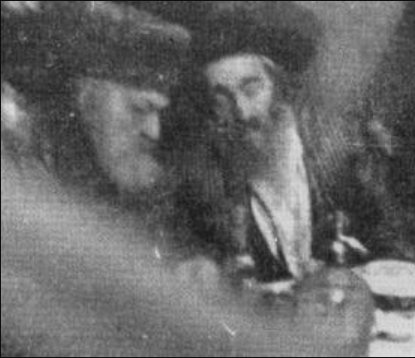
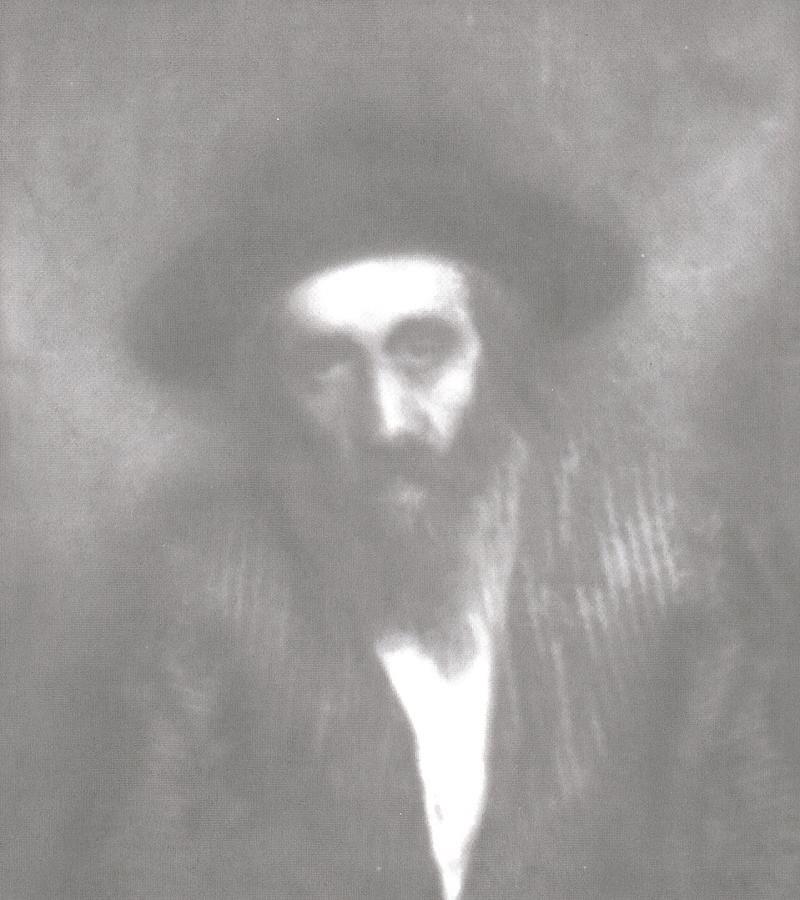
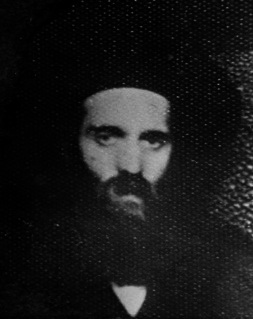
Rav Aharon Roth zt"l
Rav Ahrele Roth, founder of Chassidus Shomrei Emunim, came to Yerushalayim in 1925. He was known for his fervent and emotional style of tefilla. In Satmar, Hungary, at the time, he was viewed as being inordinately intense, and became somewhat of a curiosity. Such was his manner of conducting himself that the talmidim from the Satmar Yeshiva were banned from visiting or even laying eyes on him. It is said that he often had to change his shirt up to three times during Shabbos-morning tefillos. He often stretched out the davening to four or five hours, such was his intensity. [I have read that he instituted the practice that all the shuls in Europe in which his Chassidim davened were forbidden to light the fires in the warming ovens during the cold winter days. He instructed that his Chassidim’s tefillos should be sufficient to warm them up and keep them from freezing. They say that the windows of such shuls glistened with condensation due to the intense heat generated inside them despite the lack of ovens to heat them!] When he moved to Yerushalayim in 1925 he had decided to become a sofer (a scribe), but his teacher quickly realized that this was no ordinary human being and, soon after, Rav Ahrele Roth founded Shomrei Emunim.
Stories of Rav Aharon Roth zt"l

On one occasion at a simcha, the Rebbe was dancing fervently in the middle of a circle. Amidst his ecstasy he opened his eyes, and noticed a man with a disturbed face, perhaps a Misnagged (opponent of Chassidim), looking on with contempt. Rav Ahrele broke the circle, took the man by the hand, and began to dance. A circle, once again, formed around, and Rav Ahrele looked up into the man’s eyes. The man was shaken by this look, and almost lost his equilibrium. But just then he began to feel the niggun resonate. As the dancing became more intense, this seemingly unhappy fellow was visibly transformed, and by now he had lost his self-consciousness. Still dancing with Rav Ahrele, hand in hand, he felt as if he were soaring. Never before had he conceived of such ecstasy. Rav Ahrele knew well that the view from inside the circle is much different from the view on the outside. The man never looked back. He became a devoted Chassid of the Rebbe. Such was Rav Ahrele’s intensity and influence.
Rav Avrohom Meir Ziswein was a Chassid and follower of Rav Tzvi Elimelech Spira of Bluzhov. When the Bluzhover moved to Pest, Rav Avrohom Meir heard of a certain special bochur, a young man who outshone all his peers in the Yeshiva in Weitzin; this young man’s true Yiras Shomayim (fear of Heaven), sterling character and fiery avoda drew Rav Avrohom Meir to seek to bring him under the wings and guidance of the Bluzhover who was to become his Rebbe. The young man was none other than Rav Aharon Roth.
Once, Rav Avrohom Meir recounted his initial impressions of the young, budding Tzaddik:
Believe me, when I first met Rav Ahrele in Weitzin, I was sure that in no time he would grow to be a leader of no less than a thousand Chassidim and that one day I would have to wait in line by the door to gain an audience with him and speak my mind. However, this was not to be, for this sterling Tzaddik had no wish whatsoever to become a well-known and famed Rebbe; instead, he loathed and hated the Rabbonus and the limelight. He shirked from fame and renown and pushed away the masses. Instead he sought to light a flame in the hearts of Yidden, to ignite the spark of the pintele yid, fill them with awe and fear of Heaven, true faith and strong, pure emuna and a desire and passion for serving the Almighty Creator! His primary work was to gather around coarse, simple Jews with broken hearts, and to uplift them and aid them to grow and expand till they became precious vessels serving Hashem with no ulterior motives. He did not want any sheine yidden, accomplished Jews, scholars and good characters who had already reached any level of devotion and did not need him to raise and uplift them. For such Chassidim he had no desire at all.
Once, one of the fine, sheine Yidden of Yerushalayim approached Rav Ahrele in my presence and said to him, “Rav Ahrele, begin your tefillos on Shabbos just one hour earlier, at seven thirty in the morning and I will bring you two hundred accomplished yungeleit to daven with you!”
“Listen,” explained Rav Ahrele, “I cannot possibly fulfill your request. We finish our tisch late – after chatzos – and we must wake on Shabbos later than during the week so that we have properly rested for our devotions. Then there are hachonos, spiritual preparations and the mikve and it all takes time; I cannot possibly begin one hour earlier.”
When the latter had departed, Rav Ahrele turned to us and said, “I didn’t really tell him the entire truth. All the excuses I made are true indeed; however, the real emes is that I do not wish to begin my davening one hour earlier precisely because it would attract them. I start davening one hour later so that those two hundred yungeleit should not come to me! I don’t look for finished, accomplished sheine yidden, especially those who have a hard time listening to what I say. They cannot humble and subjugate themselves – I have nothing to do with such Jews! I search specifically for a golem – a shapeless mass that I can fashion with my own hands into a form that can serve Hashem – these I can transform into shining yungeleit who accept my words with truth and humility.” That was the way of the Shomer Emunim.
There is no question that Rav Ahrele Roth was a kanno’i, an extreme anti-Zionist who fought against the influences of Zionism and who felt that its ideology was false and foreign. Some examples of his kano’us are described by one of his close talmidim, Rav Eliyohu HaKohen Shteinberger:
Rav Ahrele would have nothing to do with the Zionist Rabbonim, especially with the chief Rav. When he heard that one of his talmidim was commissioned to write a Sefer Torah by a shul in Tel Aviv for the illuei neshoma of the first chief Rav, he forbade his talmid from completing the Sefer Torah. The sofer had already completed Sefer Bereishis and the gabboim of the shul in Tel Aviv were so upset that they refused to pay for any of the work. And so Rav Ahrele compensated the sofer the entire sum from his own pocket.
Another time after the terrible news of the Holocaust reached Israel, an assembly was called together in the Churva shul of Rav Yehuda HeChassid to declare the upcoming Wednesday as a public fast. The invitation came in the name of the second chief Rav, and Rav Ahrele refused to allow any of his talmidim or Chassidim to participate. When Rav Dushinsky similarly forbade it, they both designated Monday as a fast instead. The organizers tried to change Rav Ahrele’s mind, going so far as to send the Gerrer Rebbe’s son to plead with Rav Ahrele, but he refused flat out to have anything to do with any assembly that the Zionist chief Rav would participate in.
Another example was his abhorrence of the new Ivrit language, which the Zionists had established. Rav Ahrele forbade his followers to speak and use this language, claiming that it would defile them. When one talmid once wrote out a teno’im between chosson and kalla and wrote the Hebrew word for furniture as rehitim, Rav Ahrele tore up the contract when he reached that word and said that he would not allow any Modern Hebrew words to be used!
In contrast, however, to other extremists and kano’im, Rav Ahrele was a Tzaddik and an Ohev Yisrael. His kano’us was based on emes and on his unceasing search for truth and his unyielding Ahavas Hashem, Ahavas HaTorah and Ahavas Yisrael. Here are a few examples stories from the same witness and author, who wrote the above examples of kano’us:
When Rav Amram Bloi, whom Rav Ahrele greatly admired for his staunch opposition to the Zionist ways, assembled protests on Shabbos against the Chillul Shabbos that the soccer games in Yerushalayim were causing to thousands of Jews, Rav Ahrele and his Chassidim joined in the protests. He sent all his Chassidim, adults and bochurim, to the protest for two Shabbosos in a row. Afterward, Rav Ahrele saw that the bochurim might be negatively influenced by seeing things that were inappropriate and he forbade them from taking part in further protests. Rav Amram Bloi was upset by this and he sent Eliyohu Shteinberger to Rav Ahrele to try to persuade him to change his mind and send the bochurim to protest. Rav Ahrele was adamant in his refusal and sent Rav Shteinberger back to Rav Amram Bloi with the following message: “Go tell Rav Amram in my name that if he takes upon himself the complete and total responsibility for the sin that if the bochurim should see unsightly forbidden things and blemish their holy vision and eyes, then I will send them on that condition.” Eliyohu Shteinberger went back and gave Rav Amram Bloi Rav Ahrele’s message and of course Rav Amram was afraid to accept such a responsibility and the bochurim did not participate.
Another example of Rav Ahrele’s understanding of when kano’us was inappropriate was when the former secretary to the chief Rav (then retired) showed up in Rav Ahrele’s shul one Shabbos. This Chassid was a scion from holy families yet still his former position as secretary to the Zionist chief Rav did not endear him to Rav Ahrele’s Chassidim – so much so that they did not even let him sit down. When Rav Ahrele saw this, he called the man over and gave him a seat. Several of the Chassidim came up to and whispered to him this person’s identity and former position, but Rav Ahrele shrugged them off and ignored them. When Krias HaTorah commenced, Rav Ahrele told them to give him an aliya like all guests and after davening he asked him to sit down for the Kiddush. Again, some of the Chassidim approached Rav Ahrele and whispered in his ear this person’s identity and past position, but their whispered protests fell on deaf ears. Rav Ahrele shooed them off and retorted angrily to them, “Do you want to be the one to teach me to be a kano’i?!” After davening the guest asked the gabbai permission to speak with Rav Ahrele privately and he was in there for an hour. After he came out, Rav Ahrele told the gabbai, “You have to know when to be a kanno’i and when it’s better not to be a kanno’i. You see, he was crying and begging me to help him do teshuva and crying over how low he had sunk from his former lofty stature after he came from such a good family. I had to give him chizuk. I am sure that his illustrious forebears will all thank me very much for helping him.” (Uvda DeAharon Ch. 28)