
Rav Eliezer Hager of Vizhnitz zt"l
הרב אליעזר בן ישראל האגער זצ"ל
Elul 2 , 5706
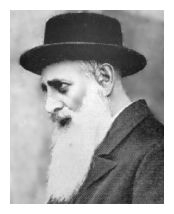
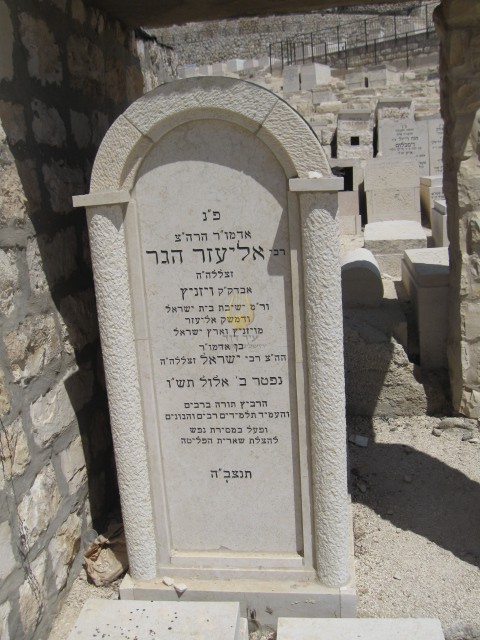
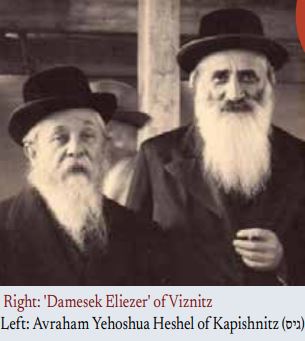
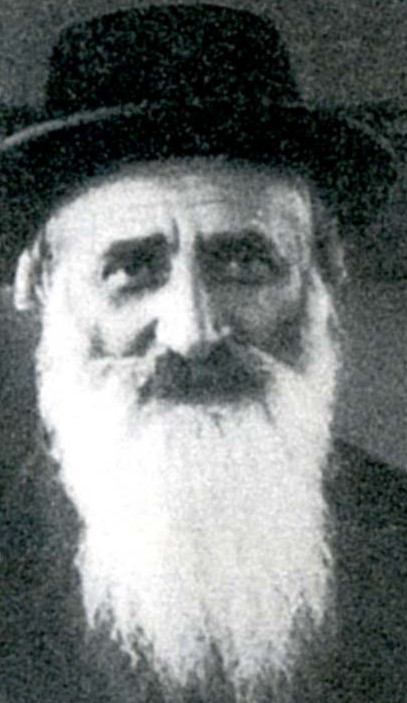
Rav Eliezer Hager of Vizhnitz zt"l
Rav Eliezer of Vizhnitz was born in Bedevilla, the town where his father served as Rav, on Shabbos (Parshas Yisro), 22 Shevat, in the year תרנ״א/5651. He was named after his maternal grandfather, Rav Eliezer of Dzhikov. At the age of 16, on Thursday, 15 Sivan תרס״ז/5667, Rav Eliezer married Chava, the daughter of Rav Yitzchok Meir Heschel of Kopischnitz and the great-granddaughter of the Rizhiner. He received smicha from the Maharsham of Berzhan, Maharsh Engel of Radomishla, and the Gram Shteinberg of Brody, author of Machzeh Avrohom.
When World War I broke out, Rav Eliezer and his father-in-law fled from Galicia to Bukowina. After stopping in Vizhnitz for a few days, they learned that the Russian army was approaching, so they continued on to Vienna, Austria. In Vienna, Rav Eliezer met and learned with the tzaddikim of the Rizhiner dynasty who had also taken up shelter there. He also learned with the gedolim Rav Meir Arik, Rav Yosef Engel and Rav Shteinberg, and he gained greatly from their Torah.
During this period, he worked hard to help the thousands of Jewish refugees who had flocked to Vienna, doing his utmost to ease their pain and attend to their physical and spiritual needs. He raised money to provide refugees with food and clothing; he sent anonymous care packages to those who were too proud to ask for handouts; and he worked tirelessly to obtain deferment and release for those who had been conscripted to serve in the Austrian army at the front. He also founded the kloiz of Chassidei Vizhnitz, which remained a center for Torah and Chassidus until it was destroyed by the Nazis.
At the end of World War I, his father, the Ahavas Yisroel, took up residence in Grossvardayn and the center of Chassidus moved with him. On Lag Ba’Omer, תרפ״ב/5682, with his father’s blessings, he was crowned as Chief Rabbi of Vizhnitz. He returned to Bukowina and established a Chassidic yeshiva for the Jewry of Bukowina and Bessarabia, which saved thousands of youngsters from the spiritual dangers of assimilation. His talmidim included the Yeshuos Moshe of Vizhnitz. In addition to being the Chief Rabbi of Vizhnitz, he also served as the head of Agudas Yisroel in Bukowina.
He was crowned as Rebbe after his father’s passing in תרצ״ו/5696. At the beginning of World War II, in ת״ש/5700, the Russians took over Vizhnitz, so he fled to Temishvar, where the local Jewish population became his Chassidim and followers. He did his utmost during the war to aid the Jews living in Transnistriya.
He made aliya in תש״ד/5704 and lived in Tel Aviv, where he re-established the Vizhnitzer Yeshiva and was among the foremost Chassidic leaders in the Holy Land. After a serious illness (an inflammation of the lining of his lungs, which he suffered in silence), he passed away on 2 Elul תש״ו/5706 and was laid to rest on Har HaZeisim.
Stories of Rav Eliezer Hager of Vizhnitz zt"l

In his younger years, Rav Eliezer sat and studied together with his older brother, the Imrei Chaim of Vizhnitz, and their exertion in Torah study was legendary. For two years, the brothers were so engrossed in their studies that they didn’t sleep in a bed. Except for Shabbos, they didn’t even change their clothes from week to week. When they needed a short rest from learning, they simply lay their heads down where they were, while fully dressed – and thus they could use the entire night for Toras Hashem!
Rav Elimelech Biderman shared the following story:
The Damesek Eliezer of Vizhnitz was walking down the street with his gabbai when they passed a jewelry store that had a fine display of watches in the window. Suddenly, the Rebbe stopped, turned around, and returned to the store they had just passed. To the gabbai’s surprise, the Rebbe entered the store and asked the owner to show him the best watches he had available.
“My Rebbetzin is a real maven in watches; she will only want the finest craftsmanship,” the Rebbe stated in a loud, clear voice. The owner of the shop hurried to show the Rebbe a selection of beautiful watches, but the Rebbe shook his head. “No, no, these are no good,” he said, waving them away. “As I explained, the Rebbetzin has impeccably good taste when it comes to watches. Why, I have an idea – why don’t you call over your wife and ask her to help us choose? I am sure she has fine taste in these matters.”
To the gabbai’s growing astonishment, the Rebbe invited the proprietor’s wife to help him select the gift. After several minutes, the Rebbe seemed satisfied; he borrowed some money from the gabbai, paid for the watch, thanked the owner, complimented his wife’s fine taste in watches, and left the store.
As soon as they were out of earshot, the gabbai couldn’t hold back. “Rebbe!” he said, stricken. “Isn’t it beneath your dignity to act in this way – to ask the opinion of the store owner’s wife, and have her help you choose a gift for the Rebbetzin?”
The Rebbe chuckled and, with a gleam in his eye, explained, “When we passed by the shop the first time, I could hear the owner arguing with his wife. He claimed that she had poor taste in watches and jewelry, and even accused her of chasing away customers and ruining their business. I therefore returned to the store and went in to buy a watch so I could specifically request her opinion and praise her good taste.” He turned to his awestruck gabbai and smiled. “Don’t you think their sholom bayis (marital harmony) will improve now that he values his wife’s judgment and opinion? I think that’s certainly worth the price of a good watch, don’t you?”