
Rav Eliyahu of Vilna zt"l
הרב אליהו בן שלמה זלמן מוילנא זצ"ל
Tishrei 19 , 5558
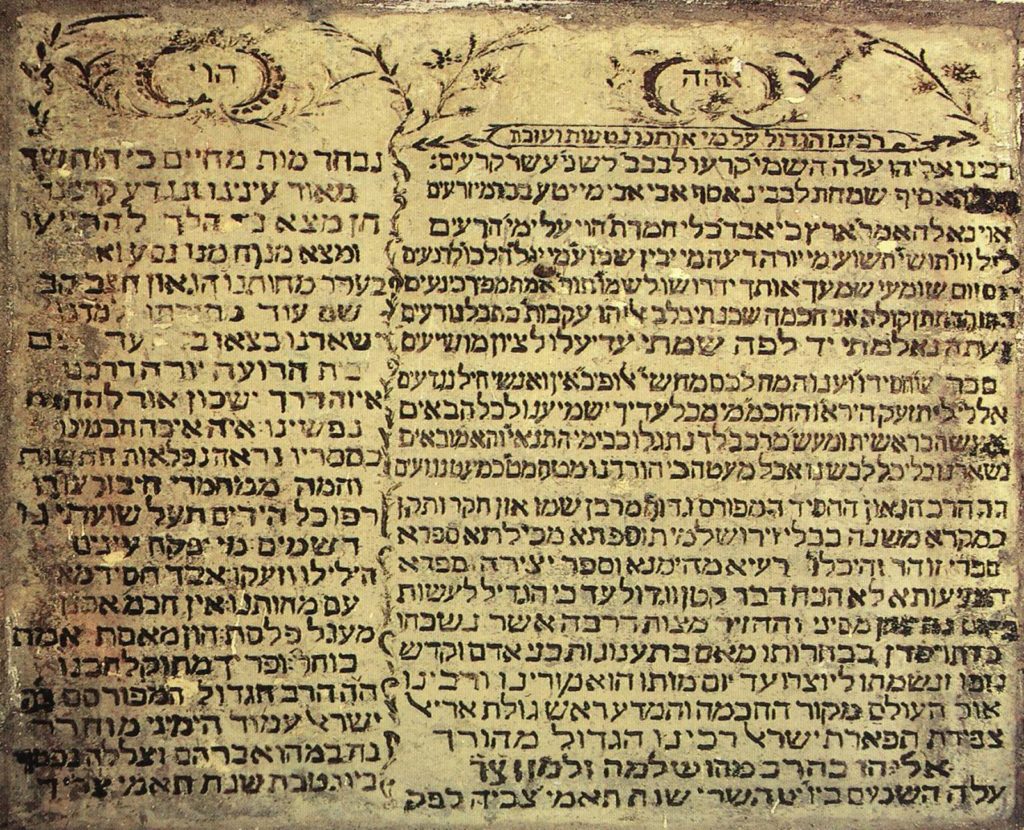
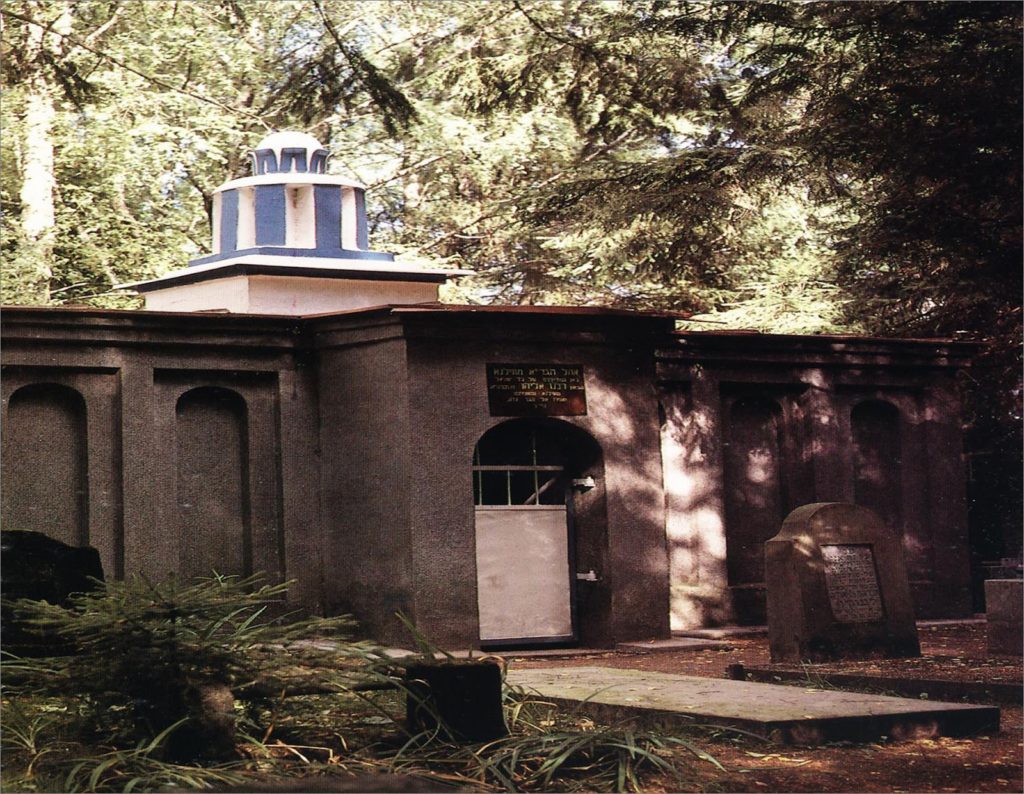
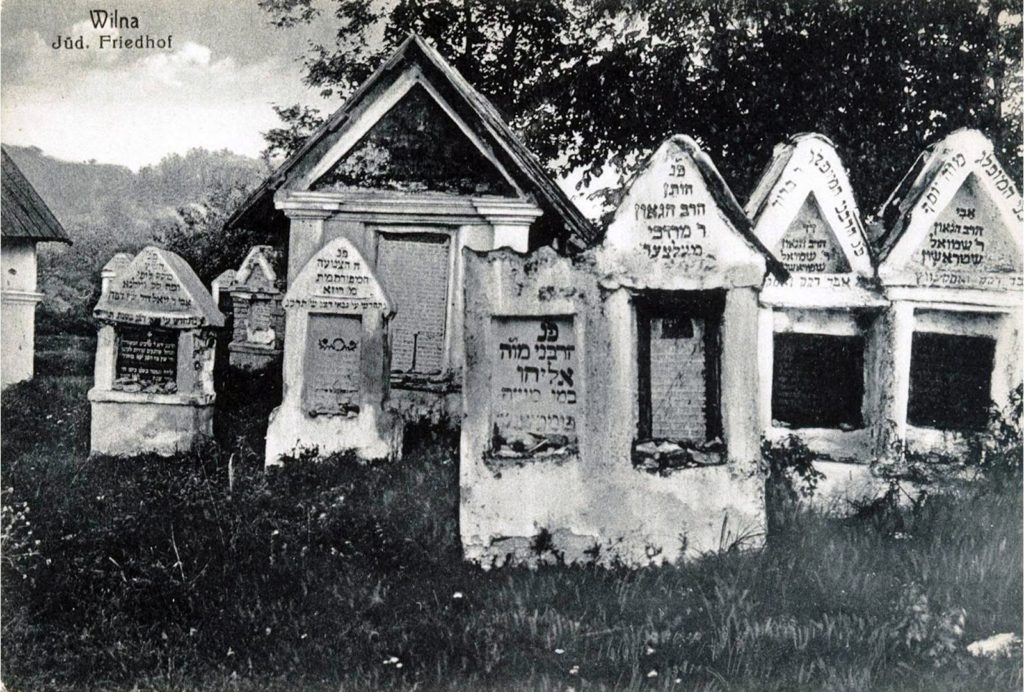
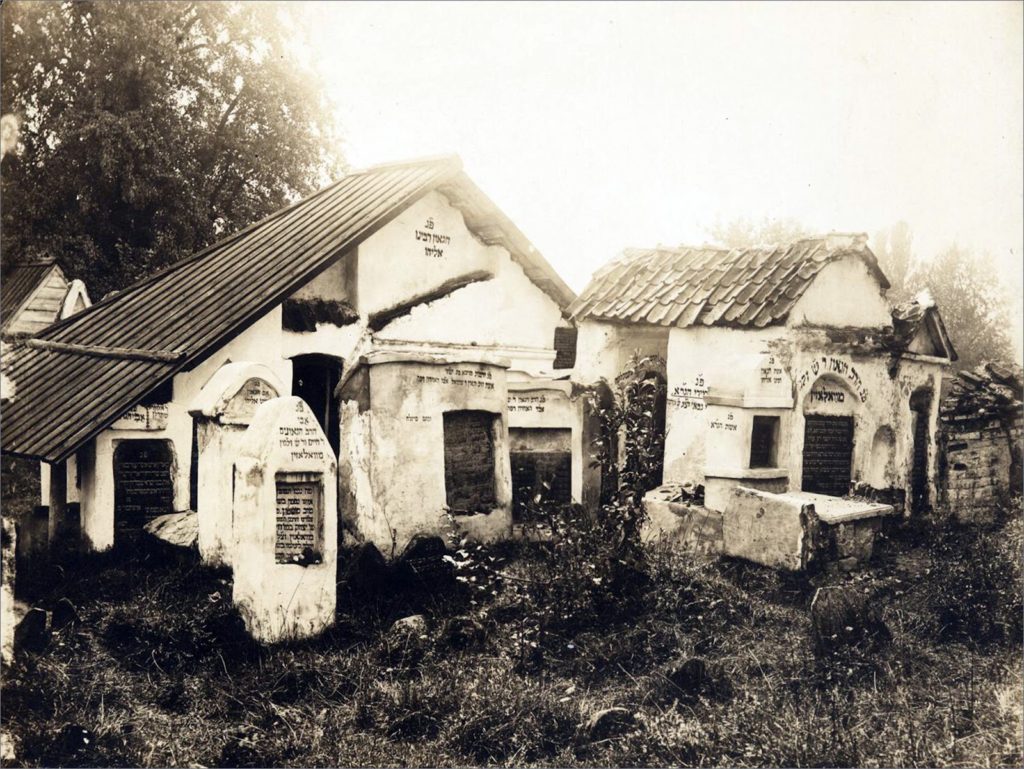
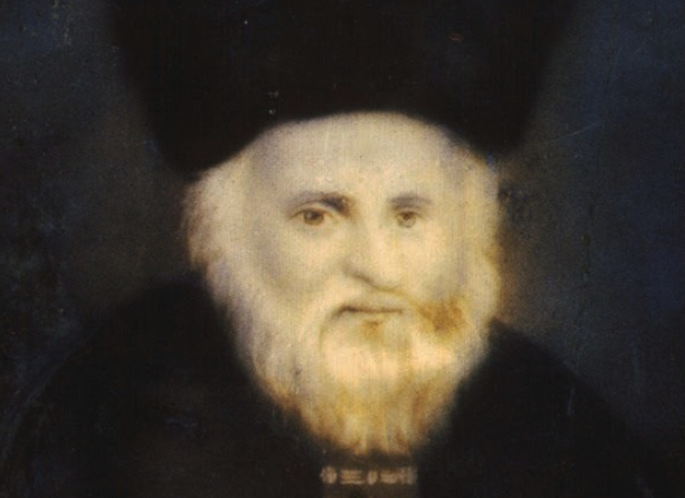
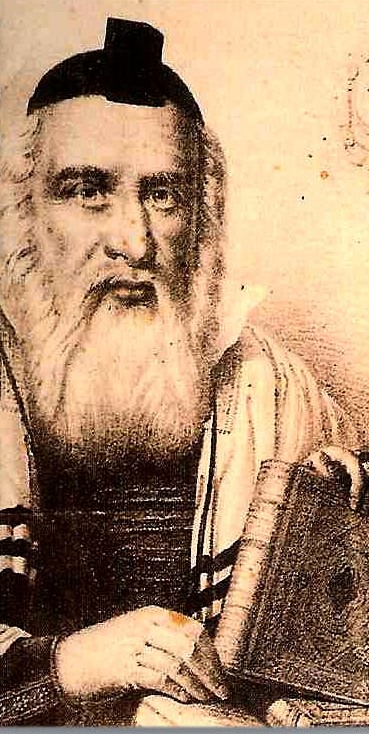
Rav Eliyahu of Vilna zt"l
His Father Rav Shlomo Zalman’s Yichus
Rav Shlomo was the son of Rav Yissacher Ber, son of the pious Rav Eliyahu Chassid. The Vilna Gaon was named after this illustrious great-grandfather. Rav Eliyahu Chassid was the son of Rav Moshe Kramer, AB”D Vilna, and the son-in-law of Rav Pesachya, son of Rav Moshe Ravkash of Vilna who authored Be’er HaGola.
The Vilna Gaon was the bechor in his family. His brothers were: Rav Avrohom Ragaled, author of Maalos HaTorah; Rav Yissacher Ber of Vilna; Rav Meir of Yanishock; Rav Moshe, posek and maggid of Padzeleva near Vilkomir.
At age six, he studied both with a teacher and with his father. By age seven, he studied under the author of Pnei Moshe on the Yerushalmi, and at a young age became both friend and study partner with Rav Aryeh Leib AB”D Tshechnovitz.
At age eleven, on Simchas Torah, he suddenly remembered that he had vowed to complete the tractates of Zevachim and Menachos by the end of the chag, and he had not even begun. So, he sat down and learned both tractates all night long. Rav Michel of Datneve was present and then fell asleep, but he awoke around midnight to find the young Eliyahu going strong, having gotten up to page 50 of Zevachim. Rav Michel, astounded, asked him how he managed to learn 50 pages of Talmud in just two hours! He tested him on a few difficult passages and found the young illui’s understanding to be complete and thorough. The young Eliyahu had fine answers to all his questions.
When Rav Michel returned at dawn, he found that Rav Eliyahu had begun Menachos and had already finished almost half the tractate. He tested him again and blessed him. The Gaon had completed both tractates Zevachim and Menachos before Shacharis. By age 12, the Gra was already aiding those much older than him and even rebbeim in understanding the complex laws of sanctification of the new moon. The Aliyos Eliyahu records that by age eight he had mastered various astronomy texts. His text of Sefer Yetzirah was complete before his bar mitzvah. It is known that at this age he even attempted to create a golem, but, from Heaven, they held him back from doing so (it otherwise seems that might have succeeded!)
He slept no more than two hours a day, and for the duration of 30 years, not longer than 30 minutes at a single stretch. At age 20 he went into self-imposed exile. He wandered from place to place wrapped in tallis and crowned in tefillin. From Berlin, Lisa, and everywhere he went, stories emerged about the Gaon that were wondrous.
Stories about His Self-Imposed Exile
The Vilna Gaon once entered a beis medrash and sat to study there as an unknown guest. He learned for a stretch and then he noticed an old woman approach a holy-looking blind man who sat wrapped in tallis and tefillin. She brought the man a small afternoon meal, and as he ate, he remarked about the melodious voice of a stranger-- a new voice that he did not recognize. “Surely this traveler is a righteous individual. Please invite him to the meal; surely he is hungry and needs to eat.”
The woman invited the Vilna Gaon, but he demurred as he was worried that his hosts would not have enough food for themselves. Realizing his reluctance, the old man explained: “My good wife works at the miller, and there, the flour mill is constantly grinding the wheat. As payment for her services, the owner allows her to collect all the powdered flour that spills over in the mill and so we have plenty and to spare!” The man seemed filled with joy over this, and dined on the gruel made of this flour and water as if it was a great meal.
Afterwards, he invited the Gaon to his home for Shabbos. Again, the Gra hesitated, and again the blind man reassured his guest, “My wife also works at the slaughterhouse and she helps the butcher by plucking all the feathers off the fowl. As payment, he gives her the feet and the head. Therefore, we have plenty of meat for Shabbos, and all the poor are our guests. That Shabbos the Vilna Gaon saw how the old blind man and his elderly wife shared together with their poor guests their Shabbos meal of watery flour gruel with chicken legs and heads. To them, it was like the feast of royalty. All his life, the Vilna Gaon said that he was jealous of the good character and attributes of that elderly couple and how they were happy with their lot, claiming that he wished he was as content as they were.
Another incident induced the Gaon to express the wish that he was as humble as another. During one of his journeys of self-imposed exile, he met a rav of a small town . It was a cold and rainy night and the rav invited the Gaon to sleep at his home. The rav led his guest of undisclosed identity to a comfy bed and covered him with a sheepskin. The Gaon feared that the blanket could be considered shatnez according to a stringent approach in the Rambam and slipped the warm cover off. The rav came to check on his guest and found the cover had slipped off. He covered his guest a second time and went back to his studies. Again, the Gaon slipped off the suspect blanket and again the rav checked on his guest and found him uncovered. “Now please my good man,” the Rav urged, “I want you to be warm! Do try and see that the cover doesn’t slip off; I cannot keep coming to interrupt my learning to cover you again and again.” The Gaon was impressed by the rav’s humility in that he would come back to cover him again and again. Seeing that the rav’s penchant for hachnasas orchim was so strong, he shared the true reason why he removed the blanket explaining why he was that he worried that it was shatnez.
The rav listened and simply brought a different blanket that was less heavy but also less problematic. From this exchange, however, the Gaon’s cover was blown. His explanation of the halachah revealed that he was a Torah scholar. That morning, when the rav sought out his scholarly guest, the Gaon had already left. With his identity revealed, the Gaon fled, but what remained with him always, was the jealousy he felt over the humility that the rav displayed.
In the introduction to Peas Hashulchan, it is told that on his way home he hired a coach and promised the driver to pay him extra for waiting. The Vilna Gaon wished to finish davening the Tefillas Shemoneh Esrei. Yet, while the Gaon stood silently davening, the driver hurried the horses and ran off with all the his possessions. The Gaon came back home empty-handed.
In תק"ה, the Gaon returned to Vilna and studied Torah in poverty and asceticism. He was accustomed to study secluded alone in nature. No one but his wife Chana, the daughter of Rav Yehuda of Kidan, knew where this location was. She saw to it that he was undisturbed, but fed and taken care of. She passed away 5 Kislev תקמ"ג.
The Vilna Gaon authored a number of seforim; the tally among his various students and disciples varies from 55 to some 72 works. Not all of them were printed. The Gaon had the custom to revise seforim with his many glosses and emendations. Rav Chaim of Volozhin testified that before he amended a text of the revealed Torah, such as from Tannaim or Amoraim of the Talmud, he only did so if he first had tested that it agreed with 15-20 sugyos. In amending the hidden Torah, he only made changes where he found no less than 150 sound reasons for doing so.
Among the students mentioned below, was Rav Yisroel of Shklov, author of Tekalin Chaditin, Peas Hashulchan, and Nachla Umenucha. Rav Yisroel served and studied under the Gaon for half a year and was with him for the final 20 days before Rav Eliyahu’s passing. Rav Binyomin and Rav Yisroel of Shklov who prepared and published the Vilna Gaon’s commentaries on the following works: Shulchan Aruch; Orach Chaim; Yore Deah; Mishnas Eliyahu; glosses on tractate Shekalim (Rav Yisroel); a commentary to Pirkei Avos; emendations to the text of the minor tractates prepared by Rav Menachem Mendel of Shklov, the sefer, Tzuras Haaretz V’tavnis Habayid --also by the Rav Menachem Mendel; a commentary to the Pesach Haggadah; and Sefer Yetzirah by Rav Menachem Mendel of Shklov as well.
Rav Meir of Vilna also studied several years under the Gaon and authored a commentary called Eliyahu Rabba based on what he heard and learned on mishnayos Seder Taharos. It is known that whatever the Gaon taught in Taharos was only after he clarified that it was true according to the secrets of Torah as well.
In תקנ"א, when he was advanced in age, the Gra grew ill. Instead of going to doctors, he turned to the famed Dubno Maggid for help through the agency of the Maggid’s insightful stories and parables.
In תקנ"ד, at age 74, Russian soldiers attacked Vilna. They surrounded the city intending to capture the city from the Poles, and on the 21st of Tammuz, around thirty Jews lost their lives to the gunfire of the invaders. On Tu b’Av the fighting intensified, and when the sounds of battle grew near, the Jews fled. Men women and children congregated together for safety in the Great Synagogue. The Vilna Gaon approached the bimah, opened the doors of the aron kodesh and recited Tehillim, chapter 20: “Hashem save us during troubled times” seven times. Suddenly, a loud blast was heard and the gathered Jews were stunned when a direct hit was made onto the roof of the shul. The Gaon cried out, “Batel! Batel!” The bomb failed to explode and even after quiet returned to the city the shell remained there on the roof as a sign of the miracle.
In תקנ"ו, he again took ill and called the Dubno Maggid and once more was healed. In תקנ"ח, on the eve of Yom Kippur he called his children and grandchildren to his side and blessed them one last time. As Sukkos approached, he gathered his strength despite the severity of his illness, so that by the second and third days of Chol Hamoed Sukkos he was still able to fulfill the mitzvos of lulav and esrog with great fervor and simchah. It is believed that the Gaon passed away on the 19th of Tishrei at age seventy-eight while still holding the arba minim in his holy hands. (Summary based on Ruach Eliyahu)
Stories of Rav Eliyahu of Vilna zt"l

It was the third day of Chol HaMo’ed Sukkos, the yahrzeit of the Vilna Gaon. The Munkaczer Rebbe, author of Minchas Elazar, was sitting with his Chassidim in his sukka and he related the following story:
“I heard this story from reliable sources who have handed down the story directly from the author of Kedushas Levi, Rav Levi Yitzchok of Berditchev.
“It was the third day of Chol HaMo’ed Sukkos in the year that the Vilna Gaon passed away. Rav Levi Yitzchok said: ‘Just now the Vilna Gaon has passed away and has been brought before the Heavenly tribunal. They looked over his case and ruled that they would open for him the gates of Gan Eden immediately. At that moment the souls of the students of the Ba’al Shem Tov appeared before the court and appealed the ruling on the grounds that the Gra had opposed them and made their lives so difficult. The Vilna Gaon retorted in his defense that his intentions were purely for the sake of Heaven, that he had misunderstood the ways of the Chassidim. The Ba’al Shem Tov’s students responded that although it was true that his intentions were purely for the sake of Heaven, his opposition prevented them from serving Hashem properly. (Note: The opposition to the founder of Chassidus, the Ba’al Shem Tov, and his followers rose in the wake of the false messiah movement of Shabsai Tzvi in the mid-1600s, which had led many Jews astray. Many Rabbonim saw Chassidus as potentially dangerous. Those opposed to Chassidus became known as misnagdim. The opposition of the Gra and his followers came in the form of bans, excommunication, boycotts on employing Chassidim, and chasing Chassidim out of town, which most certainly disrupted their Avodas Hashem. )
“‘The court was about to reevaluate the judgment, but at that moment the holy Torah herself (and other versions of the story include the thousands and thousands of pages of Talmud that the Gra had studied in his lifetime) surrounded the Gaon, shielding him from all sides. The Torah testified that the Gra never transgressed even a minutia of a law, whether it was a Torah law or a rabbinical enactment. ‘How can it be that someone who spent his entire life studying me should be treated this way?’ said the Torah. ‘Do not touch him!’
“‘Then and there the court ratified its previous judgment, upholding its decision to send the Gra straight to the highest level of heaven, the Gan Eden Ho’Elyon, and receive his reward.’”
All this did the Berditchever relate on the day of the Vilna Gaon’s passing. Then word went out in Berditchev that the Gra had passed away and ascended to heaven to walk before Hashem in everlasting light.
Toldos Kedushas Levi (Munkacz) 101.
The following pages are filled with the remarkable testimonies of the Vilna Gaon’s closest family members and disciples, his sons, and Rav Chaim of Volozhin. These first-hand accounts testify to the Gaon’s lofty stature. Many of the anecdotes were and heard direct from their Gaon’s holy mouth.
The following is direct account recorded by the Vilna Gaon’s two sons in their introduction to their father’s commentary on Shulchan Aruch:
Mastery of Torah in His Youth
Born on the first day of Pesach תפ"ב in Selitz near Brisk, Lithuania, by age 6½, he already displayed his genius in shul by delivering a complex drashah which his father had taught him. (Ruach Eliyahu cites Shenos Eliyahu on Mishna Brachos 1:1 for an example of a typical drashah the Gra gave at age seven.) During Shalosh Seudos, his father brought him before Rav Heschel of Vilna. The Rav asked rhetorically, before the gedolim sitting with him, “Have you ever seen such a wise and insightful child as this?”
They answered back that this drashah was no achievement as they assumed he had reviewed the material with his father two or three times and that he had simply memorized. They concluded that he was repeating the drashah verbatim. Yet, Rav Heschel believed that the child truly had the ability to say amazing insights such as these on his own. “Give him an hour to prepare, and he will demonstrate his amazing capabilities,” Rav Heschel promised them.
For the next hour, the young prodigy learned on his own and afterwards, those gathered proceeded to ask him many difficulty questions on the portion he worked on. He then provided them with one single astounding answer that resolved the many questions and difficulties all at once! They were astonished at this and embraced young Eliyahu and kissed him in affection. They had seen for themselves that he possessed rare mental acuity and insight.
By age nine he had mastered all of Tanach, Mishna, and Gemara. He had studied midrashim and had come up with complex reasoning. He began to study the works of Kabbalah such as Etz Chaim and complex halachic responsa. Where others failed, he succeeded in grasping the complexities of these texts and unlocking their mysteries. Within half a year, he had mastered all the writings of the Etz Chaim. At age thirteen he accepted upon himself the ways of piety and asceticism befitting the title, “Chassid,” and from that point on, he never looked beyond four cubits, guarding his eyes and focus until the day he died. He accepted upon to himself distance himself from life’s earthly pleasures and limited himself to two olive-sized portions of bread soaked in water. This was what the Gaon ate daily for breakfast and supper and even swallowed the pieces whole so as not to taste them. He studied the Shas—Talmud Bavli and Yerushalmi—for six years, Tosefta, Mechilta, Sifra and Sifri as made emendments and sifted through incorrect editions, perfecting the girsa by checking for inaccuracies. For six more years, he studied the works of the poskim and halachah and toiled to identify and verify the sources, as had the Beis Yosef done when he gathered all the shitos. The Be’er Hagola followed in the way of his forebearer, and the Vilna Gaon did the same. Rav Eliyahu began demonstrating how the rulings all had their sources in the words of Chazal in the Bavli, the Yerushalmi , halachic midrashim, or in the comments of Rashi and the Tosfos.
Fulfill The Requirements of Halachah and Chazal Until Your Soul Goes Out
The Gra accomplished all that he did due to his drive for truth. He persistently sought the emes and ignored the falsehoods of this world. This passion for truth and mastery of every aspect of halachah shielded him sins and errors recounted in the dictums of Chazal and allowed him to follow mitzvos precisely to the letter.
Once on a journey, the Gra, along with a disciple, stopped to rest at the home of an upstanding Jew. That evening, the master of the house served supper and asked Rav Eliyahu of Vilna to please have something to eat. Although he felt ill with an upset stomach, the Gra tried to eat in order to please his host regardless of how sick he felt. But, after just tasting the food, he threw it all up. When the master of the house came back and saw the plate still full, he again encouraged his guest to eat. The Gra complied and again vomited all he had eaten. This same scenario repeated itself a few times.
“Why do you force yourself to eat when you are clearly unable to keep anything down?” asked Rav Eliyahu’s disciple.
“Chazal say that we must do whatever the master of the house tells us except to leave,” explained the Vilna Gaon. “The halachah dictates that wherever Chazal say we must do something—even a Rabbinic decree or ruling—the shiur (amount required) to do is ‘until your soul goes out.’ He is our Master and we must fulfill His will and prostrate ourselves before Him.” The Vilna Gaon was simply fulfilling the halachic requirement as he understood it to be!
Forsake Love of Family for Love of Torah
He was so immersed in his studies that he never asked his children regarding their business, income, or livelihood. He did not ask how they or their families fared or what news they shared, nor did he write them letters or read their letters. Instead, when they came to visit, he rejoiced after not having seen them for some time. Then he would asked how much Torah study they had forfeited from traveling and asked that they be made comfortable so that they could make up what was lost in learning here at his home.
One son writes about the extent to which the Gra sacrificed his love of anything physical--even his own beloved children for the love of Torah. He brings an astonishing example: When our brother Sholom Zalman was just five or six years old he was, at the time, the beloved only child of our father Rav Eliyahu. At that time, Sholom Zalman developed a dangerous illness and was bedridden. Before he was out of danger, our father left Vilna to pursue his practice of seclusion. His private quarters where he would isolate himself were seven parsecs from Vilna.
Prepared to retreat to his studies, he had the wagon readied and set off. He spent a full month there secluded with Hashem and Torah alone. Only when he went to the bathhouse—a place where it was forbidden to think thoughts of Torah—did his mind wander to personal matters. On one such outing, he calculated that an entire month had elapsed since the time he had left his ill son, and realized he had no news of his condition. Overtaken by love for his beloved son, he was jolted out of his hisbodedus. He immediately ordered a coach to head home and check on his child’s condition.
Just Two Hours of Sleep A Day
The Gra waged a war against his body all his life. One clear example of this was the great avodah he accepted upon himself not to sleep more than two hours in each twenty-four-hour period. For many years, he never slept more than a half an hour straight at a time. Even during that half hour of rest, his lips constantly murmured halachos and aggados—laws, rulings and homiletics. After a half hour rest, he would arise, wash his hands, and return to his studies with renewed energy. Then he would go back to sleep for another half hour. He would sleep for these short periods at night, with a half hour nap reserved for the day hours. With strategies such as this, he fought his yetzer regarding food and sleep all the days of his life.
Permission From Heaven
Consistently devoting his genius and energy to Torah and to avodas Hashem paid off. He came to the point where nothing ever truly bothered him. In purifying his heart, he was left to serve Hashem with immense joy. Day by day his intellect grew and he used it to divine truth so that his actions would correspond only to the will of his Creator. He endeavored in nothing unless he had determined that it was truly Hashem’s will.
This amazing ability to know and act only in accordance with his Creator’s will was demonstrated to us twice. We heard from his own pure and holy mouth that something was found to be counter to the will of the Creator and so, he refrained from it. For example, I asked him from time to time why he never went to live in the Holy Land (Eretz Yisrael), and he did not give me an answer. Once, I was persistent and prodded him until he answered me: “I do not have permission from Heaven to do so.” Another time he had said that he would compose his own Shulchan Aruch based on the format of the Four Turim. He wished to pasken and decide one single binding ruling based on his own opinion that would be backed by irrefutable proofs. A few years before his passing I asked him again regarding this undertaking and he answered on this occasion as well, “I do not have permission from Heaven.”
The most respected and wisest of people recognized [the Gaon’s] unfathomable greatness and wished to bask in his presence, to study his ways and learn from them. They came in great numbers to speak with him in learning and to daven together with him in his beis medrash. They witnessed themselves how his love for tefillah was so great—that every word which left his mouth was uttered in sanctity. It seemed that his wisdom, straight heart, and knowledge all grew further through his ardent tefillah. The love of Hashem was palpable with every word that left his holy lips. For those who experienced this, it touched them so deeply that it filled them with a love and yearning to serve Hashem that lasted all day long. Even so, it was obvious to all that such lofty levels were simply beyond our generation’s capacity to appreciate or emulate.
The Gra’s seven students and disciples listed in order are: Rav Chaim of Volozhin, author of Nefesh Hachaim and Ruach Chaim on Pirkei Avos; Rav Shlomo Volkmir; Rav Shlomo Zalman, the brother of Rav Chaim Volozhiner; Rav Saadia, brother-in-law of Rav Shlomo Zalman of Volozhin; Rav Shlomo of Tultshin, maggid of Vilna; Rav Tzvi Hirsch of Semyatitz; and Rav Shlomo of Mogilev. Besides his disciples from Vilna, the disciples from Shklov are also mentioned in order: Rav Binyomin, Rav Simcha Bunim, and his brother Rav Menachem Mendel.
The Gra guided his disciples first, to learn all twenty-four seforim of Tanach with the nekudos and taamim as well as the laws of dikduk. Then he urged them to study and memorize the six orders of the Mishna by heart along with the major commentaries. Afterwards, they were to delve into the Talmud with great emphasis on Rashi’s commentary and the Tosfos. He emphasized that pilpul and chidud should not be taught to young students or those who failed or lacked the knowledge of the preliminary studies just mentioned. He set up a beis midrash where there was a constant study and review of mikrah, Mishna and Gemara, and he would review with them these subjects as well at set times. He set forth a program of study that allowed them to complete the Talmud within a few years and to know it well by heart. They were also trained to know the sources for all the halachic rulings of the four Turim and Shulchan Aruch completely. He warned them against engaging in pilpul believing it often led to vanity and pride rather than truth. The Gra held that its only purpose was to help one arrive at a decision in halachah once all the fundamental elements were clear. They used his methodology in learning for 18 years and he rejoiced at their achievements. And they delighted in the radiance of the Gra’s unimaginable grasp of Torah. Woe to us for our loss; our consolation is this commentary on the Shulchan Aruch. (Introduction of Rav Avrohom and Rav Yehuda Leib, the sons of the Vilna Gaon, to his commentary on Shulchan Aruch, Orach Chaim)
The following account is cited from the Vilna Gaon’s greatest disciple, Rav Chaim Volozhiner, in the introduction to the Gaon’s commentary on Zohar, Sifra D’tzniyusa. Rav Chaim writes:
The Vilna Gaon’s Attitude Towards the Arizal
Regarding our holy master, the G-dly and awesome Arizal, with my own eyes, I have witnessed the extent to which the Vilna Gaon honored, esteemed, and appreciated the Arizal. When he would speak about the Arizal, his entire body trembled. He would say, “How awesome it is to speak about such a G-dly individual as this! Following the time he merited the revelation of Eliyahu Hanavi his great ability to ascertain the awesomeness of Hashem’s works became even greater!”
Yet, the Gaon felt that many of the writings of the Arizal had been corrupted by emendations of students other than Rav Chaim Vital. It was they, he believed, who had failed to correctly understand the Arizal’s true meaning, and he therefore did not rely on them for ruling halachah.
His Effort and Toil in Torah
The Gaon, a gadol among giants, exerted himself in an extraordinary manner. He refrained from food or drink for days and nights on end, and denied himself sleep. Having arriving at the level he struggled for, his countenance was suffused with an unearthly glow which radiated the light of Torah!
It was an oft repeated saying of the Gaon that proper understanding of the words of the holy Zohar and Tikkunim is impossible without several weeks of intense effort. Every concept, idea, and essay needs to be laboriously worked through.
His Power of Tefillah
I once spoke with the Vilna Gaon about tefillah and told me the following:
“I was once shown from Heaven just how awesome tefillah truly is. For twelve weeks toiled intensely to understand a passage in the holy Zohar regarding Rosh Chodesh but clarity on it eluded me. Then, one Rosh Chodesh, while davening the Amidah, seven different ways to explain the passage of Zohar entered my mind in one moment. ‘What should I do?’ I asked myself; perhaps I could pause for a moment just to organize my thoughts. Would this be considered a hefsek–a forbidden halachic disruption of prayer?’
That is actually what I did. I spent about a quarter of a minute (15 seconds) and I organized my thoughts and immediately went back to my davening. I completed my prayers and I thought back to recall my thoughts and review them. They were gone; they had vanished completely. I was greatly troubled by this and I spent a half hour trying to come overcome the anguish I felt so that I could properly recite Hallel.
When I stood up to prepare to daven Mussaf, the same seven explanations came back to me again. This time, I did not interrupt my prayers and paid no attention to the thoughts. When I finished davening, there they were, organized completely in my memory—all seven explanations sweeter than honey!”
On this, Rav Chaim Volozhiner remarked, “See how great and lofty were the Gaon’s pure thoughts during prayer—that for him, even Torah ideas were considered as ‘foreign thoughts’ during davening.”
His Corrections to Mystical Texts and the Sefer Yetzirah
I heard the following directly from the Gaon’s holy mouth: He did not dare to amend the text of any kabbalistic work of Torah until his change succeeded in illuminating the difficulties in other passages. His one revision would rectify up to 150 difficult passages found in other places in the text, bringing all 150 standing contradictions to their logical resolution.
His revised version of Sefer Yetzirah was already formulated during his younger years. I asked him to compare some ten different versions of the text, and he told me that his version was as clear as the Arizal’s with one small change made where the Arizal’s text was mistaken.
Creating a Golem
I said to him, “If this is true, it would be no great difficulty to use the text in order to create a golem.”
He answered me: “I once started to create a golem. Then, in the middle of my work, I experienced a vision that obstructed me from doing so. I thought to myself, ‘Likely from Heaven they are holding me back from doing this due to my young age.’”
So I asked him, “How old were you back then?”
He responded that it was before his bar mitzvah. (Translator’s Note: See also below Why did the Vilna Gaon Attempt A Golem cited from Kol Hator)
His Renouncement of Revelations and Refusal of Help from Angelic Maggidim
Above all, he saw no greater benefit for his soul than his own toil in Torah study. Although [from Heaven] they were willing to grant him (gratis) insight into the secrets of Torah assisted by angelic maggidim (angelic ministers of Torah and its secrets) he relinquished all such help viewing his own unaided exertion as his most valued resource.
I myself heard from his holy mouth that oftentimes, various heavenly maggidim appeared to him asking if he wished to have revealed to him secrets of Torah, but he would consistently refuse their help.
One of the maggidim persisted, but still, the Gaon refused him and paid no attention to his awesome image. He responded to the maggid, “I do not wish to achieve understanding of Hashem’s Torah through any intermediary whatsoever. My eyes are uplifted to Hashem; whatsoever He Himself wishes to reveal to me directly and any portion he wishes to bestow upon me from His Torah through my own efforts , that is my desire. I ask only for wisdom directly from Hashem’s ‘mouth’ — the understanding he plants within my heart and the insight he plants within my kidneys. My innards shall then be transformed through my own toil like two fountains of knowledge. It is then that I shall know I have found favor in His eyes. That which is received through angelic forces and not my own earned wisdom—I do not want.”
His Warning to Rav Chaim’s Brother, Rav Shlomo Zalman
The following tale is a story that happened to me when the Vilna Gaon sent me to my younger brother who is greater than me in all aspects—piety, sanctity, and holiness—the gaon, Rav Shlomo Zalman, to relay to him a directive on behalf of the Vilna Gaon himself.
“Say to him in my name” the Gra commanded, “that he should not receive any angelic maggid which shall come to him. Sometime soon an angelic maggid will appear to him. And while our master, Rav Yosef Karo, author of the Beis Yosef did engage with an angelic maggid, that is irrelevant. Rav Yosef Karo’s encounter was over two hundred years earlier in a generation that was still worthy and prepared for revelations such as these. Furthermore, he was in the Holy Land and we are in chutz l’aretz—outside the holy land. Considering these factors, it is impossible to be wholly dedicated, untainted by ulterior motives or improper thoughts.” Revelations that came through any other means besides direct Torah study, the Vilna Gaon rejected as not worthwhile at all.
His Dream Revelations and Ascension of the Soul
The Gra was even more adamant about relying on dreams as an acceptable form of revelation. These ascensions of one’s soul called, “aliyas neshama,” to the Heavenly Academies, the Mesivta D’rekiya, were similarly not considered to be of great utility by the Gaon. Rather, he held that the principle manner of Torah study was only that which man attains in this world through personal effort. What was of true value in his view was utilizing one’s own free will to choose good over evil and to use that choice to exert oneself in Torah study. This is what gives true nachas ruach to Hashem. Conversely, whatever the soul receives from revelations during sleep comes without toil, without expression of our free will to decide, is receiving reward in this world as a taste of Olam Haba. The implication in the Gra’s words is that he was familiar with precisely this type aliyas neshama. In fact, one of his talmidim heard the Gra mention that from a certain point in his mature life, this phenomenon became a nightly experience.
The Lost Dream That Was Later Remembered
One such account of these wondrous visions is as follows:
On the first day of Pesach, two of the Vilna Gaon’s main disciples were visiting with their rebbe on Yom Tov. These talmidim were acquainted with the Gaon’s holy ways and they were very surprised to see that their rebbe seemed troubled. They knew that every Yom Tov the Gaon was exceptionally b’simcha. His disposition was joyful as commanded by the holy Torah in line with fulfilling the mitzvah of “simchas Yom Tov.” When they asked him what was wrong, at first the Gaon refused to say. Yet, after their repeated efforts, he relented:
“Though I am unaccustomed to do so, I must reveal something you so that I should fulfill Chazal’s dictum that when a person has some burdensome worry he should speak about it with others. Last night I was visited by Eliyahu Hanavi (if my memory serves me correctly, though, it is possible that it was some other great figure from the Heavenly Academy), and he revealed to me regarding the novel understandings of the Divine 12-letter-name of G-d and the pasuk, “Alu zeh b’Negev. I awoke with joy and couldn’t refrain from thinking about these chiddushim before I recited Birkas HaTorah. I was therefore punished and I forgot them all!” (According to his own opinion on this matter, it is forbidden to even contemplate Torah thoughts before reciting the brachah.)
His disciples comforted him and blessed him that Hashem return his “lost object” back to him. After some time, one of them asked if, indeed, he had retrieved his lost chiddushim. The Gaon responded that, Baruch Hashem, they were revealed to him a second time:
“They contained 2,260 explanations and just as I knew why they were lost to me; I also know why they were revealed to me again. Using one of these insights gave me the ability to discern the powers of all creatures and each and every limb’s purpose.”
What is extraordinary from his description, is how second-nature these occurrences seem to be and that he needed no kavanos or yichudim (meditations or intense focus) on holy Names to achieve these dream ascensions. This is entirely plausible when one considers that all that passed his lips was Torah and all of his thoughts in his heart and mind were all only Torah, day and night—the revealed Torah, the Oral Law and the kabbalistic design of the Chariot. It is well known that from an early age he never walked even four cubits learning Torah and without wearing tefillin. All his actions were filled with extraordinary sanctity. And it is known that our dreams express the state of our heart. In that case, why should he need kavanos and yichudim?
The Purpose of Sleep and Dreams
One of the Gra’s favorite sayings was that the entire purpose of sleep was created by Hashem solely for the purpose of attaining whatever a person was unable to during his waking state. When a person is awake, his soul is bound up with his body, and even after immense struggle, the body is still a barrier that separates us from spirituality. Therefore, during sleep, when our soul somewhat detaches from the material, we become receptive to spiritual revelations. Once the soul divests itself from the body through sleep, we are able to enter a state in which we “don a supernal garment” called, “chaluka d’rabbanan–the robe of the rabbis.”
Nightly Revelations
What remains unclear to me is whether all the revelations that he had—whether those he told me of directly, or those I myself saw with my own eyes in his various writings regarding holy secrets revealed to him by Yaakov Avinu or Eliyahu Hanavi, zachur l’tov, or where he writes, simply, that it was revealed to him “anonymously”—were conscious waking revelations, or occurred during sleep through aliyas neshama to the Heavenly Academies. However, what is clear to me, is that he truly experienced aliyas neshamah on a nightly basis from the day he came of age, as I said above.
With Rashbi and The Arizal
What was involved with the Gra’s conscious revelations were obfuscated due to his reluctance in talking about them. The only way I merited the few stories I have was by turning the conversation to the topic, on occasion. I was once privy to hear an amazing piece of information from his holy mouth. The Gaon implied that he also had revelations while in a fully conscious state as well.
As G-d is my witness, my Father in Heaven knows that I heard from his holy mouth that once in Vilna, a dreamer scared all those who heard of his dreams . He was able to tell each person private things that he said or did—even those things which occurred behind the closed doors of his home. Everyone was terrified of him.
This man was brought before the Vilna Gaon and he said to my rebbe: “Rabbi, please allow me to say before you just this: Two weeks ago on Thursday you sat here in this very place and you said a chiddush and developed a new approach to several pesukim in Haazinu. Rav Shimon Bar Yochai sat at your right hand while the Arizal sat at your left.”
My rebbe the Gaon was very surprised how an ordinary person could know this. And he [the Gaon] remarked: “I remember that before this, I even sent out the gabbai from my home.” The rebbe, the Gaon, then admitted to him, “It is true that I innovated those chiddushim.” As he said this, his face was filled with an expression of deep satisfaction. It was clear that these were truly wondrous secrets that were worthy of being told even to Rashbi himself. He then gazed at this dream master and recognized that he was a deeply depressed individual. To such individuals dreams are accessible as well [through the paths of tumah] and he asked the gabbai to lead him out. (Introduction to the Gaon’s commentary on Zohar, Sifra D’Tzniyusa)
Divrei Torah of Rav Eliyahu of Vilna zt"l
his 48 acquisitions in torah lead to his ruach hakodesh and unity with hashem
“The truth is,” writes Rav Chaim of Volozhin, the main disciple of Rav Eliyahu-- the Vilna Gaon, “that all the Gaon’s wondrous ways are not very surprising to me; nor do the awesome revelations that that he experienced surprise me. I know in my very heart and soul, and I witnessed with my own eyes, that the Gaon fulfilled all 48 manners of acquiring the Torah described in Pirkei Avos 6:6.
“He toiled with all his might in Torah lishma–purely, for its own sake. All this was done with great kedushah and taharah–in great sanctity. He did not overlook any subject matter whether seemingly significant or not [he studied them all]: Talmud Bavli and Yerushalmi, Mechilta, Sifra, Sifri, Tosefta and all the Midrashim, Zohar, Maaseh Bereishis and Maaseh Merkava as well as Sefer Yetzirah, along with all the works and writings of the early kabbalists, the writings of the Arizal. He mastered these works thoroughly until their paths and methods were utterly clear. These efforts pave the way for acquiring great lucidity in understanding the depths of Torah. He had it all memorized, organized clearly in his mind. He used all his powers and faculties to retain the insights he acquired. He sacrificed everything to achieve that level of clarity. He scrutinized and elucidated every word and passage until it made sense at an exacting level. [In order to achieve this, he engaged in ascetic practices.] From the time he came of age, he did not gaze outside his immediate four cubits [so as not to see anything inappropriate or distracting]; he separated and distanced himself from worldly matters in an astounding manner—even to the extent that he did not even inquire after the well-being of his immediate family. Nor did he communicate with them through letters or even read the letters they sent to him.
“He lived in a way that was apparent that he cleaved to the tree of life [the Torah, the life-giving source], to the point where from around bar mitzvah age, he barely slept [not more than a total of two hours a day, and in half hour increments]. After unremitting effort, the Torah was given to him as a gift and his kidneys were opened like fountains of wisdom. This state only was enhanced and developed hour by hour and day by day. Despite his astonishing abilities in Torah knowledge and wisdom, he was exceedingly humble and modest. In fact, these qualities seemed to go hand in hand. Someone who never witnessed his holiness in Torah, his manner of serving Hashem, his perishus v’chassidus (asceticism and piety and his humility), is as one who has never seen the sun, as if he never experienced true light and radiance before. As I speak of him, my heart is filled with awe. As I remember him, I see him before me just as he was alive serving Hashem like a supernal ministering angel from on High.
“Take this to heart and consider it well, who ever saw such a thing in our times? Whoever heard of such a thing even in earlier generations? Was there ever such a remarkable person alive ever before [like the Vilna Gaon?]”
“All his remarkable manners, achievements, and revelations were his reward for Torah; this is her sachar. From the Heavens, they awarded him his portion for all his toil. We have a tradition as found in Pirkei Avos, testified by the Tanna Rav Meir, that whoever toils in Torah l’shma merits ‘devarim harbeh--many things.’ The Mishna does not explain what these ‘many things’ are. It cannot be referring to the list of all the rewards and lofty levels mentioned that follow this statement [as it would be redundant]. [These rewards] are prefaced by Rav Meir’s statement: ‘not only that, but also…’ demonstrating that these are to be differentiated from the aforementioned ‘devarim harbeh.’ Rather, the term ‘devarim harbeh’ means, additionally, ‘many remarkable things.’ This [separate level] hints to other-worldly revelations and supernal visions which simply cannot be expressed or put into words at all [and so are not explicitly mentioned]. And we saw with our own eyes that all the elevated levels that are listed here in the Mishnah (Avos) were all embodied by our master and teacher [Rav Eliyahu, the Vilna Gaon], may his soul rest in Eden. All the holy things that the Tanna enumerates—that are described in the Mishnah-- were all accomplished by our master, the Gaon. This enabled him to attain ruach hakodesh – Divine intuition, a holy spirit of insight… all the supernal gates were opened for him and no one held him back or protested or criticized him . . .even the Heavenly veil was not placed before him and he was attached and bound to Hashem through Torah for Hashem and the Torah are One, unified as one.” (Cited from Rav Chaim Volozhiner’s Introduction to the Vilna Gaon’s commentary on Sifra D’Tzniyusa)
rav yisroel of shklov testifies regarding the vilna gaon’s attitude towards secular wisdom
Rav Yisroel of Shklov writes:
The Vilna Gaon mentioned that he had 150 explanations to the first pasuk alone yet there was no scribe adept enough to record them all. The following was told to me by Rav Menachem Mendel of Yerushalayim, [the Gaon’s] disciple who authored ten works on secrets of Torah:
“I once served the Vilna Gaon when we were in the town of Serhay. He was about to finish his commentary to Shir HaShirim. He was a in high spirits from the simchas Torah he felt from the accomplishment. He called over his mechutan, the Rav of Serhay, and his son the Maharil, Yehuda Leib, who asked that the doors and windows all be closed and many candles lit so no one should disturb them. As the Vilna Gaon sat and completed the perush, he gazed heavenward in great dveykus (rapture) and gave praise, blessing, and thanksgiving to His Great- -Exalted-Name-Who granted him the merit to understand both the inner workings and the outer trappings of the holy Torah.”
The Vilna Gaon’s Attitude Towards Secular Wisdom In General
The Vilna Gaon said “All of the secular wisdoms require and rely on the Torah. They are all needed to understand our holy Torah fully and they are all included in the Torah and can be fully understood through her…” and he began to list them… “such as: Algebra, Trigonometry, Geometry, Music etc.”
His Attitude Towards Music
The Vilna Gaon had great regard for music. He said that without knowledge of music, many of the ta’amim (cantillation notes of the Torah) and the secrets of the songs of the levi’im and the secrets of the Tikunim of the Zohar cannot be fully understood. To do so requires a grasp of music theory. He said further that the power of music is such that its sweet melody can cause people can expire or resurrected; the secrets of music hidden in Torah can bring a person back from the dead. The Gaon also described various niggunim that Moshe Rabbeinu knew from Har Sinai, while the remainder stem from the oral tradition of Torah sheb ‘al peh which we have today.
His Attitude Towards Medicine
The Gaon expounded on other forms of wisdom as well such as medicine and surgery. He wanted to study pharmaceutical medicine and learn the secrets of herbal remedies from the experts of his time, but his father prevented him from this endeavor lest he be constantly called upon to heal the sick and save lives. His father feared that his son’s involvement in the arts of medicine would detract from his Torah learning.
His Attitude Towards Magic
The Gra explained that here existed a whole body of wisdom known to the Sanhedrin and Tannaim regarding magic and sorcery. He deemed it necessary to be well-versed in these disciplines as substantiated in Shas, yet he only lacked the knowledge of certain plants and grasses. He endeavored to learn to identify these plants from local villagers, but as a result of his sheltered background, weathering these rugged outings proved too much for his constitution.
His Attitude Towards Philosophy
The Gra also studied philosophy and learned all there was to know. He concluded that he only learned two things from this discipline: the seventy powers of the soul of man, as he writes in his commentary to Yeshaya 11:1 (see also Zohar vol. 1 Lech Lecha, Sisrei Torah p. 80b and Gra’s commentary to Sefer Yetzirah), and one other thing that he did not identify. “The rest is all rubbish and can be cast away,” he said.
His Mastery of All Torah Subjects
He testified that he had mastered the entire Torah from Sinai, as well as the prophets’ writings that together make up the Tanach, the Mishna, and Oral Law. and how Oral Torah is embedded within the Mishna. He knew by heart all the writings of the Oral Law as well as the rulings of the Achronim of the Shulchan Aruch . He obtained clarity about those rulings and stood by which even unto his old age.
He also studied all the writings of the secrets of Torah, all the works of the Zohar and writings of the Arizal and Ramak. He knew them all by heart and amended and corrected all their texts.
His First Drashah in Olam Haba
He concluded that there are 420 pillars of light, but their names and locations remain unknown. He said that he was able to learn and grasp all of their names and locations as they were embedded within the written Torah, but never revealed this to anyone and it is not recorded it any sefer.
The Rav of Serhay pleaded with the Vilna Gaon to write them down and leave some hint of them for posterity, but the Gaon refused claiming that would be his opening derashah that he would deliver when he arrived in the Next World.
In all his life, the Gaon never engaged in mundane conversation. He never accepted a rabbinical position or role as leader. He spurned all form of bribe and secluded himself in a study situated in the forest. At one point, he departed for Eretz Yisroel but returned for reasons which he did not disclose. He then returned all the donations he had been gifted from various gevirim as support for his journey. At age twenty he began his practice of self-imposed exile. He closed the windows in his home and learned by candlelight so that no one would disturb him. And he reviewed the entire Talmud Bavli monthly. (Introduction by Rav Yisrael to Peyas HaShulchan)
Lofty Levels Attained by the Vilna Gaon
He [he Vilna Gaon] merited that Eliyahu Hanavi, and at times, Yaakov Avinu would appear to him, to teach him secrets of Torah. From his letters, we know that various roshei yeshivos from the Heavenly Academies taught him each night.
Anyone who spoke with him in Torah learning saw right away that: Here is someone who acquired Torah through all forty-eight manners of acquisition mentioned in Pirkei Avos (Chapter 6) as well as by developing all the middos of Rav Pinchas Ben Yair (Avoda Zara 20b).
All those who came to him experienced for themselves great miracles even though he himself did not pursue the path of miracles.” (Yad Eliyahu, Siman 25)
Aristotle Was a True Heretic
Rav Menachem Mendel of Shklov told how once, in conversation with the Vilna Gaon, the conversation led to the subject of Aristotle. The Gaon said that philosopher was a true heretic, a total atheist.
“If he would have come here before me, I could have shown him now, on this very table, the orbits of the sun, the moon, and all the stars shining brightly just as they do in the heavens in the sky above. How then could he refute providence and purport that the world operates according to the laws of nature alone? Was it impossible for Shimon Hatzadik who lived in the same generation as Aristotle to demonstrate show him wonders from the mighty Divine acts of G-d? The truth is, Aristotle actually did recognize there was a Creator and still rebelled against Him!”
Rav Menachem Mendel writes in response: “I was truly taken aback when I heard all this from his pure mouth. He told me thus”:
“Why are you so astonished? Using just one Divine Name, I could accomplish this [manifest the constellations] and the Geonim in the times following the era of the Talmud knew this as well!” (Introduction to Vilna Gaon’s commentary on Pirkei Avos by Rav Menachem Mendel of Shklov)
Segulos of Rav Eliyahu of Vilna zt"l
The Vilna Gaon’s daughter’s children all died in their childhood years. When she was again expecting, she straight away left her home town of Disna and travelled to Vilna to her father for his blessing and advice. When she explained the reason why she came, he answered her with concise instructions: She should name the baby after his late brother and also add a new name. The new name should be given first and the name after his deceased brother second. Having dispensed his advice, the Gaon instantly returned to his learning. They followed the instructions, naming the child Zalman Ber—“Zalman” being the new name and “Ber” after his late brother, Dov Ber. Their child survived and lived into adulthood! She repeated this segulah she heard from her father with her other children. Others who had lost children also used this segulah, and it aided them in having zera shel kayama-- children who survived childhood and lived. (Ruach Eliyahu p. 75)