
Rav Menachem Mendel Hager of Kossov zt"l
הרב מנחם מנדל בן יעקב קאפיל הגר זצ"ל
Cheshvan 17 , 5586
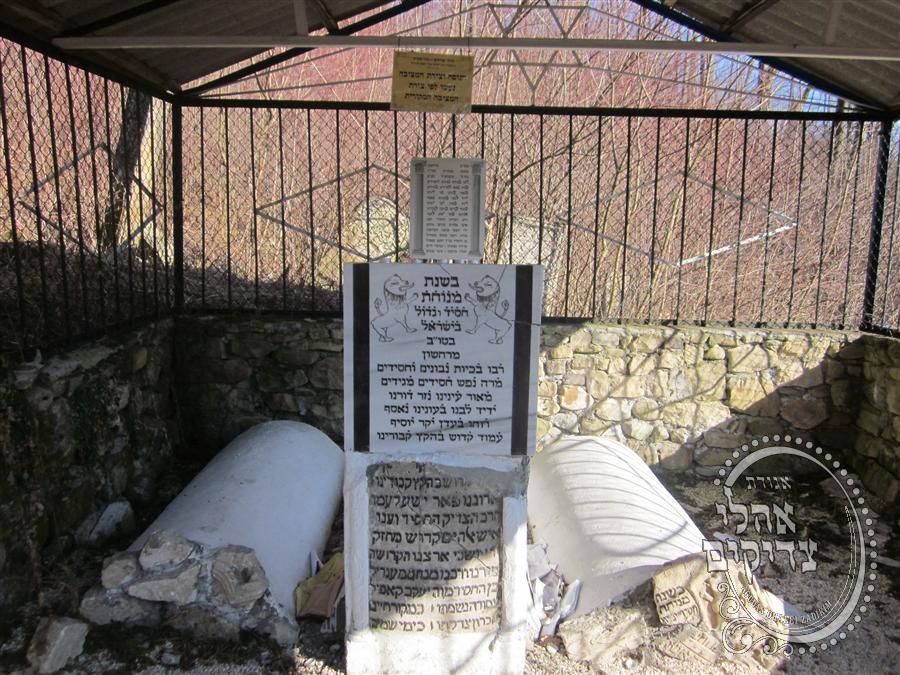
Rav Menachem Mendel Hager of Kossov zt"l
Rav Menachem Mendel Hager of Kossov was the founder of the Vizhnitz and Kossov dynasties and author of Ahavas Sholom. The son of Rav Yaakov Koppel Chassid, Rav Menachem Mendel was a student of Rav Moshe Leib of Sassov, Rav Tzvi Hirsch of Nadvorna, and Rav Zev Wolf of Tcharne-Ostra. His grandson was Rav Menachem Mendel of Vizhnitz.
Stories of Rav Menachem Mendel Hager of Kossov zt"l

The Imrei Chaim of Vizhnitz told how the Ahavas Shalom used to daven so loudly that his voice carried very far, so much so that the shepherds in the mountains of Kosov knew what time of day it was based on the Ahavas Shalom’s tefillos. For example, when he recited Ha’aderes veha’emuna lechai ha’olamim – the shepherds would turn to one another and say in Russian, “Panyeh Rebi chai olamim – the Rebbe has reached chai haolamim,” and they knew what time of day it was.
Rav Uri of Strelisk was the Ahavas Shalom’s brother-in-law. One day he came to Kosov for a visit. A poor Chassid, who had no means to marry off his daughter, approached the Ahavas Shalom and asked him for a yeshua to help marry off his daughter. “My brother-in-law, the great tzaddik, Rav Uri, is here visiting,” explained the Ahavas Shalom. “Please go to him and he will help you.”
The Chassid went to Rav Uri and explained that he had been sent by the Ahavas Shalom to get a beracha and a yeshua to marry off his daughter. “Please take the zechus (merit) I have accrued today from my davening; that zechus will help you marry off your daughter.”
The Chassid thanked him and headed back to the Ahavas Shalom. “No, no, now that won’t do at all! Go back and tell my brother-in-law that it’s not enough,” replied the Ahavas Shalom when he heard what his Chassid reported.
The Chassid returned to Rav Uri and repeated what his Rebbe had said. “Well, in that case, here, take the zechus of the mitzva of tefillin which I donned today as well.”
But that didn’t work either. “Oh no, surely that’s not enough to help marry off your daughter.” The Ahavas Shalom shook his head sadly. “Go back and tell my brother-in-law that it’s not good enough.” Again the Chassid dutifully returned to the Strelisker and again Rav Uri “gave him the gift” of the zechus of another mitzva. When the Chassid came back a third time with his Rebbe’s complaints, Rav Uri rushed to see his brother-in-law and to ask him face to face what was wrong.
“Please explain what zechus I should give to help the Chassid marry off his daughter.”
“Come,” said the Ahavas Shalom, “come together with me and we shall go from house to house among the Yidden till we have collected the sum this poor Chassid needs, and in that zechus he will be able to marry off his daughter.” And so they did.
Rav Chaim Meir of Vizhnitz once related how his ancestor Rav Menachem Mendel of Kossov, author of Ahavas Shalom was a disciple of Rav Meshulem Feivish of Zaberazh author of Yosher Divrei Emes and was once travelling to visit his Rebbe.
Due to his poverty he travelled on foot and he stopped at a local inn and asked the innkeeper for some lodging for a weary Jewish soul. “Please,” inquired the Kossover, “perhaps you have some small morsel for me before I lie down for the night, as I have not tasted any food all day,” explained the impoverish Rav Menachem Mendel to the kind innkeeper. The innkeeper, however shook his head sadly, “unfortunately, I myself have not eaten today at all, neither have my little ones and I do not even have any food for them for tomorrow either,” he explained sadly. That night, Rav Menachem Mendel slept fitfully, it was not hunger however that bothered his sleep, it was his feelings of sadness for the innkeeper’s poor starving children.
Then next day after bidding a sad farewell, he embarked on the next leg of his journey when a large coach happened by. The wealthy Jew in the coach had spotted the traveler and hastened his driver to halt the fine horses so that he might ask the traveler where he was headed. “You there, Reb Yid, where are you headed?” “I am travelling to vidit my rebbe, Rav Meshulem Feivish in Zaberazh,” explained Rav Menachem Mendel to the wealthy man.
“Why, what a stroke of Divine Providence!” exclaimed the wealthy man, “I too am headed in that direction to visit the Rebbe myself. Allow me the honor of doing a mitzvah and of inviting you to travel with me rather than on foot.” The Kossover began to think, and he quickly came up with a plan to help the poor innkeeper and his starving family. “Reb Yid, I would be honored to travel with you if you will also give me one hundred gulden,” remarked Rav Mencahem Mendel to the surpised wealthy man.
The wealthy man was beside himself, “what does he think this beggar? What chutzpa?! I offer him a ride and he ask for such a large sum as a donation!” he said to himself. Nonetheless not wanting to offen the poor man and not wishing to give up on the mitzvah he replied, “Listen I will be happy to give you five gulden as well, now come and climb on,” he invited.
But Rav Menachem Mendel stubbornly refused, “Sorry but in that case I will continue on foot,” and so saying he began walking. The wealthy Jew was stunned, he ordered his driver to draw level with the pauper and he made a second offer, “Listen, I wish to take you with me, why should you travel on foot for such a long journey, here, I am reasonable I will offer you twenty gulden, OK?” He finished with a smile expecting Rav Menachem Mendel to join him and climb on. However the Kossover’s reply quickly wiped the smile off his face, “I am sorry but if you cannot give me a hundred gulden, and no less, we will part ways, thanks but no thanks,” and so saying he continued on foot. The wealthy man was incensed, what chutzpah! At the same time he was impressed, somehow this poor man’s impudence seemed to stem from something other than sheer stubbornness, his holy visage shined with an otherworldly light, and his shining countenance moved something in the wealthy man.
He realized that they were both travelling to the rebbe, he wanted the mitzvah of taking this obviously poor man with him and so he relented and agreed, “Alright have it your way, one hundred gulden, now please climb on and lets us be on our way.” If he was incensed and surprised before, it was nothing to the shock he received when Rav Menachem Mendel replied, “Thank you for your generosity, Reb Yid, but I cannot accept unless you turn your coach around and accompany with the money back to the village behind us to the local inn,” and he explained what the money was intended for.
The coach man was dumbfounded, on the one hand he was impressed that the sum was for charity and to feed starving children, and that this obviously poor man was not interested in any himself, on the other hand this entire episode was delaying him and now the stranger wished him to turn around!
However he relented and did so. Rav Menachem Mendel entered the inn together with the wealthy Jew and he handed the delighted innkeeper, the gift of one hundred gulden, “Go and purchase some brandy and spirits so that you can do business, make a living and feed your family, but please keep tabs on your earnings,” whispered the Kossover to the innkeeper, “for one day you will need to share your wealth with this man here with me today.”
And so it was that the wealthy man and Rav Menachem Mendel arrived in Zaberazh and were enthusiastically received warmly by Rav Meshulem Feivish whose gabbai came out to greet them with calls of “Beruchim haBaim, Osay Mitzvah – Welcome o’ doers of good deeds!”
Many years later, Rav Menachem Mendel now Rav of Kossover and a leader and rebbe in his own right spotted the formerly wealthy merchant as a beggar begging for alms and charity in Kossov. The wheel of fortune had turned and he had become poverty stricken, while the formerly destitute innkeeper had become wealthy.
Now the Kossover called his gabbai over and had him escort the formerly wealthy Jew into the Rebbe’s chamber. There the Rebbe wrote him a letter of introduction reminding the innkeeper of his promise and of the Kossover’s instructions years before. “Go to this inn and claim your share,” instructed the Kossover. The formerly wealthy beggar did so and his Mazal was overturned and he too prospered.
“And that,” concluded the Imrei Chaim of Vizhnitz, is how my ancestor helped other Jews!”
The Ahavas Sholom had a Chassid who was an innkeeper. His small inn and tavern were leased from the local Polish nobleman and after the Jew had paid the poritz, his parnossa was meager indeed. He was always late on his payments and was always coming to the Kosover Rebbe and asking for help. The Ahavas Sholom would, on these occasions, open his desk drawer and hand the Chassid whatever money he needed to pay off his debts. When the Ahavas Sholom passed on, and his son the Toras Chaim took over as Rebbe, the Chassid continued to come and visit the new Kosover, yet now, when he described his financial woes and his need for funds, the Toras Chaim did not give him any money, only a berocha.
“Rebbe, what will I do with your berocha?” said the bewildered Chassid. “I need cash now! Your father used to give me the money I needed, not just a berocha!” said the exasperated Chassid.
“My father,” replied the Toras Chaim, “had a special berocha from Shomayim that his desk and his drawers should always help the needy and never lack funds. He could always open his desk drawer and find whatever he needed. I have not inherited this berocha and thus cannot do so, but don’t worry, the Cossack has plenty of money to spare – much more than I – and he will give you!”
And on that enigmatic note the Rebbe bid his Chassid farewell.
The Chassid did not understand the Rebbe’s strange references to imaginary Cossacks. He only understood too well that without the money he needed to pay the poritz, he was now in serious trouble. He went home sad and distressed. When his wife asked if the Rebbe had given him the money, the Chassid answered bitterly, “He is no Rebbe.”
He went sadly to sleep and was awakened suddenly in the middle of the night to the sound of loud knocking and banging on his front door. When he opened it, he saw standing before him a stranger, a tall Cossack who immediately told him, “I am in a rush to join the war and I had to leave in haste. I have no one trustworthy to guard my money until I return…if I ever come back, that is. When I asked around these parts for someone I could trust with my life they all said that you were the most trustworthy person. Here, take this money,” and he handed the bewildered Jew thousands of gold coins. “Safeguard it for me until I come back. If I ever come back, give it to me!” So saying, he left into the night without another word.
The Jew hid the money and the next day set out for Kosov. When he told the Rebbe the strange tale, the Rebbe smiled and said, “There is no longer any Cossack, and no longer any war. He is never coming back – the money is yours!”
Needless to say, the Chassid’s faith in his Rebbe was restored and he had plenty to pay the poritz. (Sarfei Kodesh 433–434)