
Chacham Ovadiah Yosef zt"l
הרב עובדיה בן יעקב יוסף זצ"ל
Cheshvan 3 , 5774
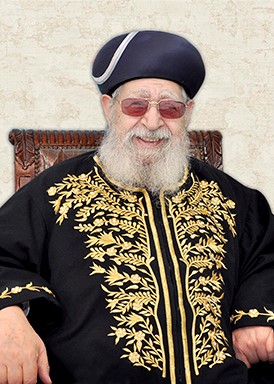
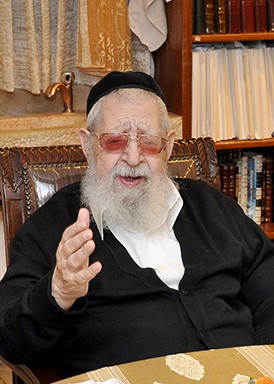
Chacham Ovadiah Yosef zt"l
HaRav Ovadia Yosef (3 Cheshvan 2013), born in Baghdad, Iraq, was the Sephardi Chief Rabbi of Israel from 1973 to 1983, and the founder and long-time spiritual leader of Israel's "Shas" political party. His decisions and responsa in Jewish Law have influenced an entire generation of Sephardic rabbis, and are often consulted by Torah scholars across the spectrum.
http://www.ascentofsafed.com/cgi-bin/ascent.cgi?Name=rebbeBios
Stories of Chacham Ovadiah Yosef zt"l

“Warm yourself by the fire of the Sages but beware lest you be burned by their coals; their bite is like a fox, their sting like a scorpion and their words are fiery coals” (Avos 2:15).
Rav Ovadia Yosef used to illustrate our Mishna with the following story about the chief Rav of Constantinople, the Saba Kadisha, Rav Shlomo Alfandri:
After the Spanish Expulsion, Turkey was once of the countries that welcomed Jews in the hopes that their commerce would enrich her coffers. Among the relaxed laws enacted to welcome them was an exemption from army service so that Jewish young men would not be caused to desecrate Shabbos and be exposed to treif food and influences.
However, as time went on and the new sultan, Abid Al Hamid, emerged, he acted to conscript Jews into compulsory army service of the Ottoman Empire. Those Jews close to the ruler and his underlings sought to find favor in their eyes and they urged their Jewish brethren to comply with the sultan’s wishes. The body governing the Jews’ spiritual wellbeing was also in favor of army enlistment, and in the end the only obstacle was the Firman, a document that had been granted by the previous king to the Chacham Bashi, Rav Moshe HaLevi. Using the previous exemption, Rav Moshe HaLevi could prevent the enlistment of the Jews, and the pressure mounting against him was enormous. The Jews wanted to appease the new sultan and garner his favor and the favor of other government ministers, and chief among them was one of the wealthiest Jews in Constantinople, who was very close to the sultan. They all began to pressure the Chacham Bashi to relinquish the previous Firman of exemption and hand it back to the sultan.
One of the lone opposing voices that stood staunchly against enlistment was that of the chief Rav of Constantinople, Rav Shlomo Eliezer Alfandri. He argued that enlistment would cause mass chillul Shabbos and exposure to eating treif and foreign influences. When the sultan heard this he was enraged and he summoned Rav Alfandri. When the Rav came before Abed Al Hamid, the sultan was struck dumb by his holy appearance and dared not harm the Rav. However, the wealthy merchant from Constantinople continued to disagree with the Rav and sought all ways and means to ensure that army enlistment would become a reality. Finally, Rav Alfandri told him that if he would not give up and change his ways, his end would be bitter indeed. When the latter refused, the Rav turned away sadly and threatened him with one final stroke, declaring that Hashem would not forgive him for his actions.
The wealthy merchant left his home that day to head out to the sultan and find a way to achieve his goal, but he never made it there! As he crossed his own threshold he suffered heart failure and died on his own doorstep!
During the levaya, Rav Alfandri forbade anyone to eulogize the niftar. Even though the wealthy merchant’s son and other dignitaries and government officials begged the Rav to allow a hesped for the sake of the honor of the sultan and the man’s high rank and position, the Rav stood his ground and refused. “You talk of his honor and the sultan’s but I am an Eved Hashem; I stand for the honor of Hashem, Master and King of the World. It is His honor I seek and I will not change my mind or bend my will to you.” Even the hefty bribe of a purse full of money would not sway the Rav, and the man was buried in dishonor and disgrace.
Afterward, Rav Alfrandri was awarded by the sultan the title of Chacham Bashi, when he was appointed chief Rav of Damascus. There he ruled as Rav and Dayan with the legal backing of the authority of the sultan as well as the Torah and was thus able to run the Jewish community as he saw fit and punish any transgressors who would oppose him. (Anaf Etz Avos p. 136–7)
Rav Ovadia Yosef used to illustrate this Mishna with the following story about Rav Yaakov of Lisa author of Nesivos HaMishpat:
Two litigants once came before Rav Yaakov Lorberbaum of Lisa arguing over a golden dinar. “Rabbi, I was walking in the shuk, and I found a golden dinar on the floor and picked it up,” said one.
“It’s mine; it had just fallen out of my pocket!” interrupted the other “I never gave up hope of recovering it so it still belongs to me!”
There seemed something about the second litigant’s shifty manner and oily tone that gave away that he was a thief and a scoundrel. Rav Yaakov’s senses told him that was that this man was dishonest.
Determined to back up his intuition with something more with which to judge the case properly, he sent second litigant out of the room and called in the finder of the gold coin. Rav Yaakov took the coin and called out in a voice so loud that anyone in the adjoining room could hear, “See here, see this notch on the coin? It’s like a scratch just below the first letter. It’s a true siman [as is found in] (Gittin 27b)! If anyone were to use that siman as proof, this coin would surely be given back to him!”
Rav Yaakov then called back the second litigant who had been eavesdropping the entire time.
Rav Yaakov turned towards the second litigant and asked, “Can you offer any siman as proof that this dinar is yours?”
“Yes rabbi!” he answered happily, “There’s a scratch below the first letter which must be as legitimatea siman as any to prove that this is my coin!”
The rabbi opened his hand and showed the would-be-thief the coin. The satisfied smirk of this shady character quickly became a frown as the rabbi said, “Well, I guess this isn’t your coin then, because this coin is clean as a whistle-- no scratches on it at all. I guess you should go and look for the coin that you dropped because this coin belongs to the one who found it!” (Anaf Etz Avos p. 4)
“Rav Elozor of Bartosa used to say: Give Him what is His, for you and whatever is yours are His” (Avos 3:8).
When Rav Ovadia Yosef used to teach Pirkei Avos he would illustrate the above Mishna with the following story:
Once, when the Arizal was studying the secrets of Torah together with his talmidim, all of a sudden he paused and recited the blessing over bad news, “Boruch Dayan HaEmes – Blessed is the True Judge.”
“I hear a heavenly voice that a decree has been proclaimed in the Heavens above,” he said, quoting Doniel 4:14. “‘By the decree of the wakeful ones is the matter and by the word of the holy ones is the edict.’ It has been decreed that a swarm of innumerable locusts will overrun the city of Tzefas and devour all vegetation and all fruits and trees, as well as all the plants growing in the fields. The residents will starve and be left without sustenance! This will all come to pass because of one poor Tzaddik, a Talmid Chochom named Yaakov Altretz, who is fasting and wallowing on the ground with complaints against Hashem that he is left bereft of all livelihood and means of support and no one has any mercy on him. Hashem cannot bear to remain silent because of this pauper’s prayers and sufferings, and His anger has been kindled against the residents of Tzefas, his neighbors, since no one is doing anything to help the pauper and no one pays attention to him or his plight. This is the decree, and now, my brothers and friends, I ask you to make a collection for tzedoka and send one of us to purchase food and provisions; the rest of the money, give to this poor man immediately to ease his pain and suffering and end his hunger.”
Rav Yitzchok Kohen quickly got up, gathered money from the chevraya and headed to the local grocery, where he purchased food and provisions. He took these and the rest of the money and went off to find Rav Yaakov Altretz lying on the floor in misery and hunger. Rav Yaakov was a water carrier by trade and that morning his clay pails with which he would draw water from the well had fallen and broken. He was left with no means to purchase new ones and no means of support. He had no money and no food, and had not eaten that day.
Rav Yitzchok grasped Rav Yaakov by the hand, helped him get up and sat him at the table. He revived him with food and drink and presented him with provisions to sate his hunger and slake his thirst. He also gave him the rest of the money so that he could now purchase new pails to draw water from the well and continue to earn a living. Finally, he asked him to daven to Hashem for forgiveness for Tzefas that the decree should be canceled. “Because of you a terrible decree has been cast against Tzefas that a plague of swarming locusts devour our food. Now ask Hashem to have mercy. Please, from now on, be careful how you complain and what you say against Hashem’s ways,” Rav Yitzchok said to Rav Yaakov. He accepted the rebuke and promised to never do it again. He got up and tearfully davened, asking Hashem to annul the decree and remove His anger from the people of Tzefas.
Afterward, Rav Yitzchok Kohen returned to the Arizal and related what he had done and what had happened and the Arizal said, “Know now that your tzedoka for the poor man has canceled the decree of the locust plague. Thank goodness for Hashem’s mercy and kindness!” They resumed their study once more, when all of a sudden the sky darkened. All the talmidim became worried and terrified at the sight of clouds of innumerable locust swarms flying over the city, darkening the skies of Tzefas.
“Do not be alarmed, and don’t worry,” the Arizal reassured them. “As I said, the decree has been annulled. The locusts just haven’t yet received the message.” As soon as he had said this, a great gust of wind came from the sea and cast the entire swarm of locusts into the depths of the ocean, where they all drowned; not one of them set foot in Tzefas. Hashem saved the residents of Tzefas in the merit of the tzedoka and chessed that they did for Yaakov Altretz. Rav Shlomo Shlumiel was an eyewitness who testified as to the veracity of these events and was personally acquainted with the pauper, who was a Tzaddik and Chassid and well versed in the Torah by heart. Afterward, he was appointed Av Bais Din in Tripoli. Thus was fulfilled the dictum of Chazal in Avos: “Whoever fulfills the Torah in poverty shall in the end fulfill it in wealth”. (Anaf Etz Avos p. 181–182)
Avos 2:14 Which is the bad road, the wrong path that you shouldn’t travel on? Rebbe Shimon said: He who borrows and fails to repay. For he who borrows from man is likened to he who borrows from Hashem.
Rav Ovadia Yosef used to illustrate our Mishna with the following story:
Rav Eliyahu Lopian told the following amazing story in the name of Rav Yisroel Salanter and Rav Chaim of Volozhin:
A star prize pupil in Yeshivas Etz Chaim of Volozhin once got sick and required medical attention. Rav Chaim asked another bachur to accompany the sick talmid while they travelled together to the sick talmid’s home.
By nightfall they reached a village and decided to spend the night there in a local inn. In the morning, the proprietor of the inn named a price for their room and board. The melave who accompanied the sick talmid paid for his lodgings whereas the sick talmid had no money. “Don’t worry you will pay me back a different time,” reassured him the innkeeper, “you are a yeshiva bochur so I can tell that I can trust you,” he concluded.
When they arrived at their final destination, the sick talmid handed over the money to his friend and asked him to repay the debt. The friend took the money, but on the way back he simply forgot about it and went straight back to the yeshiva without repaying the debt. Meanwhile, unfortunately the sick talmid’s condition worsened and eventually his health deteriorated and he passed away and died. Word of his passing reached the yeshiva where his fellow tamidim cried, mourned him and eulogized the sick bachur.
Some days later Rav Chaim Volozhiner was walking down the corridor when he was astounded to see with his own eyes the very same bachur who had died walking down the corridor of the yeshiva towards him!
Rav Chaim recovered himself and approached the deceased bachur and asked him what had been ruled regarding his standing in the heavenly court of beis din shel ma’alah. The deceased responded that in shomayim they began counting his merits in Torah study and mitzvah observance and weighing them against his sins and demerits and misdeeds and they ruled that he was to go to Gan Eden. However, when he arrived one dark angel of destruction barred his way and claimed that he was a thief who had never repaid his debt to the innkeeper for his room and board at the inn. Now although he was blameless, he had asked his friend to repay the debt, still his friend forgot, and since the innkeeper never forgave the debt and expected him to pay and had never received the money the debt was still outstanding and remained unpaid. His way to Gan Eden was barred! Since the beis din shel ma’alah saw he was blameless they gave him dispensation to come back down and ask his rebbe and rosh yeshiva to pay back his debt. As the bachur concluded his other worldly request he vanished and was gone!
Rav Chaim summoned the bachur who had travelled and accompanied the sick deceased talmid and the latter admitted sadly that he had simply forgotten about repaying the debt. “Go quickly and travel to the inn and pay back the debt immediately,” Rav Chaim ordered him. He did so and repaid the debt and the neshama of that deceased bachur was never seen again, his soul moved on to its rest as all its outstanding accounts had now been settled. This story was handed down to Rav Yitzchok Zev Soloveitzchik of Brisk who used to tell it in the name of Rav Yisroel Salanter and testified as to its veracity as true story. (Anaf Etz Avos, page 125)
“Be cautious in judgement” (Avos 1:1)
Rav Ovadia Yosef used to illustrate this Mishna with the following story:
There was once a Jew who owned a wine store. In the cellar were stored many barrels of wine worth a hefty sum of money. The wine merchant had a helper who worked in his store. One day the helper decided to hide his money pouch among the barrels in the cellar. The pouch contained all his savings, some two hundred gold rubles that he had scrimped and saved and when Shabbos approached, he decided that the perfect place to hide the money would be in the locked cellar among the barrels.
On Motzo’ei Shabbos, he was distressed to discover that his money was gone. When he approached the wine merchant, his employer denied any knowledge of the pouch or its contents. He came before Rav Shlomo Kluger, and cried and begged the Rav to help him recover the lost money.
“Unfortunately, I suspect my employer, for the cellar was locked and no one else has the keys,” cried the helper.
Rav Shlomo Kluger summoned the wine merchant and asked him about the missing money, but the wine merchant denied any knowledge of the money or its whereabouts.
“You know I also trust you and I know that no Jew would have done such a dastardly, nefarious deed to steal this poor man’s money.”
The wine merchant smiled and nodded his head, agreeing with the Rav.
“I must therefore conclude that a goy broke into your cellar and stole the money, and I am sure you understand the ramifications of this.”
At this point the wine merchant’s smile vanished and was replaced by a look of growing concern and unease.
“Yes, the only resolution now is for me to rule that all your wine is forbidden for consumption. I will summon the shamash of the Bais Din and issue a decree and proclamation to publicize that your wine has been exposed and is no longer kosher, since you surely know that the Halocha forbids wine that has come in contact with goyim!”
When the wine merchant heard this he grew pale, realizing that he was liable to lose out a fortune of money many times what the money in the pouch had been worth.
“Well, actually, now that the Rav mentions it,” he hemmed and hawed, “I do seem to remember finding a pouch with some money.”
The Rav refused to accept this testimony until he ran home and came back with the money, returning it to his helper and everything was settled. (Anaf Etz Avos page 4)
Rav Yosi says: Apply yourself to the study of Torah, for it is not something you can just inherit” (Avos 2:17).
Rav Ovadia Yosef used to tell the following story about the Bais HaLevi to illustrate this Mishna:
When Rav Yosef Dov Soloveitchik was still a bochur learning in the Volozhiner Yeshiva, he heard from his uncle, Rav Yitzchok, about the great Gaon Rav Shlomo Kluger, his greatness in Torah and Yiras Shomayim. This sparked in him a great desire to meet Rav Kluger and discuss words of Torah and bask in his glory. The only problem was that Rav Shlomo Kluger lived in Brodie, and Galicia and Volozhin were very distant from one another. The young Yosef Dov had no money and no way of reaching his far-off destination. One day, he overheard guests in the Yeshiva discussing their travel plans, saying that their destination lay in Brodie. Now he hatched a plan to fulfill his dream! He approached the coachman and explained to him that he wanted to hire himself out as a wagondriver.
“Surely the journey is long and you need the extra help? I can take over the horse’s reins so you can rest and help you feed and harness the horses when we stop over.”
The coachman looked at the pale, scrawny frame of this Yeshiva bochur, who was not used to doing any hard-physical labor, and doubted that he could handle the job.
“And what are you asking as a wage?” he countered skeptically.
“I have a need to travel to Brodie and so I am willing to work for free. My sole wage will be a bed to sleep in when we stop for the night and some simple food for the journey.”
That settled it – free help was an idea that appealed to the coachman.
“All right,” he agreed. “Let’s start by harnessing the horses and readying the wheels for the journey.”
The young Yosef Dov had never done any manual labor. His soft hands, so used to caressing pages of the Gemora, were soon bruised and bleeding from the hard leather harnesses, and burned from the hot tar and pitch used to smear the coach wagon’s wheels for the long journey. Nonetheless, young Yosef Dov did not complain. As tired as he was, he sat holding the reins while the coachman snoozed and his young mind reviewed the Torah he was excited to discuss with Rav Shlomo Kluger! He was so absorbed that the horses wandered off the road. The bumps woke up the coachman; startled, he quickly took charge of the horses and set them back on the road.
“You lazy slouch!” he yelled at the poor Yeshiva bochur and aimed a good slap right across his face. “That will teach you to keep the horses on the road!” he berated him.
Yosef Dov said nothing; he accepted the rebuke and resolved to work harder. Eventually, after several harsh days of travel they reached their destination. The young Yeshiva bochur knew no one in Brodie and immediately began asking for Rav Shlomo Kluger’s home. When the door was opened, they found a dirty, unkempt, disheveled vagabond at the door, in place of the Yeshiva bochur that this tramp claimed he was.
“You say you are the grandson of Rav Chaim of Volozhin?” the servants said doubtfully, and even Rav Shlomo Kluger had his own doubts as to the identity of the rough-looking youth whose torn clothes, dirty, cut hands and appearance were more of a coach driver than that of a Yeshiva bochur-grandson of Talmidei Chachomim. “Where is your letter of introduction?”
Yosef Dov had none, but in place he pleaded to show his prowess. “Let me instead discuss the answer to the difficult Rambam I have prepared,” and so he demonstrated his Torah knowledge and convinced Rav Shlomo Kluger of his true identity.
“I apologize for mistaking you and not believing your word. Your Torah is true and to make it up to such a budding Gaon and Talmid Chochom, this Shabbos in shul, you will be honored to deliver the derosha in my place!” invited Rav Shlomo Kluger.
Brodie was filled with Talmidei Chachomim and the entire town, young and old, packed the shul, to see and hear the young prodigy that Rav Shlomo Kluger had honored to deliver the derosha. When I say everyone came, I mean everyone, even our coachman! When he saw who the Rav and scholar delivering the Shabbos derosha was he almost fainted! He began to cry and sob hysterically! He approached young Yosef Dov and begged his forgiveness.
“I am so sorry I treated you so harshly and even slapped you!”
Rav Soloveitchik forgave him wholeheartedly. “If you had slapped me for not knowing Torah and called me a simpleton and one who doesn’t know how to learn, you would be liable, but you told the truth. After all, when it comes to knowing how to handle the coach and drive the horses I am a true am haaretz!” (Anaf Etz Avos 2:17)
Rabban Gamliel said, “Make a rav for yourself and distance yourself from doubt and do not tithe by estimating.”
When Rav Ovadia Yosef used to teach Pirkei Avos he would illustrate the above Mishna with the following story:
Rav Mordechai Bennet was once in the resort town of Carlsbad vacationing at the spa, when he met a reform rabbi. The German reformer bragged to Rav Mordechai how all matters of Jewish ritual and law were under his auspices and how his ruling on all matters of halacha was the final word.
When Rav Mordechai tried to discuss Torah with him, he was horrified to discover that the reform rabbi was nothing but a complete am ha’aretz who knew absolutely nothing when it came to Torah and halacha!
“Tell me rabbi,” Rav Mordechai probed, “What then do you do when matters of kashrus are brought before you for a ruling? Let us say a chicken or fowl with a needle piercing its gizzard or a broken wing joint is brought before you. How do rule whether it is kosher or treif; how can you tell?”
“Well,” answered the flustered rabbi , I just rule stringently and declare it treif every time; I leave no room for doubt and I am machmir!”
“Let me tell you a story, said Rav Mordechai with a smile, “There was once a simple country bumpkin, a Jew who lived far away from the city in a rural village. He raised geese, fowl, and duck, and when they were brought to the slaughter, he would take them to the local shochet. The country Jew would then sell the meat and fat on the market and earn a living. Whenever they encountered a shaila – a halachic question as to the kashrus of the fowl (like the aforementioned cases of a needle or broken wing), he would saddle up his horse and ride into town to ask the rav to pasken and rule on the kashrus of the bird.
“Once, a prankster wandered into the village and met this simpleton. He realized that this was an opportunity to have a good laugh. ‘Listen my good man; let me give you some good advice,’ said the joker to the simpleton. ‘Why waste time and expense of traveling all the way to the city of Frankfurt to ask the rav your kashrus questions, especially in winter when the roads are in disrepair! Listen to me; you should let the dog decide and save yourself from traveling. You see, it says clearly in the Torah regarding treifos: “L’kelev tashlichin oso – throw treif to the dogs.” So, this pasuk proves that all treif meat really is the property of the dog. That’s your litmus test. Any fowl that has any doubt regarding its kosher status, just place the meat in front of the dog. If the dog eats it, this proves it is treif since it is his. If he leaves it alone, this will ‘prove’ that it is kosher!’ The simpleton’s face lit up, ‘What a great idea!’ And so the dog became the posek and amazingly, whenever a fowl with any question was placed before him, the hound quickly devoured the meat. After a month like this went by, our simpleton decided that enough was enough and he saddled his horse and headed off to the city of Frankfurt to see the rav. The rav inquired about his long absence. “Why have I not seen you for weeks? Did you not have any kashrus questions?”
“I did Rabbi, but you see,” answered the simpleton “I had many shailos with the chickens and I let the dog resolve them.”
“I see,” said the rav, “and so why did you come here now?”
“Well, that’s just it; the thing is, my dog is just too machmir; he only knows how to rule that the chickens are treif each time!” explained the simpleton.
Rav Mordechai concluded his tale and turned to the reform rabbi. “Looks to me like you share the same methodology with that dog in ruling stringently that all questions in kashrus are treif, eh?” (Anaf Etz Avos pp. 61-62)
“Rav Elozor Ish Bartosa says: Give Him what is His, because you and yours are His” (Avos 3:8).
Rav Ovadia Yosef used to illustrate our Mishna with the following story:
Rav Menachem Mendel of Rimanov once sat studying and teaching Torah with his talmidim when a pauper entered the Bais Medrash. Some people naturally awaken sympathy and our pauper was an especially bedraggled and sad sight that tugged at the Tzaddik’s heartstrings. The Rebbe sent his gabbai to fetch a golden dinar from his wallet in the next room and the Rebbe handed the surprised and grateful pauper one gold coin. The poor beggar was dumbstruck and overjoyed at his good fortune. A gold dinar was a handsome, large donation, and he effusively thanked the Rimanover and went on his way.
Afterward, the Rebbe had second thoughts. He began to feel troubled that he had given the pauper tzedoka out of feelings of mercy, compassion and sympathy, rather than to fulfill the mitzva of tzedoka for the sake of Hashem, as Rashi comments on Teruma – “‘Take teruma and give it lishmi – for the sake of My Name,’ says Hashem.” The Rebbe decided that he would call his attendant again and send him after the pauper.
The pauper was meanwhile happily on his way, smiling at his good fortune. The poor man had gone some distance when behind him he heard the Rebbe’s attendant calling after him, running to catch his breath. The pauper froze and his eyes darkened. “Oh no! Surely the Rebbe made a mistake when he gave me a gold dinar and he has sent his gabbai after me to exchange it for a silver one!”
Still, having no choice, he turned sadly around and headed back to the Rebbe’s hoif, following the gabbai’s lead.
When they returned, the Rebbe had the gabbai bring the wallet and to the pauper’s total astonishment, not only did the Rebbe not take his gold dinar away, but he proceeded to hand him another gold coin! This was too much! The pauper smiled, turned to the Rebbe and taking courage from the Tzaddik’s kindness, asked boldly, “Rebbe, I am sorry, I don’t understand. If Your Honor wished to give me two gold coins, why couldn’t the Rebbe have done so at once rather than call me back? The gabbai gave me quite a turn and I suffered a fright and was very downcast and disappointed until just now,” he concluded, confused.
The Tzaddik smiled and explained, “In Parshas Re’eh the pasuk tells us noson titein – ‘you shall surely give tzedoka’. Why does the pasuk use a double expression? It tells us that if you give out of feelings of sympathy, give once more for the sake of the mitzva. This is what I did. The pasuk also says, ‘Your heart shall not be evil when you give him’. I interpret this pasuk to mean that the first time you give tzedoka do not do so because of the feelings in your heart, that you feel bad for the pauper; therefore give again, and do so for the sake of mitzvas tzedoka. (Anaf Etz Avos p. 183)
Divrei Torah of Chacham Ovadiah Yosef zt"l
avos chapter 6 mishna 6
The Torah is acquired in 48 ways:
[One of these is] Love of Rebuke
When Rav Ovadia Yosef used to teach Pirkei Avos he would illustrate the above Mishna with the following story:
Rav Bunim of Peshischa once came before his master and rebbe, the holy Chozeh of Lublin, with a tearstained face and eyes red and puffy from crying. “What happened?” asked the Chozeh.
“Someone insulted me and rebuked me,” Rav Bunim said.
“And what did you do?” asked the Chozeh.
“I kissed him,” answered Rav Bunim to the surprised Chozeh.
“Who was this?” asked the Chozeh. It was the Shevet Mussar by Rav Eliyah HaKohen. His words of mussar and rebuke moved me and touched my heart so much so that I cried. When I finished, I closed the sefer, kissed it, and replaced it on the shelf. (Anaf Etz Avos p. 410)
repaying a debt
Avos 2:14 Which is the bad road, the wrong path that you shouldn’t travel on? Rebbe Shimon said: He who borrows and fails to repay. For he who borrows from man is likened to he who borrows from Hashem.
Rav Ovadia Yosef used to illustrate our Mishna with the following story:
Rav Eliyahu Lopian told the following amazing story in the name of Rav Yisroel Salanter and Rav Chaim of Volozhin:
A star prize pupil in Yeshivas Etz Chaim of Volozhin once got sick and required medical attention. Rav Chaim asked another bachur to accompany the sick talmid while they travelled together to the sick talmid’s home.
By nightfall they reached a village and decided to spend the night there in a local inn. In the morning, the proprietor of the inn named a price for their room and board. The melave who accompanied the sick talmid paid for his lodgings whereas the sick talmid had no money. “Don’t worry you will pay me back a different time,” reassured him the innkeeper, “you are a yeshiva bochur so I can tell that I can trust you,” he concluded.
When they arrived at their final destination, the sick talmid handed over the money to his friend and asked him to repay the debt. The friend took the money, but on the way back he simply forgot about it and went straight back to the yeshiva without repaying the debt. Meanwhile, unfortunately the sick talmid’s condition worsened and eventually his health deteriorated and he passed away and died. Word of his passing reached the yeshiva where his fellow tamidim cried, mourned him and eulogized the sick bachur.
Some days later Rav Chaim Volozhiner was walking down the corridor when he was astounded to see with his own eyes the very same bachur who had died walking down the corridor of the yeshiva towards him!
Rav Chaim recovered himself and approached the deceased bachur and asked him what had been ruled regarding his standing in the heavenly court of beis din shel ma’alah. The deceased responded that in shomayim they began counting his merits in Torah study and mitzvah observance and weighing them against his sins and demerits and misdeeds and they ruled that he was to go to Gan Eden. However, when he arrived one dark angel of destruction barred his way and claimed that he was a thief who had never repaid his debt to the innkeeper for his room and board at the inn. Now although he was blameless, he had asked his friend to repay the debt, still his friend forgot, and since the innkeeper never forgave the debt and expected him to pay and had never received the money the debt was still outstanding and remained unpaid. His way to Gan Eden was barred! Since the beis din shel ma’alah saw he was blameless they gave him dispensation to come back down and ask his rebbe and rosh yeshiva to pay back his debt. As the bachur concluded his other worldly request he vanished and was gone!
Rav Chaim summoned the bachur who had travelled and accompanied the sick deceased talmid and the latter admitted sadly that he had simply forgotten about repaying the debt. “Go quickly and travel to the inn and pay back the debt immediately,” Rav Chaim ordered him. He did so and repaid the debt and the neshama of that deceased bachur was never seen again, his soul moved on to its rest as all its outstanding accounts had now been settled. This story was handed down to Rav Yitzchok Zev Soloveitzchik of Brisk who used to tell it in the name of Rav Yisroel Salanter and testified as to its veracity as true story. (Anaf Etz Avos, page 125)
avos chapter 1 mishna 16
Rabban Gamliel said, “Make a rav for yourself and distance yourself from doubt and do not tithe by estimating.”
When Rav Ovadia Yosef used to teach Pirkei Avos he would illustrate the above Mishna with the following story:
Rav Mordechai Bennet was once in the resort town of Carlsbad vacationing at the spa, when he met a reform rabbi. The German reformer bragged to Rav Mordechai how all matters of Jewish ritual and law were under his auspices and how his ruling on all matters of halacha was the final word.
When Rav Mordechai tried to discuss Torah with him, he was horrified to discover that the reform rabbi was nothing but a complete am ha’aretz who knew absolutely nothing when it came to Torah and halacha!
“Tell me rabbi,” Rav Mordechai probed, “What then do you do when matters of kashrus are brought before you for a ruling? Let us say a chicken or fowl with a needle piercing its gizzard or a broken wing joint is brought before you. How do rule whether it is kosher or treif; how can you tell?”
“Well,” answered the flustered rabbi , I just rule stringently and declare it treif every time; I leave no room for doubt and I am machmir!”
“Let me tell you a story, said Rav Mordechai with a smile, “There was once a simple country bumpkin, a Jew who lived far away from the city in a rural village. He raised geese, fowl, and duck, and when they were brought to the slaughter, he would take them to the local shochet. The country Jew would then sell the meat and fat on the market and earn a living. Whenever they encountered a shaila – a halachic question as to the kashrus of the fowl (like the aforementioned cases of a needle or broken wing), he would saddle up his horse and ride into town to ask the rav to pasken and rule on the kashrus of the bird.
“Once, a prankster wandered into the village and met this simpleton. He realized that this was an opportunity to have a good laugh. ‘Listen my good man; let me give you some good advice,’ said the joker to the simpleton. ‘Why waste time and expense of traveling all the way to the city of Frankfurt to ask the rav your kashrus questions, especially in winter when the roads are in disrepair! Listen to me; you should let the dog decide and save yourself from traveling. You see, it says clearly in the Torah regarding treifos: “L’kelev tashlichin oso – throw treif to the dogs.” So, this pasuk proves that all treif meat really is the property of the dog. That’s your litmus test. Any fowl that has any doubt regarding its kosher status, just place the meat in front of the dog. If the dog eats it, this proves it is treif since it is his. If he leaves it alone, this will ‘prove’ that it is kosher!’ The simpleton’s face lit up, ‘What a great idea!’ And so the dog became the posek and amazingly, whenever a fowl with any question was placed before him, the hound quickly devoured the meat. After a month like this went by, our simpleton decided that enough was enough and he saddled his horse and headed off to the city of Frankfurt to see the rav. The rav inquired about his long absence. “Why have I not seen you for weeks? Did you not have any kashrus questions?”
“I did Rabbi, but you see,” answered the simpleton “I had many shailos with the chickens and I let the dog resolve them.”
“I see,” said the rav, “and so why did you come here now?”
“Well, that’s just it; the thing is, my dog is just too machmir; he only knows how to rule that the chickens are treif each time!” explained the simpleton.
Rav Mordechai concluded his tale and turned to the reform rabbi. “Looks to me like you share the same methodology with that dog in ruling stringently that all questions in kashrus are treif, eh?” (Anaf Etz Avos pp. 61-62)