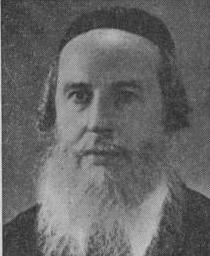
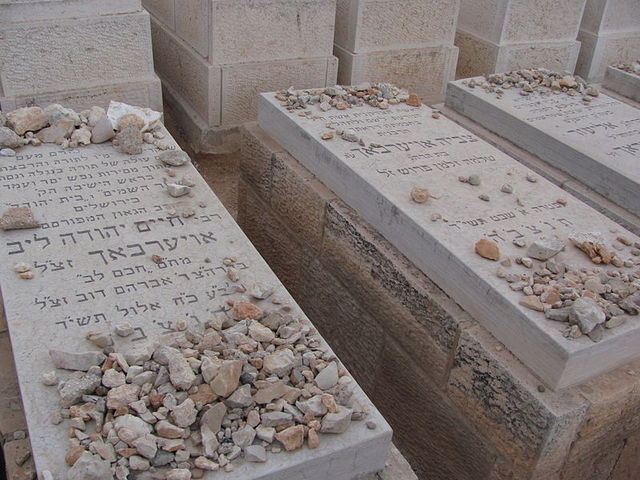
Rav Chaim Yehuda Leib Auerbach zt"l
הרב חיים יהודה לייב בן אברהם דוב אוירבך זצ"ל
Elul 28 , 5714
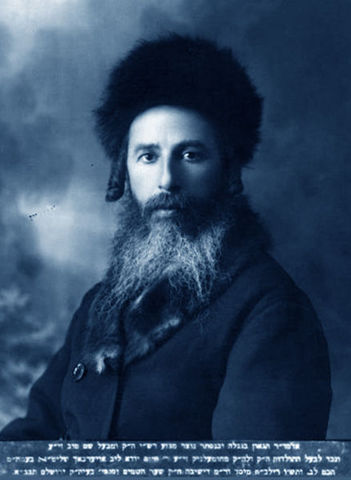
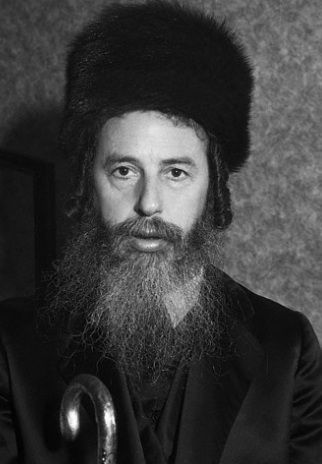
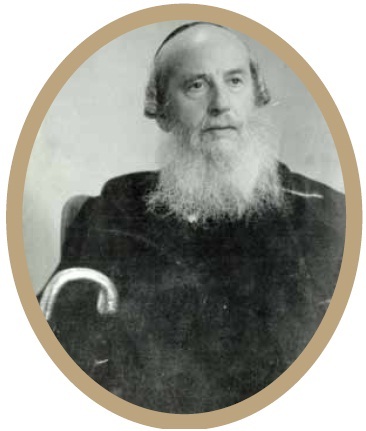
Rav Chaim Yehuda Leib Auerbach zt"l
Rav Chaim Leib was born in 5647/1887 and grew up in Yerushalayim. At the age of eighteen he received semicha from Rav Chaim Berlin of Yerushalayim. In 5667/1907 he married the daughter of Rav Shlomo Zalman Porush, one of the foremost askonim of Yerushalayim.
Rav Chaim Leib’s thirst for Torah was unquenchable. Even during his sheva berachos he learned all night with his brother-in-law Rav Akiva Porush. He became a devoted talmid of Rav Shimon Lider-Horowitz, learning Toras HaNistar from him.
One night, he dreamed that the Arizal came to him and complained that few Yidden learned his Torah, which has the power to redeem the Shechina from Golus. As soon as he awoke he went straight to his Rebbe, Rav Shimon, who, it turned out, had that same dream. So Rebbe and talmid immediately set out to open a Yeshiva for Toras Ho’Ari, which they called Sha’ar HaShomayim.
Rav Chaim Leib stood at the helm of the Yeshiva his entire life.
During World War I, when the military draft menaced young Jewish men, Rav Chaim Leib acted with mesirus nefesh to save Yidden from serving in the Turkish army. He somehow obtained the title of ambassador for the Ethiopian embassy, and issued Ethiopian citizenship for many Jews.
This was a great crime and easily detected, because Ethiopians are dark-skinned, and he issued the documents to lighter-skinned Yerushalmi Jews. Officially sentenced to death as a traitor, he hid from the authorities for months after the war.
Rav Chaim Leib was among the founders of the Chassidic Bais Medrash in Shaarei Chessed, and served as its Rav.
He raised money for his Yeshiva with tremendous mesirus nefesh. At times he gave away every penny he had, and was left with nothing for his family.
The berocha he received from Rav Yosef Chaim Sonnenfeld is well known. Rav Yosef Chaim told him, “In the merit of all you do, you will merit children who will light up Klal Yisrael with their Torah and yira.”
Indeed, his son was none other than Rav Shlomo Zalman Auerbach, and his sons-in-law were Rav Sholom Schwadron and Rav Simcha Bunim Leizerzohn (niftar in his prime), zichronom shel Tzaddikim livrocha.
Rav Chaim Leib suffered two heart attacks. After the second one, he suffered for some time, and was niftar at the age of sixty-eight on the 28th of Elul 5614/1954.
Zechuso yogen oleinu.
www.hamodia.com/features/this-day-in-history-28-elulseptember-3/
Stories of Rav Chaim Yehuda Leib Auerbach zt"l

by Rabbi Aryeh Gefen
"A person doesn't always find the path that he ought to be taking. For the want of a mentor he might stray onto tortuous sidetracks. Or, he might go right inside without enough advance preparation and lose his bearings due to the powerful, intoxicating aromas of PaRDeS [the acronym of the initial letters of the four levels of Torah interpretation: pshat (simple meaning), remez (allusion or hints), drush (expounding or homiletics) and sod (secret teachings)]. This [danger] led to [the imposition] of protective measures and limitations, as well as to [people's] keeping away from the approaches to the wisdom of the Kabboloh" (from the pamphlet issued when yeshivas Shaar HaShomayim was founded).
Yeshivas Shaar HaShomayim came into being after two distinguished Yerushalmi Yidden shared the same astonishing dream. The yeshiva truly is a Gateway to Heaven within which, over the years, numerous students of all ages and levels have elevated themselves heavenward.
Fascinatingly, its name is taken from a posuk (Bereishis 28:17) that Yaakov Ovinu uttered after the dream in which he saw mal'ochim ascending and descending between heaven and earth.
One night, HaRav Chaim Yehuda Leib Auerbach zt'l awoke suddenly after having dreamed a strange dream. Exhausted, he turned over and quickly dozed off again but soon he woke up again, shaken, after the dream repeated itself. His drowsiness now having disappeared and he being none too interested in trying to fall asleep again just to see the dream a third time, he arose, dressed and went outside into the cool Yerushalayim night.
His footsteps echoing softly in the deserted streets and alleys, he made his way to the Botei Broide neighborhood (adjacent to Machaneh Yehuda), to the home of HaRav Shimon Horowitz zt'l, one of Yerushalayim's great kabboloh scholars.
After a time he became aware of the sound of more footsteps. In the darkness he made out a figure, recognizably Jewish, coming towards him. When the figure came close to him he discovered to his surprise and joy that it was the very person whom he wanted to see — HaRav Shimon Horowitz himself.
"What are you doing out so late?" Rav Shimon asked Rav Chaim Leib.
"I was on my way to see you. I had an amazing dream tonight and I wanted to tell you about it."
"Very interesting. I also had an astonishing dream about you and I was on my way to you."
Conferring on a dark street corner, the two were staggered to discover that they had both dreamed about the same venerable elderly man, his face shining with an otherworldly light, who had forcefully requested of them that his Torah be learned in Yerushalayim. "My Torah has the power to bring the Shechinah back from its exile," he told them.
Rav Shimon decided that the person who had appeared to them was apparently none other than the holy Arizal, who is known to have regretted the fact that his Torah was not widely circulated among Yerushalayim's Ashkenazi population. The only place where the Ari's kabboloh was then studied in Yerushalayim was the Beis Keil yeshiva which produced scholars of the stature of HaRav Shalom Sharabi (the Rashash), HaRav Yedidiah Aboulafieh and the author of Shemen Sasson.
Then and there the two Ashkenazim decided to open a yeshiva for the study of the Ari's kabboloh. Without fanfare, an initial group formed and began learning in the Old City and very soon the first shiur was being delivered.
A Home of Its Own
Over the years the yeshiva underwent many difficulties, moving from one place to another before finally coming to occupy its own current premises on Rechov Rashi in the Mekor Boruch neighborhood. By the way, there is a meaning to the arrangement of the windows in the beis medrash. There are thirteen windows — the gematria of echod — on each side, together making twenty- six, which is the gematria of Hashem's Name.
Among the yeshiva's first talmidim in the Old City was HaRav Tzvi Pesach Frank zt'l. An earthquake in Yerushalayim in 5627 (1927) slightly damaged the yeshiva's building but it remained there until 5708 (1948), when fighting broke out prior to the departure of the British. Haganah fighters took up a position on the roof of the yeshiva from where they were able to fire on the Jordanians.
When the Old City fell to the Jordanians shortly thereafter, the conquering Jordanians set fire to the building with all the seforim and furniture inside, contrary to all international rules and laws. The yeshiva tried unsuccessfully to reclaim the building following the liberation of the Old City in 1967. The Machon Yerushalayim publishing house now occupies the renovated building at number one Rechov Gal'ed, and only a plaque commemorates the yeshiva that was once situated there.
Despite all its travails the yeshiva remained intact. It relocated at first to the Katamon neighborhood together with many other Jewish refugees from Old City. To this day there is a beis haknesses named Shaar HaShomayim in the building that the yeshiva occupied on Rechov Amatzia.
With growing tensions on the Jordanian border the yeshiva moved again to the Beis Yisroel neighborhood, learning in the building that now houses the shtieblach. In 5718 (1958), following the intervention of Rabbi Menachem Porush, the yeshiva moved to temporary premises on Rechov Rashbam.
One of HaRav Chaim Leib's sons, HaRav Refoel Auerbach zt'l, assumed leadership of the yeshiva after his father's petiroh and tried to fulfill his father's testament that it move into a large, spacious building of its own. With the help of Rabbi Reuven Saron, negotiations were entered into with the owners of the present building on Rechov Rashi and with another of the yeshiva's foremost supporters, Rabbi Pinchas Hoffman. The deal was eventually settled and the building was bought for the yeshiva.
When the supporter returned to Eretz Yisroel several months later he paid a visit to HaRav Shlomo Zalman Auerbach zt'l, another of HaRav Chaim Leib's sons, who worked to strengthen the yeshiva all his life and served as its president for many years. He was stunned to hear the following from Reb Shlomo Zalman:
"My brother Reb Refoel passed away exactly thirty days after the building was purchased. Those thirty days were among the happiest of his life. For years he had been deeply worried that he might pass away before managing to fulfill his promise to our father to build a home for the yeshiva. With the contract signed and the purchase completed his promise to our father zt'l was fulfilled and he `returned in peace to Father's house' (see Bereishis 28:21)."
Within the Yeshiva's Walls
Right from the start the yeshiva was planned with broad vision. When first opened it comprised a Talmud Torah, a yeshiva ketanoh, a yeshiva gedolah and a kollel for married students.
The condition for joining the yeshiva for mekubalim was extensive knowledge of the revealed Torah. Only those who had already "ingested their fill (milei kereiso)" of Shas and poskim, and were solidly grounded in Torah and yiras Shomayim were admitted. To this day, alongside the shiurim in kabboloh, the yeshiva offers daily shiurim in Shas, poskim, Halochoh and aggodoh that are attended by scores of talmidei chachomim and laymen.
The yeshiva is still the main address for Ashkenazim who wish to study kabboloh. Half the day must be spent learning revealed Torah and, as a matter of principle, all students are strictly forbidden to make any use whatsoever of "practical kabboloh" or any related techniques.
Shaar HaShomayim took the lead in making the public aware of the Arizal's yahrtzeit on 5 Av and of the custom of visiting his burial place then, and also of the tikkunim carried out once a week during the annual Shovovim period (between Teves and Adar).
The word Shovovim is made up of the first letters of the parshos of that period: Shemos, Voeiro, Bo, Beshalach, Yisro, Mishpotim. In a leap year, the weeks of Terumoh and Tetzaveh are added, and it is then called Shovovim Tat. Today, one can encounter well known roshei yeshiva attending the special Thursday tefillas minchahs that are held in the yeshiva during the Shovovim weeks, among the large crowd that always comes.
Various other tikkunim and pidyonos are still held in the yeshiva, such as tikkun almonoh and others, but these are conducted quietly and without publicity. The yeshiva has also published many kabboloh works.
Talmidim tell the story of one of the yeshiva's scholars who started to pray wearing tefillin prepared according to the halachic requirements of the author of Shimusha Rabboh. He found that while wearing the tefillin he was unable to concentrate his thoughts in the way that he had learned. He could not understand what had happened until he had the tefillin checked and discovered that they were posul!
At the Helm
The first roshei hayeshiva were the founders, HaRav Chaim Yehuda Leib Auerbach, author of Chacham Lev and HaRav Shimon Tzvi Horowitz, author of Shem Mishimon and Kol Mevaser. Over the years, many other great Torah scholars taught in the yeshiva. Rav Chaim Leib's son, Rav Eliezer Auerbach zt'l led the yeshiva for many years and after his petiroh, his brother Rav Refoel Dovid zt'l took over. Members of the family continue leading the yeshiva to this day.
Heading the yeshiva at present are HaRav Fishel Eisenbach, HaRav Yaakov Meir Shechter and HaRav Gamliel Rabinowitz. Since HaRav Shlomo Zalman's petiroh, his son HaRav Shmuel, rosh yeshivas Maalos Hatorah, has served as the yeshiva's president. He asked a nephew of Reb Shlomo Zalman who is a son-in-law of Rav Refoel Dovid Auerbach, Rav Yechezkel Schlaff of London, to shoulder the burden of the yeshiva's material and spiritual upkeep.
Many avreichim spend many hours of the day learning revealed Torah in Shaar HaShomayim and the yeshiva has produced a number of talmidei chachomim of stature, as well as Torah disseminators and rabbonim.
There are several shiurim in the department for the study of the concealed Torah, arranged according to level. The first shiur is introductory, with the study of Oztros Chaim. In the second shiur, Eitz Chaim is studied in depth. In the third shiur, kavonos of the Rashash are studied.
In 5684 (1924), the yeshiva published a booklet in which its leaders set out its aims as follows. "First, the study of the revealed Torah, as it is studied in all the holy yeshivos, [including] Shas in depth and poskim. Second, the study of kabboloh, mussar and inquiry. [This is] the only place in the world where the Torah of kabboloh is studied in an orderly manner, progressing from simple teachings to more difficult ones, taught by talmidei chachomim who are qualified for the task.
"A person doesn't always find the path that he ought to be taking. For the want of a mentor he might stray onto tortuous sidetracks. Or, he might go right inside without enough advance preparation and lose his bearings due to the powerful, intoxicating aromas of PaRDeS [the acronym of the initial letters of the four levels of Torah interpretation: pshat (simple meaning), remez (allusion), drush (expounding) and sod (secret teachings)]. This [danger] led to [the imposition] of protective measures and limitations, and to [people's] keeping away from the approaches to the wisdom of the Kabboloh.
"The yeshiva's intention is not to provide its students with a simple, superficial understanding of the works of kabboloh, to afford a mere glimpse, wherein lies the danger of stumbling — as Chazal put it, "He glimpsed and was injured." Only extensive inquiry and in-depth study of all the kabboloh works ensures full, rounded knowledge. This is what Yeshivas Shaar HaShomayim and its branches aim to provide."
How a Yeshiva Looked a Hundred Years Ago
Looking through several of the promotional publications issued by Yeshivas Shaar HaShomayim for the Study of Revealed and Concealed Torah, one gets an impression of what it was like to learn in this unique yeshiva, which was fully operational before yeshivos were patterned as they are today. Many aspects of how the yeshiva was run were a function of the circumstances at the time and do not necessarily have any practical application in our times. It is interesting to follow the way in which things developed until they crystallized into the form that we have them today.
In their prospectus, the yeshiva's founders provide the following description of some of the different "courses" the yeshiva offered.
"The yeshiva for bochurim — This department will accept gifted and inspired youngsters aged fifteen and sixteen who have completed their studies in Talmud Torah and who want to become halachic authorities for Klal Yisroel. Distinguished rabbonim and scholars of Yerushalayim will deliver shiurim in gemora and commentaries and in the poskim. Upon completion of their course of studies, the talmidim will receive a certificate attesting to their competence to render rulings from the yeshiva's teachers who themselves are rabbonim who occupy positions in Yerushalayim.
"Rabbinical lawyers — In addition to the Torah and ethical authority that our botei din wield in the Diaspora, the beis din tzedek in the Holy Land is invested with the legal authority of the [mandatory Palestine, pre-1948] state, by decree of the king, may his glory be exalted. The members of the beis din issue rulings on all matters pertaining to inheritances, wills, marriage and divorce, alimony and the like. There is therefore a great need for rabbinical lawyers who can act as advocates in the botei din. The yeshiva has therefore opened a special department whose purpose is to teach and train advocates in Talmudic law. Capable youngsters who are gifted with clarity of speech and with sound logic, who are honest and of fine character, will be accepted. The shiurim will be on Shulchan Oruch, Choshen Mishpat and Even Haezer.
"The Department for the Study of Kodshim and Taharos — These two orders [of mishnah] are almost totally neglected by most scholars, to the point where laymen suspect that these parts of Torah may simply be superfluous. The laws that Chazal term "fundamental halochos" (Ovos 3:18) have almost disappeared from the vista of the holy Torah's splendor and wholeness. The arrangers of the Talmud saw fit to assign so much space to the orders of Kodshim and Taharos, even though they already lacked practical relevance in their day. This department will accept talmidei chachomim who are Cohanim and whose occupation is Torah, who wish to attain knowledge of Torah in its entirety.
"The Department for the Study of Kiddush Hachodesh and the Principles of Fixing the Calendar — The Jewish People are considered "a wise and understanding people" (Devorim 4:6) on account of their expertise in this area. The Rambam devoted an entire chapter to it in his Mishneh Torah. This department will accept talmidei chachomim from among the yeshiva's scholars who wish to learn the laws governing the fixing of the calendar and sanctifying the new moon from the Talmud and the Rambam, in an orderly and methodical way.
"The Study of Kabboloh — Talmidei chachomim who are trained and very solidly grounded in all areas of the revealed Torah, and who have passed all the tests that prove their suitability [for this study] from a spiritual standpoint, will be accepted. These shiurim will be given daily by the greatest experts in Kabboloh, in the seforim of the Ari and his talmid Rav Chaim Vital zy'a. There are several levels in the yeshiva and those who have passed the first level will ascend to succeeding levels. Those who are capable, will become mentors and will convey their learning to others. Others are involved in editing the many manuscripts that the yeshiva publishes in the field of Kabboloh. Mechavnim is the term for those who have been successfully tested by the elder scholars of Kabboloh and know how to focus their thoughts on Yichud Hashem and on the thoughts brought in the kabboloh literature." http://chareidi.org/archives5767/rosh/RSH67features2.htm