
Rav Yechezkel Sarna zt"l
הרב יחזקאל בן יעקב חיים סרנא זצ"ל
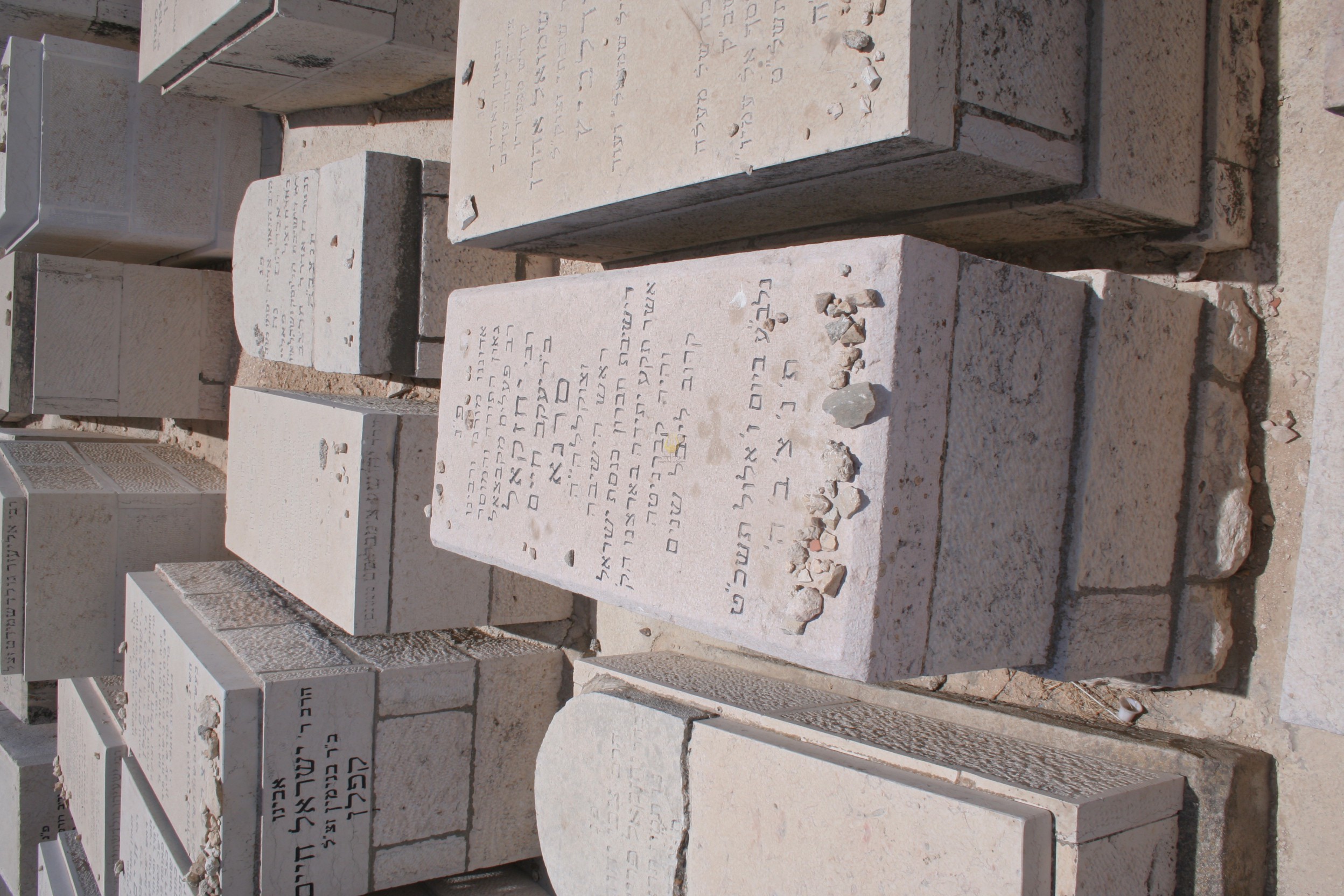
Elul 6 , 5729
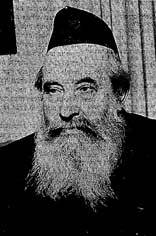
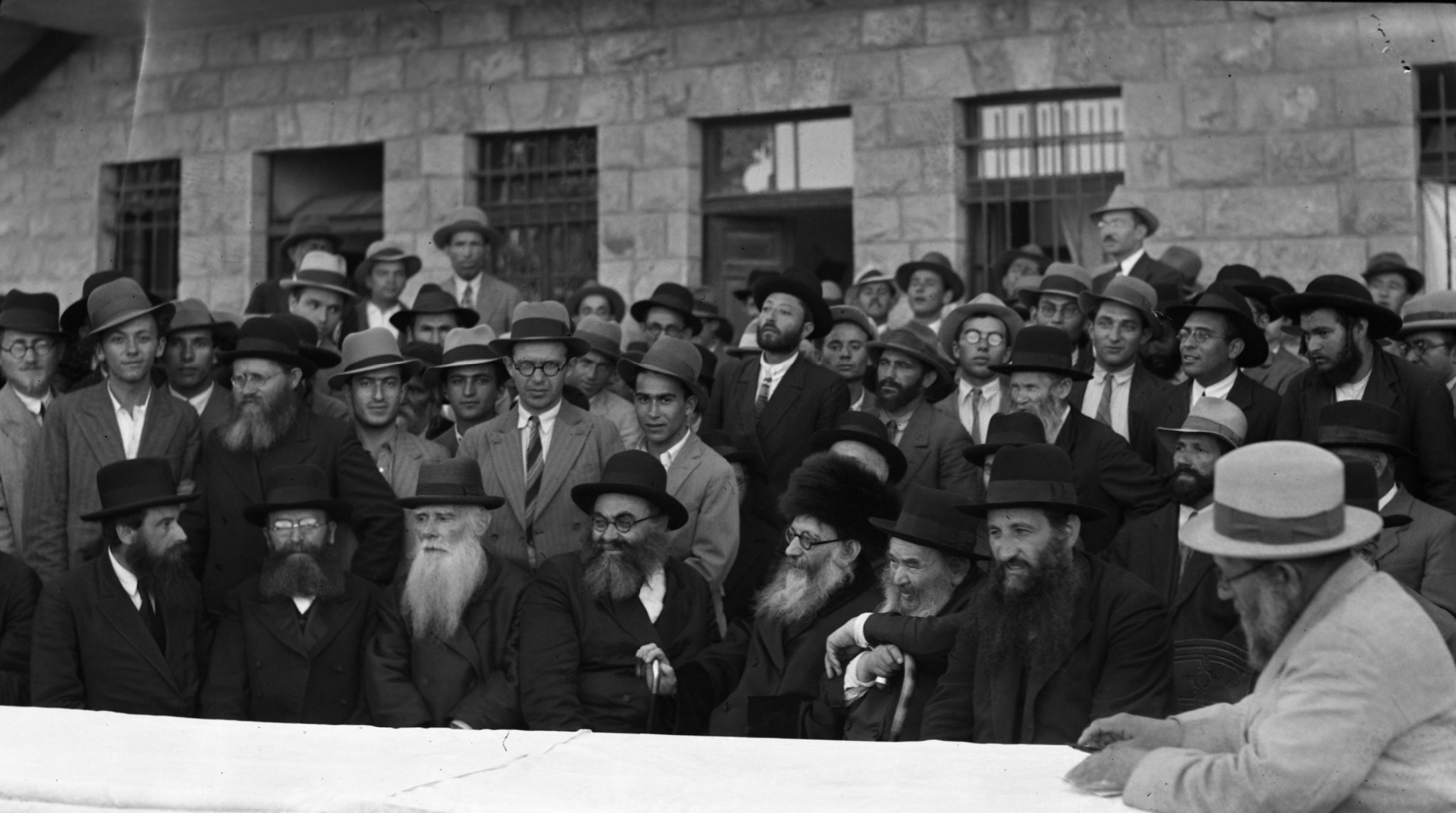
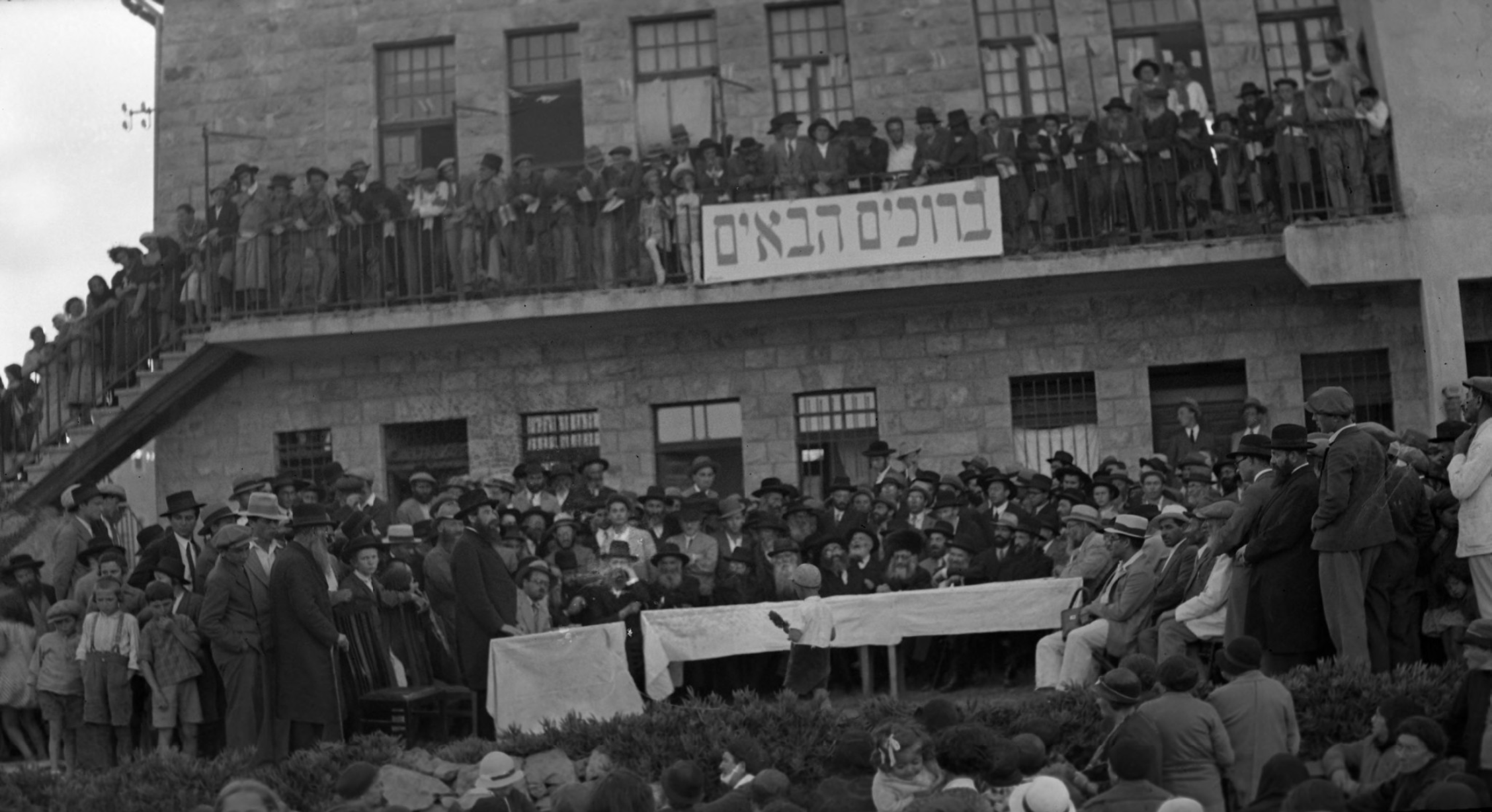
Rav Yechezkel Sarna zt"l
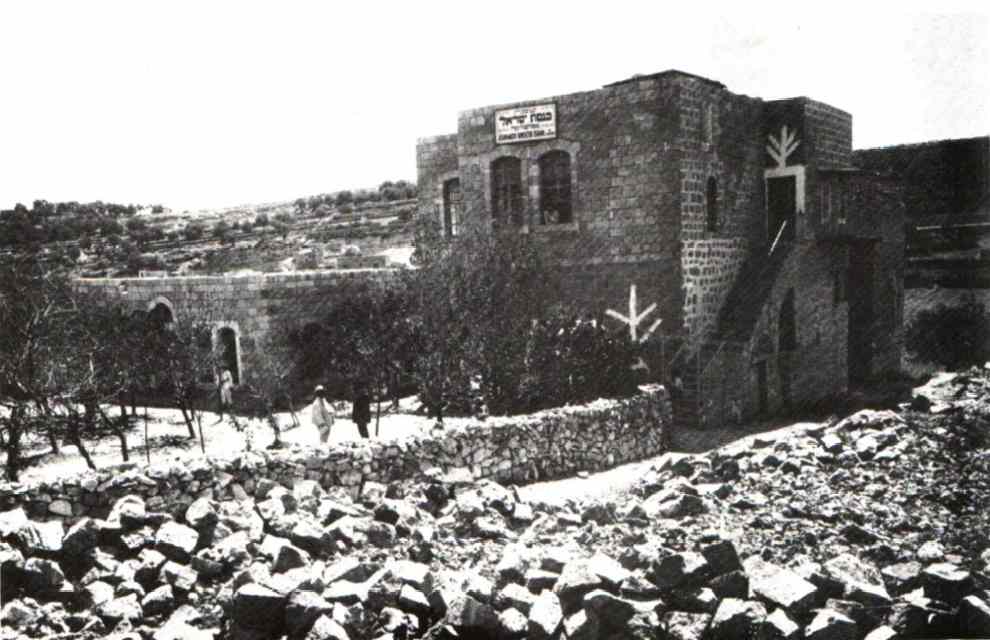
Rav Yechezkel Sarna, born in Horodok, near Minsk (1891-1969). At the age of 11, he went to Slobodka, near Kovno. In 1903, he started learning at Yeshivas Knesses Yisrael, under the rosh yeshiva, Rav Chaim Rabinowitz. A year later, Rav Yechezkel went with Rav Rabinowitz to Telze, only to return in 1907, now under Rav Nosson Tzvi Finkel, the Alter of Slobodka. At that time, Slobodka's beis midrash was filled with some of the great Torah scholars of Lithuania, including Rav Aharon Kotler, Rav Yaakov Kamenetsky, and Rav Eliezer Man Shach. In 1924, the Lithuanian government had decided to revoke the right of yeshiva students to an exemption from army service. After consulting with the Alter, it was decided that part of the yeshiva should be transferred to Eretz Yisrael. It was decided to transfer the yeshiva to Chevron. In 1926, a new mashpia ruchani was appointed: Rav Leib Chasman. After the petirah of the Alter in the winter of 1917, Rav Yechezkel gained recognition as the mussar leader in the citadel of the Alter, along with Rav Leib Chasman. In Av of 1929, blood baths inundated the country; one of the worst hit was the Jewish settlement in Hevron. During the infamous savage massacre by Hevron's Arabs, twenty-four of the yeshiva's students lost their lives. He himself had gone to Yerushalayim on the Thursday prior to the Shabbos of the massacre, but due to the tense situation he was unable to return to Hevron in time for Shabbos. Rebuilding slowly in Yerushalayim, by Rosh Hashanah the yeshiva had already assumed once more the form of a yeshiva in the full sense of that term.
He was married to Pesha Miriam, was the daughter of Rav Moshe Mordechai Epstein, Rosh Yeshiva of Slobodka.
Rav Yechezkel Sarna's son, Rav Chaim, who was born in Chevron in 1929; five years after Yeshivas Knesses Yisroel of Slobodka moved there writes in the introduction to his sefer Be’er Lechai Ro’i, about why the yeshiva moved to Eretz Yisroel. “The Saba of Slobodka moved the yeshiva to Eretz Yisroel after the Lithuanian government decreed military conscription for yeshiva bochurim,” Rav Chaim states. “Within three months of the yeshiva’s opening in Chevron, talmidim from Slabodka arrived together with some from Telz. Amazingly, as the last bochurim arrived in Chevron, the Lithuanian government suddenly annulled the conscription law, leading my grandfather, Rav Moshe Mordechai Epstein, to write in his introduction to his sefer, Levush Mordechai, that this was clear proof the whole incident was a heavenly decree. We clearly saw that Hashem wanted Yeshivas Slobodka to move to Eretz Yisroel. Think how the yeshiva world would look today had Slobodka not come to Eretz Yisroel.“
But why did the yeshiva move to the small, isolated town of Chevron? Ironically, Rav Moshe Mordechai Epstein was looking for a place where his bochurim could learn in peace and quiet:
“When I arrived in Eretz Yisroel I inquired about where to establish the yeshiva,” he explained. “I asked Rav Yitzchok Yerucham Diskin… and understood from him that Yerushalayim would not be a good place for the yeshiva due to controversy… We did not want to be drawn into any arguments. We also did not want to look like reformists with the modern clothing prevalent in the yeshiva. Nor did we did want the yeshiva to be in Tel Aviv because it was too modern… We chose Chevron where there was less chance of outside disturbances bothering the bochurim, and also to strengthen its Jewish kehilla that had decreased considerably.”
Rav Chaim described his small part in the Chevron catastrophe:
“Five years after the yeshiva’s founding came the great tragedy,” he wrote. “On Shabbos, the 18th of Av 1929, the Arabs of Chevron organized a pogrom, killing twenty-four bochurim of the yeshiva and wounding many others. Dozens of the town’s Jews were killed and many were wounded. Miraculously, my father, the Rosh Yeshiva, was in Yerushalayim for the Arab rioters were looking out for him, certain that as Rosh Yeshiva he was in charge of the yeshiva funds.
“Personally, I don’t recall what happened that terrible Shabbos as I was still a baby. I know that my mother fled with my sister and myself to her father’s house. As she was running there, Arabs threw a huge stone in our direction. It miraculously missed her and my mother took her two children in her arms managed to escape.”
Chevron Yeshiva moved to the Geulah neighborhood of Yerushalayim, retaining the name of the town hallowed by the blood of its kedoshim.
After his marriage, Rav Chaim became his father’s right hand until his passing in 1979, helping him run the yeshiva and publish his many seforim. When Rav Chaim was thirty-three years old, Rav Eliezer Yehuda Finkel of Mir said to Rav Yechezkel: “It’s time for your son to start giving shiurim in the yeshiva.”
https://matzav.com/todays-yahrtzeits-and-history-6-elul/ & https://yated.com/rav-yaakov-chaim-sarna-ae-rosh-yeshiva-of-chevron-geulah/
Stories of Rav Yechezkel Sarna zt"l

by Binyomin Nehorai http://www.chareidi.org/archives
29 Shevat, 5687 (1927). In the branch of the Slabodke yeshiva in Chevron, the sun has set. The Slabodke founder and educator par excellence has passed on. The Alter, HaRav Nosson Tzvi Finkel, was niftar. It is the ne'ilah of the opening chapter in the Slabodke division of the yirah institutes which were founded along the paths charted by R' Yisroel Salanter.
Somewhere, far from the bier which is surrounded by the grieving hearts, stride two of the Alter's students.
"Two types of builders," one says to his fellow, "participate in the founding of every spiritual edifice which is established for the generations: the masterminds and the accountants. Now that the masterminds have left us, we must don the mantle of the accountants."
"I saw then," one of them -- HaRav Yitzchok Hutner -- later on related, "how Reb Yechezkel's shoulders rose up to don the mantle which was thrown his way."
And, as if apologizing, Reb Yechezkel later explained to the readers of the notes he had recorded in the margins of his Mesilas Yeshorim, the Shulchan Oruch of yiras Shomayim, "I hereby say, that if in these insights, I have failed to cite the name of my mentor, HaRav Nosson Tzvi Finkel, this is because there is no reason to mention him, since everything I know is from him. Without him, I would be like a blind man and a deaf man. Only through him have I merited the opening of my eyes, and my ears, and my entire study approach and manner of analyzing the halochos comes only from him, my rav muvhak, even though I didn't merit to be a talmid muvhak."
Those close to him testify that in his sichos, Reb Yechezkel never mentioned the name of the Alter.
He has studied elsewhere. It was not well known, for example, that he had also served another mentor, HaRav Shimon Shkop during the period he studied in Maltshe. He held Reb Shimon in great esteem, but more than that he valued his lack of dependence on one approach or another. His heart was prepared to absorb from the Alter, from the mashgiach, Reb Zalman Dolinksi, from Reb Naftoli Trop of Radin and from Reb Chaim of Telz. But his own mind ground the ideas he absorbed, dipped them in condiments from his own table and prepared them according to his taste.
In this way he followed the sage advice of HaRav Yitzchok Yeruchom Diskin, the son of the Maharil Diskin the Rav of Brisk, whom he visited in Yerushalayim when he searched for a building for the yeshiva after the massacre that forced them to relocate from Hebron to Yerushalayim.
"Surely," said HaRav Diskin with warmth, "you are swamped with eitzas. But let me give you an eitza too. It is worthwhile to listen to every advisor and to listen to every eitza. But when it comes to taking action, proceed according to your own understanding."
Dikduk in Mitzvos
As far as the attention to the details of mitzvos were concerned Reb Yechezkel followed the methods by all of the disciples of Reb Yisroel Salanter. In this he was much like the Chofetz Chaim, whose son said: "As for my father, all of the mitzvos and all of the prohibitions were the same to him."
Typical of him is the following question, which Reb Yechezkel marked down when he was in Switzerland (due to an illness): In modern hospitals where the pipes are very strong, one makes a lot of noisewhen he opens the faucets to draw water. This is also true of the waste water, as it flows out to the sewage. This noise in all likelihood disturbs the sleep of the patients. What is preferable: to use a lot of water when washing, for reasons of bein odom leMokom [Note: the gemora says that using a lot of water for washing brings brocho], or to be minimize the water, due to considerations of bein odom lechavero?"
Another one of Reb Yechezkel's questions:
A rosh yeshiva of a yeshiva from which he earns his livelihood, has very costly medical expenses, yet he also refrains from accepting private gifts, partially out of considerations of the dignity of the yeshiva. Which is preferable: To withdraw money from the yeshiva's account for his expenses, or to accept private gifts in order to defray the expenses?"
Some of his students once encountered him mounting the stairs to the yeshiva's study hall on Shabbos night, having arrived only after the end of davening. To the students who wondered why Rav Yechezkel was in a rush when ma'ariv was already finished, he explained, "Ma'ariv is miderabonon, while wishing a gut Shabbos is de'Oraisa."
He never endorsed imitation of outward behavior without a corresponding change in one's inner essence. He once told a group of avreichim: "The Chazon Ish possessed the attribute of simplicity and modesty. One can learn humility from him; one can learn respect of one's fellow from him, and love of one's fellow. He not only had long tziziyos."
"The most precious diamond in the crown of a godol beYisroel," he once said, "is the fact that he is `tov ro'i' in other words a figure in whom all see good, a model of the Torah Jew."
Rav Yechezkel would charge a rav with the difficult task of cultivating good rhetoric and proper speech. "Just as in music," he once wrote, "every note in speaking must be weighed and measured, and every tone which is out of place is jarring. In speech, words do not enter the hearts, and surely do not cause them to tremble, if the diction is not measured and weighed."
Regarding Chazal's maxim which determines that the words of the wise are heard if they are said calmly -- divrei chachomim benachas nishmo'im, he said: "Nachas doesn't necessarily denote just a lack of anger. Every raising of the voice that is inappropriate, causes harm. Even if the words are filled with rich content, they won't make the proper impression if they are not spoken with appropriate calm."
The Honor of a Friend
The rosh yeshiva's students still remember the resoluteness of their rav at the levaya of one of the special poskim of that time, the gaon of Montreux, HaRav Yechiel Yaakov Weinberg, a Slabodker talmid who is famous for his responsa work, Seridei Eish. News of the petirah of the Seridei Eish reached Eretz Yisroel from Montreux in Switzerland. HaRav Weinberg was a friend of the rosh yeshiva from the period in which they studied together in Slabodke under the Alter, who had a great impact on both of their personalities.
The admirers of the niftar in Europe made efforts to bring his bones to Eretz Hakodesh. His friend, the rosh yeshiva, also planned to attend the levaya. But precisely when the aron was on the way to Lod, Reb Yechezkel fell ill, and at the instructions of the doctor, he had to remain in bed, suffering deeply over his forced absence from the levaya. It was very difficult for him to accept that he would be unable to participate in the levaya of his friend, who was so esteemed and was considered one of the gedolei hador.
R' Yechezkel told the students who came to visit him, that they were obligated to close their seforim and to pay their respects to the sefer Torah which had been consumed. The niftar, he explained, "was a man of great stature in his wisdom, his yirah, his middos and his zikui horabim.
"You should know," he told those who perhaps didn't know, "that a great prince of Israel has fallen today. But I want to make one request," he added, and from his voice it was obvious that something was weighing heavily on his heart. "I know that the Mizrachi circles will try to link his name to their approach. They will try to bury him alongside those who identify with their method. You must try to prevent this. All of his life, he was an ish Torah veyirah, who was raised and grew in the beis medrash. He is one of us.
"And if there are problems," he closed. "Tell me immediately."
There were indeed problems. When the bier reached a crossroad, the Knesset members from the Mizrachi movement issued orders that the procession should continue to Sanhedria, to the plots where the leaders of their movement were buried. The students of the Chevron yeshiva sought to fulfill their rosh yeshiva's instructions, and they encountered firm opposition.
Suddenly, in a totally unexpected manner, the edge of a walking cane cut the argument short. It was the cane of Reb Yechezkel who, despite the pain he suffered, had made the effort to come to the site. Those present sought to approach him and to ask how he felt. Others, who knew his precise condition, tried to lend him supporting hands.
But the Rosh Yeshiva paid no heed to them. In a storm, he headed toward the bier. Leaning on his cane, and panting heavily from the effort, he finally reached the bier which stood at the center of the battle taking place on the crossroads between Sanhedria and Har Hamenuchos.
Here the Rosh Yeshiva behaved in a most authoritative manner. "The niftar will be buried there," he said, his hands pointing in the direction of Har Hamenuchos.
To those who still doubted who had the last word, Reb Yechezkel's following remark put an end to their hesitations. "The niftar will be buried in the place prepared for me, beside HaRav Eliezer Yehuda Finkel, the rosh yeshiva of Mir.
"Our generation needs someone like Reb Yechezkel for many more years," said HaRav Chaim Shmuelevitz, the Mirrer rosh yeshiva, who was present on the occasion.
This was in 5726 (1966), a year before the dramatic events of the Six Day War. The Kosel, the Old City and Har Hazeisim were all under Jordanian rule. No one had any thoughts about being laid to rest on Har Hazeisim, the mountain opposite Har Habayis, a mountain whose tombstones had been trampled for eighteen years by Arab legionnaires. No one knew that exactly a year later, Jews would once more be able to pour out their prayers on the place from which the Shechina did not move.
Three years after the petirah of his friend, Reb Yechezkel was called up to the mesivta shel maalah. On Wednesday, the 6th of Elul, 5729, the aron kodesh of the Slabodke yeshiva was taken captive.
"Bury me on Har Hazeisim," was the request of the one who had "donated" his grave in order to save the honor of his friend. He was buried beside the grave of his illustrious father-in- law, HaRav Moshe Mordechai Epstein.
With the Chofetz Chaim
HaRav Yechezkel Sarna merited to be very close to his mentor, rabban shel Yisroel, the Chofetz Chaim, and for a year- and-a-half lived beside him, when he moved from Radin to Smilowitz, while the cannons of the First World War raged. The events of World War One had an impact on the life of the yeshiva, which was nonetheless like an island of daled amos shel halocho in the vast ocean of blood and tears.
One of the students, Ephraim Leibowitz, who had come from Memel (a city on the German border), was suspected by the Russians of espionage on behalf of Germany. According to the emergency regulations, all German citizens had to appear before the authorities, who would then transfer them to Eastern Russia or to Siberia.
In the yeshiva of the Chofetz Chaim, at that time, there were three students with German citizenship. Out of pity, the yeshiva's administration ignored their citizenship and its requirements, even as it feared the repercussions of their being in the yeshiva illegally.
After the fast of the 17th of Tammuz 5675 (1915), calamity occurred. In the middle of the night, agents of the KGB, accompanied by police from Lida and Vilna, raided the home of Reb Leib Matlis, the brother-in-law of the Chofetz Chaim, where their suspect lived. During the search, a precise sketch of the blueprint of the fortress in Kovno was "found" among Leibowitz's belongings, on a piece of paper which had been maliciously stuck into the student's pocket by one of those very secret police.
The threat of death loomed over the student. He was expected to be put to death within no more than a day or two. With much effort and money, his trial was postponed. Many efforts were also made which were finally successful in releasing Reb Leib Matlis from the prison in which he had been detained for a number of weeks as an accessory.
The boy's family came to plead with the Chofetz Chaim not to be angry at him, and not to curse him. The Chofetz Chaim replied that he never curses anyone.
It was two years later that the Chofetz Chaim learned that Leibowitz was in a prison in Panze, and that his trial was about to take place. It was precisely on Shemini Atzeres 5677 (1916) that a letter arrived with the news that Ephraim Leibowitz was about to be tried. The following day, Simchas Torah, when the Saba Kadisha was called up to the Torah, he banged on the table and burst out into tears. "Ribono shel olom," he cried. "Why do you let your sons suffer so? The Torah which Ephraim studied with great hasmodoh is before You, and now he is suffering terribly, even though he has committed no crime."
Those present cried, while the Chofetz Chaim asked his son-in- law to calm them, saying, "It's Simchas Torah today."
After the davening, the Chofetz Chaim sent a special messenger to the well known lawyer, Oscar Gruzenberg of St. Petersburg, who was famous as one of Russia's greatest jurists. Gruzenberg had achieved his fame in some of the biggest criminal trials of his time. In the Jewish world, he became known for his defense of Beilis.
Gruzenberg, a Jew who barely knew about Yiddishkeit, tended toward the radical left, and was far from the Jewish experience. Along with this, he was a humanist, and was thus always among the first to take the side of the downtrodden, and as was natural in those times, they were often Jews who suffered from pogroms, expulsions, blood libels and more.
This time, however, Gruzenberg refused to take the case. He was afraid to become involved in a trial which was being held in the wartime atmosphere of hostility to Jews and Judaism.
Upon hearing the reply, the Chofetz Chaim decided that he himself would go to see Gruzenberg about the case. On this trip, he took his student, Reb Yechezkel Sarna, whom he regarded as his confidante whom he could trust, and also Reb Hillel Ginsburg. The trip was shrouded in mystery, and some of its chapters aren't even known today. There were many efforts about which Reb Yechezkel never said anything.
Nonetheless, many details about the journey did become known. In time, it was related that Gruzenberg asked the Chofetz Chaim if he could personally testify that the accused was completely innocent of espionage.
The Chofetz Chaim replied that he was certain of this, and that the very fact that a man as old as he had come all the way from Shomiatz to St. Petersburg for that purpose, should be proof enough of his own conviction.
"Rabbi," Gruzenberg said with emotion. "I'm pretty young. But if you have the energy and vigor to make such a dangerous trip then we, who lack such a feeling of responsibility, should be considered old."
Then to his wife he said, in Russian: "In our times, when life has so little value, would a Russian notable be willing to embark on such a dangerous journey, just in order to save a single young boy, who isn't even his relative?"
Gruzenberg apologized for a moment, and left the room. "He's a good person," the Chofetz Chaim told those who had come with him. "It's a pity he isn't oriented towards avodas haBorei. If only he had been educated in a yeshiva . . . "
Gruzenberg returned and announced that he could not accept the defense of the young man. "I don't feel brave enough to stand before a military court at this point," he said. "I called a friend, non-Jewish lawyer, who agreed to accept the case. He also thinks that it's best that the defending lawyer be a Christian and not a Jew."
The trial was held in Vitebsk in Teves 5677 (1917), before a military tribunal which was made up of three Russian generals. On the day the trial opened, the Chofetz Chaim sent telegrams to all of the yeshivos in Russia, to daven and recite Tehillim. In his yeshiva, everyone fasted.
The entire procedure of the trial is an amazing story. Among the witnesses were HaRav Elchonon Wassermann, Reb Tzvi Hirsch Levinson, the son-in-law of the Chofetz Chaim, and the Chofetz Chaim himself.
Throughout the trial, the defense related accounts of the sterling character of the Chofetz Chaim, in order to illustrate the extent of his ethical level. Even when the reliability of the stories was questioned by the judges or the prosecution, the defense insisted that it is not only the story itself which proves the point, but even the fact that such a story is even told about him, even if it is not precise.
The prosecution, for its part, explained that although the honesty and sincerity of the Zidovski Rabinn was not in doubt, all this still did not prove the innocence of Leibowitz who, in his wily manner, had deceived his mentor.
The accused was sentenced to death, but out of consideration for his age, the sentence was commuted to twelve years in prison, with hard labor.
The accused fainted in fear, and from the observer's benches, wails were heard.
The students who left the court were shocked. They also didn't know how to convey this to the Chofetz Chaim. Some advised telling him that Leibowitz had been sentenced to only two years in prison.
Reb Yechezkel was the one who broke the news to the Chofetz Chaim, telling him that Leibowitz had not been sentenced to death but to six years in prison.
It is related that the Chofetz Chaim ordered Reb Yechezkel to lock the door of the room. Agitated, he looked to and fro, and when he saw that there was no one else there, he whispered to Reb Yechezkel: "What makes them certain that they will continue to rule for even six more months?"
Two months passed, and Kerenski and his revolutionary government took over the reins of government, while Czar Nikolai was deposed and, a short while later, assassinated. This was on the 22nd of Adar, 5677 (1927)!
Ephraim Leibowitz, the "Jewish spy," was freed along with other political prisoners, thanks to the efforts of Gruzenberg, and the yeshiva community.
In Brisk it was said that R' Chaim Soloveitchik had commented on this story: "The Chofetz Chaim deposed Nikolai."
Reb Yechezkel took the remaining secrets to his eternal rest.
His Biography
HaRav Yechezkel Sarna was born in Horodok Russia, in 5650 (1890). His father was R' Yaakov Chaim, a maggid meishorim in Horodok and Slonim, who became famous for his outstanding rhetoric as the maggid of Slonim. His mother Eidel stemmed from the Buxenbaum family.
Like all of the other children of the period, he began his education in the local cheder. His father, who recognized young Yechezkel's talents, sent him when he was still very young to various yeshivos in the area. Yechezkel wandered from yeshiva to yeshiva, until his older brother, Reb Leib finally brought him to Slabodke in Kovno, where he began to study in the Or HaChaim yeshiva ketana, known locally as Yeshivas Rebbe Herschel. The mashgiach at that time, Reb Eliyahu Laicrovits, planted mussar roots in young Yechezkel's heart.
Yechezkel remained in Slabodke for only a year. In 5662 (1902), he journeyed to Maltshe, where he studied under one of the most famous Torah giants of the time, HaRav Zalman Sender Kahana-Shapiro, who also presided as the Chief Rabbi of Maltshe. Due to an inner conflict which occurred in the yeshiva, Reb Zalman Sender left Maltshe, and transferred to Kriniki. This was only a year after Yechezkel had arrived in Maltshe. However, without a mentor, he too left Maltshe and returned in 5663 to Slabodke, in order to study in Knesses Beis Yitzchok, headed by HaRav Chaim Rabinowitz, who later on became known as Rav Chaim of Telz. He was very fond of the youth, who became bar mitzvah that year, and recognized his brilliance of mind and swift grasp. When Rev Chaim was invited to deliver shiurim in Telz, at the end of 5664, he included the young Yechezkel in the group of well known Torah scholars who were schooled in halocho.
In the beginning of the winter of 5666 (1906), the young Yechezkel once more returned to Maltshe, in order to study under HaRav Shimon Shkop.
Another year passed, and Reb Shimon left Maltshe. Under the influence of the son of the Alter, HaRav Shmuel Finkel, the young Yechezkel, who was by then seventeen years old, decided to return to Slabodke.
5667 (1907) was the most important year in the life of Reb Yechezkel. His searching and wandering had ended, and he decided to remain in Slabodke -- and he remained there until his final day.
Slabodke itself wandered first to Eretz Yisroel in Chevron the city of the forefathers, and then to Geula in Yerushalayim, but he always remained in Slabodke. He never left it. Regarding this, he later said that he was very grateful to Reb Shmuel Finkel for having drawn him into the Slabodke life.
by Binyomin Nehorai http://www.chareidi.org/archives
Part II
In the first part of this article, we discussed some of the themes and great incidents of HaRav Yechezkel Sarna's life. These included the funeral of the Alter of Slobodke and the funeral of the Seridei Eish. We also related an incident with the Chofetz Chaim and a young yeshiva student who, during World War I, was accused by the Russians of spying for the Germans. The first part also gave the basic biographical details of HaRav's early years as a youth in Horodok and his wandering through several yeshivos and mentors until he finally settled into the life of Slobodke.
Merging Into Slobodke
Slobodke's study hall at that time was filled with some of the great Torah scholars of Lithuania. There were veteran talmidei chachomim, who had gained fame for their straightforward thought and sharpness of mind. Among them were the bochur Aaron the Sislovitzker (HaRav Aharon Kotler) and Yaakov the Dahailover (HaRav Yaakov Kamenetsky). And then young Yechezkel Sarna, the Horodoker, joined their ranks. He once casually related that he was a peer of the Sislovitzker, who later became the symbol of brilliance and astuteness.
He was very well versed in the depth of halocho and equally as great in the scope of his knowledge. Maran HaRav Eliezer Man Shach, who was in the yeshiva then, related that the bnei yeshiva would speak in amazement about the Thursday mishmar nights, in which the Horodoker would study forty pages of gemora.
It was natural that the image of the refined young man caught the eye of the yeshiva's founder and father, the Alter, HaRav Nosson Tzvi Finkel. The Alter related to each and every student differently. With his special critical sense, the Alter understood that Reb Yechezkel was a young man who, in addition to greatness in Torah, had outstanding qualities which rendered him fit to be a mentor in the mussar halls of the future generation. The Alter displayed his fondness for Reb Yechezkel and drew him close to him. He saw the young man as one whom he could model into a suitable spiritual and ethical image.
The spiritual guide (mashpia) of the yeshiva (in addition to the Alter of course) at that time was HaRav Zalman Dolinsky, also called Reb Zalman Radiner. His discourses also had a great impact upon Reb Yechezkel, who used to mention the lasting lessons he gleaned from them.
The young Yechezkel studied in Knesses Yisroel in Slobodke until 5674 (1914). However, for a few months in 5670 (1910), he studied at Telz, having been sent there along with a group of students who had been asked to assist the mashgiach, Reb Shmuel Fondiller, Hy"d, who was one of those working to spread the mussar approach.
The Upheaval of World War I
World War One broke out in 5674. The yeshiva was closed, and the Jews of Slobodke expelled. It soon reopened in Minsk, where young Yechezkel also arrived. Like his friends, he also used forged certificates in order to evade the draft which loomed over the heads of young men of his age. But to his misfortune, he was caught by a policeman, who detained him in the local prison. He was supposed to stand trial, be punished, and even worse than that, sent to the front, where people were falling like flies.
Aware of his difficult situation, he sought an escape route, which wasn't long in coming. A lazy guard turned his head for a moment, enabling the prisoner's swift escape. He hastened to the home of a relative, Rev Yehoshua Cymbalist (Horodoner), where he went into hiding. That very night, he was smuggled to Smilowitz, where the Radin yeshiva had wandered along with its rosh yeshiva, the Chofetz Chaim.
In the meantime, the Slobodke yeshiva left Minsk, which was very close to the front by that time, and transferred to Krementchug. Reb Yechezkel remained with the Chofetz Chaim, first in Smilowitz, and later in Shumiatz. He absorbed many of the Chofetz Chaim's ways, and he soon came to regard him as one of his mentors. He also enjoyed the acutely logical shiurim of the rosh hayeshiva, HaRav Naftoli Trop, who was known in the yeshivos for his remarkable shiurim.
HaRav Sarna regarded this period as one of the most beautiful in his life. His heart absorbed the impressions made by the righteousness and piety of the Chofetz Chaim. He filled his mind with the lomdus approach of Reb Naftoli. But when he left he was the same Reb Yechezkel who had entered -- a product of Slobodke. A ten-chapter pamphlet called Toras Ha'Onshim, written by him in Smilowitz in 5676 (1916), was found among his writings. It testifies clearly that his Slobodke character did not change during his period in Radin.
In the summer of 5677, Reb Yechezkel was asked to come to the Slobodke yeshiva that was still temporarily in Krementchug. The Alter hadn't forgotten his beloved student and wanted to see him now beside him. Laden with Torah, yirah, and mussar, he returned to Krementchug, where his place on the eastern wall as one of the top students of the yeshiva was acknowledged.
The Jews of Krementchug were enduring a difficult period. The danger of death hovered over their heads, and they were prey to pogroms, robbers, bandits, rioters and starvation. In Adar 5679 (1919), HaRav Yechezkel married the daughter of HaRav Moshe Mordechai Epstein, who chose him as a son-in-law.
As the war ended soon after, the yeshiva returned to its abode in Slobodke, a Jewish suburb of Kovno which was at the time under Lithuanian rule. Reb Yechezkel was one of the returners, settling in his former place of study.
It was the beginning of a new period for Slobodke.
In Slobodke, Reb Yechezkel dedicated all of his time and effort to Torah and mussar. When the Alter proposed that he deliver shiurim in the yeshiva, he refused. When the Kollel Beis Yisroel, headed by HaRav Yitzchok Eizek Sher, was founded, he did not join. Nonetheless, he remained in contact with its members.
He signed the articles he wrote in the Tevuno magazine with the letters YCh"S, his initials. This was the journal of the Slobodke yeshivaleit, edited by Rav Yisroel Zissel Dvoratz.
His influence in the yeshiva was great, although he refused to occupy any official position. He rarely engaged in public activity, except for a few missions he was given by his father-in-law, the Alter. In Kovno in 5684 (1924) he served as emissary of the Alter at a rabbinical convention on current religious matters.
The Move Up to Eretz Yisroel
In 5684, trouble brewed in Slobodke. The Lithuanian government had decided to revoke the right of yeshiva students to an exemption from army service. At the time, the rosh yeshiva, HaRav Moshe Mordechai Epstein, was in the United States.
HaRav Yechezkel Sarna tried to activate the Jewish lobby, even personally participating in the delegation which appeared before the authorities. But to no avail. After consulting with the Alter, it was decided that part of the yeshiva should be transferred to Eretz Yisroel.
The proposal was a daring one for those days, considering the difficult conditions in Eretz Yisroel of almost eighty years ago. A telegram was sent to the United States to ask the Rosh Yeshiva to approve the proposed solution. In his return telegram, the helmsman of the yeshiva said that the suggestion was a good one. The Rosh Yeshiva even promised to make every effort to secure money to carry out the complex transfer.
After Pesach, HaRav Yechezkel set out to Eretz Yisroel to find a suitable place for the yeshiva. He was charged with organizing the yeshiva's transfer and setup in its new abode, along with the task of securing entrance certificates for the yeshiva students. HaRav Avrohom Grodzinsky, who served as the yeshiva's spiritual director, arrived soon afterward.
It was decided to transfer the yeshiva to Ir Ho'Ovos, Hevron. During the period of the Yomim Noraim of 5685, the first minyan of students reached Hevron. That winter, many other students from Slobodke, Telz and other yeshivos arrived, as did students from the old yishuv in Yerushalayim, who looked a bit skeptically at the new yeshiva, whose ways seemed somewhat strange to them. HaRav Yosef Chaim Sonnenfeld, however, discerned the yiras Shomayim of the students, and remained in close contact with the yeshiva and its directors until his final days.
Slobodke, the kingdom of mussar and yirah which strode along the paths charted by Reb Yisroel of Salant, was the first of the yeshivos to make aliya to Eretz Yisroel. The leader of the aliya, Reb Yechezkel, regarded it as a great merit to have paved the way later followed also by the Lomza yeshiva which settled in Petach Tikvah, as well as by others.
Within a few months, HaRav Avrohom Grodzinsky was asked to return to Lithuania. As a result, the burden of leading the yeshiva in Hevron fell on Reb Yechezkel, who displayed outstanding organizational capacity. In addition, he was revealed as a mashpia, whose deep, logical shiurim captured the interest of students who were not much younger than he.
The name of the yeshiva became famous throughout the Jewish world. In the course of 5685, the rosh yeshiva, who had come from America, visited Hevron and then returned to Slobodke in Elul. He was accompanied by his brother-in-law, the son of the Alter, HaRav Moshe Finkel, who was suddenly niftar on Succos of 5686, after having remained in Hevron for only six months, where he delivered shiurim. The Alter also arrived in the summer of 5685.
A year later, in 5686, a new mashpia ruchani was appointed: HaRav Leib Chasman, later known for his Or Yahel.
In the beginning of 5687, when the Alter fell ill and felt that his end was near, he called his beloved Reb Yechezkel to him, and told him that he should begin to deliver mussar shmuessim in the yeshiva. The first sichos were delivered in HaRav Yechezkel's home. He later began to speak in the yeshiva itself.
During his early efforts as a mussar speaker -- perhaps because of a fear of public speaking or perhaps due to his desire to weigh his words -- he would pause between every word, like one counting precious pearls. In time, however, his speech began to flow, and he became on outstanding speaker.
After the petirah of the Alter in the winter of 5677, Reb Yechezkel gained recognition as the mussar leader in the citadel of the Alter, along with HaRav Leib Chasman, who was esteemed for his deep spiritual influence.
In Av of 5689, blood baths inundated the country; one of the worst hit was the Jewish settlement in Hevron. During the infamous savage massacre by Hevron's Arabs, twenty-four of the yeshiva's students lost their lives. The Hevron chapter in the lives of these Jews ended, as did the Hevron period of Slobodke.
"Our sorrow is great as the sea," Reb Yechezkel telegraphed HaRav Yitzchok Eizek Sher in Slobodke.
He himself had gone to Yerushalayim on the Thursday prior to the Shabbos of the massacre, but due to the tense situation he was unable to return to Hevron in time for Shabbos. Thus, he was far from the focal point of the calamity. Scores of students dispersed. Parents from abroad called upon their sons to come home. "Moh rabu rachamov," wrote Rav Yechezkel in a letter, "that the yeshiva merited to arise anew after so terrible a destruction."
Rebuilding
Rebuilding the yeshiva was not easy. Grieving, pained, and injured, the students assembled once more. Invitations arrived from Tel Aviv, from Petach Tikvah and even from Reb Yitzchok Gerstenkorn of Bnei Brak, who offered HaRav Moshe Mordechai Epstein the position of the Chief Rabbi of Bnei Brak. But the choice fell on Yerushalayim, and the burden once more on Reb Yechezkel, who was nearly alone at the front.
The Rosh Hayeshiva made the necessary efforts to collect the money, while HaRav Leib Chasman, who was ailing and feeble, did his share by encouraging the students and guiding their chinuch.
"Of course, during the first weeks," Reb Yechezkel related in a letter, "they were in a desperate situation -- oppressed and ailing, lacking even clothing and shoes. But from the 15th of Elul, they began to slowly recuperate, and by the week before Rosh Hashanah the yeshiva had already assumed once more the form of a yeshiva in the full sense of that term and, as is customary in Elul, the students made great strides in their studies."
The synagogue in the Achva neighborhood was the yeshiva's first station in Yerushalayim. Quite soon, homes, apartments and houses were purchased in Geula, where the large study hall of the Hevron yeshiva -- called by its former name that was hallowed by the blood of the kedoshim -- was eventually built.
A new period began. Hevron occupied its place among the fashioners of Torah in Eretz Hakodesh. Generations of talmidei chachomim, roshei yeshiva and dayanim developed between the walls of the yeshiva.
Under Reb Yechezkel's inspiration, the Yavneh Talmud Torah and the Tiferes Tzvi Yeshiva were founded. They served as a mechina to prepare students for the Hevron Yeshiva. Kollelim for avreichim, alumni of the yeshiva, were founded in Yerushalayim, Petach Tikvah and Tel Aviv.
In the wake of the yeshiva's difficult financial situation, HaRav Sarna was forced to travel to the United States in 5691 (1931), where he stayed for twelve months. The uprisings had an effect on the yeshiva's financial situation which had continually deteriorated since then. Sufficient funds were not raised in America. The responsibility increased with the petirah of the rosh yeshiva, HaRav Moshe Mordechai Epstein, in the winter of 5694.
HaRav Yechezkel became the rosh yeshiva, the mashgiach, the parnas. We cannot describe this difficult period at length in this article, though we will mention that included very difficult times that it included liens and even prison sentences because of the yeshiva's financial difficulties. Eventually, under HaRav Yechezkel's influence, the Weizman brothers, owners of the Nur match factory of Acco, merited to build the illustrious yeshiva study hall, where Torah still resounds today.
During the period of the Holocaust, HaRav Sarna was one of the first to spearhead the Vaad Hayeshivos fund, and he assisted the Vaad Hatzolah which dealt with European refugees. He also took an interest in aliya of young, orphaned refugees as well as in their Torah education.
His two brothers in-law, HaRav Aharon Cohen and HaRav Moshe Hevroni worked alongside him in the yeshiva as roshei yeshiva. HaRav Meir Chodosh was its menahel ruchani.
"Let's bring Moshiach tzidkeinu," he told the mashgiach, HaRav Eliyahu Lopian, who visited him on the last erev Shavuos of his life.
When he became seriously ill, his students recited many prayers for his welfare. "Now it's Elul, and the students will surely study Torah and mussar with hasmodoh. I hope that my illness will not disturb them," he told one of his close confidants.
The tree was not cut down. Also the well did not dry up. The tree continues to grow and the well to flow: one in Givat Mordechai, the other, in Hevron Geula in Yerushalayim, headed by his son, who is continuing in his footsteps, HaRav Yaakov Chaim Sarna.
Torah is Important to All Klal Yisroel
One of the heads of the Mizrachi movement in the United States sharply criticized the rosh yeshiva for his membership in to Agudas Yisroel. "Ramim must keep a distance from politics," the man claimed, even threatening to cause financial harm to the yeshiva. In a long, amazingly penetrating letter, HaRav Sarna wrote what appeared to be an explanation of the aim of Torah Jewry in Eretz Yisroel.
"Regarding the claim that ramim must keep a distance from politics and not involve themselves either directly or even indirectly in the intricate problems of politics, I must wonder! That is what the secular say. The secular always tell the rabbonim not to interfere in politics, even when the rabbonim come to mend the breaches of religion. Do you really believe that all of the issues of Mizrachi and Aguda are nothing but politics?
"If such is the case, I would advise you, although your are not ramim, to distance yourselves from politics, and instead spend your time learning a few pages of gemora each day."
HaRav Sarna replied in a pleasant manner to the threats, and with the admixture of refinement and resolve of a true leader: "I can't refrain from telling you how sorry I am about your threats which, if we translate from diplomatic rhetoric to spoken language, means: `If I don't change my ways, then you'll deprive the yeshiva of its source of sustenance.' But I stay away from fear, for were I a coward, I wouldn't be where I am today. The yeshiva hakedosha is maintained by miracles: every day a new miracle, and those who head yeshivos are not afraid of the future. If that were so, there would be no yeshivos in Eretz Yisroel, cholila.
"I'm not frightened by your threats, because I don't think that you are in the category of chayovim -- of those through whom a chov of such immensity is brought about, and I regard all that you have said as mere prattle. I am not sorry about the threats, but about those who make them. I am sorry that they have reached so low a level. Let me ask you: Whom are you threatening? Is it my yeshiva and not yours? Is the value of Torah measured only by one's narrow party lines? Such thinking may be compared to that of one who said: `If you don't do what I want, I'll turn off the lamps which glow in the city during the nights and provide light for its residents.'"
His love of the abodes of Torah is expressed in a different letter: "I always say that the biggest miracle is that ruchniyus continues to be maintained in the generation of ikvesa demeshicha, in which there are so many enemies whose sole purse is to uproot all, and especially the young generation which suffers so much from their families who constantly pressure them to be concerned about "tachlis." The miracle is that those young, dear people are imbued with the full realization of their true tachlis, and know that all other aims will destroy the body and the soul together, cholila. They cling to the Torah with all their hearts and all their souls out of love and simcha."