Rav Avrohom Yaakov HaKohen Pam zt"l
הרב אברהם יעקב בן מאיר פאם זצ"ל
Av 28 , 5761
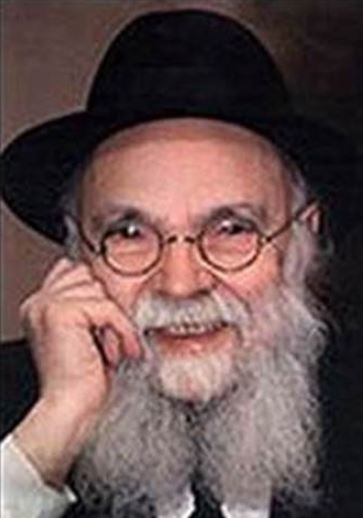
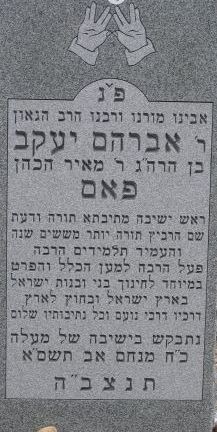
Rav Avrohom Yaakov HaKohen Pam zt"l
Harav Avraham Yaakov Hakohen Pam was born in Tammuz 5673 to Harav Meir, a noted talmid chacham, who was a former talmid of Slabodka and Radin. It was, therefore, in a Torah-steeped home that Rav Pam’s unique personality was fashioned.
Young Avraham Yaakov constantly sought to grow in Torah and ruchniyus, and his diligence, refinement and purity of thought were evident even in his youth.
As a child, he studied in Kovna. His family later moved to America, where his father was appointed R”M in Yeshiva Rabbeinu Chaim Berlin. Thirteen-year-old Avraham Yaakov began studying in Yeshiva Torah Vodaath.
After his marriage to Rebbetzin Sara, he was asked to serve as R”M in the yeshivah ketanah of Torah Vodaath, and later he went on to become Rosh Yeshivah of the yeshivah gedolah. For more than 60 years he delivered shiurim and mussar shmuessen, making a tremendous, lifelong impact on his talmidim.
His profound, weekly shiurim in parashas hashavua in Torah Vodaath were well attended. These shiurim provided the contents of his sefer Atara Lamelech, with particular stress on middos tovos.
His appearance at various assemblages and conventions of Agudas Yisroel and organizations had a tremendous impact. His speeches were accepted with great reverence in all Torah-true circles. He spoke calmly, with measured, well-chosen words that penetrated the hearts of his listeners.
Along with his leadership in many of the struggles facing Torah Jewry in the United States, he was very concerned about the problems of Torah Jewry in Eretz Yisrael. He founded the Shuvu organization for the chinuch of Russian children in Eretz Yisrael.
At one Agudah convention he delivered a stirring speech, making all aware of the urgent need to provide for the spiritual needs of these children. Then and there, he set up a special committee for rescue activities, and in that manner Shuvu was born. He was its loyal patron until his final day.
Two months before he was niftar, his health began to deteriorate. Despite his difficult condition, weeks before his passing he participated in the annual parlor meeting of Shuvu, setting out for the meeting by ambulance, on a stretcher. There, he spoke for five minutes about the tremendous importance of providing Jewish children with a Jewish education. At that, his final public appearance, he conveyed the message that every Jew, under all circumstances, is obligated to do his maximum for the sake of the chinuch of Jewish children.
He was niftar on Thursday night, 28 Av, and was buried at Mount Judah Cemetery in Queens, N.Y.
Yehi zichro baruch. https://hamodia.com/columns/day-history-28-avaugust-29/
Rav Avraham Yaakov HaCohen Pam (1913 - 2001) grew up Lithuania. His father Rav Meir, was a Gaon in Torah, and his mother a melumedes extraordinaire and a pillar of chesed. Rav Pam's stay in Slobodka, basking in the glow of the great gedolim whose presence illuminated the shtetl, though short, had a tremendous impact on his life.
In 1927 as conditions in Lithuania deteriorated, Rav Meir Pam took advantage of an opportunity to move and settle in America. He began his career at Yeshiva Mesivta Torah Voda'ath in 1938. Rav Pam was renown for his fiery pilpul chaveirim, and the Torah friendships he forged that impacted his life and that of his talmidim. With the passing of Rav Eliyahu Chazan, Rav Pam was appointed Rosh HaYeshiva the position he held until the end of his life.
Rav Pam shunned the limelight. He preferred to devote his days and nights to his life’s passion; the study and teaching of Torah. He worked tirelessly on behalf of Jewish educational causes both in the United States and in Israel.
Tens of thousands of Jews considered Rav Pam a "godol"," a spiritual giant. They regarded his words as gems to be gathered, even when his message consisted of criticism. For his listeners knew - from his reputation, his demeanor and the unmistakable pain on his face - that Rav Pam's exclusive motivations were fear of God and love for fellow Jews.
Anyone who ever met Rav Pam could not help but recognize his modesty. Although he was a great person, one of the gedolei hador, his humility was striking, his simplicity remarkable, and his honesty and integrity impeccable. He displayed remarkable sensitivity for other human beings, and the ahavah that he transmitted could be touched with your hands. He cautioned against being judgmental of others His sense of halacha and its practical application was impeccable.
Honesty and integrity were also recurrent themes of Rav Pam's. Meticulous honesty, he said is the mandate of every Jew, and must be the hallmark of every one claiming to be observant."Emunah," he went on to explain, also means "faith," alluding to the fact that faith in our Creator as the source of our daily bread is antithetical to acting dishonestly.
Perhaps above all, he was powerfully dedicated to making authentic Jewish education available to all Jewish children - the "jewels in the crown" of the Almighty, as he once wrote. He personally founded, Shuvu. It provides young immigrants to Israel, largely from the former Soviet Union, with a comprehensive Jewish education in an open and loving environment, helping both the children and their parents reconnect with the Jewish religious heritage.
All Jews, whether they knew of Rav Pam during his life or not, would do well to recognize the profound loss to us all that his death represents. We all know that any and every attempt to capture this giant's greatness will fail to do him justice.
Family Background:
His father Rav Meir, was a Gaon in Torah whose entire life evolved around limud HaTorah. Rav Pam often told his talmidim-and especially his grandson R' Meir, who is named after his great-grandfather, that Rav Meir never stopped learning in order to go to sleep. He would concentrate on either a Ketzos or Reb Akiva Eiger until finally dozing off to the strains of their svaros, often waking up in the middle of the night to find the seforim still lying open beside him.
Another potent force in molding Rav Pam's fervent hashkafa was that of his mother, Rebbetzin Rachel Leah, a melumedes extraordinaire and a pillar of chesed who constantly set aside money for the impoverished. She was the daughter of Rav Shimon Dov Analek, the Shedlitzer Rav and a Talmid muvhak of Rav Eizel Charif
Rav Pam's zaide, Rav Shimon Dov, served as the Rav of Tiktin and later in the Chassidic community of Shedlitz
https://www.geni.com/people/Rabbi-Avrohom-Pam/6000000008872464260
Stories of Rav Avrohom Yaakov HaKohen Pam zt"l

by Moshe Rockove
HaRav Avraham Yaakov Hacohen Pam zt'l was born in Lithuania 88 years ago. His father was a rov and an outstanding talmid chochom. He learned in the famed Kodshim Kollel in Radin where he was a chavrusa of HaRav Elchonon Wassermann.
At the age of nine, he left his town to enter a yeshiva in Kovno. He was younger than the other bochurim so that the rosh yeshiva asked his father jokingly, "Where is his crib?" He received a letter from his former rebbi that said, "Someday this young bochur will be a godol beYisroel." (The family still has the letter.) He was accepted and learned with complete devotion.
Rav Pam would eat Shabbosim at the home of HaRav Yaakov Kamenetsky zt'l, who was learning at the time in the famed Kovno Kollel. They would cross paths again later in life when they were both on the hanhalla of Yeshiva Torah Vodaas. Rav Yaakov would affectionately refer to Rav Pam as the "Kohen Godol."
Rav Pam's father immigrated to the U.S. when his son was 11 years old; the rest of the family came two years later. He attended Mesivta Torah Vodaas and became a devoted talmid of the Rosh Yeshiva, HaRav Dovid Leibowitz zt'l, a Slobodker talmid who had also learned in the Kovno Kollel and was the nephew of the Chofetz Chaim. He always considered HaRav Leibowitz as his primary rebbi in life. He wrote a beautiful tribute about his Rebbi after he passed away signed "A Talmid."
At the age of 21, he faced a dilemma: In those days, most bochurim his age went to work and didn't learn in beis medrash any more. He wanted to continue with his learning but had no one to learn with! He learned by himself in a shul in Brownsville for five years until he became a rebbi.
Rav Pam started saying shiurim in the Mesivta in 1937, and for the next 64 years he said shiurim to thousands of talmidim who went through Torah Vodaas. He started as a 10th grade rebbi, then moved up to 12th grade -- and for the last 25 years he said the Yoreh De'ah shiur. He felt it was a zechus for him to say this particular shiur in his old age, for in his prime as a bochur, he learned Chulin with a lot of hasmodoh. He would eat and take care of what he had to, but it was always with Chulin on his mind. He thus felt it fitting that he should say a shiur on that which he toiled so hard on, in his advanced years.
When HaRav Aaron Kotler came to the U.S. in 1941 he said shiurim on Zeroim to a select group of avreichim; HaRav Pam was never among that group. HaRav Gedaliah Schorr zt'l who also later became a rosh yeshiva in Torah Vodaas, was also a part of the group.
Rav Pam had a special affinity for the sefer Mishna Berurah. He knew every se'if with the Mishna Berurah and Biyur Halacha. When it was hard for him to see and people would learn with him, he would correct them if they read the Biyur Halacha improperly. His set of Mishna Berurah was buried with him as a testament to his love for those seforim.
He married Sarah Balmuth who was from a Galician family. HaRav Hutner zt'l was the shadchan; he told the girl's father that "he was going to be a godol beYisroel," echoing the sentiments of Rav Pam's youth rebbi.
A Rebbi to Talmidim
His shiur was known for its emphasis on clarity. He would say that a bochur has to know the gemora, Rashi, and Tosafos clearly before he goes deeper into the sugya. He didn't like to use the gemora as a springboard to delve into the sugya without a clear understanding of the basic facts first.
Those of us who didn't learn by him got a taste of his shiur at the last Siyum Hashas in 1997. He started the new cycle at the main siyum in New York City by learning with everyone the first mishna in Brochos. He explained each part of the mishna with simple eloquence; we felt as if we were all sitting in his shiur room in Torah Vodaas listening to his blatt shiur on Brochos daf beis.
His love for his talmidim was boundless. He was available to them anytime they needed something from him -- an answer in halacha, a hashkofoh question, or advice about life. They reciprocated his love by helping him out as much as possible. They took up his causes as their own and always assisted him when he was ill. In fact, when he was niftar at 1:15 Friday morning, 35 talmidim were at his bedside; some having been there for days.
Sterling Middos
Rav Pam personified the middoh of pashtus. He looked and dressed like a simple person; he never wore a long coat or even sat on the mizrach in Torah Vodaas.
Rav Pam visited Eretz Yisroel 35 years ago with his wife. They went to Bnei Brak to see the Ponevezh Yeshiva, which was hosting its Yarchei Kallah at the time. The beis medrash was alive with the kol Torah of the participants. He told his Rebbetzin that he would like to join them on one condition: the minute someone starts referring to him as a rosh yeshiva in Torah Vodaas, he is leaving.
They moved into the dormitory and stayed together with the other members of the Yarchei Kallah. Rav Pam learned in total anonymity for two weeks. One day there was a pidyon haben in the Yeshiva. Someone came over to him and suggested that since he is a rosh yeshiva, he should sit at the head table for the seuda. His anonymity breached, he left that very day back to Yerushalayim, where he was originally staying.
He measured his words carefully. Everything he said was thought out and was said for a reason. He would mention the Sheloh that says two mal'ochim accompany a person and write down everything he says. "They don't write shorthand. If a person would see this personally, how careful he would be when he utters a word!" he said emotionally. He lived with this Sheloh as his guide in watching what to say.
Whenever he spoke and demanded a certain middoh from the audience, one had the feeling that he himself had worked on the middoh first before addressing the public. He would speak about emes because his lived with that middoh.
He demanded from bnei Torah a certain extra sensitivity in middos and interpersonal relationships as befitting a talmid chochom. He would say that the Rambam writes that a talmid chochom should not walk around with even a stain on his shirt; so surely he should speak and act as befitting a ben Torah.
A grandson related that his grandmother offered a bochur some watermelon and the bochur responded "Yes." Rav Pam was so agitated that the bochur did not say, "Yes, please," as a courtesy, that he had to go to his room to rest afterwards!
Concern for Others
His ahavas Yisroel was legendary; he hated machlokes with a passion. He once remarked at an Agudah Convention that if a married couple feel they must divorce, why must they put themselves through such strife and turmoil by fighting with each other?
The evil of speaking loshon hora was something he emphasized his whole life. He once mentioned in a shmuess that his mother did not know what it meant to speak negatively of a fellow man. This was the environment in which he was raised.
He would say that the underlying cause for loshon hora is a lack of ahavas Yisroel. He suggested many times that people should learn the Chofetz Chaim's sefer Ahavas Chesed as a way of increasing their concern for their fellow man.
He said from Chazal that the reason the meraglim were able to speak loshon hora about Eretz Yisroel is because they lacked ahavas Eretz Yisroel. When the love for something is lacking, there is nothing to stop a person from speaking ill about it!
A bochur was once caught stealing from his roommate. The roommate, who was very sensitive, was afraid to stay in the dorm. Rav Pam invited him to sleep in his home. His wife thought the bochur moved in because the heat in the yeshiva wasn't working properly and needed extra care, so her husband was being nice to him. She never found out the real reason why he brought the bochur home!
His address was a place for every individual who needed wise counsel and a listening ear. Many people came just to cry their hearts out to him. He would listen to them and they would leave feeling relieved without him giving advice on how to resolve their issues! They felt as if they unloaded their "weight" on him and he relieved them of their burden just by giving them the time of day to vent their pain and anguish. They felt someone -- a real caring person -- was listening to them.
His son HaRav Aron Pam said at the levaya that HaRav Shneur Kotler mentioned to someone when he was ill that if he dies, he is sure that the mosdos he felt responsible for will be taken care of, but who will be busy with the many individuals who came to him for help? "Similarly, the mosdos my father felt responsible for will find someone else to guide them, but who will take care of the many people who needed his help?"
He refused to have a gabbai or a secretary assisting him with the many requests for his time. At one point, the family decided he should take one day off from seeing people just so he could have a break. He replied that they are right, but what happens to the person who needs him today and cannot wait until tomorrow? He will have lost his chance. "I cannot do that to a person."
A lot of money went through his hands that he gave as tzedokoh to those he knew needed it. This past Shiva Ossor BeTammuz, he had just arrived home from the hospital and was in a very weakened condition. He said, "We must do gemilus chassodim." He summoned an older person who lived in the neighborhood and needed a lot of chizuk. Rav Pam kissed him on the hand and gave him a check for $1800. He next got on the phone with a talmid and requested $10,000 for someone he knew who needed the money. The talmid came over immediately with the money. Only after this was all taken care did he say, "Now I can go lie down."
The Rosh Yeshiva demonstrated enormous respect to other talmidei chachomim. When HaRav Reuven Fine zt'l was rosh yeshiva in Torah Vodaas, he would frequently travel to Eretz Yisroel to visit his family. The bochurim would accompany him to the airport to see him off. One time, the bochurim were at HaRav Fine's house getting ready to go to the airport when HaRav Pam came in to say good by. After he talked for a few minutes with HaRav Fine, the entourage began the trip to Kennedy Airport. HaRav Pam stayed on the street and walked behind the cars for a few steps so he could fulfill a mitzva by escorting a talmid chochom!
Leader of the Klal
The last years he was involved in all major decisions facing Klal Yisroel. He was a member of the Moetzes Gedolei Hatorah of Agudas Yisroel of America. HaRav Shach asked him to become chairman of Chinuch Atzmai, which he served with total devotion.
For the last ten years HaRav Pam was the backbone of the Shuvu organization, which has educated some 10,000 Russian children in Torah and Yahadus. He spoke at the Agudah Convention one year and said, "We are not doing enough for the Russian children in Eretz Yisroel, we must do more." These simple, heartfelt words penetrated the hearts of the assembled guests. Immediately after he finished speaking, people came over to him asking "What could we do?" They had a meeting that night and Shuvu was born.
He was selflessly devoted to that cause. He was in constant contact with those running the organization in Eretz Yisroel. He attended every function -- parlor meetings, dinners even when it required a considerable amount of mesiras nefesh.
Just a few weeks ago, the annual Shuvu parlor meeting took place. HaRav Pam was extremely weak yet he insisted he must go. The doctors spent the entire day taking him off the machines he was on and hooking him up to portable ones. Three doctors went with him to ensure everything was all right. He spoke a few heartfelt words about Shuvu but really nothing had to be said: Just to see how Rav Pam came and how much effort he exerted to come, conveyed to everyone his strong and deep feelings about the organization.
He was niftar early Friday morning. When people went to Shacharis they were greeted with signs that informed them of the sad news. The levaya was at the Torah Vodaas beis medrash, a mokom that meant so much to him as a bochur and later, as part of the hanhala.
As per his explicit wishes, there were no hespedim. He mentioned this request numerous times to his family and was very passionate about it. His oldest son, HaRav Aaron Pam, said a few words in the name of the family. The thousands who attended then accompanied HaRav Pam on his final journey.
The family members relate that Rav Pam would get very emotional when he would duchen on yomim tovim. It was as if he felt the generation resting on his shoulders and wanted to give the bircas kohen to all of them. Now that he is at the Kisei Hakovod, he should be a meilitz yosher for his family, his talmidim, and all of Klal Yisroel for he truly knows what they all need.
http://www.chareidi.org/archives5761/shoftim/SHFTarpamrck.htm
by S. Bruchi, D. Rubinowitz and Yated Ne'eman Staff
On Friday 28 Av, tens of thousands of bereft Torah-loyal Jews, headed by maronan verabonan, the gedolei haTorah vehaChassidus, accompanied HaRav Yaakov HaKohen Pam, zt"l, on his last earthly journey. HaRav Pam was the rosh yeshiva of Torah VoDaas. One of the great marbitzei Torah in the United States, he produced tens of thousands of students. He was the president of the American Chinuch Atzmai and of the Shuvu and the Nechomas Yisroel organizations. He was niftar Thursday night, 28 Av, after an illness, during the 89th year of his life.
Upon learning the bitter news of HaRav Pam's petirah, a heavy pall of mourning descended upon all beis Yisroel and the yeshiva world in particular. HaRav Pam was one of the formulators of the derech of the yeshiva world in the United States; one who created and sustained the American Torah world, and one of its most venerable roshei yeshiva. He was also a venerated model figure to countless Jews, due to his unique manner of avodas Hashem.
On Thursday night after chatzos, the bitter news of his petirah spread quickly throughout American chareidi centers. The news reached Eretz Yisroel on Friday morning, while many were still davening for his recovery.
HaRav Pam's health had severely deteriorated in recent months, and his illness aroused concern among the Torah world that hastened to plead for his speedy recovery. Prayers uniting all circles of chareidi Jewry in the United States were uttered fervently, expressing the great esteem in which all held this illustrious godol who guided beis Yisroel for so many decades.
Close to chatzos on Thursday night, his health took a drastic downward turn, and family and students streamed to his room in Boro Park's Maimonides Hospital, where they mournfully cried out "Shema Yisroel," and "Hashem Hu HoElokim." His family and students did kriya, as obligated by halocho.
All felt bereft and orphaned. In the morning, his bier was brought to the study hall of the Torah VoDaas yeshiva in Flatbush, where he taught Torah, yir'oh, mussar and halocho to tens of thousands of students over a period of more than sixty years. The beis medrash that had been a beacon for his many students, from which the light his Torah had shone forth for long distances, resounded with the weeping of those who had come to lament the petirah of the tzaddik, one of the last vestiges of the previous generation.
On Friday afternoon, his levaya, attended by tens of thousands of students and mourners who had arrived from all parts of the United States, formed a massive entourage that proceeded from the yeshiva. He was buried Friday afternoon in the plot of his fathers in the cemetery in Queens.
Over 10,000 men and women came to pay respect to the Rosh Yeshiva. The streets were closed off from 18th Avenue to Courtelyou Road, and from Coney Island Avenue to Ocean Parkway, including the service road. It was very organized. Police barricades kept the women across the street with a special section in between for the cars and roshei yeshiva to get across.
Almost all the Roshei Yeshiva and gedolim were there. People came back from the mountains specially for the levayo.
Here is the list of gedolim (perhaps not comprehensive) who attended: Novominsker Rebbe, HaRav Elya Svei, HaRav Aharon Schechter, Mattersdorfer Rebbe, HaRav Henoch Leibowitz, Rachmasrivka Rebbe, HaRav Malkiel Kotler, Bluzhever Rebbe, Munkatcher Rebbe, and HaRav Shmuel Birnbaum.
The group said Tehillim and his son, HaRavAharon Pam, spoke for a few minutes on behalf of the family. He stressed how HaRav Pam ztz'l did not want a hesped -- he was a father to all. He asked mechila from his father and thanked everyone for all that they did.
Hundreds followed the procession through Crown Heights to the Interboro to the cemetery. Everything was very organized -- there were police all along the route directing traffic.
The Rosh Yeshiva was buried near other Torah Vodaas gedolim: Rabbi Herman, HaRav Reuven Grozovsky and HaRav Yaakov Kamenetzky.
His Biography
HaRav Avrohom Yaakov HaKohen Pam, son of HaRav Meir, a ram in the Chaim Berlin yeshiva who had studied in the Slabodka and Radin yeshivos in Lithuania, was born in Tamuz 5673, into a home filled with Torah and pure yiras Shomayim. In his sefer, Atara LaMelech, HaRav Avrohom Yaakov describes his father and his dveikus to Torah, imbibed as a young man in Slabodka. During that period, HaRav Pam's father was immersed in Torah day and night, sharing a common language with the fervent lomdim of the yeshiva. In time, he was appointed to the position of maggid shiur in the yeshiva of the ga'avad of Ponovezh (HaRav Yosef Shlomo Kahaneman), along with HaRav Eliyahu Dushnitzer.
In the sefer, HaRav Avrohom Yaakov also speaks about his righteous mother, who was the epitome of chessed. She assisted the poor and brokenhearted in a remarkable manner. He wrote: "Once a person complained: `My father-in-law promised me a huge sum for my wedding, but did not fulfill his promise. He tricked me.' My mother consoled him by saying: `From the amount your father-in-law promised you, it is evident how much esteem he has for you, and how deserving you are in his eyes of so large a dowry.'"
In that home, HaRav Avrohom Yaakov's unique personality was formed. He showed distinct signs of being destined for greatness. He constantly sought to grow in Torah and to rise in spiritually, and his diligence, greatness, refinement and purity of thought were manifest even when he was young. He was noble of spirit, outstanding in his middos, and meticulous in his interpersonal relationships.
As a child, he studied in Kovna. His family later moved to the United States, where his father was appointed to the position of ram of the Rabbenu Chaim Berlin yeshiva. Once in America, the thirteen-year-old Avrohom Yaakov began to study in Torah VoDaas. He became very close with his mentors, the rosh yeshiva, HaRav Dovid Lebowitz, zt"l, and HaRav Shraga Feivel Mendelowitz, zt"l, rapidly becoming the yeshiva's finest student.
The rosh yeshiva and the mashgiach were especially fond of him, seeing that he was a bor sud she'eino me'abeid tippa who was destined to light up the skies of Jewry with his Torah and unique character traits.
He was known for his outstanding hasmodo as well as for his work on his middos and his study of mussar. His entire life centered around Torah study and middos improvement, and was one long saga of deep immersion in Torah study and exertion in avodas Hashem in an unassuming manner.
After marrying the former Sara Belmuth, tibodel lechaim tovim ve'arukim, who helped him in a most dedicated manner her entire life, he was asked to serve as ram in the Torah VoDaas Yeshiva Ketana, and later as the rosh yeshiva of the yeshiva gedola. For more than sixty consecutive years he delivered shiurim and mussar discourses to the yeshiva students. His discourses would penetrate his students' souls and form a path in their hearts leading to beis Hashem. He was a mechanech in his very essence and conduct and a manifestation of the fact that Torah and yiras Shomayim are the core of life. His image lit up their hearts long after they had left the yeshiva.
HaRav Pam had a tremendous impact upon his tens of thousands of students. From his shiurim, they derived guidance in avodas haBorei and acquired the eternal kinyonim of pure Torah and yiras Shomayim. They regarded him as an archetype of the genuine oved Hashem, whose life focused only on serving Hashem with his entire heart and soul, raising kevod Shomayim and disseminating Torah and mussar, especially among the younger generation. His students regarded him as a compassionate figure who sought only their welfare and whose desire was to guide them along the paths of Torah and mussar.
For some six decades, the great HaRav Avrohom Yaakov HaKohen Pam was an anchor for hundreds and thousands of students deeply attached to him with strong bonds of love. They sensed that he was their support during times of happiness and during times of distress, and felt that they could turn to him for counsel.
He would study Chulin with Shulchan Oruch with the avreichim of the Torah VoDaas Kollel, and after testing them, he would grant them yoreh yoreh, yodin, yodin.
His students note his fatherly image and the warm manner in which he influenced them to pursue Hashem's path. He personally fulfilled whatever he demanded of his students, and was a model of humility, the noble trait from which he elicited his quality of tolerance and the pashtus noted by his many students. He never sat at the Mizrach in the yeshiva, but rather among his students, like one of them. He wore a short jacket, not a rabbinical frock: a model of humility, modesty and simplicity. It was no mistake that he merited to be called, "the Chofetz Chaim of America."
His home in Flatbush was a center of Torah guidance. Every single corner in that home, which was the utmost in pashtus, radiated with kedusha and embodied the daled amos of halocho from which Torah emanated to chareidi Jewry the world over. In that home, HaRav Pam was consulted as a partner in all decisions pertaining to chareidi Jewry. He welcomed all in a warm manner, opening his doors to every Jew in need, listening attentively to them and making all-out efforts to help.
His appearances at the meetings and conventions of Agudas Yisroel in the United States had a tremendous impact. His speeches were heard each time with cherdas kodesh, for he was a beloved figure, accepted by all circles of the chareidi community. He spoke calmly, with measured, well- chosen words that penetrated the hearts of his listeners.
Although he didn't participate in the last Agudah convention, a speech that he had recorded at home was presented. He spoke about the trait of emes,saying that it should be the guiding light of the entire chareidi sector. As a man of truth, for whom truth was the central point of his life, he spoke penetratingly about the sin of chilul Hashem caused by a lack of integrity.
His profound, weekly shiurim in parshas hashovua in Torah VoDaas were famed throughout the United States, and many people attended them. Hundreds of tapes of his shiurim on the parshos and on middos serve as the mainstay of the chinuch of every ben yeshiva in the United States. They constitute the bulk of his sefer, Atara LaMelech, which contains discourses on hashkofoh as well as guidance, chiddushim and explanations, with particular stress on integrity in one's interpersonal relationships. These shiurim generally focused on middos tovos and the good practices he himself exemplified.
Alongside his leadership of many of the struggles of Torah Jewry in the United States, he was very concerned about the problems of Torah Jewry in Eretz Hakodesh. The issue of the chinuch of Jewish children was close to his heart, and he was the first to offer his aid in every effort in this area. He was particularly interested in the Torah-true chinuch in Eretz Hakodesh. After the petirah of HaRav Moshe Feinstein,zt"l, he was appointed president of Chinuch Atzmai in the United States. He was also a member of the presidium of the largest Torah organization in America, Torah Umesorah. During recent years he was president of the Nechomas Tziyon organization, active in American secular schools.
He founded the Shuvu organization for the chinuch of Russian children in Eretz Yisroel, and was its patron during the past few decade. He became involved in this organization when HaRav Avrohom Yosef Laizerson, one of the heads of the Chinuch Atzmai in Eretz Yisroel, arrived at an Agudah convention in the United States. At the directives of the gedolei HaTorah, HaRav Laizerson then raised the problem of the education of the children of Russian immigrants who want to study in Chinuch Atzmai schools.
The subject was raised at the convention and HaRav Pam, very upset over the difficulties encountered in the area of the chinuch of immigrant children, accorded the issue a pivotal place at the Agudah convention. In his stirring, tear- filled speech, he addressed the thousands of participants at the convention, making them keenly aware of the urgent need to rally to the aid of Russian immigrant children. Then and there, he set up a special committee for rescue activities, and in that manner, Shuvu was born. He was its loyal patron until his final day. HaRav Pam said that in the beis din shel ma'aloh it will surely be noted that he had a part in the founding of Shuvu.
Four years ago, he contracted a serious illness and underwent surgery. The Torah world prayed for his refuah, and with Hashem's help, he resumed his regular Torah activity. Two months ago, his health began to deteriorate. Prayers were recited for his recovery in all the yeshivos. Despite his difficult condition, three weeks ago he participated in the annual convention of Shuvu, setting out for the meeting on a stretcher by ambulance. At the meeting, he spoke for five minutes about the tremendous importance of granting Jewish children a Jewish education. At that, his final public appearance, he conveyed the message that every Jew under all circumstances is obligated to do his maximum for the sake of the education of Jewish children.
Last week, his health rapidly deteriorated, and he was rushed to Maimonides Hospital in Boro Park, where he returned his pure soul to its Maker on Thursday night at 12:30, in the presence of his family and many of his students and close acquaintances.
The levaya left Torah VoDaas on Friday morning, and was attended by tens of thousands of mourners. Before the procession set out for the cemetery, chapters of Tehillim were recited. As per his final request, no hespedim were delivered. His son, HaRav Aharon Pam, delivered words of parting.
He is survived by an illustrious family: sons that are gedolei haTorah and grandchildren and great- grandchildren, all of whom are pursuing the path he charted for them. His sons are: HaRav Aharon, a ram in Darkei Torah in New York; HaRav Dovid, a rav in Beis Medrash Shneour in Toronto; and Rav Usher, a ram in the Talmud Torah of Lakewood.
5761/shoftim/SHFTaravpam.htm