
Rav Meir Dan Platzky zt"l
הרב מאיר דן בן חיים יצחק פלצקי זצ"ל
Nissan 6 , 5688
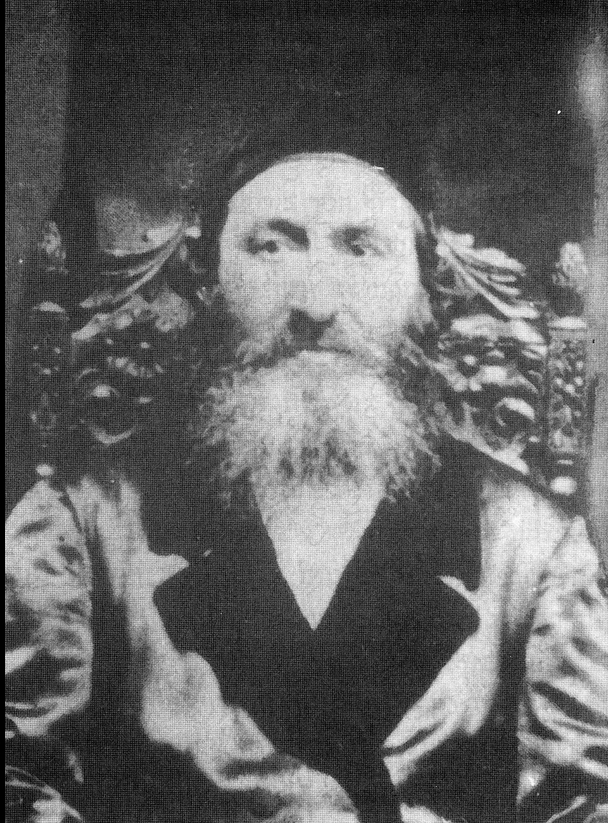
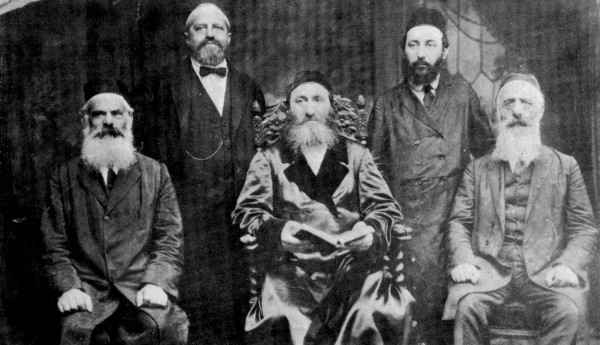
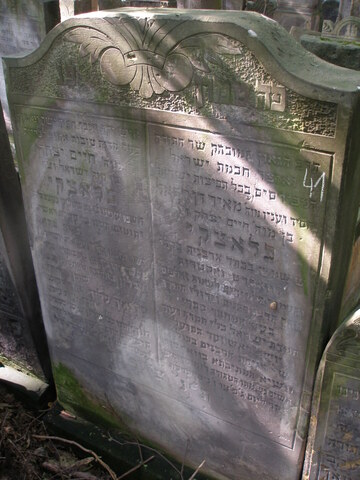
Rav Meir Dan Platzky zt"l
The Prodigy of Kutno
“Rabbi Meir Dan”, as he was called and known among the Jews of Poland, was a giant among rabbis. He served as the rabbi of the community of Dvart [Warta], the rabbi of the community of Ostrow Mazowiecka, and in his last days as head of the Mesivta yeshiva in Warsaw, the capital of Poland. But holding these positions per se did not add luster to his name; rather it was because of his great personality that these communities themselves became renowned. This personality sprouted and grew in the very heart of Chassidic Poland. He was educated in the lap of pure Chassidism to become a pillar of Torah and education.
Rabbi Meir Dan was born in Kutno in the year 5627 [1866–1867] to his father Rabbi Chaim Yitzchak Plotzky, a scholar and ardent Chassid, one of the followers of the Chassidic rebbe Rabbi Chanoch Henich of Alexander. After the latter's death he became one of the important followers of the rebbe of Ger, the author of S'fas Emes, and was among his inner circle. His mother, Mrs. Gela, was a distinguished woman and one of the most righteous and well known women of Kutno, who implanted in her beloved son the love of Torah and yiras Shomayim from the moment he could understand, even before he went to cheder.
When he was only eleven months old Rabbi Meir Dan came down with a mortal disease. The doctors in Kutno refused to treat him any further, as they saw no possibility of saving his life. His father Rabbi Chaim Yitzchak rushed to the house of his teacher, Rabbi Chanoch Henich Hacohen of Alexander, and bitterly poured out his heart about his terrible trouble. The rebbe gave him a blessing for a complete recovery, but Rabbi Chaim Yitzchak remained there, immersed in pain. He knew what the doctors of Kutno had said before he left his house. He had left his baby son at the very edge of death.
“Why are you worried? You will yet derive much pleasure from him. He will be a great rabbi in Israel,” the great rebbe said. Rabbi Chaim Yitzchak pulled himself together at that moment, and no longer hurried to get back to the bed of his sick child. He stayed for a while in Alexander in the presence of his teacher and rabbi. Then the little Rabbi Meir Dan gradually regained his strength. When he grew up and gained understanding, he was found to have exceptional abilities, an unusual acuity of mind. He was already thought of as a prodigy even before he was brought to the cheder.
His father Rabbi Chaim Yitzchak was never a wealthy man. He barely made a living as a clerk and trusted employee, a bureaucrat for wealthy Jews who owned great woodlands in western Poland. Generally his work, whether in the forest or in a village, was located close to where they felled trees. Rabbi Chaim Yitzchak wandered from place to place along with his family and his brilliant son. But his mother was concerned about his studies. So she went out and sold her jewelry and engaged exceptional teachers, who stayed in the villages with her family and taught the little Rabbi Meir Dan. He rapidly progressed in the levels of Torah study to the point where he was considered a great prodigy. When Rabbi Meir Dan eulogized his mother after her death he highlighted the greatness of her spirit, her rare moral qualities and the extraordinary deeds of a young woman who would sell her jewelry in order to have higher caliber teachers, who shared their high level of knowledge.
When Rabbi Meir Dan was nine years old he was no longer in the hands of wandering teachers. Even the best of them had nothing more to teach the young prodigy. So despite his young age his parents sent him to Kalish, to the yeshiva of the Gaon Rabbi Chaim Eliezer Wachs, the rabbi of the city and author of Nefesh Chaya. At first visitors to the rabbi's house had doubts about what such a young child was doing there and attending the rabbi's lectures, even if he were gifted. But once Rabbi Wachs examined Rabbi Meir Dan he immediately included him in the group of his best students. From that time on he never stopped loving him and caring for his needs. After a few years Rabbi Meir Dan moved to Sochachow [Sochaczew], to the yeshiva of the Chassidic rebbe Rabbi Avraham, author of Avnei Nezer, a place where exceptional scholars and giants of the Torah tended to concentrate. The lectures of the gaon of Sochachow were replete with such sharpness and depth that even adult students with great abilities at times found them difficult to comprehend. Nevertheless, the young Rabbi Meir Dan quickly succeeded in becoming part of this elite group. When he was thirteen years old his father arranged a Bar Mitzvah celebration in Kutno and invited all the leaders of the city to the event. Rabbi Meir Dan himself composed a discourse, which overwhelmed all those who heard it with its acuity and profundity. Word of the talk reached his teacher and rabbi, the rebbe of Sochachow. When Rabbi Meir Dan returned to his yeshiva he was asked to reprise his discourse that had become known. This veteran prince of the Torah listened to his young student and said, “One can debate what he said, but he built a beautiful structure and it would be a shame to bring it down when it is just as likely that it will stand….”
Head of the Yeshiva of Dvart
In Dvart, located in this district, a city full of wise men and sofrim [scribes; authors], great Chassidim and excellent scholars, there lived at that time Rabbi Mordechai, a Chassid and a learned man, a wealthy man and a man of good deeds. His wife was Mrs. Sheina Reizel, a righteous woman who grew up in the house of her uncle, the Gaon Rabbi Chaim Auerbach, chief of the rabbinical court of Linschitz [Leczyca].
Rabbi Mordechai had three daughters. The two older of them were married to great scholars who eventually served as rabbis. The first was Rabbi Yosef, chief of the rabbinical court of Kletcheva [Kleczew], and the second the Gaon Rabbi Menachem, chief of the rabbinical court of Kozminka [Kozminek]. For the youngest of his daughters, the talented and outstanding Tziril, Rabbi Mordechai sought an exceptional young man who was known as an outstanding gaon of note. In Sochachew at the yeshiva of the rebbe Rabbi Avraham he found the young Rabbi Meir Dan and took him as the groom for his daughter.
Rabbi Mordechai spent much money on the dowry and gifts. In the year 5642 [1882] Rabbi Meir Dan married his bride when he was just fifteen years old. His father–in–law Rabbi Mordechai spent a great deal of money so that Rabbi Meir Dan could acquire a large library and also took care of all his needs. For ten years Rabbi Meir Dan worked at studying Torah and became a great scholar, having no worries about his subsistence or that of his family, being reliant on the support of his father–in–law. In his sefer, Chemdas Yisrael, Rabbi Meir Dan says, “I am morally obligated to mention for good and blessing at the beginning of my book the name of my dear rabbinical, righteous and just father–in–law, who walked a straight path and loved Torah and its students, Rabbi Mordechai, may his memory be a blessing, and my dear and righteous mother–in–law, Mrs. Sheina Reizel, may she rest in peace, who supported me for ten years, when all my needs were dependent upon them in all matters, and I was able to study and teach worthy students.”
The grandfather of Rabbi Meir Dan, his father's father, was an outstanding gaon and Chassid and multi–talented man, named Rabbi Yisrael. He died in the year 5643 [1882–1883] when Rabbi Meir Dan was seventeen. On the day of his death the grandfather called for his grandson, asked him to put his hand on his heart and to swear that he would study with all his heart and soul and that he would cultivate innovative and profound ideas about the Torah. His grandfather's request never left the memory of Rabbi Meir Dan up until his final day. (This information is found in the introduction to his book, Chemdas Yisrael, Volume I, where he adds that he named his book after his esteemed grandfather.)
For a short time Rabbi Meir Dan studied in Dvart by himself. But soon a number of young men came to him, and he began to deliver his lectures to them. From that time on there was never an absence of a yeshiva around him. In the house of his rich father–in–law, surrounded by love and devotion, Rabbi Meir Dan dedicated himself to learning and teaching, day and night. He was always found in the midst of his studies. His yeshiva grew, and it became famous in the surrounding area and beyond. Its students were deeply attached to their teacher, the young gaon, whose name became well known in the entire world of Torah as one of the sharpest minds of his generation, a genius in Halacha and a genius in understanding. He diligently and rapidly went through both of the two Talmuds and the early and later commentators. He was a gaon whose sharpness of mind did not detract from the breadth of his knowledge and whose breadth of knowledge did not diminish his acuity.
Rabbi Meir Dan was a Chassid in every fiber of his being. He adhered to pure Chassidism with all his heart and soul and to his studies with enthusiasm and awe, with holiness and purity. He related to every iota of the Torah with fear and trembling, but also with love and soulful devotion. Study was never for him a matter of pleasure, but rather a holy undertaking. The Torah obligates every part of one's body, not just the mind and intelligence. Therefore he worked in the field of Torah with literally with all his strength. He approached the study of the Torah with a real hunger, as if he had never studied it before. Every day he would set aside time to infuse into his heart the love of Torah. Thus, there was no limit or parallel to his love of the Torah.
Gaon and Chassid
He was one of the devoted and sharpest Chassidim of Ger. He had a permanent place at the house of prayer of the Chassidim of Ger in Dvart, which was full of extraordinary men of learning and Chassidim, both old and young, enthusiastic in their service to God. His limitless devotion to Chassidism was planted in his heart by his father, Rabbi Chaim Yitzchak, and by his grandfather, Rabbi Yisrael. And so he maintained this precious heritage in every aspect. From a very young age he would frequently visit the holy ambience to be found at the court of the Chassidic rebbe Rabbi Aryeh Leib of Ger, author of the S'fat Emet [The Language of Truth]. After the latter's death he accepted the authority of the Chassidic rebbe Rabbi Avraham Mordechai of Ger.
The rebbes of Ger had a deep love for this young and exceptional gaon. There were very few like him in his generation. At the same time, every word that came out of the mouth of the rebbe was like a law for him, and every demand or request an obligation for which he was prepared to go through fire and water to fulfill. Rabbi Meir Dan viewed Chassidism as an integral part of the obligations incumbent upon every Jew of recent generations. Only Chassidism would prevent deviations in thought and action in our bereft generations, assuming that Chassidism was directed by a true tzadik, a saint of Israel.
Every person needs some real submission, and not only of the heart. Just as prayer needs to be expressed with your mouth, so, too, every submission needs to be expressed in actions. A person who has no teacher, no rabbi, and does not submit to anyone only diminishes his own stature. No matter who he may be there is a higher power above him and God helps him, Rabbi Meir Dan posited. Thus, he viewed in Chassidism an activity which supplemented his study of Torah and good work, and without which everything is deficient. Later in his life, when he was on a mission in America, he was asked by one of the Mitnagdic rabbis, “A gaon like you, who has mastered every aspect of the Torah, why do you need to travel so much and why do you need to submit to the rebbe so much?” Rabbi Meir Dan replied, “We learn that ‘thunder was created in order to straighten out the crookedness of the heart’. This teaching seems surprising and incomprehensible. For a person who infuses into his heart much Torah, his work consists of prayer, fear and love of God, the fear of sin and adherence to the blessed Creator. Is he not yet able to rid the crookedness from his heart with the strength of his Torah and fear of God? Must he wait until a day of rain, thunder and lightning storms in order to be able to expel the crookedness?”
“From this analogy we understand,” Rabbi Meir Dan went on, “that this crookedness, which is the fertile source of all poison and bitterness, cannot be cured by the person himself. Rather he needs help. The Chassid does not wait until a stormy day. He travels to the rebbe, who guides and directs him and prunes the wild growths that envelop the heart and soul of a person. He learns to know submission, its nature and substance. He absorbs his rebbe's Torah and teachings like a pupil before his master. He learns from his manner, his conversation and his conduct of affairs. His Torah knowledge is not diminished thereby, but rather his stature is only straightened.”
In the year 5663 [1902–1903] Rabbi Meir Dan published his sefer, Chemdas Yisrael, to which some of the greatest rabbis of the generation gave their enthusiastic endorsements. Among them were his teacher, Rabbi Avraham of Sochachew, the Gaon Rabbi Chaim Soloveichik, chief of the rabbinical court in Brisk [Brest–Litovsk], the Gaon Rabbi Eliyahu Chaim Meisel, the rabbi of Lodz, and others. They adorned the rabbi–author with the greatest of titles, they crowned him as being an awesome gaon, a prince of the Torah. But Rabbi Meir Dan, in printing their endorsements, edited out all the compliments that were directed at him, but made do only with references to “the rabbi.”
Most of the hours of the day he devoted to his holy work. He delivered several lectures to the students in his yeshiva per day. But in addition to this he was aware of everything that was going on in his community, Dvart. He served as the address for every bitter soul and every trouble that afflicted the people of the city or its environs, and never stinted in any effort to assist anyone who asked for help. He saw himself as responsible for the well being and health of all the poor and suffering, the widows and orphans in his community and the surrounding area. He never ceased in his devotion to the downtrodden.
Before the last world war ended the position of the rabbinate in Ostrow Mazowiecka became vacant. The rabbi of the community, Rabbi Yosef Kalish of Amshinov, was chosen as the Chassidic rebbe and chief of the rabbinical court of Amshinov in place of his father, the Chassidic rebbe Rabbi Menachem, who had just died. The people of the community of Ostrow Mazowiecka chose the Gaon Rabbi Meir Dan as their rabbi and teacher. As usual, Rabbi Meir Dan took no final step until he had consulted with his teacher and rabbi, the Chassidic rebbe Rabbi Avraham Mordechai of Ger. When the rabbi came to ask his question, the rebbe replied, “For a few years, why not?”
Rabbi Meir Dan no longer hesitated. He left Dvart and went to Ostrow Mazowiecka, where his reputation was as a great gaon, a prince of the Torah, a devoted rabbi and courageous fighter, one of the greatest rabbis of his generation, and a paver of the paths to Torah Judaism. In Ostrow Mazowiecka, as in Dvart, he immediately took the lead in all communal activities. He stood at the gates as a father and patron, responsible for everything that occurred within. He did not flinch before anyone, nor did he put up with anyone. He saw in the rabbinate a holy mission whose responsibilities must be fulfilled with devotion.
As the situation in Poland calmed down, the question of the organization of traditional Judaism once again rose to the fore. Rabbi Meir Dan was co–opted to this service, and was appointed as one of the leaders of Agudas Yisrael. The founders of this new movement were faced with a difficult problem, that of establishing a budget for the organization's activities. Without adequate financial resources it was clear that it would be impossible to establish a mass movement, with centers, hundreds of branches, and thousands of educational and other institutions.
Therefore it was by decided by the organizers of the Organization of the Faithful of Israel (a/k/a Agudat Yisrael) to send a high level delegation to England and the United States to encourage orthodox Jews to organize and offer their full support to the new movement. Chosen as head of the delegation was Rabbi Meir Dan Plotzky. Its members consisted of the Gaon Rabbi Asher Lemel Spitzer, chief of the rabbinical court of Kirchendorf [Kirchdorf], Rabbi Dr. Meir Hildesheimer of Berlin, Germany, Dr. Nathan Birnbaum, Rabbi Yosef Lev, who later served as rabbi in London, and Rabbi Yitzchak Meir Levin, may he live and be well, who headed the delegation only in England.
Rabbi Meir Dan was everywhere received royally. Rabbis and those knowledgeable about the Torah trembled before this great gaon, who was rightfully thought of as a prince of the Torah and a pillar of education. But the delegation did not succeed in raising the needed sums. Rabbi Meir Dan, who had a kind and gentle soul, did not succeed, as he was not adept at the games of honorifics by which fundraising was accomplished in America in those days. He did know how to flatter people, especially the nouveau riche, who were ignorant of Torah, did not have the fear of Heaven, and did not have the same charitable impulses to which Rabbi Meir Dan was accustomed.
Rabbi Meir Dan then returned to Poland. But a great shock now befell the state that had just attained its new political independence, after more than a hundred years of subjugation to Russia, Germany and Austria. The Bolshevik Red Army invaded Poland and attempted to conquer her anew. The Polish Army quickly retreated westward. In a relatively short time the soldiers of communist Russia had arrived at the gates of Warsaw.
He published his sefer, Klei Chemdah, on the Torah, which quickly captured the hearts of the Torah community in Poland and beyond. Major endorsements were given to this book by leading contemporary Torah scholars. Among them were the Gaon Rabbi Yosef Rosen, the Gaon Rabbi Meir Simcha of Dvinsk, the Gaon Rabbi Yosef Engel and others. The book was quickly sold out and made the name of its author famous as one of the sharpest geonim [pl.of gaon]. He also published the second volume of his sefer, Chemdas Yisrael, which included rabbinic responsa, lectures and moral discourses that Rabbi Meir Dan had delivered since he was appointed as rabbi and chief of the rabbinical court. These were only a few of the thousands of responses that the rabbi had sent to communities near and far, to hundreds of rabbis and dayanim [pl. of dayan] who had turned to him with all manner of serous issues and complicated questions. He responded quickly, precisely and clearly to every inquirer. He did not avoid deciding difficult matters of Jewish law, although he occasionally surrounded his replies with other topics, meandering through the Talmud and the early and later decisors in the course of clarifying the law.
At its first convention in 5682 [1921–1922], at which hundreds of rabbis took part, Rabbi Meir Dan was elected as chairman of the executive committee of the Association of Rabbis of Poland. He functioned in this framework principally in matters revolving around issues of Halacha. He refused to get involved in any activity that involved improving the economic status of rabbis. He left this matter to other rabbis.
In Agudas Yisrael
The Gaon Rabbi Meir Dan was active and involved in the organization of the Agudas Yisrael movement in Poland. Its firm establishment was important to him, and he did much on its behalf. The rabbi saw Agudas Yisrael, then known as The Organization of the Faithful of Israel, as very serious force for the strengthening of the ramparts of religion, for saving future generations for Judaism, for the prevention of the domination of anti–religious movements in the Jewish community, and for the rule of Torah in the life of the nation. Therefore he sharply opposed and totally rejected the wish of certain rabbis to appear politically unaffiliated. “At a time when full loyalty to the Torah has become a political party matter, how can a rabbi who fulfills his Torah mission see himself as unaffiliated? What rabbi can remain indifferent to the question of whether the Torah is that which determines all the ways and means of the life of the nation, or whether other factors, national or class ones, do?” he asked.
Even within the orthodox Agudas Yisrael movement Rabbi Meir Dan had his own distinct ideas and approach. A fundamental debate was then being undertaken in the new movement on the following question: who has the right to join Agudas Yisrael? The debate originated in Germany, Slovakia and Hungary, where separate orthodox communities existed [independent of the general Jewish community]. There were those who argued that only members of such separate communities could join Agudas Yisrael, since following the rulings of the giants of the Torah of the previous generation separate orthodox communities had been established. This would oblige every orthodox Jew to join these separate entities. There were even those who forbade joining the general communities, which included the non–religious and even the anti–religious, and whose provisions did not comply at all with the explicit Halacha. As opposed to them there were those who argued that it would be inappropriate to limit the world organization to the framework of the separate communities, and that it was incumbent upon Agudas Yisrael to include all Jews who observed the word of God, and not to prevent any Jew who indentified with its principles to join. Rabbi Meir Dan joined in this debate. As soon as he returned from the Agudas Yisrael mission to England and the United States he ceaselessly demanded that the gates of Agudas Yisrael should be opened to the maximum extent
in order to attract the masses to its ranks. Everything should be done so that the masses would join the movement in every locale, without being overly concerned with the minutiae of their observance. The very fact of their joining and being active within the framework of Agudas Yisrael under the authority of the leaders of the Torah would bring about a turning point in their lives and in all their actions. He voiced this opinion on every occasion, whether in the conferences of Agudas Yisrael or in the meetings of the Moetzet G'dolei Hatorah [The Council of Torah Greats], to which body he was elected on the very day of its founding.
Alongside the establishment of Agudas Yisrael in Poland was also founded the Tz'irei Agudat Yisrael [Young Agudat Yisrael]. Clubs were set up for young orthodox [men], along with libraries for its members and other religious youth. Many of the leading Chassidic rebbes and other rabbis in Poland were strongly opposed to the very idea of setting up of religious libraries. A religious youth should study Torah. So, too, should the working youth devote every free hour to Torah and its works, and not waste time reading books of literature, meaningless stories, which may contain poison dangerous to the soul.
But the young orthodox activists, who worked to establish clubs and libraries for the religious working youth, found a champion in Rabbi Meir Dan Plotzky, who saw this as an imperative of the times. “The libraries for youth will prevent the reading of forbidden and dangerous books that corrupt the soul, and do not, Heaven forefend, prevent the study of the Torah,” he ruled.
When in 5682 [1922] the national convention of Agudas Yisrael in Poland convened in Warsaw, Rabbi Meir Dan delivered an enthusiastic and fiery speech. He demanded of the masses to sanctify the name of Heaven by committing themselves to this undertaking. He energized the thousands who attended the convention who applauded enthusiastically. At the conclusion of his words a resounding sound blasted forth from the mouths of thousands, Sh'ma Yisrael Adoshem Elokeinu Adoshem Echad [Hear O Israel, the Lord Our God the Lord Is One]. This scene uplifted Rabbi Meir Dan. This lecture found particular favor in his eyes, to the point where it was printed in his book, Klei Chemdah (in the section dealing with the weekly biblical portion of Nitzavim).
During his decades at his yeshiva in Dvart, to which many young men streamed, and during his service as rabbi of Ostrow Mazowiecka, he nurtured thousands of students. As he approached sixty he began to pine for the days of his youth, before he had burdened himself with the onus of the rabbinate and when his time was completely free for spreading the Torah, for learning and teaching. When he was approached to accept the post as head of the Mesivta yeshiva in Warsaw, at which hundreds of young men studied, he responded positively. He even agreed to travel once again to the United States to raise the money needed to expand the yeshiva, to absorb hundreds of additional students, and to secure its existence. Thus, in the year 5686 [1926] the Gaon Rabbi Meir Dan left on this mission to the United States and remained there for many months.
Upon his return from the United States Rabbi Meir Dan resigned his position as rabbi of Ostrow Mazowiecka, to the distress of many of its residents who were tied to the rabbi with strong bonds of love and friendship. A spacious apartment was rented for him at 7 Marianska Street in Warsaw. The rabbi began his new job as head of the Mesivta yeshiva and began to give his opening lectures on the Laws of the Sanctification of G-d's Name of the Rambam. The rabbi hoped that in Warsaw, the capital of Poland and the largest Jewish community in those days, he could contribute to the Jewish and religious community, whether in the framework of Agudas Yisrael or the Association of Rabbis, etc.
Rabbi Meir Dan refused at first to have a synagogue in his home. He would attend one of the many Chassidic shuls of Ger in Warsaw, as just one Chassid among many. “From now on I am no longer a rabbi and am free from any of the requirements of praying at any one particular place,” he said gratefully. He was fortunate in his new position, and planned to expand the framework of the yeshiva, to raise its status, and to transform it into a center of Torah learning in Poland. Thus, many young men began to stream to Warsaw, applying to the Mesivta, the reputation of whose head was widely spoken of. Hundreds of young men, sharp and excellent, from all over Poland wanted to study Torah directly from the mouth of the leading gaon of the generation.
But the happiness of Rabbi Meir Dan did not last long. Just a few months after his arrival in Warsaw he fell ill with a disease from which he never recovered. The disease got worse day by day, to the distress of his many admirers, students and friends.
Even has he lay in his sick bed the gaon did not stop learning with enthusiasm, innovating ideas about the Torah. In the Compendium of Sermons that was published by the Association of Rabbis in Poland, Volume IX, in the year 5690 [1929–1930], page 16, the Chassidic rebbe Rabbi Yitzchak Zelig of Sokolow wrote, “Our colleague, the Chassid and Gaon Rabbi Meir Dan, chief of the rabbinical court of Ostroveh, just a few days before his death wrote me a letter reminding me to pray with him that he would be cured of his illness. He also wrote a note to clarify the text of the Mechilta on the weekly Bible portion of Vayakhel. I replied to him briefly to gladden him with words of Torah, knowing that words of Torah would make him feel better and that the light of the Torah will make him live. My reply did not reach him before he went up to heaven, to our great regret. I greatly loved his words of Torah that he innovated when he was beset with pain (may we not know of such), and this was Torah that he taught despite all this and remains to his credit.”
It is told that shortly before his death an expert physician, one of the great doctors of Poland, stood at his bedside. The doctor said to him that if you invest all your desires in a particular matter, and you derive maximal unlimited pleasure from it, it will stimulate strength within you that will help fight the disease and you might be able to overcome it.
When the doctor left, the Gaon Rabbi Meir Dan said, “In fact I have been fortunate to be counted among the type of rabbis who are sufficiently knowledgeable to deal with very serious and complex questions. So if I invest all my strength in this, it is clear that I will derive great pleasure from it, that I will be strengthened. But this will not be strength but rather pride, conceit, egoism. It is better to die than to fall into the morass of pride….”
In his last days he even wrote a will, saying that it might even help to lengthen his days. In his will he asked his sons, the Gaon Rabbi Yisrael Natan and the Gaon Rabbi Chanoch Henich, to publish the lectures that he gave on the observance of the Shabbos and to print his many Torah novellae. His pain grew from day to day, but it did not detract from his great concentration until the last moment of his life.
On the sixth day of Nissan 5688 [March 27, 1928], the Gaon Rabbi Meir Dan departed for on high, not quite attaining the age of sixty–two. There was much mourning after the death of this gaon and honored one of his generation. Many eulogies were given about him all across the Jewish world.
Appendix I – Rabbi Plotzky's Visits to the United States
U.S. passenger ship list records confirm that Rabbi Plotzky made two trips to the United States:
He arrived in New York City on the S.S. Adriatic from Southampton on May 27, 1921 (under the name Majer Don Plocki, age 54, Rabbi [written over “Priest”], from Ostrowo, Lomza Gubernia, Poland), traveling with Rabbi Josef Srul Lew, another member of the Agudas Yisrael delegation (see below). They were both marked as non–immigrants on three–month visits, with their trips being financed by the “Israel World Organisation” [sic]. Their destination was 194 Henry Street, New York.
He arrived on the S.S. Mauretania from Cherbourg on May 14, 1926 (under the name Majer–Don Plocki, age 58, Rabbi [written over “Rev'd.”], from Ostrow, Poland, Warszawska 22). He was marked as planning to remain permanently, with his destination being Congregation Beth–Chasidim of Poland. He was also listed as having a medical condition, a hernia.
The 1921 visit is described in several sources, including the book, “The Struggle and the Splendor,” by the late Rabbi Moshe Sherer (published by Agudath Israel of America, 1982), which is a history of that organization. Rabbi Sherer writes that in 1921 “a distinguished European Agudath Israel delegation came to the United States seeking to strengthen Torah allegiance and organize an Agudah movement here. Led by one of the outstanding gaonim of Poland, the Ostrover Rav, Rabbi Meir Don Plotzky, the group included Rabbi Asher Spitzer of Kurdorf [Kirchdorf], Slovakia, Rabbi Dr. Meir Hildesheimer of Berlin, Dr. Nathan Birnbaum, and Rabbi Joseph Lev.”
This material is made available by JewishGen, Inc. and the Yizkor Book Project