
Rav Mordechai Bennet zt"l
הרב מרדכי בן אברהם בינעט זצ"ל
Av 13 , 5584
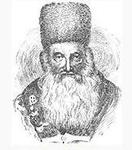
Rav Mordechai Bennet zt"l
Author of Parshas Mordechai and Techeiles Mordechai.
Rav Mordechai ben Rav Avrohom Banet (1753–1829) was chief Rav of Moravia born at Csurgó, a small village in the county of Stuhlweissenburg, Hungary.
A gifted child
As Rav Banet’s parents were very poor and consequently unable to engage a teacher, they sent their son when only five years old to his grandmother at Nikolsburg. There Rav Gavriel Markbreiter provided for the tuition of the gifted child for a period of six years, and then sent him to Ettingen, Alsace, the Rav of which place was Rav Markbreiter’s brother-in-law. The latter became Rav Banet’s teacher, and took great delight in his talmid’s wonderful development. At Rav Banet’s bar mitzva celebration his teacher showed the guests, to their great astonishment, three of the boy’s manuscripts: a commentary on the Chumash, a commentary on the Pesach Haggoda, and novellae on the Talmud.
From his thirteenth to his fifteenth year, Rav Banet devoted himself exclusively to the study of the Tenach, with the aid of the Meforshim (Jewish commentaries) and of the Haggoda in Talmud and Medrash; his strictly halachic studies he completed later in the Yeshiva of Rav Yosef Steinhardt at Fürth, where he remained three years. He then went as a chover to Prague, where Rav Meïr Karpeles started a private “klaus” for him; though Rav Yechezkel Landau (the Noda B’Yehuda) conducted a large Yeshiva in the same city, a number of able Talmudists came daily to hear Rav Banet’s discourses. After staying in Prague for two years, he married Rebbetzin Sora Finkel (niftar 1828), the daughter of a prominent well-to-do citizen of Nikolsburg. Here he settled in 1773, and within a year was made Av Bais Din.
Thirteen years later, he accepted the rabbinate at Lundenburg in Moravia, which he held for six months, when he resigned to become Rav at Schossberg, Hungary. His stay in his native country was short, and in 1789 he was appointed Rav of Nikolsburg and chief Rav of Moravia. Later on, he also received offers from Pressburg and Cracow, but yielding to the solicitations of his congregation, he remained at Nikolsburg. He was niftar in Carlsbad on August 12, 1829, where he had gone for treatment. His body was buried temporarily at Lichtenstadt, near Carlsbad, but seven months later was permanently interred at Nikolsburg, in accordance with his will.
His friend and colleague, the famed Chasam Sofer, had the highest esteem for him. The Chasam Sofer eulogized him and called him Ben Yochid Le’Kudsho Berich Hu (an only child to Hashem), meaning that no one was his equal.
His Works
Although Rav Banet’s works are neither numerous nor exhaustive, they are among the classic products of Talmudic literature in the eighteenth century. They are:
- Biur Mordechai, Vienna, 1813, a commentary on Mordecai ben Hillel’s compendium;
- Mogen Avos, Zolkiev, 1835, a treatise on the thirty-nine acts prohibited on Shabbos;
- Har haMor, responsa, with allusion to the rabbinical explanation of the name Mordechai as mora dakya (“pure myrrh”);
- Parshas Mordechai, Szigeth, 1889, responsa;
- Techeiles Mordechai, Lemberg, 1892, halachic and haggadic discourses.
All these works clearly show Rav Banet’s keenness, wide knowledge of rabbinical literature, and, what is more important, his logical and strictly scientific method. In contrast to his friends, Rav Moshe Sofer and Rav Akiva Eiger, who were casuists, Rav Banet avoided casuistry in discussing involved halachic questions, gaining his ends by means of a purely critical explanation and a systematic arrangement of the matter. An excellent example of Rav Banet’s criticism is his letter to the chief Rav of Berlin, Rav Tzvi Hirsch Levin, whom he tries to convince of the spuriousness of the collection of responsa Besomim Rosh. This collection was published by Rav Shaul Berlin, Rav Levin’s son, as the work of Rav Osher ben Yechiel (Parshas Mordechai, No. 5; Literaturblatt des Orients, v. 53, 55, 140). A comparison of Rav Banet’s criticism on the work with Zunz’s remarks on it (Ritus, pages 226–228) cannot fail to excite admiration of Rav Banet’s method.
Superiority of his Style
Rav Banet’s works differ in other respects from those of his contemporaries. His style is clear and elegant, and his language is a pure Hebrew. Moreover, Rav Banet’s attitude toward the strict Orthodoxy of his friends and colleagues was exceptional, and may be attributed to his knowledge of modern thought (compare his letter to Rav Tzvi Hirsch Levin in Literaturblatt des Orients, v. 54). These characteristics gave him an independent position in the struggle between Orthodoxy and the so-called “spirit of enlightenment”.
Views on Education
Frequently Rav Banet showed an insight lacking in his opponents. In his memorial to the government on the education of Rabbonim (printed in Toldos Mordechai, pages 35–37), he remarked that if the course of studies which the gymnasium demanded of candidates for all other professions were required of a rabbinical candidate, the latter would be fit for anything except the rabbinate. Still, far from objecting to a secular education for Rabbonim, as he was understood to do (see Löw, Gesammelte Schriften, ii. 190 et seq.), he favored it; but he thought that a Rav should first of all possess sufficient knowledge of rabbinical matters; and he proposed that a rabbinical candidate should devote his time chiefly to Jewish subjects until his eighteenth year. His opinions concerning the duties of a Rav, especially with regard to the instruction of children, show the strong influence that modern views had upon him. He wrote a catechism for religious instruction and submitted it in manuscript to the government. To judge from the letter accompanying it, Rav Banet’s views on the education of the young were sensible and in accordance with the spirit of the time.
Opposes Religious Reform
Nevertheless, Rav Banet, conscientiously opposing the new tendency, declared every reform in religious observance to be wrong and harmful. Thus, in a letter to the government concerning the introduction of German into divine service (ib. pages 38–42), he wrote in favor of the preservation of Hebrew. His attitude is significant in view of the fact that, many years later, Rav Zacharias Frankel used the same arguments in the convention of Rabbonim at Frankfurt-on-the-Main, 1845; and events have proven the truth of the prophecy made by Rav Banet: that if the tefillos are said in another language, few Jews will care to study Hebrew, and familiarity with the Hebrew Scripture will gradually cease.
Although Rav Banet was independent in his attitude, his learning and high character gained for him many faithful friends among young and old. Even the Chassidim respected him, and Rav Dov Ber, the “middle Rav” of Chabad, speaks highly of him in a letter (as of 1906) in the possession of J. L. Sossnitz of New York. Compare also Weiss, Zikronotai, pages 77–81.
The communities of Lichtenstadt and Nikolsburg contended for the honor of interring his mortal remains, and the dispute which later arose over the exhumation of the body was fought with the weapons of learning, and figures in the responsa literature of the time.
Rav Mordechai Banet was a talmid of the famed Rav Yechezkel Landau (Noda B’Yehuda) and was considered the Godol HaDor of his time. He was the one who gave the Chasam Sofer semicha.
Rav Mordechai was the Rav in Nikolsburg but in the last years of his life, he fell sick and moved to Lichtenstadt (near Carlsbad) for treatments.
When he was niftar on 13 Menachem Av, the people in Lichtenstadt buried him there quickly because they wanted his merit to stay and protect their town. When the people in Nikolsburg found out what had happened, they raised an uproar – and the question of should they reinter him came before the Chasam Sofer. In his teshuva (responsa), he ultimately gives three reasons why it was mutar to reinter him in Nikolsburg. And so it was: after six months on Zayin Adar his body was removed and brought forth and then on Sunday 12 Adar his holy body was re-interred in Nikolsburg.
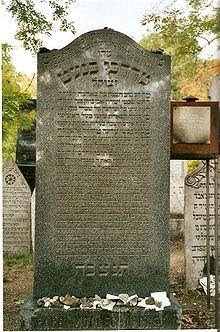
Following is the text of his matzeiva – denoting part of this story:
נוסח מצבתו:
מה רב טוב הצפון פה באדמה קבורה
ראש שבטי ישורון אבן פנה יקרה
דמע עיני כל תירדנה על שבר בת עמו
כי לוקח תפארת עוזמו מעל ראשימו
יפעת אורימו חשכה בעלות הכורת עלימו
בשוב נפשו עדינה טהורה אל מקורה
היה בן שבעים וחמש שנים לגבורה
לא נס ליחא ולא כהתה עינו מאורה
העמיד תלמידים הרבה והרביץ תורה
ובאחריתו היתה מאת ה' נסבה בגבורה
כי יסע לעיר קרלסבאד לשתות מי בארה
ושמה בקשו העליונים נפשו הטהורה
ביום ד' י"ג אב עזב אותנו לאנחה וצרה
לפרט עיני עיני ירדה מים ונפשנו מרה
ולמחרתו נקבר ע"מ לפנות בל"ש העירה
ואחריו בז' אדר בהסכמת שרי התורה
העלוהו בניו מקברו והובל פה העירה
והושם בין קברות משפחתו היקרה
בכבוד גדול בבכי והספד מרה
ביום א' י"ב בחדש אדר התק"ץ ליצירה
ה"ה אדוננו גאון הגאונים רשכבה"ג יקר בדורו
ויחיד בעמו כק"ש מו"ה מרדכי בנעט זצ"ל ע"ה
ארבעים שנה היה רועה נאמן
אב"ד ור"מ פה קהלתנו והמדינה
[Editor’s note: Several years ago, I made the trip to Nikolsburg to daven at his kever. We arrived very late at night in the bitter cold and wandered the cemetery aimlessly searching for his kever in the near-pitch darkness. We were almost at the point of leaving, when we quickly davened to be zoche to say a few chapters of Tehillim at his kever. Within seconds, we turned to the next row, and there, right in front of us, was his kever. I can attest that there is a palpable spiritual high at his kever].
Rav Mordechai once went away on summer “break” with his good friend, the Chasam Sofer, for a mere few weeks. When they returned, Rav Mordechai related to his son that the pair covered the complete Talmud Bavli, Talmud Yerushalmi, Shulchon Aruch, Rambam, Ramban and Kisvei HaAri HaKodosh – then stopped himself and said to his son that he had “spoken and revealed too much already”.
We would like to convey our special thanks to Rav Mayer Reichberg (ah brider) and the elusive Rav D. (who refuses to be named publicly) for their tremendous help with Rav Banet’s biography. May Hashem bless them in the zechus of these holy Tzaddikim to receive a profusion of shefa, brocha v’hatzlocha.
Stories of Rav Mordechai Bennet zt"l

The Chofetz Chaim related regarding Rav Mordechai Benet – that Rav Benet’s talmidim noticed how he had the custom to draw the shapes of letters with his finger in the air. They paid careful close attention and realized that he was drawing the pasuk (from Tefillos Yomim Nora’im): Ashrei Ho’Ish She’Lo Yishkachecha U’Ven Adam Yis’ametz Boch – “Happy is he who does not forget You (Hashem), and the man who strengthens himself in You”, reminding himself never to take his mind off his Creator.
The Chasam Sofer was known to write his responsa very quickly without any afterthought or regret. Once, an issue with an aguna was presented to him, and as was his custom he wrote a quick response and handed his response to his son, Rav Shimon, to deliver it to the Bais Din in Nikolsburg. Rav Shimon thought that since this was a grave and important matter, he would delay fulfilling his father’s errand, because perhaps his father rushed the response and might want to clarify or change it later. A few days later, the Chasam Sofer asked his son if he had delivered the responsa. His son replied in the negative and explained his reasons. The Chasam Sofer proceeded to tell his son the following: “In every generation, Hashem puts a Godol HaDor who has Siyata dishmaya and the halachic responsa will be in accordance with Hashem’s will. In this generation, I was chosen for this task. Please deliver the responsa immediately.”
When the lengthy responsa was received by Nikolsburg’s Bais Din, Rav Mordechai Banet opened up the letter and just read the last few lines of the halachic decree. When the Bais Din questioned Rav Mordechai about why he had not read the whole p’sak din, he replied, “In reality, I only need to see the last line, if the Chasam Sofer said muttar or ossur – and that would be enough. However, I read a couple of the last lines because reading the ksav yad (handwriting) of the Chasam Sofer brings about tremendous Yiras Shomayim.
Rav Mordechai was the Rav in Nikolsburg and in the last years of his life, he fell sick and moved to Lichtenstadt (near Carlsbad) for treatments.
When he was niftar, the people in Lichtenstadt buried him quickly because they wanted him to stay in their town. When the people in Nikolsburg found out what had happened, they caused an uproar – until the question if they should reinter him came before the Chasam Sofer. In his teshuva (responsa), he ultimately gives three reasons why it is mutar to reinter him in Nikolsburg (even though it was a very unpopular thing to do – because it gave the non-Jews ammunition to reinter bodies at their own discretion).
He also notes in his lengthy responsa, that the people in Nikolsburg are not to be believed that Rav Mordechai wanted to have his body returned – because he states that Rav Mordechai had affirmed in his lifetime that whoever will need salvation after his petira, should just come to his kever and his tefillos will be answered – and that incentivizes the people of Nikolsburg to try to have him buried near them. However, while he was writing the responsa, the Chasam Sofer fell asleep. In his dream, Rav Mordechai appeared to him and told him that he did indeed want to return to Nikolsburg – but Hashem wanted him to be buried in Lichtenstadt for the following reason:
When he was a young man, the shidduch to the girl that he was to marry was broken. This girl suffered embarrassment due to this fact and later married the Rav in Lichtenstadt. Rav Mordechai further related that with the help and tefillos of the Rav of Lichtenstadt, it was determined that the only kappora (absolution) that he could get was by being buried next to her in the cemetery for six months. And so it was: after six months his holy body was removed and re-interred in Nikolsburg.
Following is the text of his matzeiva – denoting part of this story:
[Editor’s note: Several years ago, I made the trip to Nikolsburg to daven at his kever. We arrived very late at night in the bitter cold and wandered the cemetery aimlessly searching for his kever in the near-pitch darkness. We were almost at the point of leaving, when we quickly davened to be zoche to say a few chapters of Tehillim at his kever. Within seconds, we turned to the next row, and there, right in front of us, was his kever. I can attest that there is a palpable spiritual high at his kever].
Rabban Gamliel said, “Make a rav for yourself and distance yourself from doubt and do not tithe by estimating.”
When Rav Ovadia Yosef used to teach Pirkei Avos he would illustrate the above Mishna with the following story:
Rav Mordechai Bennet was once in the resort town of Carlsbad vacationing at the spa, when he met a reform rabbi. The German reformer bragged to Rav Mordechai how all matters of Jewish ritual and law were under his auspices and how his ruling on all matters of halacha was the final word.
When Rav Mordechai tried to discuss Torah with him, he was horrified to discover that the reform rabbi was nothing but a complete am ha’aretz who knew absolutely nothing when it came to Torah and halacha!
“Tell me rabbi,” Rav Mordechai probed, “What then do you do when matters of kashrus are brought before you for a ruling? Let us say a chicken or fowl with a needle piercing its gizzard or a broken wing joint is brought before you. How do rule whether it is kosher or treif; how can you tell?”
“Well,” answered the flustered rabbi , I just rule stringently and declare it treif every time; I leave no room for doubt and I am machmir!”
“Let me tell you a story, said Rav Mordechai with a smile, “There was once a simple country bumpkin, a Jew who lived far away from the city in a rural village. He raised geese, fowl, and duck, and when they were brought to the slaughter, he would take them to the local shochet. The country Jew would then sell the meat and fat on the market and earn a living. Whenever they encountered a shaila – a halachic question as to the kashrus of the fowl (like the aforementioned cases of a needle or broken wing), he would saddle up his horse and ride into town to ask the rav to pasken and rule on the kashrus of the bird.
“Once, a prankster wandered into the village and met this simpleton. He realized that this was an opportunity to have a good laugh. ‘Listen my good man; let me give you some good advice,’ said the joker to the simpleton. ‘Why waste time and expense of traveling all the way to the city of Frankfurt to ask the rav your kashrus questions, especially in winter when the roads are in disrepair! Listen to me; you should let the dog decide and save yourself from traveling. You see, it says clearly in the Torah regarding treifos: “L’kelev tashlichin oso – throw treif to the dogs.” So, this pasuk proves that all treif meat really is the property of the dog. That’s your litmus test. Any fowl that has any doubt regarding its kosher status, just place the meat in front of the dog. If the dog eats it, this proves it is treif since it is his. If he leaves it alone, this will ‘prove’ that it is kosher!’ The simpleton’s face lit up, ‘What a great idea!’ And so the dog became the posek and amazingly, whenever a fowl with any question was placed before him, the hound quickly devoured the meat. After a month like this went by, our simpleton decided that enough was enough and he saddled his horse and headed off to the city of Frankfurt to see the rav. The rav inquired about his long absence. “Why have I not seen you for weeks? Did you not have any kashrus questions?”
“I did Rabbi, but you see,” answered the simpleton “I had many shailos with the chickens and I let the dog resolve them.”
“I see,” said the rav, “and so why did you come here now?”
“Well, that’s just it; the thing is, my dog is just too machmir; he only knows how to rule that the chickens are treif each time!” explained the simpleton.
Rav Mordechai concluded his tale and turned to the reform rabbi. “Looks to me like you share the same methodology with that dog in ruling stringently that all questions in kashrus are treif, eh?” (Anaf Etz Avos pp. 61-62)
Divrei Torah of Rav Mordechai Bennet zt"l
avos chapter 1 mishna 16
Rabban Gamliel said, “Make a rav for yourself and distance yourself from doubt and do not tithe by estimating.”
When Rav Ovadia Yosef used to teach Pirkei Avos he would illustrate the above Mishna with the following story:
Rav Mordechai Bennet was once in the resort town of Carlsbad vacationing at the spa, when he met a reform rabbi. The German reformer bragged to Rav Mordechai how all matters of Jewish ritual and law were under his auspices and how his ruling on all matters of halacha was the final word.
When Rav Mordechai tried to discuss Torah with him, he was horrified to discover that the reform rabbi was nothing but a complete am ha’aretz who knew absolutely nothing when it came to Torah and halacha!
“Tell me rabbi,” Rav Mordechai probed, “What then do you do when matters of kashrus are brought before you for a ruling? Let us say a chicken or fowl with a needle piercing its gizzard or a broken wing joint is brought before you. How do rule whether it is kosher or treif; how can you tell?”
“Well,” answered the flustered rabbi , I just rule stringently and declare it treif every time; I leave no room for doubt and I am machmir!”
“Let me tell you a story, said Rav Mordechai with a smile, “There was once a simple country bumpkin, a Jew who lived far away from the city in a rural village. He raised geese, fowl, and duck, and when they were brought to the slaughter, he would take them to the local shochet. The country Jew would then sell the meat and fat on the market and earn a living. Whenever they encountered a shaila – a halachic question as to the kashrus of the fowl (like the aforementioned cases of a needle or broken wing), he would saddle up his horse and ride into town to ask the rav to pasken and rule on the kashrus of the bird.
“Once, a prankster wandered into the village and met this simpleton. He realized that this was an opportunity to have a good laugh. ‘Listen my good man; let me give you some good advice,’ said the joker to the simpleton. ‘Why waste time and expense of traveling all the way to the city of Frankfurt to ask the rav your kashrus questions, especially in winter when the roads are in disrepair! Listen to me; you should let the dog decide and save yourself from traveling. You see, it says clearly in the Torah regarding treifos: “L’kelev tashlichin oso – throw treif to the dogs.” So, this pasuk proves that all treif meat really is the property of the dog. That’s your litmus test. Any fowl that has any doubt regarding its kosher status, just place the meat in front of the dog. If the dog eats it, this proves it is treif since it is his. If he leaves it alone, this will ‘prove’ that it is kosher!’ The simpleton’s face lit up, ‘What a great idea!’ And so the dog became the posek and amazingly, whenever a fowl with any question was placed before him, the hound quickly devoured the meat. After a month like this went by, our simpleton decided that enough was enough and he saddled his horse and headed off to the city of Frankfurt to see the rav. The rav inquired about his long absence. “Why have I not seen you for weeks? Did you not have any kashrus questions?”
“I did Rabbi, but you see,” answered the simpleton “I had many shailos with the chickens and I let the dog resolve them.”
“I see,” said the rav, “and so why did you come here now?”
“Well, that’s just it; the thing is, my dog is just too machmir; he only knows how to rule that the chickens are treif each time!” explained the simpleton.
Rav Mordechai concluded his tale and turned to the reform rabbi. “Looks to me like you share the same methodology with that dog in ruling stringently that all questions in kashrus are treif, eh?” (Anaf Etz Avos pp. 61-62)