
Rav Moshe Teitelbaum zt"l
הרב משה בן צבי הירש טייטלבוים זצ"ל
Tammuz 28 , 5601
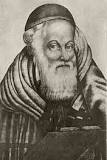
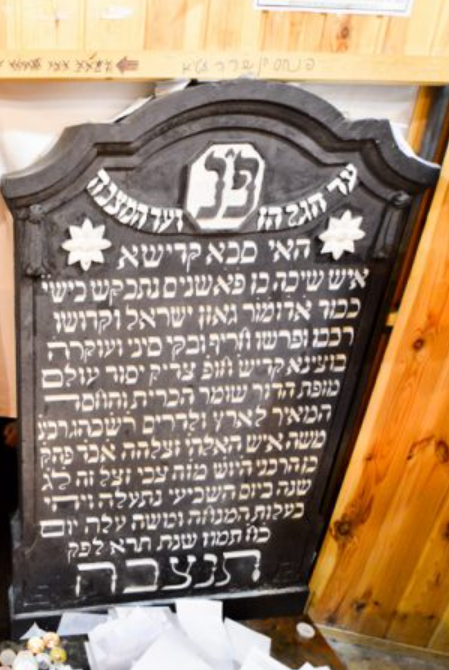
Rav Moshe Teitelbaum zt"l
Rabbi Moshe Teitelbaum [28 Tammuz 1841], known as the Yismach Moshe after the title of his book of Torah commentary, was famed both as a scholar and wonderworker. A disciple of the Seer of Lublin, he was instrumental in the spread of Chasidut in Hungary. His descendants founded the dynasties of Satmar and Sighet.
http://www.ascentofsafed.com/cgi-bin/ascent.cgi?Name=rebbeBios
Stories of Rav Moshe Teitelbaum zt"l

“Just look how his hands are shaking,” one shoichet pointed out to his friend, one of the other shoichtim. His friend just shook his head in silent agreement. It wasn’t the elder shoichet’s fault; he had simply reached a venerable old age, and as old age set in, so did rheumatism, and trembling hands. One thing the townsfolk agreed on: they no longer trusted the shoichet’s unsteady hands; they wanted him to retire. But the shoichet had his pride and refused to be forced into retirement. He and the townsfolk reached an impasse, with neither wishing to yield.
In the middle of the dispute, a new rabbi arrived—and with him, new hope for the resolution of the town’s problem. Rav Sholom Sofer (scion of the illustrious family of the Chasam Sofer) was hired to replace their recently retired rabbi. At the time, he was but a yungerman, a young avreich lacking the authority to remove the old shoichet from his position. Yet, as each side became more entrenched in their opinion, machlokes took over the town. Distinct feuding lines were drawn with some supporting the respected, but elderly shoichet, and others opposing him because of his shaky hands.
“How can you dare retire our beloved shoichet who has dedicated his life to ensuring that we eat kosher meat? Have you no shame?” argued one side.
“How can you not retire an old shoichet? It is precisely our dedication to kosher meat that forces us to replace someone whose hands tremble and can no longer serve as a competent shoichet! Have you no yiras shomayim?” argued the other side.
The new Rav, observing the controversy decided to speak with the Shoichet. He advised him as follows: “Look, my good shoichet, you see how bitter this dispute is. I am on your side; I don’t think there is any substance to their complaint. As a new rabbi here however, I lack the authority to take any concrete action to help you keep your position and put an end to the machlokes. My suggestion is that you go to the gaon, Rav Moshe Yosef Teitelbaum of Uhjel and ask him to test your abilities. Once he sees that your abilities as shoichet have not deteriorated, he will surely write you a letter of approbation. He will attest to the fact that the meat is kosher and that will settle the matter!”
The shoichet agreed and left for Uhjel.
When the Uhjler Rav, Rav Moshe Yosef Teitelbaum saw the Shoichet, he saw for himself how unsteady his hands were. Yet, he was unwilling to embarrass the elderly man. The rav suggested the following:
“I don’t have time this minute to sit and write up the letter. I have an idea; you go back home and as soon as I have the time, I shall write up a letter and send it straight to your rabbi, Rav Sofer back in Brezhna where you live.”
The shoichet agreed and returned home.
Some time passed and the yohrzeit of the Yismach Moshe approached. When Rav Sholom Sofer made his way to Uhjel for the yohrzeit, he stopped in to visit Rav Moshe Yosef as well.
“Well, well, I owe you a letter,” apologized the Uhjler Rav to the Brezhner Rav, Rav Sofer. “Please check what has happened to the letter you wished me to compose.” He pointed to a stack of papers on top of which lay letter rendered illegible due to a great blot of ink smeared all over it.
“Let me tell you the story of this letter: When I met your shoichet and I saw firsthand how his hands shook I realized I should write to you. Still, I didn’t want to shame the poor old man so I sent him home and promised to send you the letter. When I finally sat down to write the letter and address it, I fell asleep. As I slept, I had a dream. In my vision I saw my venerable zeide, the holy Yismach Moshe who questioned me in consternation:
“If they are searching high and low across the whole country for a murderer, someone who wishes to harm the livelihood and to shame an old man, spilling his blood, couldn’t they find anyone better than you?”
When the vision ended, I awoke with a start and the ink pot tipped over and ink spilled over the freshly written letter and ruined it, just as you see it here. I took this as a sign that I was not to be the one to send you this letter. Therefore, I haven’t sent you anything until today.” (Teshuas Tzaddikim p. 511)
The Tosher rebbe and the Satmar Rebbe both used to relate the following story on different occasions:
The Uhjler Rebbe, author of Yismach Moshe, once made a request that Heaven grant him the yiras shomayim of a Tanna. This request was denied on the grounds that he would be unable to withstand such yiras shomayim. He repeated his petition to at least receive the yiras shomayim of an Amora or one of the Geonim; yet again, his request was denied on the very same grounds: He would simply be unable to handle such yiras shomayim. Finally, he made a third request, to be granted the level of yiras shomayim of the Rambam. This final tefillah was answered. The Yismach Moshe saw however, that he was simply incapable of withstanding such a yiras shomayim. He then davened that it be taken away - and so it was. (Teshuos Tzadikim see also Avodas Avoda Sichos Shemos)
Rav Moshe Teitelbaum of Ujhel, author of Yismach Moshe and founder of the Satmar Dynasty, once testified about himself that in one of his soul's past lives (gilgulim), he was among the dor hamidbar, the generation that wandered in the desert for forty years.
Upon hearing this wondrous account, his grandson, the Yetev Lev, asked him, "Zeida, if you lived among the dor hamidbar, you must have been present during the great battle between Korach and Moshe Rabbeinu! Tell us, Zeida, whose side did you take during the dispute?"
"Well," explained the Yismach Moshe, "there were actually three sides during that dispute. One group sided with Moshe Rabbeinu. Another group followed Korach and sided with him against Moshe and Aharon. The third group stayed neutral; they did not take sides at all. I myself was part of this third group; I did not take any sides."
Seeing the look of incredulity on his grandson's face, the Yismach Moshe hastened to explain how he could have refrained from siding with Moshe: "You must understand that even to take a neutral position and not involve oneself in the dispute was quite a feat. It was a real nisayon to remain neutral and not side with Korach. Korach was a great man; he studied Torah all day long. Moshe, busy with communal matters, was always seen coming and going. Believe me, it was not easy! It was a great and difficult test just to have been part of this third group and not to have joined Korach!"
The Yismach Moshe explains Korach's principal argument against Moshe's leadership:
"For the entire congregation (kol ho’eida) – they are all (kulom) holy" (16:3) in the following way:
His contention was that if all Jews are holy, then by definition they are all – including Moshe and Aharon – equal. By what right then, did Moshe and Aharon take leadership positions?
In order to understand Korach’s line of reasoning, the Yismach Moshe analyzes the pasuk’s use of the word kulom (“they are all”). The pasuk has already said kol ho’eida ("the entire congregation”). Surely the word kol (“entire”) refers to the whole of Klal Yisrael? Why do we need the extra word kulom? Why could Korach not simply say, "For the entire congregation is holy", rather than "For the entire congregation – they are all holy"? What meaning do these extra words convey?
The Yismach Moshe gives us a beautiful parable of a musician who plays a stringed instrument such as a harp or violin. Each string he plucks creates a different sound. Some strings have a light, airy sound and are pleasant even when played on their own. Others, however, have a discordant, “off sounding” pitch when plucked alone. It is when the strings are played in unity that they create a harmonious blend of sweet melodies.
Further, a seasoned musician knows which strings produce which notes. He knows his music and plays it without having to pluck each string to test its sound. A novice musician will need to test each string before he learns how to play a new, unfamiliar piece.
Thus, the pesukim in Tehillim 33 tell us: "Sing in praise to Hashem, you righteous ones; for those who are straight and just, praise is becoming. Give thanks to Hashem with the lyre; with a ten-stringed harp intone to Him. Sing Him a new song; they are pleasant when played together [terua, from the word re’us – togetherness]."
Based on the above parable, the Yismach Moshe reads these verses in Tehillim as follows: "Sing in praise to Hashem, you righteous ones": You might think that, logically speaking, only truly righteous and just individuals, who have never sinned or strayed from the straight path, have the right to praise Hashem with song, and that only "for the straight and just ones, praise is fitting.” How can someone tainted by misdeeds praise a king? Wouldn't the king be displeased by a song performed by a traitor?
Hashem, however, in His infinite kindness and mercy, hears and accepts the songs and praises of all His servants--even those whose deeds are like the malodorous chelbona, which was nonetheless an essential ingredient in the sweet-smelling ketores.
So, the pasuk tells us, "Give thanks to Hashem with the lyre; with a ten-stringed harp intone to Him." Just as a musician uses a multi-stringed instrument--with each string having a different quality--knowing that, in harmony, they produce exquisite music, so too all Jews should sing to Hashem, regardless of whether or not they are tzaddikim -- for together, they produce magnificent melodies.
"Sing Him a new song": just as the amateur musician must test out each string on its own when he plays a new tune, and each string, on its own, may generate discord, nevertheless, "they are pleasant when played together."
Similarly, says the Yismach Moshe, in every generation there are individuals who may not live up to the level of tzaddikim. However, as one unified congregation they can serve Hashem with praise.
This was Korach's argument. He said "the entire congregation" was holy – but not just that – they were “all holy." With this additional word, he was making the claim that all Klal Yisrael were on an equal spiritual footing, and that Moshe and Aharon therefore had no right to elevate themselves as leaders.
Of course, we know that his argument was flawed. There are always weaker individuals who are not on par with the talmidei chachomim and tzaddikim of their generation. Even so, by seeing ourselves as separate – but equally essential – strings on a ten-stringed harp, we may praise Hashem with a glorious melody.
Elazar Nissan was the only son of Rav Moshe Teitelbaum of Uhjel, author of Yismach Moshe. When Elazar Nissan was nine years old, he fell precariously ill. The Yismach Moshe and his wife watched with growing despair as their child burned with fever while the doctors gave little hope for his recovery.
The Yismach Moshe decided that his son’s life was dependent on the tefillos of someone greater than himself. He appointed two faithful Jews as his emissaries and sent them to Lizhensk to beseech Hashem in the merit of the tzaddik, the Rebbe Reb Melech. “When you arrive at the beis hachaim,” Rav Moshe explained, “say out loud that you vow a neder to give a coin to tzedakah for the sake of the neshama that will approach the holy soul of the Rebbe Reb Elimelech on High.
Tell him that we have arrived to daven to Hashem at his tziyun. What will happen,” explained Rav Moshe further, “is that your vow will stir up all the neshamos that are hovering near the tziyun. They will each wish to deliver the coin to the holy tzaddik for charity since, in the world of truth known as olam ha’emes, the merit of a mitzvah is a very precious and valuable asset. Therefore, all the neshamos will vie to be the one that succeeds in reaching the Rebbe Reb Elimelech first and having the coin’s merit be ascribed to their own neshama. After this all transpires, you can approach the tziyun of the Noam Elimelech and daven there for my son’s refuah.” The Yismach Moshe then added: “Please pay attention to your watches and note the time when you daven at the tziyun so we can compare the timing when you return.” The shluchim listened carefully to the rebbe’s request and started on their way as agents to fulfill the request.
Sometime later, the child awoke from his feverish dreams and called out: “Tatty Tatty!” When the Yismach Moshe hurried over, young Elazar Nissan told him: “From now on I will get better, I won’t be sick anymore and I will get up out of bed and be healthy again!” Overjoyed, the Yismach Moshe asked, “my son, how do you know this?” “Because Tatty,” explained the child, “just this very minute a great rebbe came to see me.” He then described perfectly just how the Rebbe Reb Melech looked. “He gave me a berachah that I would get better and be healthy from now on!”
The Yismach Moshe checked his watch. Off course when the shluchim returned and they compared notes, the time of the child’s miraculous recovery and the time that they were davening at the tziyun matched exactly! (Tehillah L’Moshe)