
Rav Shmuel Shmelke Horowitz of Nikolsburg zt"l
הרב שמואל שמלקה בן צבי הירש הורוביץ זצ"ל
Iyar 1 , 5538
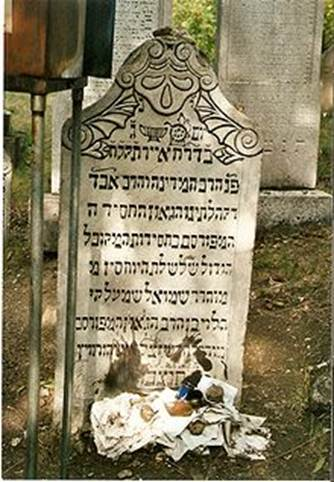
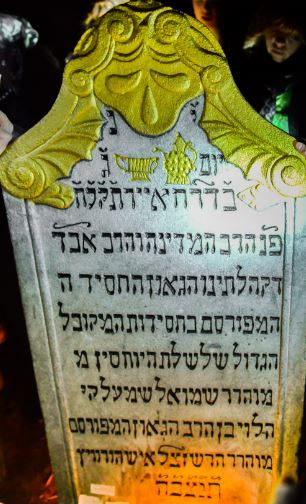
Rav Shmuel Shmelke Horowitz of Nikolsburg zt"l
Rabbi Shmuel Shmelke HaLevi Horowitz of Nikolsburg (Iyar 1778) was a major disciple of the Maggid of Mezritch along with his younger brother, Rabbi Pinchas, who became the Rabbi of Frankfort (see above). Many of the leading rebbes in Poland and Galitzia were originally his disciples. Among the books he authored are Divrei Shmuel and Nazir HaShem. Rav Shmuel Shmelke’s daughter Chava married Rav Elozor Rokeach of Brody, who later became Rav of Amsterdam.
http://www.ascentofsafed.com/cgi-bin/ascent.cgi?Name=rebbeBios
Stories of Rav Shmuel Shmelke Horowitz of Nikolsburg zt"l

Rav Levi Yitzchok of Berditchev is most famous for being one of the greatest of the early Chassidic masters, an extraordinary Tzaddik aflame with love for Hashem and His people. At the same time, he was an outstanding Gaon who served as the Rav and head of the rabbinical court in the city with which he is associated. He did not, however, take the post of Rav of Berditchev until 1785, when he was forty-five years old. Before that, he was Rav in several other cities, the first of which was Ryczywohl. The illustrious Rav Schmelke of Nikolsburg had been the Rav of Ryczywohl before being invited to serve as Rav of Nikolsburg. When he left, he was succeeded by his brilliant talmid, Rav Levi Yitzchok, who was only twenty-one years old.
Rav Levi Yitzchok came to be a talmid of Rav Schmelke because of a dream he had. After his marriage to his wife Perel, Rav Levi Yitzchok lived in the home of his wealthy father-in-law Rav Yisrael Peretz in the city of Levertov. Rav Levi Yitzchok did not feel that Levertov was the place for him. He yearned to study in the Yeshiva of Rav Schmelke, but his father-in-law insisted that he remain in Levertov. At that time, Levertov was a bright star in the Torah galaxy. Among its illustrious Talmidei Chachomim were Rav Yosef Thumim, the author of Pri Megodim, and Rav Yissochor Ber of Zlotchov, the author of Mevaser Tzedek and Bas Eini. What better place could there be for a young Torah prodigy such as Rav Levi Yitzchok than Levertov?
As time went on, Rav Levi Yitzchok’s discontent manifested itself in his physical appearance.
“Why do you look so drawn?” his father-in-law asked him.
“Every night I dream,” he said, “that I must go study with Rav Schmelke.”
“Very well. If your heart is so set on it, then you must go.”
Rav Levi Yitzchok became one of the star talmidim that Rav Schmelke brought to the holy Rebbe Rav Ber, the Maggid of Mezeritch and successor to the Ba’al Shem Tov as leader of the Chassidic movement. The others were Rav Yisrael, who later became the Maggid of Kozhnitz, and Rav Yaakov Yitzchok, who later became known as the Chozeh of Lublin.
There was another young prodigy living in Ryczywohl at the time Rav Levi Yitzchok became its Rav. His name was Rav Uziel Meisels, and he was the future author of Kerem Shlomo, Tiferes Uziel and Eitz HaDaas Tov. Recently married, he was living in the home of his wealthy father-in-law while he was learning Torah.
Rav Levi Yitzchok was a fiery Chassid of the Maggid of Mezeritch and emulated his ways. When he prayed or made berochos, his body trembled uncontrollably, and he would cry out at the top of his lungs in an ecstasy of devotion. Rav Uziel was not accustomed to this kind of behavior. It offended his sensibilities, and he disapproved. Since he was wealthy and learned, he felt no need to conceal his distaste for Rav Levi Yitzchok’s behavior, even though Rav Levi Yitzchok was the Rav of the city.
The first time Rav Uziel attended one of Rav Levi Yitzchok’s deroshos, he sat quietly among the people with his hands folded in his lap, listening to the Rav’s words with intense concentration. Rav Levi Yitzchok began by posing a number of sharp and perplexing questions regarding a difficult sugya. Then he rigorously proved one point after another with numerous citations and seemingly impeccable logic, laying foundation upon foundation until he had built a stunning intellectual edifice and resolved all the questions and difficulties in one sweeping revelation of the true meaning of the sugya.
Those among the audience who were able to follow the intricacies of Rav Levi Yitzchok’s reasoning were awed by his insight and genius. Rav Uziel, however, was not so impressed. He pointed out an inconsistency in Rav Levi Yitzchok’s reasoning, whereby the entire edifice collapsed. Rav Levi Yitzchok listened quietly. Then he nodded his head and walked away. Rav Uziel felt it was his duty to expose the Rav’s flaws, and he was pleased that he had done so. In the course of the next few months, this scenario repeated itself several times. Rav Levi Yitzchok would deliver a dazzling derosha, and Rav Uziel would dismember it with a few surgical arguments and questions.
One time, Rav Uziel had occasion to travel to a distant town, and his father-in-law placed his carriage drawn by three fine horses and his coachman at his disposal. As he traveled along the road in plush comfort, he noticed a Jewish man with a bundle slung over his shoulder trudging along the roadside. Rav Uziel ordered his coachman to stop the carriage.
“Sholom Aleichem,” he called out to the traveler.
“Aleichem sholom,” the man replied.
“Where are you going?” asked Rav Uziel. “Perhaps I can give you a lift. Why should you tire yourself out going on foot when you can ride in comfort with me?”
“I am going to Mezeritch,” said the man.
“Perfect. We will be passing that town, and it will be my pleasure to take you to your destination.”
The man smiled. “Thank you so much. I will gladly take you up on your offer.”
Rav Uziel helped the man into the carriage. Then he gave the signal to his coachman, and they continued on their way.
Rav Uziel extended his hand. “My name is Uziel Meisels. And what is yours?”
“I am Elimelech. You can call me Meilech.”
“You look like a Talmid Chochom, Rav Meilech. I would love to hear some words of Torah from you.”
Rav Meilech shook his head. “It is true that I try to learn a little bit, but I can see that you are the one who is the Talmid Chochom. And you are obviously wealthy. Torah and greatness in one place! No, Rav Uziel, it is you who should be saying words of Torah.”
“Well, perhaps later. By the way, Rav Meilech, where are you from?”
“I’m from Lizhensk.”
“Lizhensk? You are certainly a long way from home. And you’re going to Mezeritch?”
“Yes.”
“Very interesting. Why are you going to Mezeritch? What business do you have there?”
“That is where my Rebbe is. I am going to learn Torah from him.”
“And who is your Rebbe?”
Rav Meilech’s face lit up. “The Rebbe Rav Ber, the holy Maggid of Mezeritch.”
Rav Uziel stroked his beard and knitted his brows. “You are not a young boy any more, Rav Meilech, and I can see just by looking at you that you’re a real Talmid Chochom in your own right. Why then must you travel so far to learn Torah? Is he such a genius? Does he have what no one else possesses?”
“My Rebbe’s greatness in Torah has no bounds. The entire world is open before him, and when he speaks, I catch glimpses of the ultimate truth of the universe.”
Rav Uziel was intrigued. “If he is indeed so great, I would like to meet him and see his greatness for myself. Do you think I could come with you to Mezeritch? Would he meet me?”
“I’m sure he would,” said Rav Meilech.
When they reached Mezeritch, Rav Uziel alighted from the carriage together with Rav Meilech. He instructed his coachmen to stable the horses and get him a room at the inn. Then he walked together with Rav Meilech to the house of the Maggid of Mezeritch.
The attendant who opened the door solemnly shook their hands. He nodded familiarly to Rav Meilech and asked both of them to wait. It would be a few minutes before the Maggid could see them. Other than that, they did not speak. The attendant did not ask who Rav Uziel was. As they waited, Rav Uziel saw that Rav Meilech grew more excited by the minute, and he too felt his breath quicken with anticipation.
Finally, the door opened, and they were shown into the Maggid’s presence. Rav Uziel took one look at the Maggid’s face, alight with a spiritual glow such he had never seen before, and he shrank back.
“Now, whom should I greet first?” said the Maggid. “Should it be you, Meilech, because you are a Talmid Chochom? But our guest is also a Talmid Chochom, and a wealthy man besides. Perhaps I should greet him first.” He closed his eyes and mulled over this question for a moment. Then he looked up. “Sholom aleichem, Meilech! Sholom aleichem, Rav Uziel!”
Rav Uziel was so flabbergasted that it took him a moment to gather his wits and respond. How could the Maggid, who had never laid eyes on him, know his name?
“Aleichem sholom,” he finally managed to say.
“Where are you from, Rav Uziel?” said the Maggid.
“Ryczywohl.”
“Ah, Ryczywohl. So you know my talmid Rav Levi Yitzchok.”
“Yes, I do.”
“What do you say to his brilliance and vast knowledge? He is an amazing genius. Wouldn’t you agree?”
Rav Uziel did not want to contradict the Maggid, but he felt compelled to answer honestly. He cleared his throat and took a deep breath.
“Actually,” he said, “I am not very impressed with him.”
The Maggid lifted his eyebrows. “And why would you say that?”
“Because on a number of occasions I’ve pointed out errors and inconsistencies in his derashos, and each time, he nodded his head and retracted.”
“Indeed?” said the Maggid. “I would like to hear more about this. Do you happen to recall any of these derashos that you refuted?”
“Yes, I do.”
“Good. Then tell me what he said and also the errors you pointed out.”
Rav Uziel had a phenomenal memory, and he was able to repeat several of Rav Levi Yitzchok’s derashos almost word for word. Then he posed the arguments whereby he had forced Rav Levi Yitzchok to retract his words.
“Very well,” said the Maggid when he was finished. “I want you to listen closely while I explain to you what Rav Levi Yitzchok said and meant, and you will see that there was no basis at all for the objections you raised.”
The Maggid patiently explained what Rav Levi Yitzchok had said, and as he spoke, and as the structure of the argument was reconstructed with great clarity, all the objections were shown to be baseless. Rav Uziel suddenly realized that this was exactly what Rav Levi Yitzchok had intended – that it was he who had misunderstood. He found it deeply disturbing that he should have missed the essential points of the derashos when the logic was so clear. And at the same time, he was overcome with amazement at the genius of the Maggid before whose eyes, it seemed, the entire Torah, the revealed and the hidden, lay open like a book.
“Rebbe, you are the light of Yisrael!” he cried out. “I am so grateful that I now see the truth in Rav Levi Yitzchok’s words. It is so clear now, that I cannot imagine how I did not see it before. But I don’t understand why he retracted. Why didn’t he just answer my questions?”
“He certainly could have done that,” said the Maggid. “But he does not care about his own honor, and he didn’t want to humiliate you.”
As soon as he left the room, Rav Uziel sent the carriage and coachman back with a message to his family that he would be staying in Mezeritch for an extended time. He had found the wellspring of Torah from which he would drink for the rest of his life.
The Rebbe of Dzikov would relate the following tale every year: The holy Rebbe of Belz told the holy Rebbe of Kominka the reason behind a trip that the Rebbe Reb Elimelech made to see Rebbe Reb Shmelke of Nikolsburg. Once, the three Avos, Avrohom, Yitzchok and Yaakov, visited Rebbe Reb Elimelech. He asked them how the coming year would fare. They answered him that all the tefillos of the past had been accepted for good, more so than in previous years. The next year they came again, but this time they said the opposite: none of the tefillos were able to ascend properly. If not for the four pillars of the world, the world would not have been able to continue existing. Rebbe Reb Elimelech asked the Avos to reveal the identity of these four pillars. They told him that one of these four was Rebbe Reb Shmelke of Nikolsburg. Rebbe Reb Elimelech traveled to Nikolsburg to see the Rebbe. When he arrived at Rebbe Reb Shmelke’s door unannounced, Rebbe Reb Shmelke ran toward Rebbe Reb Elimelech and said to him, “Who are the other three?” (Ateres Zekeinim, p. 24; Ohel Elimelech 9)
Once Rebbe Reb Elimelech was on his way to the mikve accompanied by another Jew, when he heard a heavenly voice call out, “He who helps Rebbe Reb Shmelke overcome the wicked people in Nikolsburg will be assured a portion in the World to Come!” Rebbe Reb Shmelke had suffered terribly at the hands of some of the local residents. Rebbe Reb Elimelech asked the fellow who was with him if he had heard anything. The man had not. The Rebbe said to himself, “Since I heard this myself, it is a sign that I must journey to Nikolsburg.” He set off for Nikolsburg, and when he arrived he went straight to the house of Rebbe Reb Shmelke and asked him permission to give a discourse in the shul and rebuke the congregation. “And what good will it do for you to scold them?” Rebbe Reb Shmelke replied. “They will accept no tochocha.” But Rebbe Reb Elimelech insisted, and finally Rebbe Reb Shmelke gave in and granted him permission.
Rebbe Reb Elimelech went to the shul, where many people had gathered to hear his discourse, and he began to lecture. It seemed he had set out to prove to them how several sins listed in the Torah could actually be permitted. This type of speech was quite to their liking, and it whetted their palates for more. And so it was announced that Rebbe Reb Elimelech would speak again in the shul the next day, and the congregation returned in droves; almost the whole town showed up to hear the discourse.
This time Rebbe Reb Elimelech proceeded to prove to them how false were yesterday’s proofs and how all the sins in the Torah are quite grave and it is forbidden to transgress even the slightest of prohibitions of the Rabbonim’s enactments and decrees. His words stirred feelings of repentance and regret in their hearts until they began to cry. “Our own Rebbe [referring, of course, to Rebbe Reb Shmelke] told us these truths, only we refused to listen to him. We must all go to beg his forgiveness and make amends.”
They went to their Rebbe and fell on their faces, begging for forgiveness. They promised to listen and heed his words from then on – now that Rebbe Reb Elimelech had proven to them that their Rebbe’s words were true.
Having accomplished his mission, Rebbe Reb Elimelech asked to be granted leave from the Rebbe Reb Shmelke and he left town.
When he left Nikolsburg, he heard another heavenly voice proclaim, “Since you have aided the Rebbe Reb Shmelke, we grant you that anyone you bless within the next twenty-four hours shall be blessed.”
Rebbe Reb Elimelech walked and walked for almost a whole day, and yet he did not encounter a single Jew to bless. The Rebbe cried before Hashem, “Here You have given to me this gift for twenty-four hours and whom will I bless with it?” Suddenly, he saw a woman walking in the field and immediately he began blessing her. She became frightened and fled. The Rebbe called after her, “Do not be afraid! I am not an evil man, Heaven forbid. Tell me: where are you from and what is your occupation?” She stopped running and answered his questions, then allowed Rebbe Reb Elimelech to finish blessing her and they each went on their way.
When the woman arrived home, she told her husband about the stranger and his blessings. Sure enough, their fortune turned for the better, and their standard of living grew until they were quite wealthy. Seeing the result of the Tzaddik’s blessing, the couple believed that this man had been Eliyahu HaNovi in disguise, for they saw with their own eyes that all their handiwork was blessed. This couple established a fine home with servants in the city, and the wealthy man gave his servants permission to distribute donations up to a gold dinar without even consulting him.
Time passed, and Rebbe Reb Elimelech and his brother Rebbe Reb Zusha were traveling together, collecting charity to free captives, when they heard about this wealthy and charitable man. They traveled to his city and called on him, and his servants came to give them a donation. They refused the amount the servants offered, though they were being offered a golden dinar. They insisted on seeing the affluent man himself.
When they entered the rich man’s home, his wife saw them and recognized Rebbe Reb Elimelech. She was so overcome that she fainted, causing a great commotion in the household. When she came to, she told her husband that this man was Eliyahu HaNovi who had blessed her several years earlier.
Rebbe Reb Elimelech immediately declared that he was not Eliyahu HaNovi, and he had not come to take away their wealth, Heaven forbid. On the contrary, he was happy to see that his blessings bore fruit. The wealthy man asked them how much they needed to collect to redeem the captives. “Five hundred coins,” they said. The rich man left the room and soon returned with the entire sum. But they refused his generous gift, saying that they wanted to let other Jews have a hand in the merit of this great mitzva.
After much entreaty and pleading by the rich man, they accepted from him half the amount.
(Sichos Tzaddikim 17).
Rebbe Reb Shmelke lived for fifty-two years like Shmuel HaNovi. He used to say that his soul was a spark of Shmuel HaNovi except that because they added the name Shmelke he was not completely like the Novi.
In order to be accepted to his Yeshiva, every new student had to accept the following rules and conditions:
He must learn with all his soul and all his strength and not ever go to bed or to sleep, rather to study until he collapsed from fatigue. He once passed by a student who lay in the hallway, apparently collapsed from tiredness, his head on his folded jacket instead of a pillow. When he awoke, Rebbe Reb Shmelke berated and chastised him: if he still had the strength to fold his jacket and lay down on it, he still had strength left to learn – and that was unacceptable!
Once, a foreign ruler summoned Rebbe Reb Shmelke before him. The Rebbe Reb Shmelke traveled together with his talmid, Rav Moshe Leib Sassover. Together they journeyed by ship and were at sea for many weeks. It was the night of Rosh HaShana when a great sea storm raged and began to toss the ship to and fro among the high waves. The entire crew was seized with fear and thought that at any moment they might capsize and drown. Rebbe Reb Shmelke was deep in meditation while Rav Moshe Leib Sassover sang and danced all night, singing Shiras HaYom – oz yoshir Moshe – bellowing in a loud voice!
Every few minutes Rebbe Reb Shmelke asked if it was already dawn, as he sat in eager anticipation, burning with hislahavus, aflame with excitement for the upcoming moment when he could blow shofar!
As soon as dawn broke, Rebbe Reb Shmelke blew the shofar and immediately the storm ceased, the waves calmed down and the sea returned to normal. They were saved!
Afterward, Rebbe Reb Shmelke asked Rav Moshe Leib why he sang and danced.
“I thought at any moment we would drown and I would come face to face with my Maker. I was so excited to meet and see Hashem, how could I refrain from singing and dancing?!” was Rav Moshe Leib’s reply.
When they came before the king, Rebbe Reb Shmelke’s regal, stately appearance filled them all with awe, respect and reverence. They saw he was a G-dly man and so they freed him of any charges and wrongdoing. Tzaddikim who retold this story explained further that it wasn’t Rebbe Reb Shmelke’s shofar blowing that calmed the sea, not at all; rather it was his ga’aguim – his pining, heartfelt desire all night long for the opportunity to fulfill the mitzva that did it.
After Rebbe Reb Shmelke’s passing, the Apta Rav went to comfort his widow and hear any wondrous tales she would relate about her husband, olov hasholom.
The widow told him how once in the middle of his nightly learning session his candle burned low and went out. In distress, he walked out to seek a candle, forgetting that he was on the second floor. He stepped out onto the balcony, saw a person holding a candle coming toward him, thanked the stranger profusely, and entered, rekindling his light with the new candle and…it was then that he was struck midstride by the following realization: he was on the second floor! Who could have come toward him from the ground level, and who could have handed him a candle? It must have been Eliyohu HaNovi, was his conclusion, and the mere thought that he had burdened and troubled Eliyohu HaNovi to bring him, the lowly Reb Shmelke, a candle! The thought troubled and bothered him to the point of tears, distress and despondency. He never realized how much in Shomayim they must have valued his Torah study to send Eliyohu. His humility was so great, all he thought was how he must have burdened the prophet!
(Yehi Ohr p. 253–256 300, 301, 303, 305)
Rebbe Reb Shmelke Nikolsburger was a talmid of the great Mezritcher Maggid, Rebbe Reb Dov Ber. In the sefer Shemen HaTov the following story is cited in the name of the Apta Rav, mechaber of Ohev Yisrael:
Originally, Rebbe Reb Shmelke and his brother Rav Pinchas Horowitz, mechaber of the Haflo’a, were both talmidim of the Vilna Gaon. The Gra decided to gather a minyan and convene a Bais Din to sit and decree preventing anyone from marrying any of the Mezritcher Maggid’s talmidim. Counted among the Dayonim in this Bais Din were Rebbe Reb Shmelke and the Haflo’a. When word of the pending decree reached Rebbe Reb Ber’s ears he sent his talmidim, Rav Avrohom Kalisker and Rebbe Reb Zusha, to Vilna to attempt to prevent the decree. He advised them and gave them the following idea how to draw near the Gra: “When you come to Vilna the Gaon will be dealing with certain Tosafos and studying it with his talmidim and discussing its meaning. I will teach you a way to explain this Tosafos and when you present the solution to the Gra, he will be impressed and draw you near.”
And so it was. When the Vilna Gaon asked the identity of the two anonymous strangers who were obviously Talmidei Chachomim of some caliber since they could explain such a difficult Tosafos so well, they told him the truth, that they were talmidim of Rebbe Reb Ber, the Maggid of Mezritch. And so there was no decree, Rebbe Reb Shmelke and his brother the Haflo’a both decided to leave for Mezritch and see for themselves who this Maggid was.
In the sefer Maasei Tzaddikim it describes their first encounter with the Maggid: When Rebbe Reb Shmelke suggested they travel to the Maggid, his brother countered, “And what will be with all the bitul Torah on the way?”
“I have heard that he is a great Gaon and that he is great in Torah as well,” answered Rebbe Reb Shmelke, and so his brother agreed and they traveled to Mezritch. They were extremely disappointed by their initial encounter on Erev Shabbos when, instead of engaging them with Divrei Torah and a pilpul as they expected, the Maggid told them he needed to prepare to greet the Shabbos Queen and dismissed them. Likewise his Sholosh Seudos Torah disappointed them, as they expected a pilpul and a discourse as they were accustomed, and not Chassidus. They decided to take leave of the Maggid.
“Before you go on your way, please take leave of Rebbe Reb Zusha as well,” asked the Maggid.
And so they both went to the Bais Medrash and found Rebbe Reb Zusha, who challenged them, “It says in the Medrash in the name of Chazal that if your Rav is compared to an angel then you can ask Torah from his mouth and study, and if not, then no, but I ask you – have you ever met or seen an angel? If you cannot recognize an angel, then how would you know if your Rav is comparable to one and whether or not you can accept Torah from him?”
The two brothers agreed, and said to one another that such profound wisdom from Rebbe Reb Zusha proves that his master and teacher the Maggid must truly be as an angel great in Torah. They stayed and became devoted talmidim. (Menora HaTehora p. 9 #1 and #2)
For a long time, the Maharsham was confused with a problem that bothered him considerably. Being a Kohen, one of his mitzvos was bircas kohanim which automatically touches on another commandment: "Levoreich es amo Yisroel be'ahavo." He wondered how it is possible to love every Yid, for even Dovid Hamelech says that evildoers are his enemies. Yet the Zohar Hakodosh expressly points out that one who does not love all Yisroel should refrain from saying bircas kohanim!?
The words of R' Schmelke of Nikolsburg that he came across one day, put him at ease. The Rebbe writes that since we are commanded to love every Jew, at least the few good deeds and worthy character traits of a rosho can be loved, for surely even a rosho has something good about him. The idea pleased him and from then onwards he went up to bircas kohanim with a pacified conscience and heart full of love for every Yid.