Rav Yehuda Zev Segal zt"l
הרב יהודה זאב בן משה יצחק סגל זצ"ל
Shevat 22 , 5753
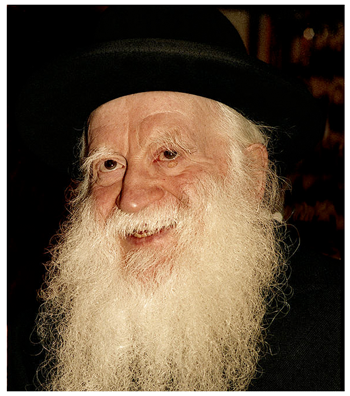
Rav Yehuda Zev Segal zt"l
Rav Yehuda Zev was born in London to Rav Moshe Yitzchok Segal, the Rosh Yeshiva and a former talmid of the Alter of Novardok, who received semicha from Rav Yechiel Michel Epstein, the Aruch HaShulchon. Rav Yehuda’s father, at the age of nineteen, had been drafted into the czar's army, where he insisted on observing mitzvos as well as he could. One day, as Rav Moshe was searching for water, he fled to the border and crossed over to Germany. From there, he headed to England, where he settled and Rav Yehuda was born. At the age of twenty, Rav Yehuda Zev attended the Mir, where he learned with Rav Chaim Shmuelevitz. He formed a close bond with Rav Yechezkel Levenstein, whom he referred to as mori verabi (my master and teacher). After he married in 1934, he learned in Gateshead, but moved to Manchester after the Germans bombed Gateshead in 1940. On April 16, 1950, he was officially inducted as Rosh Yeshiva by Rav Yechezkel Abramsky, supported by Dayan Yitzchok Yaakov Weiss (the Minchas Yitzchok), then the Manchester Av Bais Din.
Stories of Rav Yehuda Zev Segal zt"l

During World War II, Rav Yehuda Zev secured sanctuary visas in England for as many war refugees as possible, and the Manchester Yeshiva opened its doors to young refugees fleeing the Nazi inferno. As the war intensified, the Yeshiva expanded its rescue and relief efforts, organizing daily shiurim for young men who, due to the war, were unable to attend Yeshiva full time. Rav Yehuda Zev opened his own home to many of the young refugees. During this period, Rebbetzin Segal assisted her husband in all of his rescue efforts, and was one of the organizers of the community's efforts to prepare food packages for new arrivals from the displaced persons camps. She also helped her husband raise funds for the Yeshiva, and was like a mother to its students. On April 16, 1950/5710, he was officially inducted as Rosh Yeshiva. Rav Yehuda Zev is probably best known for his dissemination of the awareness of the importance of not speaking loshon hora. "I have set Hashem before me always," was Rav Yehuda Zev's guiding principle.
It is said that Rav Yehuda Zev Segal underwent a marked transformation in his outlook and behavior at the age of eight. This sounds rather far-fetched; how many eight-year-olds have real outlooks, and how many are capable of changing their behavior and attitudes at such a young age? Rav Yehuda Zev, however, was no ordinary youngster.
At the age of eight, an incident occurred that changed his life forever, as he told a close talmid more than fifty years later. “As I was crossing the street in London,” he told his talmid, “a city bus suddenly veered toward me. The driver turned on the brakes, and the bus halted only inches away from me. I was only eight at the time. Nonetheless, after this incident I realized that if life in this world can end within a second, then we certainly weren’t created in order to enjoy the here and now. I also felt that so great a miracle obligated me to dedicate myself to service of Hashem.”
Roots
Rav Yehuda Zev Segal was born in London on the 17th of Sivan 5670/1910 to Rav Moshe Yitzchok and Roize Segal. Rav Moshe Yitzchok, a talmid of the Alter of Novardok, was an outstanding Talmid Chochom, who received semicha from Rav Yechiel Michel Epstein, the Aruch HaShulchon. At the age of nineteen, Rav Moshe Yitzchok was drafted into the Czar’s army, where he insisted on observing mitzvos as well as he could, and on fulfilling the mitzva of netilas yodayim when required by halacha, in particular.
Each time Rav Moshe Yitzchok searched for water for netilas yodayim, a soldier would follow him. After a while, the soldier grew tired of running after him and permitted him to search for water alone. One day, as Rav Moshe Yitzchok was searching for water, he fled to the border and crossed over to Germany. From there, he headed to England, where he began to study in the Machzikei HaDas Shul.
In time, he was appointed shochet of the community. This position paid well and enabled him to save up a sizable sum, which he used to found the Eitz Chaim Yeshiva of London, the only Yeshiva at that time in England.
A number of years later, Rav Yehoshua Dov Silverstone and Rav Tzvi Hirsch Ferber founded a Yeshiva in Manchester, and invited Rav Moshe Yitzchok to head it. He accepted the position. Rav Yehuda Zev was only three years old when his family moved to Manchester. At that time, there was no Jewish primary (elementary) school in the city. Since British law obligated all children under the age of fourteen to attend school, Rav Moshe Yitzchok was forced to enroll Yehuda Zev in the local “Jewish school” whose curriculum was entirely secular. However, when Yehuda Zev returned home each afternoon, Rav Moshe Yitzchok studied Torah with him, providing him with a full Torah chinuch.
Rav Yehuda Zev’s unique home environment, together with his deep piety and his resolve to dedicate himself to Hashem, were the factors that fashioned his personality at that time. Rav Mordechai Smith was twenty-two when he studied with the thirteen-year-old Yehuda Zev. He recalls, “Already then, Rav Yehuda Zev was very sensitive to the needs of others. Our study session began very early in the morning. In order to avoid making noise as he walked downstairs, he would climb out of a window on the second story of his house and slide down a drainpipe, reaching the backyard without having woken anyone.”
In The Mir
When Rav Yehuda Zev graduated from secular school, he began to study full time in his father’s Yeshiva. At the age of twenty, he transferred to the Mir Yeshiva, where he learned for three years and developed outstanding character traits. One day, a young man asked if he could study with him on a steady basis. Although Rav Yehuda Zev’s schedule was full, he arranged to study Berochos with him every morning before Shacharis. That young man was Rav Chaim Shmuelevitz.
Rav Mordechai Schwab, the late mashgiach of Mesivta Bais Shraga of Monsey, who studied in Mir at that time, relates, “I began each day with a mussar study session. During the first minutes of this session, I would watch Yehuda as he plumbed the depths of the Gemora. That sight could inspire anyone to increase his hasmoda (diligence in learning).”
Rav Yechezkel Levenstein
They were so devoted to each other that Rav Yehuda Zev would refer to Rav Yechezkel as “Mori ve’Rabi”, while Rav Yechezkel would say, “Yehuda Zev is my son.” In Mir, he soon gained acclaim for his outstanding hasmoda. Rav Nosson Wachtfogel, the late mashgiach of Bais Medrash Govoha of Lakewood, another talmid of Mir during that period, once said, “From watching Rav Yehuda Zev between learning sessions, it was obvious that he was striving to develop his inner self.”
In Mir, Rav Yehuda Zev formed a close bond with another gadol ba’Torah – Rav Shimon Shkop, Rosh Yeshiva of Yeshiva Sha’ar HaTorah in Grodno. Rav Shimon would sometimes come to England to raise funds for his Yeshiva, and Rav Yehuda Zev took advantage of those opportunities to be meshamesh him. He also spent one vacation at Rav Shimon’s summer resort, studying with him and accompanying him on his walks.
Marriage
In the winter of 5693/1933, Rav Yehuda Zev’s parents asked him to return home because they had found a suitable shidduch for him. Rav Yehuda Zev left Mir on an icy winter day. Rav Yechezkel Levenstein accompanied him to the wagon that was to take him to the train. When they reached the wagon, Rav Yechezkel handed him his scarf, but Rav Yehuda Zev hesitated to take such a gift from his mentor. At last, the two decided that Rav Yehuda Zev would wear the scarf on the trip, and then mail it back to Rav Yechezkel.
On the 15th of Shevat, 5694/1934, Rav Yehuda Zev married Yocheved, the youngest daughter of Rav Shlomo Zalman Cohen, a Gerrer Chassid from Gateshead. Although Rav Shlomo Zalman Cohen was involved in business, he made Torah his primary pursuit and earning a living a secondary one. Rav Yehuda Zev planned to return to Mir after his wedding. However, when his mother-in-law fell seriously ill, he canceled these plans and remained in Gateshead. After his marriage, he devoted himself to full-time Torah study.
World War II
During World War II, England, like all other countries in the free world, refused to accept refugees who might become dependent on the state. Thus, any refugee who applied for admission to the country had to present a statement signed by a British citizen who promised to assume responsibility for the refugee’s material needs.
In order to rescue as many refugees as possible, Rav Solomon Schonfeld of London launched a project to secure affidavits from British Jews. Rav Yehuda Zev greatly assisted him in these efforts, working primarily among Gateshead’s Jews.
In 5700/1940, German bombers attacked Gateshead, and many people left the city for safer areas. Rav Yehuda Zev and his family moved to Manchester, where he remained for the rest of his life.
In Manchester, he assumed the position of Maggid Shiur in the Manchester Yeshiva, where his father served as Rosh Yeshiva. From there, he continued to secure visas for war refugees. During the war, the Manchester Yeshiva opened its doors to young refugees fleeing the Nazi inferno.
Like A Father
After the war, Dayan Aryeh Leib Grossnass brought a group of teenage survivors to England. These orphaned and destitute youngsters, who ranged in age from fourteen to sixteen, were welcomed into the Manchester Yeshiva, where Rav Yehuda Zev encouraged and assisted them. On their first Sukkos in England, Rav Yehuda Zev decided that it would be best for the group to spend the Yom Tov together in the Yeshiva, instead of at different homes. However, a misunderstanding occurred, and no food was prepared for them. Rav Yehuda Zev learned of this only a short while before Yom Tov. Despite the late hour, Rebbetzin Segal went to the Yeshiva and prepared a full meal for all twenty boys. Then, she and Rav Yehuda Zev spent the entire meal with them.
As the youngsters acclimated to their new life, their bond with Rav Yehuda Zev strengthened, and they truly felt that he was their father. On Erev Pesach, the entire group helped him with the Yom Tov preparations, and then joined him for an inspiring and rousing Seder.
During this period, Rebbetzin Segal assisted her husband in all his rescue efforts, and was one of the organizers of the community’s endeavors to prepare food packages for new arrivals from the displaced persons camps. She also helped her husband raise funds for the Yeshiva, and was like a mother to its students.
The Search For A New Rosh Yeshiva
Rav Yehuda Zev’s father, Rav Moshe Yitzchok, was niftar on the 12th of Cheshvan 5707/1947 after a serious illness, leaving the Yeshiva bereft.
Soon after his petira, the Yeshiva’s board of directors began to search for a new Rosh Yeshiva. Although Rav Yehuda Zev was already serving unofficially as Rosh Yeshiva, some of the modern members of the board felt that due to his high standards of kedusha and meticulous mitzva observance, he might be unable to relate to the average layman. As a result, they strongly opposed his appointment.
Rav Yehuda Zev, who was aware of this opposition, showed no interest in the position, in order not to foster ill will among the board members. As a result, the position remained vacant for a number of months.
In February 5708/1948, Rav Yechezkel Abramsky arrived in Manchester to participate in a ceremony at which outstanding students received awards.
At a meeting with the board, Rav Yechezkel declared that Rav Yehuda Zev was best suited for the position of Rosh Yeshiva and that the Yeshiva would greatly benefit from him.
Seeing the opposition to the appointment, he then suggested that Rav Yehuda Zev be appointed “acting Rosh Yeshiva”, adding that he was certain that if someone more qualified were found, Rav Yehuda Zev would not only step down, but would also warmly welcome the new Rosh Yeshiva.
During the next year and a half, many Talmidei Chachomim came to Manchester to apply for the position of Rosh Yeshiva. Throughout this period, Rav Yehuda Zev never displayed resentment or ill will.
In 5709/1949, the Ponovezher Rav, Rav Yosef Shlomo Kahaneman, invited Rav Yehuda Zev to join the leadership of the Ponovezh Yeshiva in Bnei Brak. Rav Yehuda Zev accepted the offer and prepared to leave England. But then the president of the Yeshiva’s board, the eminent and pious Rav Shaul Rosenberg, fell seriously ill. As he lay in the hospital, he told a close acquaintance about a frightening dream he had just had. In the dream, he had been told that he had fallen ill because Rav Moshe Yitzchok was upset by the board’s failure to appoint Rav Yehuda Zev to the position he rightfully deserved.
Although Rav Shaul had not opposed Rav Yehuda Zev’s appointment, he feared that he had also not done enough to secure it for him. As a result, he sent a family member to Rav Moshe Yitzchok’s grave and begged his forgiveness, promising to rectify the matter immediately.
Amazingly, Rav Shaul, who had seemed on the brink of death, soon recovered in full. When he was released from the hospital, he called an emergency meeting of the board and convinced its members that Rav Yehuda Zev was the best possible candidate for the position.
The board unanimously appointed Rav Yehuda Zev as Rosh Yeshiva. However, Rav Yehuda had already made plans to leave for Bnei Brak. At a farewell gathering in his honor, Dayan Yitzchok Golditch publicly asked him not to leave Manchester. That evening, Rav Yehuda Zev wrote to Rav Eliyohu Dessler, the mashgiach of Ponovezh, asking him to discuss the issue with the Chazon Ish. Rav Dessler took the matter to the Chazon Ish, who replied that Rav Yehuda Zev should remain in Manchester.
On April 16, 5710/1950, Rav Yehuda Zev Segal was officially inducted as Rosh Yeshiva by Rav Yechezkel Abramsky.
His appointment was supported by Dayan Yitzchok Yaakov Weiss, the Minchas Yitzchok, head of the Manchester Bais Din at that time.
During subsequent years, Rav Yehuda Zev was greatly assisted by Rav Shaul Rosenberg, who assumed responsibility for all of the Yeshiva’s fundraising activities. He would often say, “The Rosh Yeshiva and I have an understanding between ourselves. He doesn’t get involved with the budget, and I don’t mix in with the chinuch.” Rav Shaul was also a model of kibbud Talmidei Chachomim, a ba’al chessed and supporter of Torah.
As Rosh Yeshiva
As Rosh Yeshiva, Rav Yehuda Zev’s sole concern was developing his students’ full potential. When a student enrolled in the Yeshiva, Rav Yehuda Zev would ask him for his complete Hebrew name as well as his mother’s, so that he could daven that he grow spiritually. Every morning, before Shacharis, he would give tzedoka and then daven that he merit to see all his talmidim following the path of Torah.
As Rosh Yeshiva, he was very warm and loving toward his students. If a student was ill, he would summon a doctor for him, visit him in the dormitory and even bring him tea. As a result, students would jokingly say, “If you want the Rosh Yeshiva’s special attention, become sick!”
When the Rosh Yeshiva felt that a student would develop best somewhere else, he would help him to transfer to a different Yeshiva. But if he thought that a student who was having difficulties should nonetheless remain in the Yeshiva, he would make an all-out effort to achieve that goal.
Thus, when parents of a French student told their son to return home to pursue a career, Rav Yehuda Zev and his wife traveled all the way to Paris to convince them to let him remain in Yeshiva.
Despite his warm and caring nature, Rav Yehuda Zev maintained strict discipline in the Yeshiva, inspiring his students to awe and revere him. He did this because he believed that holding one’s Torah mentors in awe is crucial for a ben Torah’s development, as it is written, “The awe of your Torah teacher should be like the awe of Shomayim” (Pirkei Avos, 4:12).
Once, a mother called him on the phone and when he picked up the phone to speak to her, he automatically took off his glasses because that is what he did when he spoke to women in person.
Many former students called Rav Yehuda Zev every Friday to wish him a good Shabbos. Others would call to report on the progress of their children or about simchas in their families. One time, the Yeshiva students hosted a sheva berochos for one of Rav Yehuda Zev’s grandchildren. When he rose to speak, he said, “It is written that one should not mix one festive occasion with another. This gathering is a double simcha for me, since it affords me the opportunity to be with my talmidim, too. However, a sheva berochos is a family affair – and my talmidim are my children, too.”
As Rosh Yeshiva, he would stress that talmidim should use their Yeshiva years for optimal growth, especially with respect to amassing Torah knowledge. With an eye toward their future, he told them that the more knowledge they acquired during those years, the greater would be their influence later on.
With his unique hasmoda, he was a role model for such spiritual growth and love of Torah.
An ‘Ordinary’ Man’s Tefillos And Blessings
Before beginning his morning tefillos, Rav Yehuda Zev would daven that Hashem help him daven with kavona. To achieve this goal, he recited every single tefilla from a text, even Asher Yotzar, which one says a number of times a day. He would recite this prayer with the same kavona and emotion that one recites Ne’ila on Yom Kippur.
When eating, Rav Yehuda Zev would also recite berochos from a text. Since he could not always carry a siddur with him, he kept a card in his pocket that had the various berochos printed on it. Before making a berocha, he would recite a preparatory tefilla, such as, “I am about to utter the blessing of shehakol…” On Shabbos, when the Shemoneh Esrei is shorter than during the week, it is more difficult to accrue the hundred berochos one is required to recite daily. To solve the problem, on Shabbos Rav Yehuda Zev calculated how many blessing he had already made, and during the day he ate small pieces of food in order to arrive at the requisite number of berochos.
Quite soon, he became renowned for his manner of tefillos, and people from all over the world would seek his berochos. Great Torah sages such as Rav Yaakov Kaminetsky would advise people in distress to seek the Manchester Rosh Yeshiva’s berochos. When Rav Yaakov himself was ill, he asked someone who was going to Manchester to ask that Rav Yehuda Zev daven for him.
Similarly, the late Satmar Rav told someone who had approached him for a berocha, “Why seek a berocha from me when you can go to the Manchester Rosh Yeshiva?”
During the last decades of his life, Rav Yehuda Zev was flooded by requests for berochos, and he related to every single request with deep emotion. Yet in his humility, he often said of his berochos, “A berocha given by an ordinary person should never be insignificant in one’s eyes.”
One of his students was diagnosed with a malignant disease. When the boy’s father, who had hoped that his son would study a profession, asked Rav Yehuda Zev for a berocha for the boy’s recovery, Rav Yehuda Zev replied, “If your son dedicates his life to Torah study, he will recover fully.”
That night, as Rav Yehuda Zev davened Shemoneh Esrei, he was heard saying, “Tatte, I promised him.” Not long afterward, the young man recovered.
On another occasion, Rav Yehuda Zev joined a group traveling to Eastern Europe to daven at the graves of Tzaddikim. At the Chasam Sofer’s grave, he took out a sheet with a long list of names of people who needed a yeshua, and began to daven for each one. A short while later, the group was ready to leave, but Rav Yehuda Zev still hadn’t finished davening for everyone on his list. Having no other choice, he clutched the sheet to his chest and cried out with intense emotion, “Ribbono Shel Olam, may the requests of all who those whose names are on this list be fulfilled for the good.”
A Paragon Of Chessed
Rav Yehuda Zev tried to perform at least one chessed each morning before Shacharis in order to enhance the efficacy of his tefillos. When he lived in his daughter’s home, he would prepare a thermos of hot water before going to shul, so that his son-in-law could have a hot drink before leaving the house. While at his summer resort, he would prepare negel vasser for those of his companions who awoke after him.
In his mussar talks, he would stress that no opportunity to perform chessed – big or small – should be overlooked. This was a lesson he taught by personal example. Whenever he washed his hands, for instance, he filled the cup for the next person. And when he returned home from Yeshiva at night, he deposited his students’ letters in a mailbox on his way. Before dropping these letters into the box he would say, “Hareini mechaven lekayem mitzvas asei shel chessed – I intend to full the positive command to do chessed.”
Visiting the sick was another chessed to which Rav Yehuda Zev dedicated his time. Every Friday, he would visit the aged and the bedridden members of the community, comforting and encouraging them.
Rav Yehuda Zev saw a siddur that contained an inscription praising the ill man’s son for excellence in tefilla. With a glowing smile, Rav Yehuda said, “You must be so proud of your son.” Then he noticed a picture of the boy on the wall and exclaimed, “That boy looks like a Tzaddik. May you have much nachas from him.”
Once, he was asked to daven for a number of older bochurim who still hadn’t found shidduchim. Looking over the long list of names, he said, “I feel terrible for them. May Hashem help them.”
At simchas, he was equally caring and emotional, and as he danced before a chosson, his face would literally glow. Once, before he was about to undergo minor surgery, he stopped by the sickroom of a man with a fatal disease; a smile spread across the ill man’s face and his pain seemed to ease.
In Sorrow And In Joy
Rav Yehuda Zev shared both the pain and the joy of others. He once told his doctor before an operation that he was worried that the operation would interfere with his ability to dance at weddings. The doctor jokingly replied, “I didn’t know that people your age still dance.” Of course, the doctor did not realize that dancing at weddings was a form of chessed for the Rosh Yeshiva, not a form of recreation. During the Gulf War, Rav Yehuda Zev constantly davened for Eretz Yisrael’s Jews. When people asked if he was worried about a particular relative in Eretz Yisrael, he would reply, “Klal Yisrael is in Eretz Yisrael. I am worried about them all.”
In 5752/1992, Rav Yehuda Zev asked Rav Yosef Eckstein, founder and director of the Dor Yeshorim organization in Yerushalayim, to include testing for Cystic Fibrosis in his program. Rav Yosef was agreeable to the idea, but he explained that financial difficulties prevented him from realizing such a plan. Then and there, Rav Yehuda Zev launched a drive to solicit funds for the cause.
A week before Rav Yehuda Zev’s petira, Rav Eckstein told him that the sum of $250,000 was still needed to implement the program. Immediately, Rav Yehuda Zev began to write letters to collect the remaining funds.
In addition to the numerous calls Rav Yehuda Zev received from callers in need of berochos, there were many others from people who merely wished to share their troubles with him. Once, when he was in a summer resort, he spent the day in Vienna. A student who had accompanied him there said, “Boruch Hashem, you had no phone calls today. At least you were able to get a bit of rest.”
To this Rav Yehuda Zev replied, “I may have rested a bit, but I doubt if those who tried to reach me had any rest.”
Shemiras HaLoshon
Rav Yehuda Zev is probably best known for his dissemination of the awareness of the importance of not speaking loshon hora.
It all began at the end of Rav Yehuda Zev’s first zman in the Mir Yeshiva, when he went to Radin to visit the Chofetz Chaim. After that meeting, Rav Yehuda Zev became deeply attached to the Chofetz Chaim and his works.
When Rav Yehuda Zev joined a shiur in the Manchester Yeshiva in 5700/1940, he inspired his students to study Sefer Chofetz Chaim.
In 5727/1967, he suggested that a group of students study Sefer Chofetz Chaim every day, according to a fixed schedule. Later, these students prepared a written schedule of the halochos to be studied each day of the year, and hung it in the Bais Medrash.
In this manner, the first yearly cycle of shemiras haloshon study was launched. Every year, from then on, Rav Yehuda Zev published a shemiras haloshon calendar, which contained a schedule for the daily study of two halochos from Sefer Chofetz Chaim and one page from Sefer Shemiras HaLoshon, which explains the concepts behind the halochos.
In time, students of the Manchester Yeshiva spread the idea of studying two halochos a day from the Chofetz Chaim’s seforim to other Yeshivos and Kollelim.
Rav Yehuda Zev himself was very active in organizing shemiras haloshon study groups and classes not just in England, but also throughout the world. He often said that a home in which shemiras haloshon is observed and studied is saturated with kedusha.
For the remainder of his life, Rav Yehuda Zev devoted great amounts of time to disseminating this calendar, which he called his “passport to Olam HaBa”.
He was also the founding rabbinic advisor of the Chofetz Chaim Heritage Foundation, which has played a leading role in heightening awareness of the importance of shemiras haloshon. Inspired by his counsel and direction, this organization promotes dozens of programs throughout the world.
Whenever people sought Rav Yehuda Zev’s berochos, he would encourage them to undertake the study of these halochos on a daily basis. He would explain that the Chofetz Chaim felt that the majority of Klal Yisrael’s tzoros are caused by their failure to guard their tongues, and that shemiras haloshon invokes divine compassion, which benefits both the individual and Klal Yisrael. Two weeks before his petira, Rav Yehuda Zev asked the Chofetz Chaim Heritage Foundation to produce a sefer containing halochos of shemiras haloshon and the concepts behind them, arranged for daily study. The English version of this book, A Lesson a Day, is now studied by thousands of Jews worldwide.
It is said that every family that studies these halochos according to the daily schedule will surely merit yeshuos.
Striving For Perfection
Rav Yehuda Zev strove for perfection in all his deeds and thoughts. The kabbolos he made one Tishrei clearly illustrate his life’s aspirations. They included the following: To seek to do acts of kindness even for someone who has hurt me; to control my thoughts; to go to sleep while thinking in Torah; to always meditate on Torah or mussar; and contemplate the effect of my words before they are uttered.
He also adopted the practice of the great mussar sages known as Asiri Kodesh – “The tenth day is holy”. Starting from Rosh HaShana, he would devote every subsequent tenth day to introspection and self-examination, conducting himself with added kedusha on those days.
Still, on every day of the year, Shivisi Hashem Lenegdi Tamid – “I have set Hashem before me always” was Rav Yehuda Zev’s guiding principle.
Until the last days of his life, Rav Yehuda Zev was in full possession of all his faculties, maintaining his regular learning schedules and accepting visitors as usual.
Shortly before Shabbos Kodesh, the 21st of Shevat, 5753/1993, he suffered a stroke and was rushed to the hospital. On Friday night, the 22nd of Shevat, he returned his pure soul to its Maker.
Thousands of people attended his levaya. In accordance with a request he had made while alive, he was buried in Manchester – and not in Eretz Yisrael – so that England’s Jews would have a place to visit and pour out their hearts. He had also asked to be buried among children, and in a place where kohanim are able to daven.
All of Torah Jewry owes Rav Yehuda Zev a tremendous debt of gratitude, especially for his efforts to inculcate Klal Yisrael with the importance of shemiras haloshon. As a result of these efforts, thousands of Jews worldwide regularly study the halochos, and many have experienced long-awaited yeshuos. In his merit, may Klal Yisrael soon be delivered from all its tzoros.
Article by D. Sofer. This article originally appeared in Yated Neeman.
www.matzav.com/the-manchester-rosh-yeshiva-rav-yehuda-zev-segal-ztl-on-his-yahrtzeit-today-2/