
Rav Avrohom Dov Auerbach zt"l
הרב אברהם דב בן דוד אוירבך זצ"ל
Kislev 12 , 5601
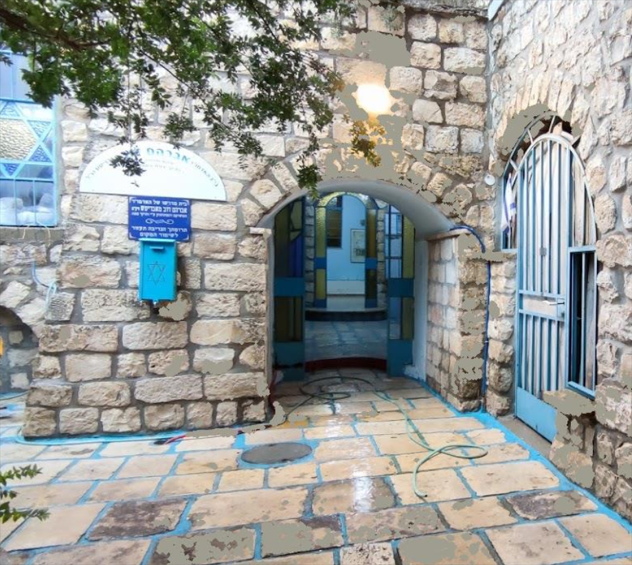
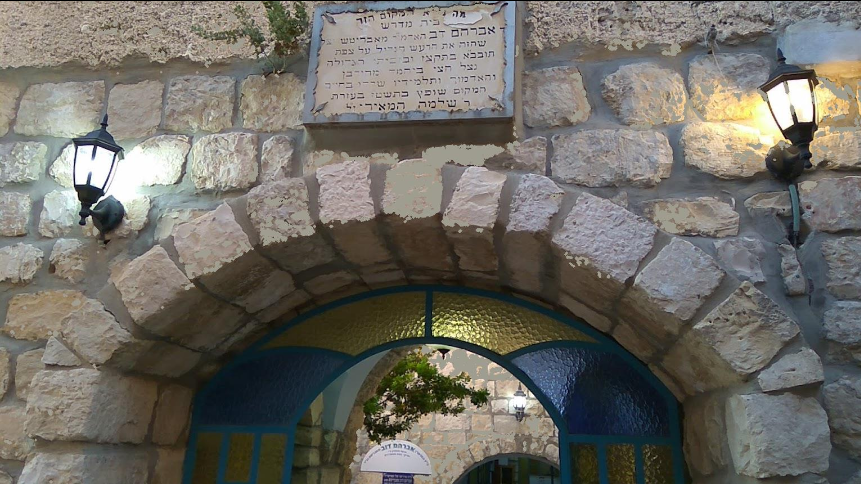
Rav Avrohom Dov Auerbach zt"l
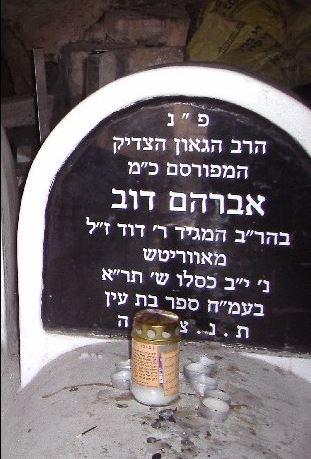
Rav Avrohom Dov Auerbach of Avritch and Tzefas was a talmid of Rav Levi Yitzchok of Berditchev and the first two Rebbes of Chernobyl. He was the Rebbe of Avritch from 1785. He moved to Tzefas in 1830 at the age of sixty-five. He is the mechaber of Bas Ayin, a commentary on Chumash. In the deadly earthquake of the 24th of Teves 5597 (January 1, 1837), five thousand people lost their lives, of whom four thousand were Jews. Although most of the shul of the Avritcher Rebbe collapsed, the part where the men were clustered remained upright and everyone was saved. He is buried in the old cemetery of Tzefas.
Rav Avrohom Dov was the son of Rav Dovid Auerbach, Maggid of Chemelnik. Although his exact year of birth is unknown to us, it is estimated that he was born sometime between the years 5506 and 5525.
From a young age, Rav Avrohom Dov was already recognized as someone of a spiritual level higher than average.
I was orphaned by the tender age of nine and raised by my grandmother. One Thursday night I sat up learning and studying Torah all night long. The next day my grandmother prepared me a special treat for lunch – pot roast! I wondered to myself what holiday it was, as I was not used to such a special meal. When I realized that surely this was her way of rewarding me for diligence and studiousness last night, I was so upset that I bit of a chunk of my hand off in anguish! Now you might ask why I am telling you all this. So that you realize that eating pot roast doesn’t make you into a Rebbe!
When he reached marriageable age he became engaged to the daughter of the Gaon and Tzaddik Rav Nosson Nota, the Av Bais Din of Avritsh. Reb Nota was among the great talmidim of the great Mezritcher Maggid, successor of the holy Ba’al Shem Tov.
Among Reb Nota’s spiritual practices was the custom to remain awake all Shabbos long, never closing his eyes for even a moment. He used to explain that this practice was based on the pasuk “And Bnei Yisrael safeguarded the Shabbos,” meaning that Shabbos must be guarded. A guard who sleeps and slacks off is liable for breach of duty. He also explained that the French ruler Napoleon Bonaparte likewise slept little and explained that the time spent ruling was very dear and precious to him. “Should I waste my royal time and sleep it all away?” Similarly, every Jew must feel that each moment of Shabbos is precious time spent in the presence of the Shabbos Queen. Who can waste such valuable time?
The Bas Ayin studied under his father-in-law for some time after his marriage and he quotes some Divrei Torah in his name throughout the sefer (see for example Parshas Devorim).
The Bas Ayin was on very friendly terms with such renowned Tzaddikim as Rav Menachem Nachum of Czernobyl, mechaber of Meor Einayim and Rav Schneur Zalman of Liadi, founder of Chabad and mechaber of the Tanya.
Rav Avrohom Dov was counted among the greatest talmidim of the Meor Einayim, the Czernobyler Rebbe, and he saw the Rebbe as his Rav Muvhok – his foremost Rav and primary mentor in Torah and Chassidus.
This deep connection that the Bas Ayin had to Czernobyl was infinite. It therefore continued after the Meor Einayim on to his son and successor, Rav Mordechai, the next Czernobyler Maggid. The Bas Ayin humbled himself before Rav Mordechai as a talmid before his master and the Maggid reciprocated with openly displayed affection toward the Bas Ayin. They would often spend time together in joint ventures like two inseparable friends.
Other Influences and Mentors
Likewise, the Bas Ayin considered himself a talmid of Rav Levi Yitzchok of Berditchov, mechaber of Kedushas Levi. He describes Rav Levi Yitzchok’s stature and honors him with many titles and accolades, as he cites some of his Torah discourses numerous times throughout the sefer Bas Ayin. People described the Bas Ayin’s ways of davening as similar to the fiery manner of the Berditchever Rav’s tefillos, and it is said that the entire area shook and rocked when he davened.
The Bas Ayin also enjoyed a close, warm relationship with the Rebbe Rav Zusha of Anipoli; the holy Rebbe of Ruzhin; the holy Tzaddik the Apta Rav, mechaber of Ohev Yisrael; Rav Moshe Chaim Efraim of Sudilkov, mechaber of Degel Machaneh Efraim and grandson of the Ba’al Shem Tov; and with Rav Aharon of Zhitomir. Rav Avrohom Dov would travel to and spend time with them and he cites their Divrei Torah in his sefer Bas Ayin.
Departure for Eretz Yisrael
In his later years, Rav Avrohom Dov made the decision to fulfill his heart’s desire and move to the Holy Land. In preparation for this move, he began to take leave of many of the great Tzaddikim and leaders of the generation. He met with these mentors, colleagues and friends to receive their approval, their blessings and good wishes. Of course, at the top of the list was the Czernobyler Maggid, and he received the Rebbe’s approval and berocha.
Rav Avrohom Dov took his leave from his Chassidim and followers as well, as described in the introduction to his sefer Bas Ayin composed by his nephew:
One of the Chassidim approached my uncle before his departure to Eretz Yisrael and asked him, “Whom should we draw close to from now on? To whom do we go from now on as our Rebbe?”
My uncle, the Rebbe, answered them, “It says in the Torah uvo sidbak –you should attach yourselves to Hashem. Chazal ask how we can attach ourselves to Hashem. They answer that we should attach ourselves to His attributes and emulate them. Just as He is merciful and kind, so should you be merciful and kind.
“This teaches us that to emulate the ways and character of another is to be truly attached to that person.
“I have been careful with myself and my middos – character traits – since the days of my youth until this very day. So too you should see to it to emulate and copy my attributes and character. This will be like you are truly connected with me face to face.
“These are the three attributes that I have been carefully safeguarding against my entire life: loshon hora – slander, sheker – lies and falsehood, gasus ruach – arrogance and vanity. Therefore see to it that you also accustom yourselves to safeguard and attach yourself to my middos and then you too will be attached to me and connected with me truly, face to face.”
His sefer contains discourses that discuss the kedusha of Eretz Yisrael and her inhabitants and citizens. Even the title of his sefer – Bas Ayin – reflects this, his desire of many long years, because although most of the discourses themselves were taught in Chutz Lo’oretz (the Diaspora), he still named the work Bas Ayin “because I instilled into these writings the kedusha and sanctity of Eretz Yisrael on which G-d’s eyes gaze always.” (Bas Ayin means the pupil of the eye and refers to the equivalent saying in English about something precious: the apple of my eye. Since Hashem’s eyes are always on Eretz Yisrael, He calls it Bas Ayin – the apple of His eye.)
When Rav Avrohom Dov finally did arrive, his joy was boundless. Although he was busy with his spiritual and physical duties caring for the citizens of Tzefas, his heart dwelled on his primary focus – the kedusha of Eretz Yisrael.
Rav Avrohom Dov called his attendant, Reb Zalman, and instructed him to pen the following letter to Rav Mordechai of Czernobyl. This is what he wrote:
The first three years after my arrival here in Eretz Yisrael I didn’t really feel anything different and I even regretted my decision to come and settle here. These three years were to me like the three years of Orla, when a tree’s first fruits are forbidden by Torah law. Today, however, when I recited the kedushas kesser during Mussaf, I finally felt that spiritual feeling I have been missing and I now regret all those years that I did not arrive and settle here sooner!
Where To Settle?
It was in the month of Elul in the year 5593 when Rav Avrohom Dov’s feet stepped for the first time on the holy soil of Eretz Yisrael. Immediately upon hearing of his arrival, several congregations began to vie for the honor of being his new place of residence. Several proposals came up and at first it seemed that the Avritsher Rav might settle in the holy city of Yerushalayim. Other options included Haifa because Rav Avrohom Dov greatly admired this port city, which boasted the location of the cave of Eliyohu HaNovi where the Bas Ayin enjoyed davening and spending time in seclusion with his Maker.
In the interim, before any decision had been made final, an honorable delegation arrived from Tzefas asking the Avritsher Rav to join them. “Please come back together with us and make Tzefas your new home and uplift the standards of the Chassidic community,” they requested.
At the time of the delegation’s visit, the Bas Ayin had not yet made a final decision to accept their gracious offer, but nonetheless, he decided to join them at least until after the Yomim Noro’im – the High Holidays of Rosh HaShana and Yom Kippur – because the journey to Yerushalayim in those days was so long and hard. Afterward, he reasoned, he could then make his way to Yerushalayim.
The citizens of Tzefas were thirsty for Torah and Chassidus, and their joy was endless at the news that the Bas Ayin would be settling in their midst, even if it was just for a short while.
At that time, the Bas Ayin established his set place for tefilla as the shul of the Arizal, located in the middle of Tzefas. It is told how on Rosh HaShana before the blowing of the shofar, a vast multitude of men, women and children crowded around the entire building and also filled it to capacity, straining just to catch a glimpse of the holy Tzaddik. When the Bas Ayin entered, he walked straight up to the bima (the raised platform or stage from where the Torah is read) and a hush descended upon the waiting throngs. He opened his holy mouth and said simply: “Rabosai! Know that today is Rosh HaShana and we must all do teshuva!” No sooner had he spoken than the entire shul was rent with the sounds of brokenhearted weeping and the entire congregation was roused to such remorse that their tears and cries prevented the shliach tzibur (chazan) from proceeding with the tefilla.
When he accepted and donned the mantle of leadership, the Bas Ayin also took on the role of head of the Chassidic Kollel, Kollel Volhyn, the most important Chassidic institution at that time in all of Eretz Yisrael.
The government likewise granted him the powers of chief Rav, to rule and judge all matters of Jewish law among the Chassidim in the city and all of its provinces and environs.
To his credit, the Avritsher Rav did his best to unite the Chassidim and Misnagdim and draw their hearts closer to one another. The Sefardim also honored him greatly and saw him as a wonder worker. He brought peace to a city divided. He was on friendly terms with his counterpart and colleague among the Perushim, Rav Yisrael of Shklov, and together they ran the city, attending to its needs and affairs.
Quickly, all the residents among the different factions found favor with the Bas Ayin, and he grew well loved and respected by them all. They saw him as a beacon of hope, a stronghold of Torah, avoda and gemilus chassodim – a bastion of Torah, Divine service and acts of loving-kindness. All those who needed help now had an address to turn to.
Rav Avrohom Dov saw to the physical and spiritual needs of his flock, took part in their worries and pain, shared their distress and did his best to ease their suffering.
The Bas Ayin’s Final Self-Sacrifice
In the beginning of the year 5601, a terrible plague struck Tzefas and many people succumbed. The Avritsher Rav, too, became infected, and finally on the twelfth of Kislev his pure and holy soul ascended On High.
Before his petira, he made a promise to the Yidden of Tzefas. “I will be the final korban of this plague. After me there will be no further deaths in Tzefas.”
And so it was – with his petira, the deaths ceased. He was the final sacrifice.
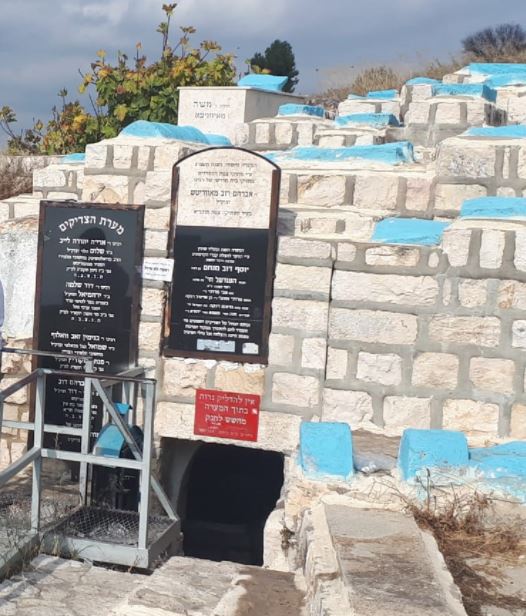
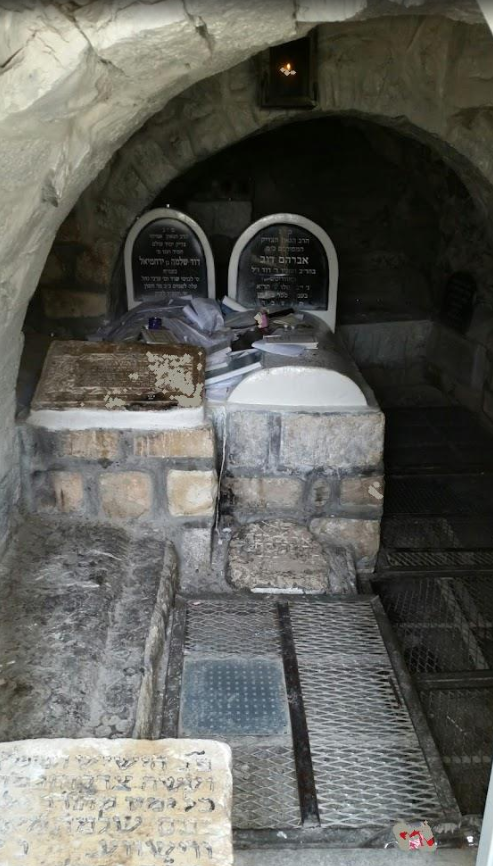
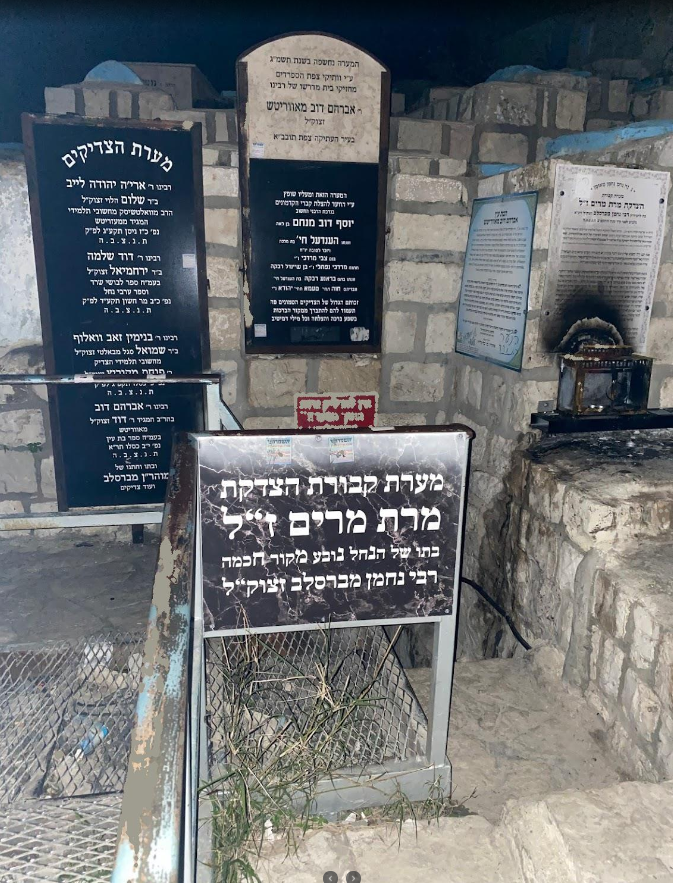
He was laid to rest in the ancient Bais HaChaim of Tzefas, in a burial cave beside other Tzaddikim such as Rav Arye Leib of Valitchisk, and Rav Dovid Shlomo Eibshitz, mechaber of Arvei Nachal on the Torah and Levushei Serod on Shulchon Aruch.
Stories of Rav Avrohom Dov Auerbach zt"l

The following story passed down to us from the Av Bais Din of Ladani, who heard it from Rav Avrohom Gottesman, who received this tradition from the famed mechaber of the Arugas Habosem:
“They all sat spellbound, listening to their Rebbe, the Tzaddik from Czernobyl, mechaber of the Meor Einayim, who, having concluded his discourse of Divrei Torah, had begun to speak of other more worldly matters. All sat still, all except one Chassid.
Slowly but surely, inch by inch, he crept forward. Another bit, and another bit, he slowly made his way down the table from the far side where he too had been sitting absorbing his Rebbe’s Divrei Torah. Slowly he inched along closer and closer, straining to hear his Rebbe’s words.
This was none other than Rav Avrohom Dov of Avritsh, the mechaber of the Bas Ayin. While most of the Chassidim sat enraptured and noticed nothing at all, there was one upstart who was annoyed by Rav Avrohom Dov’s slow advance toward the head of the table. He vocally objected most loudly to what he decided was a dishonorable move.
“So now you come, eh? Now you make your way to the head of the table, eh? The whole time the Rebbe said Torah, you sat content at the far end, but now that the discourse is over and the Rebbe’s discussions turn to more mundane matters, now you make your way over here, pushing and elbowing us all out of your way so you can sit yourself at the head of the table?!”
This sarcastic remark did not escape the Czernobyler Rebbe’s notice. The Meor Einayim turned, upset, not toward the Bas Ayin but instead toward this upstart and rebuked him, defending his talmid, the Bas Ayin’s behavior. “My talmid’s ears are pure. He has corrected them so that they are well attuned to hear the Torah that they need to hear and less so the mundane matters that they do not need to hear. When I recite Divrei Torah, he can even sit contentedly at the far end of the table and still listen and hear my words and absorb them from a distance. However, when it comes to sichas chullin and more mundane matters, even though there is what to learn from them too, he needs to exert more effort and sit close in order to hear better.”
The following tale is told about the close relationship between the Tshernobler Maggid and the Bas Ayin on one of their joint ventures:
“Please – I would be honored if your presence would grace our bris milah,” the host said, extending his warm welcome to the honored Tzaddikim, Rav Avrohom Dov and Rav Mordechai Czernobler.
The father honored the Czernobler Maggid to serve as Sandak and hold the baby during the bris milah. “I would be honored indeed to serve as the Sandak,” replied the Maggid, “on one condition: that you prepare a seudas mitzvah – a feast to celebrate the occasion.”
“Please, Rebbe, I am sorry, but I am not a wealthy man. I barely earn enough money as it is. My entire weekly salary amounts to the meager sum of five gulden (seventy-five kopecks) and this is my entire livelihood. I have already received my salary this week and spent it all on my household needs and expenses, and I have not a kopeck left,” he concluded sadly.
“I insist that you prepare a seudah and I suggest that you borrow the money from your boss. Go and ask him for an advance equal to the cost of the food for the seuda and ask him to diminish your wages week by week until he recovers the amount owed. Here – allow me to make a contribution as well.”
And so saying, the Maggid counted out a handsome sum and handed it to the father of the baby boy. The father did as the Czernobler Maggid advised, and they held a beautiful bris and a nice seudas mitzvah in its honor.
“Now let me explain the reasons behind my intentions and why I insisted on this seudah,” the Maggid explained. “The Evil One, the Soton, is known as the Samech Mem, the initials of his angelic name. These initials are the same initials as the statement that one should refrain from making a feast – seudas mitzvah ein la’asos – samech mem alef and lamed. The Evil One is crafty; he has succeeded in preventing many people from preparing seudos mitzva in honor of completing tracts of Talmud – known as seudas siyum maseches. Now he has turned his sights on the seudas bris milah to try to uproot these as well. I will stand up to him and stop him from carrying out his scheme! I will put out both his eyes!” declared the Czernobler Maggid fervently.
The Bas Ayin agreed and added, “This is how the archangel Michoel also defeated the Evil One, the Samech Mem. When the Samech Mem prides himself on how he has succeeded nowadays in convincing people to sin and how they listen to him, the archangel Michoel replies, “You fool! Do you think that when these people transgress they do so willingly and happily? They do not listen to you wholeheartedly at all! What proof is there? Just look at how they go about their actions. Did you ever hear of someone preparing a festive meal to mark the occasion of their sins and transgressions? But when it comes to mitzvos, the opposite is clearly true. Just look at what joy accompanies their wholehearted observance and fulfillment of mitzvos. The proof is clearly demonstrated by their actions after the mitzvah. For example, a father makes a bris mila for his baby. Right after the circumcision ceremony he gathers together all his best friends and relatives to celebrate and prepares a lavish feast to celebrate the occasion!”
The Bas Ayin also had a close and warm relationship with the Maggid’s son and the rest of the Rebbes from the Czernoble dynasty, including the Trisker and Czerkasser Rebbes. In fact, the Bas Ayin once revealed to one of his talmidim that one of the reasons propelling him toward the decision to leave his homeland and birthplace and make the move to the holy land was this close, warm connection to the Czernobler Rebbe’s family. There is a well-known rule that there can only be one ruler of a kingdom at a time, and the Bas Ayin saw his own post and station as Rav as encroaching on the rights of the Czernobler Rebbes’ boundaries as the rightful Rabbonim and rulers of the locale.
The Avritsher Rav, author of Bas Ayin, was not content to allow his feelings toward the Holy Land stagnate. His desire to perceive and experience the kedusha of Eretz Yisrael grew day by day and never ceased.
In connection to this great boundless love, Rav Mordechai of Slonim once related:
After the Avritsher Rav came to live in Eretz Yisrael, he settled in Tzefas. One day soon after, a strange thing happened; the Bas Ayin locked himself in his room for a while. No one was permitted entry. Finally, the door opened and out came the Rebbe, completely besimcha, and his joy radiated outward as he invited his family to mark the occasion with a festive meal. A large seuda was prepared and a close Chassid, Rav Fischel Bernstein, asked the Rebbe to please explain the reason for the festivity. The Bas Ayin spoke and simultaneously unraveled the puzzling secret behind his seclusion in his room.
“When I still lived in Chutz Lo’oretz (the Diaspora), our community hosted a Shada”r (Shlucha DeRabbonon, a Rabbinic emissary from the Holy Land, sent to collect tzedoka in the Diaspora to help support institutions in Eretz Yisrael). The Shada”r praised Eretz Yisrael effusively and in his attempt to praise and glorify the Holy Land, he seemed to exaggerate, making the following statement: ‘What should I say? Why, even the simple stones cast by the wayside on the roads of the Holy Land shine like brilliant diamonds and gemstones!’
“After I came to live here in Eretz Yisrael, I saw that his words were exaggerated and that the stones here are just ordinary stones. One day, I met the Shada”r again, here in Eretz Yisrael. I confronted him and said, “I searched for those gems lying on the road and I could not find them!’
“However, rather than apologize, the Shada”r retorted, ‘Whoever has pure, untainted eyes can truly see the gems!’
“When I heard that,” said the Avritsher, “I locked myself in my room and began to work on myself until I succeeded. I can now say that I do see even those stones in Eretz Yisrael that have been cast by the wayside shining as brilliantly as diamonds and gems! Now that I merited this, I have to thank Hashem – and so, to mark the occasion, I made this festive meal.” (Maamar Mordechai 8)
Rav Avrohom Dov of Avritch, the author of Bas Ayin, once heard a Misnagged speaking out against the Rav’s Rebbe, the Berditchever. The Avritcher defended the Berditchever’s honor and protested loudly and strongly against that opponent of Chassidus. The Misnagged (who was also a Rav) threatened that if the Avritcher would not apologize, he would never have children!
The Avritcher answered, “Even so, I will not apologize, since my Rebbe’s honor is at stake.”
He did not apologize (and he never had any children). Ma’amar Mordechai 6.
Rav Avrohom Dov of Avritch, mechaber of Bas Ayin and a talmid of Rav Levi Yitzchok of Berditchev, was visiting Zhitomir. He went to see the Toldos Aharon, Rav Aharon Zhitomir, also a talmid of Rav Levi Yitzchok. The Avritcher found Rav Aharon lying sick in bed. Rav Aharon was very glad to see Rav Avrohom Dov. “I will only be cured when I drink water that came from Eretz Yisrael,” he explained. “I know that you are planning to travel there. In fact, your thoughts are already there, and as we both know, wherever a person’s thoughts are, that is where the person is. Please, Rav Avrohom, take a mouthful of water and place it in a vessel. It will be just like water that came from Eretz Yisrael. I will drink it and be healed.”
And so it was.
The Avritcher wondered, though, how Rav Aharon could possibly know of his deep longing to move to the Holy Land. He had not told his plans to a soul. It was just an idea in his mind, and yet Rav Aharon knew all about it!
When Rav Mordechai of Slonim related this tale, he added that the Avritcher discusses this concept in his sefer Bas Ayin. He quotes Rashi’s comment in Vayishlach that the messengers that Yaakov sent to Esav were in fact malochim, and Rav Aharon writes: “We must seek to understand how malochim from the Holy Land [what does it mean they came from the Holy Land? Don’t malochim dwell in a spiritual realm above?] could come to Yaakov when he had not yet entered Eretz Yisrael. He hadn’t even reached Sukkos yet! The Ramban asks this very question in his commentary and answers that since he was traveling to Eretz Yisrael, it was as if he had already arrived there.”
(Based on Ma’amar Mordechai 9 and Kisvei Rav Yoshe 4, p. 181. It’s important to note that in our printed version of the Ramban’s commentary, he does not pose this question in Vayishlach, but rather in Vayeitzei.)
The answer that the Bas Ayin gives doesn’t appear in the Ramban’s commentary at all. HaRav Yisrael Meir Mendelowitz, however, in his notes to Bas Ayin (Brooklyn, New York: 2006) adds that perhaps the answer can be found in the Ramban’s commentary to Eiruvin 17, where he discusses the concept that everywhere a man’s thoughts are, that is where he is. See also Meor Einayim (Yismach Lev, Kesubos), which discusses this at length. See also Shabbos 102a and Eiruvin 99a.
The Druze rebelled against the rule of the Egyptian king, Muhamed Ali. As the Druze passed they attacked and looted the city of Tzefas, burning and pillaging. The Avritsher himself was then in grave danger and miraculously his life was saved.
The details of these events were told by Rav Moshe Reisher in his sefer Shaarei Yerushalayim:
In the month of Sivan in the year 5598 there was a rebellion against Ibrahim Pasha, the ruler of Egypt and Syria. The rebels tried to overthrow him and came at us armed with swords to murder all the Jews and loot and pillage our possessions.
The Jews fled their homes and left everything behind. Many fled to Ein Zaytun and hid there among the holy graves and davened, calling out to Hashem to save them.
For three days and three nights the gentiles rampaged through the city and left it empty. They defiled our holy houses of worship; the synagogues and study halls were desecrated. They cast our seforim on the ground and tore them. They closed off all the roads and prevented anyone from coming or going, cutting off all means of escape and preventing any way of communication to alert the authorities on the coast.
We were left naked and lacking all things, even the most basic necessities, because the enemies chased and stole even the shirts off our backs and beat us mercilessly.
At this time, Rav Avrohom Dov of Avritsh was the elder and leader who had arrived and was appointed as the chief Rav of Tzefas. He had a Bais Medrash that exists until this day named after him, and to that place of shelter we fled, seeking sanctuary. We gathered and hid there, men, women and children, lying on the floor, shivering in terror and fright, crying bitter tears of pain and distress.
My father-in-law, who was from Teverya, and knew how to speak a good, clean Arabic, wished to go and speak with the gentile governor of Tzefas. Perhaps he would listen to reason and be persuaded to lend his protection to the Jews. And so they gathered a bribe, a sum of money and many gifts, and they came to the governor’s home and blessed him in Arabic. He was pleased and received them with honor and accepted their gifts and bribes graciously. He promised to guard the city and protect the Jews. We left him in peace and came before the Rav, the Avritsher Rav, and told him what had transpired. He was glad and very happy, and so were all those hiding there with him.
But our joy was short-lived and our hopes were for naught. They came once again a different time to attack the city and looted whatever they could find and beat whoever they could lay their hands on. The governor himself ran and fled, and so he was unable to keep his word.
The wicked came to the Rav’s home and they captured him, taking him hostage and tying him up, binding his hands behind his back with ropes, and along with him they took other hostages as well. They took them to the stronghold known as the Schloss or castle of Yosef ben Gurion, and they beat him almost to the brink of death. They then placed their swords to his neck and threatened his life if they would not be given a thousand purses of coins, each purse containing some five hundred grush, which equal fifty silver reinisch.
Of course, we did not have nearly such a sum at all. The holy Avritsher Rav asked for water to wash his hands and called out, accepting the Divine decree: “My children, allow me to call upon Hashem and bless Him for His true judgment that He has judged me today!” So saying, he sat to await and accept the Heavenly decree.
In His great mercy Hashem saved His people. At that moment another Arab burst in and yelled, “Why are you all still sitting here? Haven’t you heard the news? Ibrahim Pasha and his soldiers are all on their way and they will not leave any of you alive! There will be no survivors of his wrath!”
As soon as they heard this, they were seized with fear and gripped by sheer terror. They fled for their lives, leaving behind all their loot and booty and hostages.
Later, another group of Jews arrived and released the Rav and all the other hostages, cutting their bonds and setting them free. They returned to find their homes in ruin and disarray. They thanked Hashem for sparing their lives.
It is told how when Rav Avrohom Dov traveled to take leave of the Czernobyler Maggid, all the Maggid’s sons were present except Rav Aharon. On the way back there was a mishap with one of the wagon wheels and it broke. The coach was stuck and soon enough it was nightfall. As they all stood and davened Mincha, Rav Aharon’s own coach pulled up beside them and he joined them at Mincha. The Bas Ayin saw the hand of Heaven in this mishap: the wagon wheel broke and delayed his departure all so that he could take his leave of Rav Aharon of Czernobyl before he left, he used to explain.
When they concluded their tefillos, Rav Aharon approached and extended his hand to say Sholom.
“Avritsher Rav, tell me please, why do people make such a big deal out of you?”
“It is because of my love for other Jews,” the Bas Ayin responded.
“I also love other Jews but the question is where to find such Jews to love?”
“That is the difference between me and you,” responded Rav Avrohom Dov. “I have them already and you do not.”
At first the Bas Ayin’s family had a hard time adjusting to the new climate and harsh conditions in Eretz Yisroel, but he did his best to help them adjust and accept the hardships with love.
While the Rebbetzin complained about the flat dry pitas, she was unused to baking from the coarse flour that she had to hand-grind herself, the Avritsher Rav’s reaction was the exact opposite. The Bas Ayin was delighted to eat such bread. Again and again he would excitedly recite the pasuk, “And it shall be when you consume the bread of the Land,” repeating it with happiness and joy! So saying, he would break bread and joyfully share it with all those around. The members of his household and his followers later testified that they had never eaten such tasty bread as those pitas that the Avritsher Rav handed out himself that the Rebbetzin had baked.
The Avritsher Rav was in fact so delighted to be able to eat the bread of Eretz Yisrael that one year when there was a severe drought and the local populace was forced to use imported grain from Chutz Lo’oretz, the Bas Ayin refused to eat any bread that was baked with such grain. He justified his actions based on the following argument:
It says in Vayikra 25:20: “What shall we eat during the seventh year?” Why would they worry about a shortage or lack of food for observing Shemitta, when they could easily have solved the problem by importing grain from Chutz Lo’oretz? Rather, the answer lies with the end of the very same pasuk: “because we shall not be able to plant or reap and gather our own grain.” The emphasis is placed on “our own grain.” What shall we do if we lack our own grain from Eretz Yisrael? This then is a clear proof straight from the Torah, concluded the Avritsher Rav, that the primary objective is to eat from the produce of Eretz Yisrael.
As soon as Rav Avrohom Dov’s feet touched the holy streets of the city of Tzefas, the Bas Ayin was excited by the sanctity and asceticism that he saw all around him. This alone, however, was not enough to convince him to stay and take up residence in the city. The following incident is what in fact changed the Tzaddik’s mind and finally convinced him to remain in Tzefas and call it his home:
It was Chol HaMoed Sukkos and the Bas Ayin overheard a conversation that drifted in from the window. This is what he heard:
“Yerachmiel!” called a Jewish mother. “Yerachmiel, my son, come, hurry up and climb up here on the roof with me. Help me roll up and put away all the straw mats in storage from the rain. Soon it will be Shemini Atzeres and all the Jews will gather in the shuls to daven for rain. Hashem heeds the tefillos of His people and will surely send gishmei berocha (rain of blessing) immediately and then all our mats on the roof will be ruined – so hurry, come and help!”
When the Bas Ayin heard this, he was very moved and made a decision to remain in Tzefas, explaining that “any city where the Jewish women were so believing and G-d-fearing, where they had such emuna that when you ask for rain Hashem immediately answers with rain – I wish my portion to be counted among them.” There and then, he canceled his plans to move to Yerushalayim and remained in Tzefas.
The Avritsher Rav himself survived the earthquake in Tzefas in a miraculous manner. He was in his Bais Medrash when the quake’s vibrations began, davening Mincha.
As soon as he realized what was happening, he warned his followers and Chassidim to remain indoors and not to leave the shul or go outside.
Instead, he ordered them to squeeze and crowd themselves around him while he fell down, prostrating himself in Nefilas Apayim, with his hands and feet outstretched – bepishut yodayim veraglayim – in a gesture of total surrender and dependence on Hashem.
The structure of the Bais Medrash had a dome-shaped roof. The earthquake caused the majority of this dome to collapse. The walls fell apart and collapsed.
Miraculously, only the small area on which the Bas Ayin lay prostrated with his followers surrounding him remained untouched and they were unharmed. Only two support pillars remained standing and the dome was left hanging almost in mid-air!
To commemorate this miracle, a plaque was inscribed that reads: “Ma nora hamokon hazeh – How awesome is this place, the Bais Medrash of Rav Avrohom Dov, the Admor of Avritsh, zecher tzaddik livrocha, who survived the great earthquake in Tzefas in the year 5597, and in his great merit he saved half the shul from destruction. He and all his talmidim survived.”
A Sign of Redemption - The Avritsher Rav saw the earthquake as a sign of upcoming redemption and he rewrote the letters that spell earthquake in Hebrew – ra’ash – inverting them to spell instead sha’ar – a gate, an opening toward upcoming salvation.
He cites Sanhedrin 98, where the talmidim asked Rav Yossi ben Kisma when Moshiach ben Dovid would come. He answered them, “When this sha’ar falls down and is rebuilt, and then falls down again and is rebuilt again, and then this happens a third time – and they won’t have the chance to rebuild it again because then ben Dovid will arrive.”
The words sha’ar and ra’ash have the same gematria as Tzefas (shin = 300, ayin = 70, reish = 200 = 570) = (tzadi = 90, peh = 80, tav = 400 = 570).
There were two earthquakes that claimed many lives and the Avritsher predicted that this third would be the end and that the Moshiach would arrive before their final reconstruction efforts were completed.
There was a revolt among the goyim when the ruler Ibrahim Facha was in control. The ruler of Tzefas guaranteed the Avritcher safe haven, but he would have none of it and declared, “Wherever all the Jews will be, so will I be there with them.” When the revolutionaries found out that the Avritcher was present, they captured him and some of his followers, taking them as prisoners and marching them to their deaths!
As they were being led to the slaughter, the younger captives began whispering about a planned revenge to take their captors’ swords and to attack them. The Avritcher overheard their plans and ordered them to abandon the idea. Instead, he told them to ask their captors for some water. He feigned thirst and was given some water to drink, over which he fervently recited the blessing Shehakol niheya bidvoro – and afterward, he explained his behavior to the Chassidim:
“There is a segula from the holy Ba’al Shem Tov to recite the Shehakol berocha in times of distress as a salvation from danger!”
Just then, a well-dressed, respectable-looking Arab approached and began to berate the rebels, asking them to release the Rebbe and his followers, for were the rebels not honorable, respected men as he had heard? Having to uphold their new reputation, they released the prisoners and ordered the Avritcher and his Chassidim to go home. Soon after, word went out that all Russian citizens should leave and the Facha wished to chase out the Jews and exile them from Tzefas to Akko and Chaifa – but the Avritcher said to sit tight. “Don’t worry, he will leave before we do.”
And so it was – just days later, he was deposed and murdered, and Tzefas was a quiet, peaceful place once again. (Sippurei Moron HaRamach p. 102 #14)
Divrei Torah of Rav Avrohom Dov Auerbach zt"l
demonstrating our attatchment to hashem through the chanuka lights
“And it was after about three months that it was told to Yehuda, ‘Your kalla [daughter-in-law] Tamar has been unfaithful and behold she has conceived through unfaithfulness.’ And Yehuda said, ‘Take her out to be burned.’ She was taken out and she sent word to her father-in-law, saying, ‘By the man to whom these belong have I conceived.’ And she said, ‘Can you identify whose are this chosemes (seal) and these pesilim (wrap or threads) and this staff?’ (Bereishis 38:24–25)
Rav Avrohom Dov of Avritsch, in his sefer Bas Ayin, gives an amazing explanation of these pesukim based on the Arizal [Rav Elozor Twerski of Faltishan used to say that this is actually a teaching by Rav Mottele of Czernobyl, the Rebbe of the Bas Ayin, which was mistakenly incorporated into his talmid’s sefer without attribution.]
And it was after about three months – from Rosh Hashana to Chanuka, when the chasima occurs and judgment is sealed, is three months. Then the evil Soton, the accuser, comes forth and prosecutes people before the Creator, alluded to by the name Yehuda (which contains the four-letter name of Hashem: Yud-Kay-Vov-Kay). The accuser comes before Hashem (Yehuda) and prosecutes us, saying, “Your kalla, Tamar, has been unfaithful” – Knesses Yisrael, who is compared to a tamar (date tree) and is the kalla (bride) of Hashem, has been unfaithful! She has gone after her passions, lusts and desires “and behold she has conceived through unfaithfulness!” Not only does she sin, but she brings it upon herself! She is attached in dveikus to sin!
And Yehuda (Hashem) says, “Take her out to be burned.” Knesses Yisrael brings these sins upon herself! She was taken out and she sent word to her father-in-law, saying, “Knesses Yisrael responds to the prosecution of the evil yetzer’s accusations against her, saying: “It is a lie that we are attached in dveikus to sin; rather, we are attached in dveikus and have conceived from the person to whom these belong, le’ish asher eileh lo, the words eileh lo equaling seventy-two in gematria, which is equivalent to the word chessed, loving-kindness. We are attached to the One to Whom eileh lo – the source of chessed, Hashem – to Him are we attached in dveikus, and not to sin. Even if sometimes the exile and the burdens of earning a living and other matters cause us to stray – still, in the depths of our hearts we are attached in love to the Creator!
And she said further [to Yehuda/Hashem], “Can you identify whose are this chosemes (seal) and these pesilim (wrap or threads) and this staff?” The seal alludes to the miraculous oil of the Chanuka lights, which was found in one pure jug of oil sealed with the seal of the Kohen Godol, the pesilim allude to the wicks of the Ner Chanuka, and the staff hints at the vessel or kli, the receptacle for the oil and the wick to make a ner (candle). The word hamateh with the kollel (including the value of the word itself) is the same gematria as the word kli. This means that the mitzva of Ner Chanuka (the oil, wicks and vessel) that we perform, thereby fulfilling Hashem’s will, is clear proof that we follow Hashem and do His will. We are attached in dveikus to Hashem. And Yehuda (Hashem) responds, “Tzodka mimeni – she is more righteous and correct than I – I admit that Klal Yisrael are correct and that the truth is they are attached to Me, and even if occasionally they stray, it is because I did not give her to my son Sheiloh – hinting at Shilo, the Moshiach, as it says: Ad ki yavo Shilo (Bereishis 49:10), which alludes to the coming of Moshiach, because Moshiach has not yet come to end the exile and I have not yet sent the Redeemer to be their shepherd.” May he come speedily in our days, Amen.
Segulos of Rav Avrohom Dov Auerbach zt"l
The Bas Ayin was niftar childless, and his kever in Tzfas is noted as a place of yeshuos. As he has done in the last several years, the famous mashpia Harav Elimelech Biderman presides over a yahrtzeit seudah in Tzfas, and also arranges for many buses from across Eretz Yisrael to converge on Tzfas, bringing many thousands in need of yeshuos and refuos to daven at the kever. (To donate a seudah le’ilu nishmas the great Bas Ayin, Harav Avraham Dov Auerbach of Ovritch, on his yahrtzeit email us at chassidusonline@gmail.com)
Those in the original chaburah remember the young man who hadn’t been blessed with children. They recall how he shared his pain with Reb Meilech on one of those Thursday nights in Reb Shloim’ke’s dirah opposite the Mir.
Reb Meilech listened and said, “Next week is the Bas Ayin’s yahrtzeit. You will host the seudah in your home.”
The yungerman was bewildered by the advice, but the next week, the little group gathered in his apartment. Nine months later, they rejoiced when their friend had his first child, a girl.
Why the Bas Ayin?
No one can know for sure, but a close talmid speculates. Nearly every single vort in the sefer Bas Ayin centers around the same theme: Hachna’ah. Submissiveness. And who takes up less space than Rav Meilech Biderman? He is a smile and voice, a call of courage and hope, but he takes nothing, asks for nothing, needs nothing. The man who dances on tables and throws himself on kevarim, who sits down on the low wall outside the shul after the shiur to chat with a dejected 15-year-old bochur.
https://mishpacha.com/reb-meilechs-secret/