
Rav Avrohom Yehoshua Heschel zt"l
הרב אברהם יהושע בן יצחק מאיר העשיל זצ"ל
Tammuz 16 , 5727
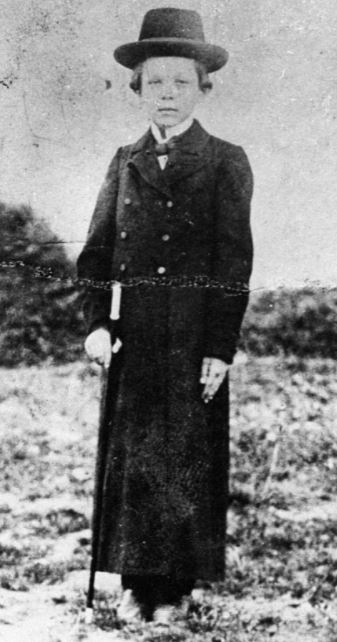
Rav Avrohom Yehoshua Heschel zt"l
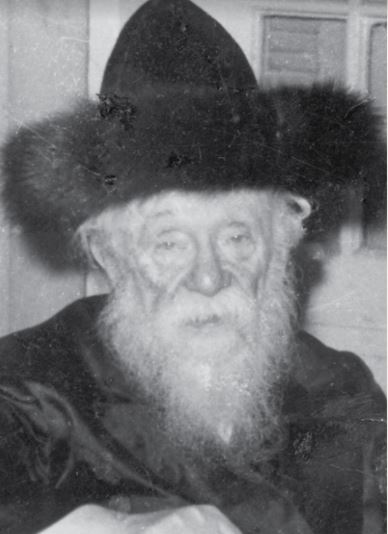
One of the great Chasidic Rebbes that I was privileged to know was the Kopycznitzer Rebbe, Rav Avrohom Yehoshua Heschel, zy’a. He embodied the royalty for which the House of Ruzhin is known. His presence was princely and regal, and he dedicated himself to illuminating the darkness of America’s spiritual desert, carrying American Jewry on his shoulders until his last days.
The Rebbe was born in the town of Husyatin (pronounced ‘Shatin’), where his maternal grandfather was the Husyatiner Rebbe. His father was Rav Yitzchok Meir Heschel, who would later become the Kopycznitzer Rebbe. He was named for the Oheiv Yisroel of Apta, of whom he was a direct descendent. Like his illustrious namesake, the Rebbe’s very essence was composed of love for his fellow Jews. His kind-heartedness was seen from an early age.
When WWI broke out, like many Jews of that region, the family fled to Vienna. At that time, the Austrian capital was teeming with refugees, and Rav Avrohom Yehoshua worked tirelessly to provide them aid and comfort. Every day he would go to the train station to greet the tired refugees who were arriving. He would personally help them with their baggage and in getting settled. From the moment they arrived, the Rebbe shouldered their burden, secretly leaving money under their doors.
In 1936, when his father passed away, Rav Avrohom Yehoshua was crowned as his successor. For three years, he served as the Rebbe in Vienna. Like his father before him, Rav Avraham Yoshua was venerated by Chasidic and non-religious Jews alike, his home was a center for constant charitable activities, and as he personally attested some years later, he never slept a night with money in his possession, having always distributed every last Groschen to the destitute.
Rav Shlomo Lorincz relates: “Rav Yoel Pollack and Rav Eliezer Breuer were present when an S.S. officer approached the Rebbe with the intention of cutting off his beard. The Rebbe held his beard with one hand, extended the other toward the S.S. hooligan, and said, “You can cut off these two fingers, but not my beard.” The S.S. man was so frightened that he left the Rebbe alone. At one point, the Nazis threw the Rebbe in jail. His Chassidim did everything they could to secure his release, and eventually, their efforts bore fruit. After the Rebbe was freed, he said that he prayed throughout his entire incarceration that he not be released on Shabbos in order to avoid desecrating the Shabbos by signing his name. And indeed, he was freed on Motzei Shabbos.
As the winds of war began blowing, and the authorities put a ban on Tefillah B’Tzibbur he listened to the directive of his uncle, the Husyatiner Rebbe, and made plans for passage to America. The Rebbe had a sum of money that was just enough to cover the travel costs to America. The night before his departure, an urgent matter of relief came to his attention, and in his tremendous faith in Hashem, he donated the entire sum to tzedakah, leaving himself without a penny to his name. The next day, the local Chassidim heard about what he had done, and a couple came before the Rebbe, and the wife set her jewelry down on the Rebbe’s table so that the Rebbe could pawn it.
Upon arrival in New York in 1939, he settled on the Lower East Side. Almost immediately, the Rebbe’s home began to serve as a place where every Jew could turn for help. The constant stream of young and old, the children, the teens, the newlyweds, and the senior citizens came to visit the Rebbe for Chizuk and advice.
Yisroel Safrin author. As featured in the Monsey Mevaser, 'Klal Personalities' series
Stories of Rav Avrohom Yehoshua Heschel zt"l
Two askonim once visited the Rebbe. They told him that among the recently arrived Holocaust survivors was an important rabbi who was dressed in tatters, and that they were trying to collect for respectable clothing for him. They then asked the Rebbe if he could donate his old hat. The Rebbe went to the closet, took out his new hat and gave it to them. The askonim were embarrassed. “We meant that the Rebbe should give us his old hat, the one he doesn’t use any more,” they explained. Replied the Rebbe, “In the World to Come, a person’s clothing will be made up of the mitzvos and good deeds that he did in this world. Do you want me to sit in Olam Haba with an old hat?”
Yisroel Safrin author. As featured in the Monsey Mevaser 'Klal Personalities' series
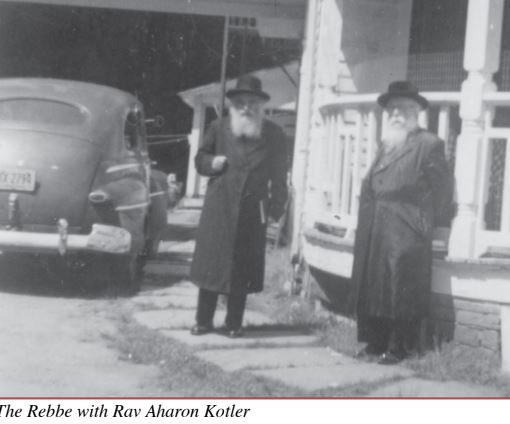
A friend of mine from out of town attended Yeshiva Torah Vodaath and befriended the Rebbe’s son, Zisha. He became a Ben Bayis in the home of the Rebbe on Henry Street on the East Side. To witness the constant flow of Yidden with all kinds of Tzoris, my friend was moved to ask the Rebbe - “How can the Rebbe love every Yid?” To which the Rebbe replied: “I will answer you in two ways:” “Number One is “To love Rav Aharon Kotler, you don’t need Ahavas Yisroel. The second thing is: When you look at the face of a person entering the door, you can see either the joy on his face or the troubles and burdens he carries. When I see the door open and the foot come through the door, I do not wait to see the face- I say ‘Ehr Iz A Yid, Un Ich Gay Ehm Leib Huben”-He’s a Jew and I will love him.”.
Yisroel Safrin author. As featured in the Monsey Mevaser 'Klal Personalities' series
My friend further related a story: “A Jew came to the Rebbe begging him to assure him his daughter, suffering from a kidney ailment ‘will’ have a refuah sheleima. The Rebbe replied, “She ‘should’ have a Refuah Sheleima.” The Yid started crying and said: ”I am not leaving until the Rebbe promises me that she ‘will’ have a refuah sheleima.” The Rebbe said, “Who am I that I can promise such a thing.” The man sat and cried bitterly for a long time. Finally the Rebbe stood up and said: “Go home - She ‘will’ have a refuah sheleima.” This young boy heard the exchange, and after the man had left, he approached the Rebbe, asking “How could the Rebbe have such ‘koichois’ that he could promise such a thing?” The Rebbe replied: “I don’t have any special ‘koichois.’ I saw that this man would have passed out if I did not promise him. Afterward, I lift my hands to Hashem in Tefillah and I cry: ‘Ribbono Shel HaOlam- I am begging you Please do not make me into a liar.”
When a similar incident occurred with the Rebbe giving a havtacha, the Rebbe later said: “Apparently, Hashem had mercy on me. He didn’t want the Kopycznitzer Rebbe to become known to one and all as a liar who makes promises that he can’t keep, so He heard my Tefillos.”
Yisroel Safrin author. As featured in the Monsey Mevaser 'Klal Personalities' series
A grandson, Rav Avrohom Yehoshua Heschel writing in Hamodia’s Inyan Magazine, related the following: “The Potiker Rav was walking home from the mikveh with the Rebbe on Henry Street on the Lower East Side when the Rebbe said: “What’s going on there?” pointing across the street. A woman was sitting with shopping bags and other things on the stoop. “Let’s go over there and see what’s going on,” said the Rebbe. The Rebbe said to the woman, “What are you doing here outside so early in the morning?” She said, “The landlord put me out. I didn’t pay the rent.” “Where does he live?” She said, “here on the first floor.” So they knocked on the door. The landlord seemed a bit astounded to find the Kopycznitzer Rebbe and the Potiker Rav standing at his door so early in the morning. “Rebbe, this is a business. She hasn’t paid the rent in six months,” he told the Rebbe. “How much does she owe?” “Sixty dollars- that’s for six months.” The Rebbe took out the money from his pocket and gave it to the landlord. He then walked to his Bais Medrash and walked back to bring another $60 to the landlord. He said, “I am paying six months in advance. Now can she move back in?” “Yes, yes, she can move back in.” “Now let’s go daven,” he told the Rav. Now I understand the pshat in the pasuk ‘Tzedek Lefanav Yehalech’ – Righteousness goes before him.” The Rav commented when he told the story. The Rebbe was so careful in regard to shmiras einayim that he didn’t actually see the woman. His heart felt that this woman was sitting outside at 6 am in the morning. Chessed was so intrinsic in the Rebbe that his heart ‘saw’ her across the street.
Rav Shlomo Lorincz once asked the Rebbe why he was not a member of the Moetzes Gedolei HaTorah. “In order to be a member of the Moetzes Gedolei HaTorah,” he replied, “one must be a Talmid Chacham.” On a different occasion, he answered the question thus: “Ich bin a pashuter zelner (I am a simple soldier). I am willing to do whatever is asked of me, but I leave the daas Torah to others. Whatever they decide, I’ll do.”
Rav Shneur Kotler related that when his father, Rav Aharon Kotler, was hospitalized for medical treatment, Rav Aharon asked if anyone had mentioned his situation to ‘the Rebbe.’ “To which rebbe is the Rosh Hayeshiva referring?” asked one of his relatives. When I say ‘the Rebbe’ Rav Aharon retorted, I mean the Kopycznitzer Rebbe.” Rav Shneur added that his father sent every chassan in the yeshiva to the Rebbe for a bracha before the wedding. (By Yisroel Safrin . As featured in The Monsey Mevaser 'Klal Personalities' series)
Among the countless stories about the boundless Ahavas Yisrael, incredible acts of chessed, and the miracles witnessed in the zechus of the brachos of the Kopycznitzer Rebbe, zy’a are many that could easily fill entire volumes. We share a few of those stories that contain pertinent lessons. At a certain gathering of gedolei Torah at which both Rav Aharon Kotler zt”l and the Kopycznitzer Rebbe were present, Rav Aharon turned to the Rebbe and asked his opinion on the issue under discussion. When Rav Aharon was later asked why the Rebbe’s opinion was so important to him, he replied: “The Torah was given to the Jewish people in order to purify them - and the Kopycznitzer Rebbe has purified himself.” The Kopycznitzer Rebbe was the first one to volunteer for any holy undertaking, and he was one of those who shouldered the burden of fund raising for Chinuch Atzmai. Together with Rav Aharon Kotler, Rav Moshe Feinstein, Rav Yaakov Kaminetzky and the Novominsker Rebbe, he knocked on people’s doors for hours each night to appeal for donations. Each month, ten thousand dollars had to be collected. Before Yom Kippur, Rav Aharon Kotler called the Rebbe and said the money must be sent immediately to Eretz Yisroel for the teachers to be paid before Yom Tov, but he did not yet have the entire sum. Rav Aharon asked the Rebbe to please lend five thousand dollars to the cause, and he himself would make up the difference. The Rebbe answered that there was no way he could take a loan since he had not paid back the loan from the previous month, but he agreed to raise the requisite sum. On Erev Yom Kippur, as everyone was getting ready for the seudah hamafsekes, the Rebbe called Reb Henoch Cohen, the director of the Chinuch Atzmai American office and requested that he come at once. When Reb Henoch arrived, the Rebbe said to him, “Go to my table and gather up all the money that’s there.” Many Jews had come to the Rebbe on Erev Yom Kippur, in order to receive a brocha and give a pidyon. Reb Henoch knew that the money on the table was the Rebbe’s means of supporting himself for the next half a year and he hesitated to take it. But the Rebbe insisted, saying, “Don’t worry about me.” So Reb Henoch took the money and indeed, it added up to the requisite sum needed for Chinuch Atzmai.
Yisroel Safrin author. As featured in the Monsey Mevaser 'Klal Personalities' series.
Whenever the Rebbe rode in a taxi, he always sat next to the driver, despite the fact that doing so might be unfitting for a Rebbe. Most of the drivers were Jews, and his purpose in sitting next to them was to engage them in conversation with the hope of having some influence on their religious observance. There were many cab drivers upon whom he prevailed to start putting on tefillin, and he himself purchased pairs of tefillin for drivers who promised that they would put them on daily, even if just for a few moments.
Yisroel Safrin author. As featured in the Monsey Mevaser 'Klal Personalities' series.
A man once came to pour out his troubles to the Rebbe. His daughter had unfortunately strayed so far from Judaism that she wanted to marry a non-Jew. Her father begged her not to inflict such pain on him, but to no avail. He therefore decided to tell her that if she went through with the marriage, he would cut off all contact with her. The Rebbe heard the man out and empathized with his pain. After thinking the matter through, he said: “My opinion is that you should stop discussing the issue with your daughter. Don’t try to force her hand by threatening to cut off contact with her. I will advise you to do one thing,” continued the Rebbe. “Tell her that you want the engagement party to be held in your home, and that you want the non-Jewish man’s entire family to participate, with no exceptions. The party will not take place until everyone can come. Prepare a lavish meal with abundant food and plenty of liquor. With G-d’s help, everything will work out fine. Just keep trusting Him.” On the day of the party, the gentile fiance’s entire family arrived at the Jew’s house. They sat down to the extravagant meal, all the while joking boisterously. Those present stuffed themselves with food and drink as though they were in a saloon, until they were completely inebriated. In their drunkenness, they began to swear and curse the Jews. The father stood at the side and wiped the tears that streamed down his face. His daughter sat at the head of the table, and there seemed to be no difference between her and the rest of the guests. Eventually, everyone got up and went home. The turning point came a few hours later. The daughter turned to her father. “I regret everything,” she said. “I want to call off my engagement. I was born a Jewess, and so I will remain for the rest of my life.” Needless to say, her father was ecstatic, and tears of joy replaced the tears of pain he had shed earlier. He asked no questions, but ran to the Rebbe’s home in order to thank him for the miracle that he had performed. The Rebbe was thrilled at the good news. “Please,” he said, “sit down and let me explain why your daughter had a complete change of heart. Know that a Jewish neshama is always on a higher level, no matter how far a person has strayed. Your daughter’s soul cannot stand lowliness and lack of values. I knew from the start that even if she married him, she would find him insufferable once she became familiar with his way of life. What a shame it would have been for the wool to be lifted from her eyes only after her intermarriage was a fait accompli. “Liquor is one of the things that brings out a person’s true colors. That is the reason that I advised you to make the party for the entire family - in order to give your daughter the opportunity to see their true ways within a short period of time. And that is exactly what happened.”
Yisroel Safrin author. As featured in the Monsey Mevaser 'Klal Personalities' series.

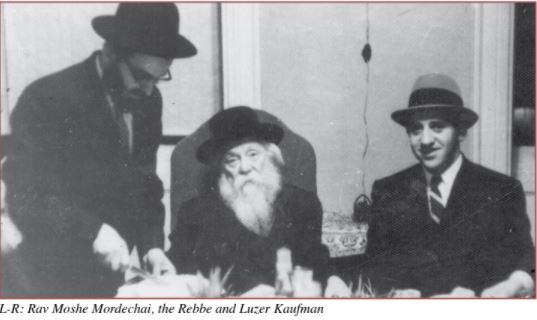
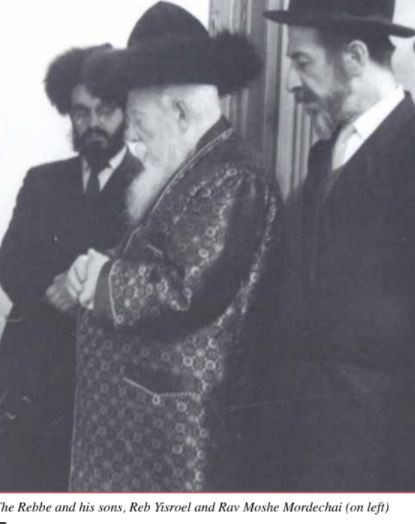
On Purim Day of 1967, the author stopped at the Kopycznitzer Bais Medrash during the seuda and the eldest son of the Rebbe, Reb Yisroel (for whom I did ‘toivois’ on a regular basis in business) saw me and singled me out. He rushed me up to his father saying: “The Rebbe should please give this man a special brocha.” The holy Rebbe took my right hand in between his two hands and said emphatically: “Di zolst zoche zein tzu gitte zachen bimheira bekurev” - “May you merit good things speedily.” That night was the “clincher” between my wife and I, as we spent many hours talking. My late wife and I were married on Tu B’Av (15 Av) just after the Kopycznitzer Rebbe was niftar. We resided on the outskirts of Boro Park and on Shabbos I would walk to the Kopycznitzer Bais Medrash on 55th Street to daven. For the first year there was no Rebbe, until the Rebbe’s son, Rav Moshe Mordechai accepted the leadership role. In the interim, in 1971 we moved to Monsey but returned for the “upsheren” of our eldest son in a meaningful ceremony. In the Rebbe’s final years, Rav Avrohom Yehoshua became weak, yet he still soldiered on with his many activities. He would say that he davened that he should remain active until his final day, and this would come true. On 16 Tammuz, 1967, the Rebbe was by the Weissmandel family in Monsey for some respite, when he asked for the sefer Sha’ar Hagmul of the Ramban which speaks of the reward for Tzaddikim. In the midst of learning the sefer, his holy soul ascended to shomayim. His sudden petira was a shock to all. An enormous levaya took place at the Kopycznitzer Bais Medrash in Boro Park. The Rebbe is interred in Tiveria, in the Husyatiner/Ruzhin Chelka, among many Gedolei Yisrael, alongside his son, Rav Moshe Mordechai Heschel, who succeeded him. The author and his family were zoche many times to be mispallel at both Rebbe’s Kvorim when visiting Tiveria. Tehei Nishmasam Baruch!
Yisroel Safrin author. As featured in Monsey Mevaser 'Klal Personalities' series.