Rav Yaakov HaLevi Ruderman zt"l
הרב יעקב בן יהודה רודרמן זצ"ל
Tammuz 14 , 5747
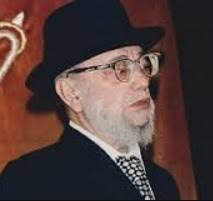
Rav Yaakov HaLevi Ruderman zt"l
Rav Yaakov Halevi Ruderman, (1901-1987) Rosh Yeshiva of Ner Israel, Baltimore. Born on Shushan Purim in 1901 in Dolhinov, Russia; studied in Yeshivas Knesset Yisrael in Slobodka, then headed by Rav Nosson Zvi Finkel (the Alter) and Rav Moshe Mordechai Epstein. Among his colleagues in Slobodka were Rav Reuven Grozovsky; Rav Ruderman's first cousin, Rav Yaakov Kamenetsky; Rav Aharon Kotler; Rav Yitzchak Hutner; In 1926, Rav Ruderman published his only written work, Avodas Halevi. In 1930, Rav Ruderman joined his father-in-law, Rav Sheftel Kramer, at the latter's yeshiva in Cleveland. In 1933, Rav Ruderman moved to Baltimore and founded the Ner Israel yeshiva, leading that yeshiva for 54 years until his passing. His death in 1987 followed less than one-and-a-half years after the passing of Rav Kaminetzky and Rav Moshe Feinstein. Posthumously, Rav Ruderman's students have published two volumes of his teachings: Sichos Levi contains mussar/ethical insights based on the weekly parashah, while Mas'as Levi contains lectures on the 19th century work Minchas Chinuch and other Tamudic and halachic insights.
Stories of Rav Yaakov HaLevi Ruderman zt"l

This article originally appeared in Yated Neeman. We abbreviated it because of its length.
As we enter the Yahrzeit of the revered Rosh Yeshiva and founder of Yeshiva Ner Yisrael of Baltimore, the Yated presents highlights of his life as told by his talmidim. We thank the talmidim who shared with us their oral and written memories of the Rosh Yeshiva.
Rav Ruderman was born on Shushan Purim in 5660 (1900) in Dolhinov, a small shtetl near Vilna. He was born late in life to his parents, Rav Yehuda Leib and Sheina, the first son after six daughters. Rav Yaakov Kaminetsky, Rav Ruderman’s illustrious cousin who is named after the same person, related a fascinating story about how Rav Ruderman got his name. A year before his birth, an elderly, childless Jew named Reb Yitzchok assured Rav Yehuda Leib that he would have a son and made him promise to name the child Yitzchok. Thinking that it was unlikely that he would have a son, Rav Yehuda Leib half-jokingly agreed. A year later, when his son was born, his mother wanted to name him Yaakov after her father. A shaila was asked and the psak was that he be given both names: Yaakov Yitzchok.
Rav Yehuda Leib was a melamed. Rav Ruderman often stated that his father knew Shas with Tosafos well, but even though he may have eclipsed his father in learning, he did not even approach his level of avoda and Yiras Shomayim. Rav Yehuda Leib recognized his young son’s prodigious talents and encouraged him to learn. The child was awakened early to learn a blatt before davening and was rewarded for every daf memorized. As a result, he mastered Seder Noshim and Nezikin before his bar mitzva.
Shortly before his bar mitzva, Rav Yehuda Leib took him for a berocha to the Lubavitcher Rebbe, Rav Sholom Ber. The Rebbe was so impressed that he blessed the boy that he should grow to be an odom godol. The Rebbe wanted the youth to learn in Lubavitch, but Rav Yehuda Leib chose instead to send him to Slonim.
The young illui from Dolhinov soon developed a remarkable reputation. At that time it was customary for Slabodka talmidim to seek exceptional bochurim to join Slabodka. The future Chevron Rosh Yeshiva Rav Yechezkel Sarna, who was already one of the Alter of Slabodka’s closest talmidim, convinced the young genius to join Slabodka. That decision was undoubtedly a watershed in his life.
It was in the middle of World War I when Rav Ruderman joined Slabodka when it was in the city of Minsk after it had fled eastward, away from the approaching German Army. In Minsk, he merited meeting the revered Godol HaDor, Rav Chaim Brisker. It seems that Rav Chaim discerned tremendous potential in the young illui and realized that he would need special care to withstand wartime difficulties. Toward that end, unbeknown to Rav Ruderman, Rav Chaim arranged for a certain wealthy Yid to provide him with extra money so that his learning would not be adversely affected by hunger. Only after Rav Chaim’s passing in 1918, when the support ceased, did Rav Ruderman become aware of Rav Chaim’s role in caring for him.
The Alter also displayed an enormous amount of affection toward the youngster. He assigned Rav Yechezkel Sarna to serve as his eltere bochur.
Rav Ruderman learned with tremendous hasmoda, but he was completely unable to keep to sedorim of the Yeshiva. The Alter gave him latitude to learn in his own way as long as he achieved the pre-set goals. It was decided that he would attempt to complete Shas that winter. Rav Ruderman would take long walks during which he would review Gemoros and Sedorim by heart. He was well on the way to reaching his goal when the Alter received a telegram shortly after Sukkos advising of the petira of Rav Yehuda Leib. Not wishing to interfere with his talmid’s learning regimen, the Alter chose not to tell him the terrible news. Only after Pesach, when he had achieved his goal, was he informed of his father’s passing. The Alter remarked that the completion of Shas would be a far greater zechus for his father’s neshoma than all the recitations of Kaddish that he missed.
His talmidim in Baltimore understand their great zechus to have had a Rebbe whose every action was a reflection of the Alter. On the Alter’s fiftieth Yahrzeit, Rav Ruderman and Rav Yaakov Kaminetsky were invited to Lakewood to speak. Rav Schneur Kotler related that when Rav Yaakov was unable to attend he stated, “The Baltimore Rosh Yeshiva is the most reflective personality of the Alter in our generation.”
One thing in which Rav Ruderman particularly took pride was the fact that he merited receiving semicha from Rav Meir Atlas, the revered father-in-law of Rav Elchonon Wasserman. This semicha traced back to the Vilna Gaon, as Rav Meir Atlas had received semicha from Rav Eizele Charif, who was in turn a musmach of Rav Abbale Peslover, who had received semicha directly from the Gaon; thus Rav Ruderman was a direct link in this chain of the mesora back to the Vilna Gaon.
In 5684 (1924), Rav Ruderman married the daughter of Rav Sheftel Kramer, a son-in-law of Rav Shraga Feivel Frank and brother-in-law of Rav Isser Zalman Meltzer, Rav Moshe Mordechai Epstein and Rav Boruch Horowitz.
The Rebbetzin was his partner and helpmate in all his undertakings on behalf of Yiddishkeit. Not only did she free him from the yoke of responsibility in the material aspects of the house, but she was also instrumental in helping him achieve lofty spiritual pursuits. Later, when they moved to America and Rav Ruderman sought to build a Yeshiva in a country that had no understanding of the concept, it was the Rebbetzin who constantly encouraged him to persevere rather than be deterred by the numerous stumbling blocks placed in his way. It was the Rebbetzin who organized fundraisers and donations of staples for the Yeshiva. The Rosh Yeshiva was eternally grateful for all that she had done and, many decades later, upon her passing several years before his petira, the Rosh Yeshiva was simply inconsolable.
During the first years after their marriage, the Rosh Yeshiva devoted himself to complete immersion in learning. In 1931, the Rosh Yeshiva, Rebbetzin and their baby daughter immigrated to the United States. Rav Ruderman joined his father-in-law, Rav Sheftel Kramer, in the Yeshiva of New Haven that had relocated to Cleveland, where the latter served as Menahel Ruchani.
In 1933, Rav Ruderman decided to accept a position as Rav of the Tiferes Yisrael Shul in Baltimore with the understanding that he could use the facilities for a Yeshiva.
The Yeshiva’s early growth intensified through the recognition and support of prominent Rabbonim. Rav Shraga Feivel Mendlowitz, Menahel of Mesivta Torah Vodaas and unquestionably one of the most important figures in the development of Torah in America, sent bochurim from New York whom he thought would benefit. Rav Yaakov Kaminetsky sent his children from Toronto, which in those days was considered a major distance away. Rav Yehoshua Klavan, one of the foremost talmidim of Rav Boruch Ber and the Rav of Washington, D.C., was among the staunchest supporters of the Yeshiva. He not only sent a son to learn in the Yeshiva, he even raised funds for the upkeep and growth of the Yeshiva. Furthermore, during the winter months, when Rav Ruderman would occasionally suffer from laryngitis, Rav Klavan would come from Washington to deliver the daily shiur. Rav Naftoli Zvi Yehuda Riff, a grandson of the Netziv and the Rav of Camden, New Jersey, was also extremely helpful.
Without a doubt, it was the power of the Rosh Yeshiva’s total immersion in Torah; his contagious Ahavas Torah and his complete belief in the eternity of Torah that enabled him to become the quintessential Rosh Yeshiva and Torah builder. His love of Torah was such that it overcame even the most natural human limitations. Once, during the early years of the Yeshiva at its current campus, a fire broke out in the building where the Rosh Yeshiva lived. Everyone immediately evacuated the building. Suddenly Rav Ruderman ran back into the burning building, exclaiming, “I forgot an absolutely irreplaceable item!” What was the item for which he risked his life? His very rare copy of the sefer Nesivos HaMishpot on Rabbeinu Yeruchem.
His dedication to learning knew no bounds. His encyclopedic knowledge of Talmud Bavli, Yerushalmi, Rishonim, Poskim, Acharonim and teshuvos set a lofty standard for which to strive. The Rosh Yeshiva stimulated lively discussions, thereby deepening interest and broadening horizons, by challenging his students to bring proof from one Gemora to a seemingly unrelated issue.
He constantly focused the attention of his talmidim and their awareness to the breadth and inter-relationship of all of Torah. He was always involved in a kushya. In fact, he would say that he used questions as memory keys with which to remember the Gemora. Therefore, he was always ready with a penetrating query or comment that would lend insight to whatever Gemora one mentioned. He lived with his questions and was constantly seen with his lips moving, as he was totally and consistently absorbed in learning.
Rarely was his sleep at night not disturbed by the kushya with which he went to bed. This total involvement was transmitted to his talmidim.
On par with his love for Torah, was the Rosh Yeshiva’s love for his students. If ever a talmid asked him a good question or related a nice sevora, his face would radiate delight. When one of the talmidim had the good fortune to ask or say something that was new to him, he would be ecstatic. Many talmidim had the fortune to be embarrassed by the Rosh Yeshiva when they would be reminded years later of an insightful Torah thought that they themselves had long since forgotten.
A revealing incident occurred when he was learning in Slabodka and a visitor arrived bearing a copy of the newly published sefer Ohr Somei’ach. The young bochur asked to borrow the sefer but was refused permission as the man planned to continue his journey the following day. Rav Ruderman was undaunted. He borrowed the sefer for one night promising to return it in the morning. Overnight he went through and mastered the sefer in its entirety!
On another occasion, the Rosh Yeshiva was once undergoing a lengthy medical procedure. The doctor, wishing to distract the Rosh Yeshiva from the pain and unpleasantness, engaged him in small talk. Throughout the procedure the Rosh Yeshiva continuously nodded his head in agreement. After leaving the clinic, he explained to the talmid accompanying him a wonderful approach to the sugya that had occurred to him in the midst of the procedure. He then suddenly interrupted himself, “By the way, perhaps you heard what the doctor was saying to me? I nodded to him out of respect, but what did he want?”
The Rosh Yeshiva once complained to his talmid, Rav Yisrael Dov Kaplan, today Rosh Kollel in Bayit Vegan, “Nowadays, people do not learn. When I was fifteen, learning in Slabodka we would get up at five in the morning and go to sleep after midnight. We learned fifty blatt a day, every day!”
Once on a long trip, the Rosh Yeshiva was accompanied by two bochurim from the Yeshiva, who decided to utilize the duration of the journey to go over several pages of Maseches Berochos that they had committed to memory. The Rosh Yeshiva was seated right in front of them and they noticed that he was shifting about in his seat uncomfortably. From time to time he walked around and fixed them with a piercing look. “What kind of Gemora are you using over there – is it a different girsa?” he asked. Scarcely concealing their pride, the bochurim replied, “We don’t have a Gemora, we’re going over what we learned by heart!” The Rosh Yeshiva, with a smile on his face, proceeded to quote the exact language of the Gemora.
When he was already in his eighties, a talmid relates, “I went to daven Mincha with the Rosh Yeshiva and he complained that the strong medicines he was taking for his numerous ailments caused him to forget. The talmid asked, “Has the Rosh Yeshiva forgotten any Tosafos in Shas?” Immediately, the Rosh Yeshiva banged his cane and forcefully said, ‘No! No! No Tosafos. I mean a chiddush in a difficult Rambam that I once said – I have trouble remembering in its entirety.” The talmid related that the way in which he could not even contemplate the horror of forgetting a Tosafos was an indication of Ahavas Torah and devotion to Torah that remained with him forever.
Rav Ruderman would show talmidim a letter that he received from the Steipler Gaon in 5719 (1959). The Steipler sent him a letter requesting financial assistance for printing the first volume of his magnum opus Kehillas Yaakov. In the letter, the Steipler wrote that he had seen and learned Rav Ruderman’s sefer Avodas HaLevi that he had written in his youth and it features “wonderful chiddushim on the most difficult areas of the order of Kodshim”. In the letter, the Steipler encourages Rav Ruderman to write more such seforim. After showing the letter to the talmid, Rav Ruderman said, “I have enough chiddushim to write ten more volumes of Avodas HaLevi, but I am now writing leibidige seforim, living seforim, my talmidim.”
The Rosh Yeshiva continued, “Teaching takes full concentration, as the Gemora teaches that only if a Rebbe is similar to a Maloch should one seek to learn Torah from him. We know that a Maloch cannot do more than one shelichus, one job at a time. Teaching talmidim preoccupies me so completely that I cannot sit and write seforim.” Indeed, the Rosh Yeshiva invested tremendous effort into teaching and shaping each talmid.
The Rosh Yeshiva established thousands of talmidim. Among them, hundreds became Gedolei Torah and Marbitzei Torah who continue his legacy and illuminate the Torah world with their shiurim and chiddushei Torah. Although of course, there was a special focus on establishing talmidim who would become Torah giants in their own right, the Rosh Yeshiva understood the individual character of each talmid and encouraged them, each in his own way, to make Torah a central part of their lives.
Talmidim of Ner Yisrael felt that the Rosh Yeshiva loved them as a father loves his son. He took an active interest in their needs, listened to their problems and shared their burdens. They, in turn, became greatly attached to him. His relationship with his talmidim was very much predicated on an explanation of Chazal on the pasuk “and you shall teach them to your sons”. Chazal say that sons are referring to talmidim. “Why, then,” the Rosh Yeshiva asked, “did the pasuk not write, “and you shall teach them to your pupils?”
“In order to teach us,” he explained, “that talmidim are akin to sons. Just as a son never stops being a son, neither does a talmid stop being a talmid. A Rebbe must never imagine that his talmid is beloved to him only when he is under his tutelage, receiving his guidance and instruction and that when this period comes to an end, so does the special relationship. The truth goes far beyond this, for upon becoming a talmid he becomes a son of his Rebbe. Even when he embarks on his own path, he should remain a son; the bond should not weaken.” This is the way in which the Rosh Yeshiva interacted with his talmidim. Talmidim who visited him after intervals of ten years or more still felt the same warm relationship they remembered from their years in Yeshiva.
His emulation of the Alter was not simply in treating his students as children; rather, it was in all facets of chinuch. He would try to handle each of his talmidim in a manner suited to that individual. When it came to delivering rebuke, Rav Ruderman would explain that if he would dare speak to his students in the way the Alter rebuked even the greatest Baalei Mussar publicly, they would have fled the Yeshiva instantaneously. In fact, when the Rosh Yeshiva found it necessary to rebuke the whole Yeshiva, he would speak very positively even while calling the talmidim to task.
Rav Ruderman often cautioned that dealing with bochurim is dinei nefoshos, a matter of spiritual life and death, and cannot be taken lightly. There were instances when members of the Yeshiva’s Hanhola thought that a specific bochur should be expelled. The Rosh Yeshiva consistently held firm to his convictions, explaining that one never knows what the future holds for such a talmid; perhaps with a bit more patience he would develop properly. By and large, he lived to see his position vindicated.
From the manner in which the Alter cared for Rav Ruderman’s every need, he learned that it is every Rosh Yeshiva’s obligation to deal with every aspect of his talmid’s life, spiritual and material. The talmidim of Ner Yisrael all attest to their Rebbe’s exceptional care and concern for them. He served as a source of strength, inspiration and advice when they were beset with problems. Regardless of the difficulty or complexity of a situation, the Rosh Yeshiva could always be relied on for the requisite counsel and comfort. Throughout the years there were many bochurim who came to the Yeshiva as refugees or from homeless and troubled backgrounds. They found a home in the Yeshiva and a father in the Rosh Yeshiva.
In addition, Rav Ruderman loved his talmidim and took great pride in those talmidim who entered the great profession of Melamdei Torah. The clearest proof of this love and pride was his almost regular referral to the verse in Doniel (12:3): V’hamaskilim yazhiru k’zohar horokia, umatzdikei horabim kekochovim l’olom vo’ed. Rav Ruderman would cite the comment of the Maharsha that says, “Just as the stars and moon are in the sky throughout the day, even though they are not seen, so too the teacher remembers and ponders his students even years later.”
Rav Ruderman’s middos, his sensitivity to others and feelings of another’s pain, were legendary. These middos were the product of a lifetime of Avodas Hashem. A talmid relates how in 1982 he came to the Rosh Yeshiva’s house to walk him to Mincha. When he greeted the Rosh Yeshiva, he noticed a broken-hearted expression on his face. The Rosh Yeshiva said, “I just heard that Rav Schneur Kotler is very sick. The Gemora says,” continued Rav Ruderman, “that if a Talmid Chochom is sick, one must beg Hashem for his recovery to the extent that one must become sick over his plight.” Right then and there, the Rosh Yeshiva burst into bitter tears. Only after somewhat composing himself did he go to Mincha.
For the next two days, the Rosh Yeshiva was unwell and unable to emerge from bed. Dr. Jakobovitz, the resident Yeshiva Lane physician, came to check him and could not find anything wrong. “I, however,” explained the talmid, “knew what had happened. The Rosh Yeshiva had davened with such effort – he became sick over Rav Schneur’s plight just as the Gemora dictates.”
Rav Ruderman was a treasure trove of stories, many of which provided his talmidim with insight and understanding of his own behavior. The special care and deference that he exhibited toward his Rebbetzin had its source in a story he had heard from the Chofetz Chaim. The Chofetz Chaim once happened to be with Rav Nochum of Horodna on Chanuka evening. It was several hours into the night and still, Rav Nochum had not lit the candles. Finally, very late at night, long after the streets had emptied of people, Rav Nochum’s wife returned home. Only then did Rav Nochum light the Menora, long after the time prescribed by Halocha. Unable to contain his curiosity, the Chofetz Chaim asked Rav Nochum for an explanation. Rav Nochum answered, “The Halocha dictates that if one only has enough money for ner Shabbos or ner Chanuka, ner Shabbos takes precedence because of its sholom bayis component. My wife,” continued Rav Nochum, “is moser nefesh to ensure that I devote my life to Torah and Avodas Hashem. She enjoys being present for lighting the Chanuka Menora and that makes it my responsibility to wait for her and forgo lighting at the proper time.”
The talmidim witnessed many occasions when the Rosh Yeshiva patterned his actions on the lessons of this story. A case in point was at the Agudah convention. One of the highlights of the convention was Rav Yaakov Kaminetsky’s address after Sholosh Seudos. The audience would sit in rapt attention listening until long after Shabbos was over. Invariably, Rav Ruderman would leave in the middle to call his Rebbetzin. He would always apologize to Rav Yaakov and they would remind one another of the story of Rav Nochum.
One poignant incident made a tremendous impact on the Rosh Yeshiva and was a clear depiction of how a Rebbe’s actions influence his talmidim. A group of women, wives of talmidim of the Rosh Yeshiva who live in Eretz Yisrael, asked for an audience with the Rosh Yeshiva when he attended the last Knessia Gedola in 5740/1980. After inquiring after their families, the Rosh Yeshiva questioned why they had requested this meeting. They replied that they wished to express their hakoras hatov; they felt that their husbands treated them with greater respect and deference because they had seen how the Rebbe treated his Rebbetzin.
The Rosh Yeshiva taught many lessons in consideration for others by personal example. A talmid recounts that before joining the Yeshiva, he came to the Rosh Yeshiva’s house to be tested. In mid-conversation, he suddenly pushed over an inkwell, leaving what would become a permanent stain on the sofa. The talmid was in a quandary, but the Rosh Yeshiva continued speaking as though nothing had happened while simultaneously attempting to cover the stain to ease the bochur’s anguish. When he saw that his attempts were not helping, he began to reassure the talmid that nothing happened!
True, words alone are often somewhat of a cliché and the expression on a host’s face usually reveal a true picture of his feelings. “In this case,” the talmid related, “the Rosh Yeshiva was able to genuinely persuade me with his great wisdom that nothing had happened.” Any damage to the sofa paled into insignificance compared to the suffering of a human being.
The same talmid paid the Rosh Yeshiva a visit more than three decades later. Drinks were served and another accident occurred. This time, a cup of cream spilled, not on the sofa but on the Rosh Yeshiva’s pants. The reaction was identical. The conversation continued as if nothing had happened. The Rosh Yeshiva shifted his legs under the table and once again managed to convince the talmid that nothing happened!
The Rosh Yeshiva and Rebbetzin had one child, Rebbetzin Chana Weinberg. His son-in-law, Rav Yaakov Weinberg, succeeded him as Rosh Yeshiva until his passing twelve years later. They were blessed with six grandchildren and numerous great-grandchildren, who were privileged to surround the Rosh Yeshiva during his last days. After the petira of the Rebbetzin, their grandchildren, the Yeshiva’s Menahel Ruchani, Rav Beryl and Mrs. Aviva Weisbord, moved with their children into the Rosh Yeshiva’s home to care for him. The beauty and grace with which they discharged their obligation helped the Rosh Yeshiva cope with the loss of his Rebbetzin and added immeasurably to the quality of his later years. The Rosh Yeshiva was constantly grateful and continuously expressed his tremendous hakoras hatov to the Weisbords.
The Rosh Yeshiva’s entire eighty-seven years comprised one long song of Torah, limud haTorah, teaching Torah, living with the middos dictated by the Torah and giving kevod haTorah. On the 14th of Tammuz, 5747 (1987), the Rosh Yeshiva passed on to join his exalted Rebbeim, the Alter of Slabodka and the giants of the era who pre-deceased him. His levaya in Baltimore was one last manifestation of kevod haTorah, as thousands flocked to Ner Yisrael to bid farewell to the last link to the greatness of Slabodka in our times.