
Rav Yisroel Hager of Vizhnitz zt"l
הרב ישראל בן ברוך הגר זצ"ל
Sivan 2 , 5696
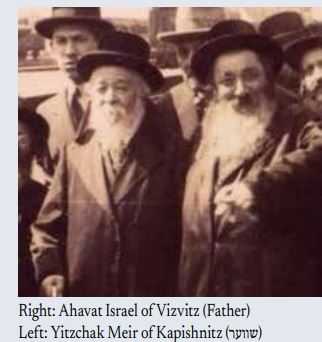
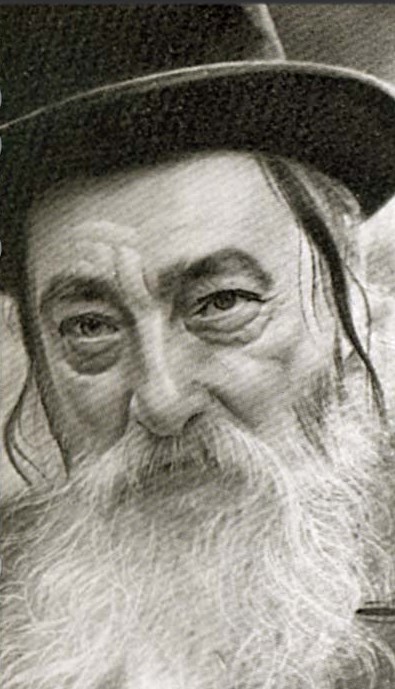
Rav Yisroel Hager of Vizhnitz zt"l
Rav Yisroel was the son of Rav Baruch Hagar of Vizhnitz.
He was known for his genius that was only matched by his love for every Jew - even the simplest and lowliest of them all—towards whom he demonstrated the utmost honor and respect.
He was among the greatest gedolim and leaders of his generation and his thousands of followers and chassidim hailed from Eastern Galicia, Romania and Hungary.
He was also the leader of Kollel Vishnitz. The auspices of the tzedaka for Rabbi Meir Baal Haness were under his authority, and he distributed charity from the fund to the poor in Eretz Yisroel.
He served as Rav in Devlia and the Máramaros region, and afterwards he was AvBeisDin in Vishnitz.
At age sixteen he married Hinda the daughter of Rav Meir Horowitz of Dzhikov, author of Imrei Noam, the grandson of Rav Naphtali Horowitz who was the founder of the Ropshitzer Dynasty.
When his father, the Imrei Baruch, passed away on 20 Kislev 5653/1893 he succeeded him as Vishnitzer Rebbe. He had many thousands of followers and served in Vishnitz as rebbe for over 43 years. In 1905 he founded the famous Vishnitz Yeshiva, Bais Yisroel.
Because of the affection that he felt and demonstrated towards every Jew, he became known as "the Ahavas Yisrael," which is also the name of his seforim that were published posthumously.
When Rav Yechezkel Pannet of Desz once observed the Ahavas Yisroel as a yungerman he remarked: Here goes a yungerman whose feet are planted firmly on the ground, but whose head reaches to the very Heavens!
Rav Aharon Roth of Shomer Emunim said of him that he merited an ayin tova when it came to spiritual matters-- he bestowed a good eye on all he gazed upon.
The Ahavas Yisroel once said about himself: "How do I know that I am not a goner? Because when I see a good Jew, I love him, even if he is not one of my own followers!"
During the first World War he fled to Grossvardein where he lived out the remainder of his days.
He passed away on 2 Sivan 5696/1936
He was laid to rest in Grossvarden, and later in 5710/1950, he was reinterred in the Vizhnitzer Ohel in Bnei Brak, Eretz Yisroel.
He left behind his sons: Rav Menachem Mendel of Vishiva; Rav Chaim Meir the Imrei Chaim; Rav Eliezer Hager, the Damesek Eliezer; Rav Baruch of Seret, founder of the Sereter Dynasty; and Rav Shmuel Abba Hager.
Stories of Rav Yisroel Hager of Vizhnitz zt"l

When Rav Leibush Ber Halpert, Rav of Vasloi was a yungerman, he tried his hand at business buying and selling grain, but was unsuccessful. Towards the end of chodesh Iyar, his uncle went to Grossvardayan and took a kvitel to ask the Ahavas Yisroel of Vizhnitz advice on the matter. This was in last days of the rebbe’s life and he was lying sick in bed. The gabbaim would not let his uncle see the rebbe; they did however give the Ahavas Yisroel the kvitel and the rebbe answered, “Let him try something else.”
After the Ahavas Yisroel passed away, Rav Halpert tried his hand at other business ventures but was met again and again with failure. One night he had a dream. In his dream, he saw the Vizhnitzer Rebbe, the Ahavas Yisroel, and Rav Halpert told him about his difficulty with parnassa. The rebbe replied, “I think you should go back to study Torah; I will have you appointed as the Rabbi of one of the towns.” When he awoke, he felt taken by surprise because this idea was not even one of the possibilities that Rav Halpert had even entertained. He was totally unprepared for what happened next.
A few days later, before Shabbos, a telegram arrived from one of the towns in Romania inviting him to apply for the open post of rabbi! As the trip would take more than twenty-four hours and Shabbos was approaching, he let the mysterious matter rest. However, after a few days, another telegram from the former rabbi arrived asking why he hadn’t come? He packed his bags and made his way to Romania. Once there, was chosen from among the other candidates and was appointed rabbi. Eventually he served in the rabbanus the rest of his life! (Kadosh Yisroel Vol. II p. 386)
Rav Eliezer Dovid Friedman, ztz'l, of London told the following illustrative stories and anecdotes regarding the Ahavas Yisrael:
The Tiferes Shlomo teaches that the rebbe, Reb Zisha of Anipoli would have a daily morning ritual. After reciting the blessing of birkas haTorah, he would go outside into the marketplace searching for Jews to bless with the bounty of the shefa which he had just found and harnessed from saying his own birkas haTorah. He would bless the first Jew he could find, no matter who he was!
Similarly, Rav Friedman relates, “I was on the bus in Givas Shmuel and I sat next to a Jew I knew from Grossvardein who unfortunately was not counted among the most religious. However, he had come from a Chassidic family and he was not ignorant of the value of a rebbe’s berachah. He told me how once he was passing by the holy tzaddik, the Ahavas Yisrael of Vizhnitz, when he was in Grossvardein and he went in for a berochah. After he left, the Ahavas Yisrael sent his shamosh after him. Surprised, he came back in. He was even more taken aback when the Ahavas Yisrael said to him, ‘Tit mir a toyva, un zayt matzliach – Do me a favor and you should succeed!’
“’You should know,’ he said to me, ‘that year, I had tremendous success in all my endeavors – whatever I did was successful.’”
Rav Friedman concluded, “The Ahavas Yisrael obviously sensed that it was an eis rotzon, an auspicious moment when his berochos could do and achieve – and he sought out the first Jew to bestow them upon, whoever that Jew was!”
There was great friendship and love between the two brothers, Rav Yisrael of Vizhnitz and Rav Pinchas of Borsha. When the Imrei Boruch passed away, the Ahavas Yisrael declined all offers of taking over the Chassidus. Initially, the pressure from the Chassidim had no effect, until Rav Pinchas revealed what he had dreamed: Rav Pinchas was undecided where to live. One night, his father the Imrei Boruch appeared to him in a dream and said, “What are you so worried about? Go and ask the Rebbe!”
To Rav Pinchas’s question as to which Rebbe his father meant, the Imrei Boruch replied, “Rebbe stands for the roshei teivos Rosh Bnei Yisrael! My son, Yisrael, will be the leader and Rebbe.”
Upon hearing his brother’s words, the Ahavas Yisrael finally relented and agreed to take upon himself the mantle of leadership. (Kedosh Yisrael Vol. I and Noam Megodim Vizhnitz Pekudei 5763 p. 3)
Segulos of Rav Yisroel Hager of Vizhnitz zt"l
The Berditchever Rav author of Kedushas Levi wrote that “I am assured that this sefer will enliven and inspire the hearts of our brethren Bnei Yisroel and set them aflame to serve Hashem with avodas haBoreh Baruch Hu.” (Haskamah to Degel)
The Chozeh of Lublin said that “Surely the author (who was a gaon and G-dly man)’s merit shall aid and help all who study these words that came out from his holy mouth and when they recite them in the name of the author his lips will move in the grave and who will act as an advocate on our behalf because tzadikim are even greater in death than in life.” (Haskamah to Degel)
The Ahavas Yisroel of Vizshnitz once told his son the Damesek Eliezer that the heilige Rizhiner testified to his followers and Chassidim that just to study the holy Sefer Degel Macheneh Ephraim is a segulah for good children – Lernen in Degel iz mesegual tzi gitte kinder! (Siach Zekenim 5 p.42)