
The Tanna Rabbi Akiva zt"l
הרב עקיבא בן יוסף זצ"ל
Tishrei 9 , 3897 / Tishrei 10 , 3897
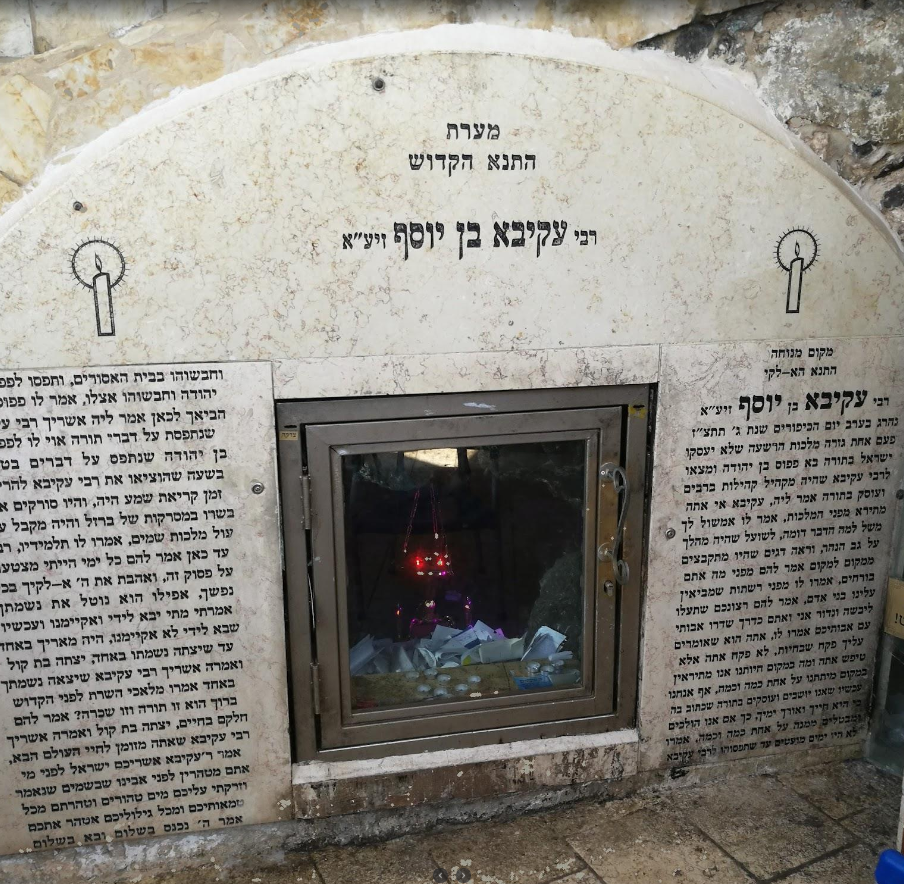
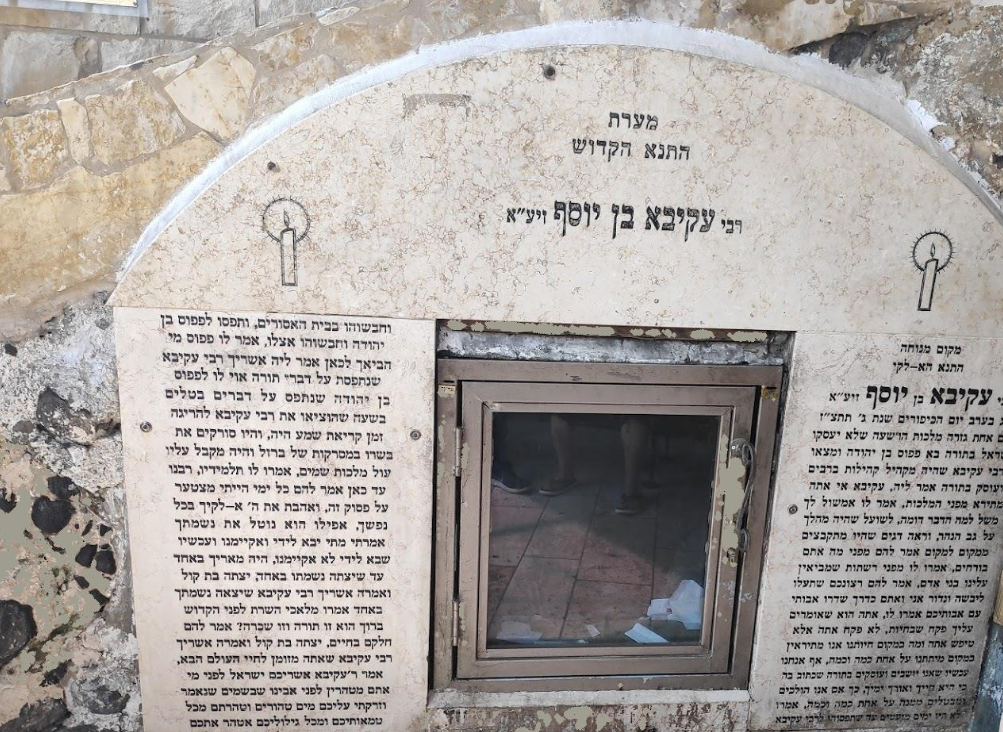
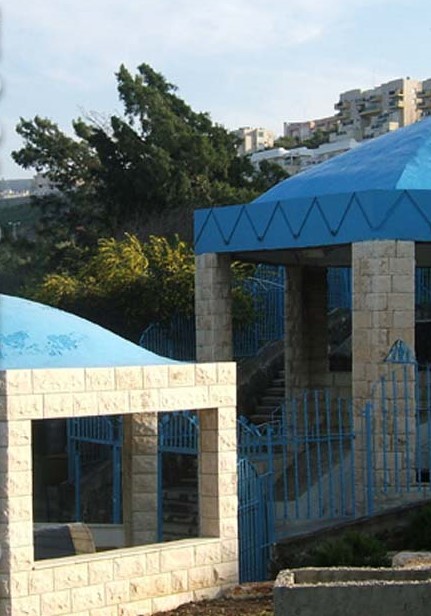
The Tanna Rabbi Akiva zt"l
(Some say 10 Tishrei)
Rabbi Akiva was born in Lod in the year 3777
His father, Yosef, a descendant of Sisera, the general of Yovin, King of Canaan, was a righteous convert (see Sanhedrin 32b and Rambam’s introduction to Mishneh Torah).
He was an ignoramus until the age of forty, when he was shepherding the flocks of the wealthy Jerusalemite Kalba Savua, whose daughter, Rochel, saw in Akiva good qualities and urged him to give up his shepherding and go to the Bais Medrash to learn Torah in return for marrying him. When Kalba Savua learned of their marriage, he disowned his daughter in anger and turned them out penniless from his home. They were so poor that they lived in a barn. One day, Eliyohu HaNovi, posing as a pauper, asked them for some straw for his wife who was about to give birth. They comforted each other that there were people even poorer than them.
The Yerushalmi (Shabbos 6:1) tells how Rochel sold her beautiful tresses so that she could support her husband’s Torah learning. He himself sold bundles of wood in the market and daily went to study the letters of the alef bais until he felt he was no longer in the category of a true ignoramus. He then realized that his own soul desired to study Torah, and that he would not learn merely at his wife’s insistence.
The Talmud Bovli, Maseches Yoma, Chapter 8 Mishna 9, reads (with my comments in parentheses):
“Rabbi Akiva said: Fortunate are you, the Jewish people! Before Whom do you purify yourself and Who purifies you? Your Father in Heaven. (They should rejoice that they are cleansed through teshuvah that is encouraged by Hashem and they are awakened to repentance by Hashem Himself), as the pasuk says, (Yechezkel 36:25), ‘I will sprinkle you with pure water and you will be cleansed.’ And it also says (Yirmiya 17:13) “The mikveh (literally means Hope) of Yisrael is Hashem.” (We can understand mikveh to mean a ritual bath rather than just hope.) Just as a mikveh [ritual bath] purifies the ritually unclean, so too does Hashem purify the Jewish people.”
It says in the Gemora (Berochos 61:):
“The time to recite Keriyas Shema arrived when [the Romans] took out Rabbi Akiva to have him executed. He accepted upon himself the complete yoke of the kingship of Heaven – ol malchus shomayim sheleima. [He recited the Keriyas Shema with this full intent.] His talmidim said, ‘Rebbe, stop here already [is this really the appropriate time for such kavonos?]’ He responded to them, ‘All the days of my life I was pained because of this pasuk (Devorim 6:5): “…with all your heart and with all your soul.” I asked myself, “When will my moment arrive? When will I finally have the opportunity to fulfill it?””
The seforim teach us that Heaven forbid that such a righteous individual would have something terrible like this [execution] happen to him! Rather [what really happened was that] they executed someone else. Someone from among their own rank and file, someone who appeared to them to be the Tzaddik [Rabbi Akiva, but was actually a Roman] was mistakenly executed in his place instead. * (Noam Elimelech Chukas)
This amazing idea is found in the Sefer Emek HaMelech by Rav Naftoli Hertz Bachrach (Sha’ar Olam Ha’Tohu, Gate 68), citing the Medrash Pirkei Heicholos Rabbosi (Chapter 6), which teaches us that all the ten martyrs known collectively as asora harugei malchus were not actually physically executed at all. Rather, Hashem tricked the wicked Romans by sending malochim down to switch the captives for Romans such as Lupiyanos for Rav Chanina ben Tradyon and they made Rav Chanina’s appearance similar to his. Rav Chanina went and ruled in his place while Lupiyanos was made to look like Rav Chanina and the Romans executed their own man. And this was the same regarding all ten martyrs. Nonetheless, their willing self-sacrifice still counts, since the wicked Romans carried out their execution (even though it was on their own men) and the martyrs mentally gave up their lives.
The Emek HaMelech concludes by saying that this is the meaning of the response of Hashem to Moshe and the malochim (Menochos 29b), when they were shown Rabbi Akiva’s cruel execution and asked, “How can this be the reward for Torah?” Hashem responded, “This is what came to mind – כך עלה במחשבה.” The Emek HaMelech explains that this is the true, literal answer; this is what Rabbi Akiva had in mind. This execution was all in his mind, a willing self-sacrifice and a mental exercise that happened in thought alone. The Tzaddikim willingly sanctified Hashem’s name. Since Hashem joins a good thought to a deed, it is considered as if they laid down their actual lives.
Stories of The Tanna Rabbi Akiva zt"l

And drink in their words thirstily: This refers to Rabbi Akiva.
How did Rabbi Akiva start out? They say that he was forty years old and had still not learned a thing. Once, he was standing at the mouth of a well and he said: Who carved a hole in this stone? They replied to him: It is the water, which constantly [drips] onto it, day by day. And they said: Akiva, don't you know this from the verse (Iyov 14:19), “Water erodes stones”? Rabbi Akiva immediately applied this concept, all the more so, to himself. He said [to himself]: If something soft can carve something hard, then how much more so, the words of Torah, which are like iron, can engrave themselves on my heart, which is but flesh and blood. Immediately he went off to start studying Torah. He went with his son and they sat down by the schoolteachers. He said to one: Rabbi, teach me Torah! He then took hold of one end of the tablet, and his son took hold of the other end. The teacher wrote down aleph and bais for him, and he learned them (aleph to tav, and he studied them; the book of VaYikra, and he studied it). And he went on studying until he learned the whole Torah. Then he went and sat before Rabbi Eliezer and Rabbi Yehoshua. My masters, he said, open up the sense of the Mishnah to me. When they told him one law, he went off and sat down to work it out for himself. (This aleph – what was it written for? That bais – what was it written for?) Why was this thing said? He kept coming back, and kept asking them, until he reduced his teachers to silence. Rabbi Shimon ben Elazar said: I will give you a parable to tell you what this was like: Like a stonecutter who was hacking away at the mountains. One time he took his pickaxe in his hand, and went and sat on top of the mountain, and began to chip small stones away from it. Some people came by and asked him: What are you doing? He said to them: I am going to uproot the mountain and throw it into the Jordan! They said to him: You cannot uproot the entire mountain! But he kept hacking away, until he came to a big boulder. So he wedged himself underneath it, pried it loose, and threw it into the Jordan. And he said to it: Your place is not here, but there! This is what Rabbi Akiva did to Rabbi Eliezer and Rabbi Tarfon. Rabbi Tarfon said to him: Akiva, it is about you that the verse says (Iyov 28:11), “He stops up the streams so that hidden things may be brought to light.” For Rabbi Akiva has brought to light things which are kept hidden from human beings.
Every day, he would bring a bundle of sticks, half of which he would sell to support himself and half he would use for kindling. His neighbors came and said to him: Akiva, you are choking us with all this smoke. Sell it all to us instead, and then buy oil with the money, and study by the light of a candle. He said to them: But I take care of many of my needs with it. I study [by its light]. I warm myself [by its fire]. And then I can [make it into a bed and] sleep on it.
All the poor will one day be judged against Rabbi Akiva, for if one says to them: Why did you never study? [And they say: Because] we were poor! then we will say to them: But wasn’t Rabbi Akiva even poorer, completely impoverished? [And if they say: It is because of our babies, we will say: But didn’t Rabbi Akiva] have sons and daughters as well? (But they will say: It is because) he merited to have his wife Rachel [to help him].
He was forty years old when he went to study Torah, and after thirteen years, he was teaching Torah to the masses. It was said that he did not leave the world until he had tables full of silver and gold, and he could go up to his bed on golden ladders. His wife would go out in a fancy gown and with golden jewelry with an engraving of Yerushalayim on it. (See Shabbos 59a) His disciples said: Rabbi, you are embarrassing us with what you have done for her. He said to them: She suffered greatly with me for the sake of Torah. Avos DeRabbi Noson 6:2
ושותה בצמא את דבריהם זה רבי עקיבא. מה היה תחלתו של רבי עקיבא. אמרו בן ארבעים שנה היה ולא שנה כלום. פעם אחת היה עומד על פי הבאר אמר מי חקק אבן זו אמרו לא המים שתדיר [נופלים] עליה בכל יום אמרו [לו] עקיבא אי אתה קורא אבנים שחקו מים. מיד היה רבי עקיבא דן קל וחומר בעצמו מה רך פסל את הקשה דברי תורה שקשה כברזל על אחת כמה וכמה שיחקקו את לבי שהוא בשר ודם. מיד חזר ללמוד תורה. הלך הוא ובנו וישבו אצל מלמדי תינוקות א״ל רבי למדני תורה אחז רבי עקיבא בראש הלוח ובנו בראש הלוח כתב לו אלף בית ולמדה . (אלף תיו ולמדה תורת כהנים ולמדה). היה לומד והולך עד שלמד כל התורה כולה הלך וישב לפני רבי אליעזר ולפני ר׳ יהושע אמר להם רבותי פתחו לי טעם משנה כיון שאמר לו הלכה אחת הלך וישב לו בינו לבין עצמו אמר (אלף זו למה נכתבה בית זו למה נכתבה) דבר זה למה נאמר חזר ושאלן והעמידן בדברים. רבי שמעון בן אלעזר אומר אמשול לך משל למה הדבר דומה לסתת שהיה מסתת בהרים פעם אחת נטל קרדומו בידו והלך וישב על ההר והיה מכה ממנו צרורות דקות ובאו בני אדם ואמרו לו מה אתה עושה. אמר להם הרי אני עוקר ומטילו בתוך הירדן אמרו לו אי אתה יכול לעקור את כל ההר היה מסתת והולך עד שהגיע אצל סלע גדול נכנס תחתיו סתרו ועקרו והטילו אל הירדן ואמר לו אין זה מקומך אלא מקום זה. כך עשה להם רבי עקיבא לרבי אליעזר ורבי יהושע. אמר לו רבי טרפון עקיבא עליך הכתוב אומר (איוב כח) מבכי נהרות חבש ותעלומה יוציא אור דברים המסותרים מבני אדם הוציאם רבי עקיבא לאורה. בכל יום ויום היה מביא חבילה של עצים חציה מוכר ומתפרנס וחציה מתקשט בה עמדו עליו שכניו ואמרו לו עקיבא אבדתנו בעשן מכור אותן לנו וטול שמן בדמיהן ושנה לאור הנר אמר להם הרבה ספוקים אני מסתפק בהן אחד שאני שונה בהן ואחד שאני מתחמם כנגדן ואחד שאני יכול לישן [בהם] עתיד רבי עקיבא לחייב את כל העניים בדין שאם אומר להם מפני מה לא למדתם [והם אמרו מפני] שעניים היינו אומרים להם והלא רבי עקיבא עני ביתר ומדולדל היה [והם אמרו מפני טפינו אומרים להם והלא רבי עקיבא] היו לו בנים ובנות (אלא אומרים להם מפני) שזכתה רחל אשתו. בן מ׳ שנה הלך ללמוד תורה סוף שלש עשרה שנה לימד תורה ברבים אמרו לא נפטר מן העולם עד שהיו לו שולחנות של כסף ושל זהב ועד שעלה למטתו בסולמות של זהב. היתה אשתו יוצאה בקרדמין ובעיר של זהב אמרו לו תלמידיו רבי ביישתנו ממה שעשית לה אמר להם הרבה צער נצטערה עמי בתורה
אבות דרבי נתן פרק ו' הלכה ב