
Rav Shimon bar Yochai zt"l
הרב שמעון בר יוחאי זצ"ל
Iyar 18 , 3881
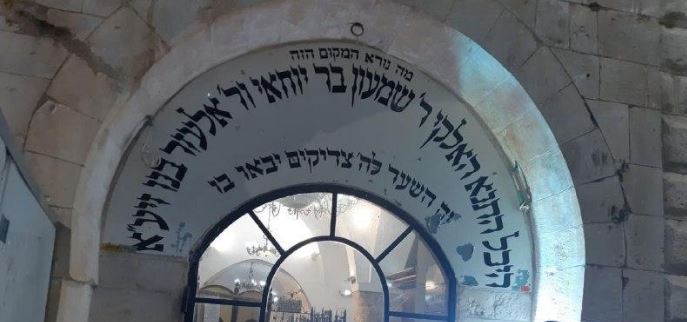
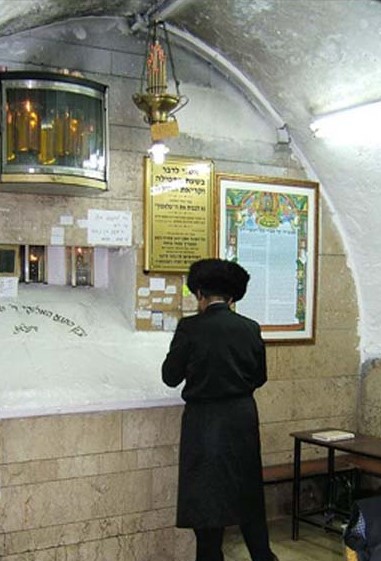
Rav Shimon bar Yochai zt"l
Rav Shimon bar Yochai, one of the most important sages in Jewish history, lived over 1800 years ago. Teachings in his name abound throughout the Mishnah, Gemorah, and Midrashim, while the Zohar, the primary source text of Kabbalah, is built around Rabbi Shimon's revelations to his inner circle of disciples. During the hours before his passing, on Lag b'Omer, he disclosed the "most sublime" secrets of Torah, in order to ensure that the day would always be an occasion for great joy, untouched by sadness because of the Omer period and mourning for him. The seminal importance of the Zohar in Jewish thought and the annual pilgrimage to Meron on Lag b"Omer are testimonies to his success.
Stories of Rav Shimon bar Yochai zt"l

Rav Aharon of Karlin wrote in Bais Aharon that “Just as HaKodosh Boruch Hu is for everyone, so too is Rashbi for everyone, even for the lowliest.”
The Nesivos Sholom explains this to mean that a great Tzaddik is so great that he not only loves the righteous Jews but he finds something beloved and precious even in the lowliest, wicked Jew as well. This is the level of Moshiach, who will be able to love even the most wicked as much as the greatest Tzaddik! He uses this idea to explain the story of Rashbi in Gemora Shabbos. When Rashbi exited his cave of exile, he observed people working in the fields and exclaimed in wonder, “How can they leave behind the eternal reward of Torah study for this world and its temporary business?!”
His eyes burned whatever he gazed upon, and a heavenly voice proclaimed, “I didn’t let you out of the cave to destroy my world!”
He and his son went back in for a year, saying, “The judgment of the wicked in Gehinnom is a twelve-month sentence.”
Asks the Slonimer Rebbe in Nesivos Sholom, “Why did they judge themselves as wicked and sentence themselves to twelve months again in the cave?” He answers that their lack of ability to love those people who were simple, lowly and worked the fields in this temporal world as opposed to being occupied in Torah study was their lack, and this is why they judged themselves as wicked and reentered the cave to rectify this failing. When he emerged, Rashbi was the epitome of the Tzaddik yesod olom (“a righteous foundation of the world”) and that is why his great, awesome light was revealed and shines on Lag BaOmer, which falls out on the Sefira of Hod ShebeHod, the Sefira which is the lowest and deepest form of harsh judgment. For his light and love shines down below to even the lowest and deepest depths, to love every Jew, even the wicked, and to find within even the lowest place light and love.
Regarding such a love and such ability, my Rebbe, the Clevelander Rebbe Shlit”a once told me the following tale: There was once an informant, whose terrible ways constantly plagued the Jews. The Tzaddikim and Chassidim gathered to put an end to him once and for all and to excommunicate him and sentence him to death for being a rodef! They approached the talmid of the Ba’al Shem Tov, Rav Zeev Wolf Kitzes, to complete their quorum and join their minyan, but to their astonishment he refused! He explained himself and said, “One day in the future, the righteous Moshiach will finally arrive! He will conquer the lands and the hearts of many. All the nations will rush to greet him and subjugate themselves before his reign and his might, and all the exiles will return. As word of his dominion spreads, Jews will flock to him from far and wide – all kinds of Jews, all…except one! There will be one black-hearted, dark, obstinate fellow, who will remain in the exile, scoffing to the final day. Then the nations will send emissaries and dignitaries, bearing gifts and offerings. Gold, silver, precious stones and treasures, yet Moshiach will scoff at them all. Then the Jews will also wish to bestow upon him a gift, but seeing how he despises ordinary wealth, they will search far and wide to bring Moshiach the most precious gift…that of a Yiddishe Neshoma – a Jewish soul! They will search and scour the entire exile and find none; everyone has come, everyone except for…one miserable soul. They will locate him and bind and gag him and carry him kicking, screaming and flailing all the way to Yerushalayim! There, they will bring the king Moshiach the most precious gift: a Jewish soul, unblemished and untarnished, and he will forge him anew into a ba’al teshuva. Be it known that it is revealed to me from on high that that precious soul resides in your informant and moser!
Now I ask you – tell me the truth – are you really willing to annihilate this most precious soul, the gift of the Moshiach, of whom it says yovilu shai lamora – “they will bring a gift to the master”?
When the Rebbe Reb Boruch of Mezhibuzh would study the holy Zohar, he would begin with the Shaar Blatt (the title page) and would explain it as follows:
Ze hasefer haZohar shechiber haTanna Rav Shimon bar Yochai – “This is the Sefer HaZohar authored by the Tanna Rav Shimon bar Yochai.” Rav Boruch explained this:
Ze hasefer – Dos iz a sapir – this is a brilliant sapphire! HaZohar – vos er laycht in alle olomos – whose splendor illuminates all of the worlds! Asher chiber – vos iz mechaber idishe hertzer tzum Tatten in Himmel – which attaches and binds Jewish hearts to their Father in Heaven! Tanna – er lernt iz az se’iz du a Bashefer oif der vellt – he teaches us that there is a Creator in the world! Mihu Zeh? He asked himself rhetorically, Who is this? and answered Zehu – this is Rav Shimon bar Yochai, may his merit shield us! (Otzar Yisrael 118)
The holy Rizhiner was plagued by an informant, a rodef and a moser, who constantly chased after the Tzaddik. He used to mock him and jest, “Why doesn’t the holy Rebbe just punish me and condemn me to die?!”
The holy Rizhiner heard this and said to his Chassidim, “When Rashbi left the cave to which he was exiled and he saw the informant Yehuda ben Gerim, he said, ‘Is he still around?’ He gazed upon him and turned him into a heap of bones! Isn’t it a wonder that Rashbi was so angry and upset at him that he would do that?! Rather, when Rashbi said, ‘Is this man still around?’ he was asking himself a question: ‘Perhaps he is still around because I have not yet succeeded in rectifying all that I need to in myself.’ So the Talmud says he gazed upon him – this means Rashbi gazed intently upon himself and began to make a reckoning, a cheshbon hanefesh regarding his own spiritual standing. As he did this, Yehuda ben Gerim was transformed into a pile of bones [proving that Rashbi had now sufficiently rectified himself and this wicked informant had no longer any reason to be here alive]. Thus,” concluded the Rizhiner, “as long as this wicked informant was still around it meant that he had not rectified himself completely yet. How would it help to punish him and cause him to leave this world? Another person will come to take his place! Only when he rectified himself would the informant have no place here either! (Be’eros HaMayim Be’er Sheva p. 60)
Once the holy Rizhiner asked a visitor who had been in Meron on Lag BaOmer to describe the event. The Chassid described how Lag BaOmer is observed in Meron at the kever of Rashbi and explained the way it felt, using the comparison that the great emotions inside were similar to Yom Kippur, whereas outside it felt like Simchas Torah!
This is no contradiction, for the awakening is the same awakening, both coming from Rav Shimon bar Yochai! Inside, it is felt and experienced one way and outside a different way. The simcha in Meron is also nisht kein poshuta simcha – “not a simple, mundane joy”; rather, it is a supernal, holy joy – a hecher simcha! (Imros Tehoros 49)
Rav Dovid Biderman of Lelov once told how on one of his visits to Meron on Lag BaOmer he stayed in Tzefas and walked on foot to Meron. As he traveled, he passed an older woman also on her way to Meron. She was very old and frail, and accompanied by a Jew dressed in the manner of the Sefardim. They went very, very slowly, as the path to Meron is uphill and rises higher and higher. When she finally reached the entrance to the burial cave, she sat down and began to weep, and cried out in Hebrew with a Sefardic accent, “Rav Shimon, Shechinta BeGaluta! – the Divine Presence, the Shechina is in exile!” Afterward, she made a petition and requested some prayer in Arabic that Hashem should have mercy and gather in all the exiles. She then kissed the tziun, and made her way slowly back to Tzefas! Rav Dovid Lelover was so moved by her simple, pure faith that he declared, “Epes mit aza temimus tzigegangen – She came all this long way with such faith and she prayed her prayer!” (Imros Tehoros 49)
Rav Mottel Avritcher (a descendant of the Bas Ayin) once told how one Lag BaOmer in Meron he watched a Sefardi Jew who was present at the hadloka – the bonfire lit in honor of the holy Tanna Rav Shimon bar Yochai. This Jew was so moved and excited that his pure heart was aflame and he shouted out, “Och yah, Rav Shimon!” And so saying he tossed his cloak into the flames to be consumed in honor of the Tanna. This did not calm him and he called out again louder, “Och yah, Rav Shimon!” And proceeded to toss into the bonfire another article of clothing! He continued to do so, until he was left standing in his tallis kotton and his breeches. At this point he began ecstatically dancing, aflame with delight and awe. Moved to emotive expression, he danced and sang with such passion and fire that it seemed that if he could have, he would have thrown himself into the bonfire in honor of Rashbi! (MiZekenim Esbonon I 102)
One day, as Rashbi left his home, he observed that the world appeared dark and menacing, as if a great cloud had covered the land and blocked the light of day. Rashbi turned to his son Rav Elozor and said, “This is no chance occurrence. Obviously Hashem wishes to do something. Let us see what He has planned to do in the world! Rashbi and his son exited the city limits and before them stood a terrible angel, as tall as a mountain, and from his mouth poured forth thirty tongues of flame!
Rashbi asked the angel, “What are you planning to do?”
“I am about to destroy the world because there aren’t thirty Tzaddikim to be found to safeguard it,” answered the angel.
“Go and tell my Creator that Bar Yochai is here in the world and that he is comparable to thirty Tzaddikim!”
The angel went before the Throne of Glory and delivered Rashbi’s message. Hashem answered the angel, “Go and destroy the world and do not pay any attention to Bar Yochai!”
The angel returned to destroy the world again. Once more Rashbi saw him and commanded him, “If you do not return to deliver a message, I will send you to the depths from which you shall not arise, to the place of the fallen angels who were cast down from Hashem!” Rashbi continued his message and said, “Tell Hashem that if there aren’t thirty Tzaddikim, twenty are enough, as it says in the story of Avrohom and Sodom and Amora, and if twenty are not enough, then let ten suffice, as it says there. And if there aren’t ten Tzaddikim found, then two should be enough, as it says that two witnesses can give testimony. And if you cannot find two then there is at least one and I am that one, as it says Tzaddik yesod olom – ‘a Tzaddik is the foundation of the world!’”
At that moment, a heavenly voice rang out and proclaimed, “Happy and praiseworthy is your portion, Rav Shimon, for Hashem decrees and you cancel and abolish it. Regarding you it is said, Retzon yerei’ov yaaseh – ‘Hashem fulfills the will of those who fear Him.’” (Zohar Bereishis 33a)
Once, Rashbi arrived in Lod and there was a plague there. He witnessed many stricken dying and remarked, “All this is happening now while I am present in town?! I command this decree be abolished!”
A heavenly voice rang out and proclaimed, “Mazikim – evil and damaging forces – depart from this city immediately, because Rav Shimon bar Yochai is in town! Even though Hashem has decreed, Rashbi has abolished it.”
Immediately, the plague ceased. Rav Chanina was impressed at the greatness and stature of Rashbi and told Rav Meir of this. Rav Meir replied, “Who can praise and compare to Rashbi? Even Moshe Rabbeinu, who sent Aharon with the incense to stop the plague during Korach’s rebellion, still had to have Aharon act, yet Rashbi abolished the decree and stopped the plague by the power of speech alone!” (Zohar Chodosh Rus 103a)
In Tzidon there was a couple who lived together for over ten years. They loved one another dearly but they had no children. They came before Rav Shimon bar Yochai and asked him to help them divorce through a get.
“I have just one request – please do not refuse me,” said the Tzaddik. “Just as when you were united in marriage there was a feast, please eat, drink and make a banquet now that you wish to go your separate ways.”
The couple fulfilled the Tzaddik’s request and they held a large, festive banquet and invited friends and scholars. As the tables lay laden with food and drink, in the midst of the merriment, when the husband’s heart was glad with wine, he turned to his wife and remarked, “See, all my goodness and wealth is here before you – please choose any precious object here and take it with you back to your father’s house!”
She was greatly moved by his words, and when she observed that he had been plied with much wine and had grown drowsy and fallen asleep, she asked the servants to carry him and place him in a bed at her father’s home. When the husband awoke from his deep slumber, he gazed about and discovered that he was in a strange bed and not at home. He turned and saw his wife sitting beside him and asked her where he was. When she replied that he was in her father’s home, he asked why she had done this.
“I was told that I could take any precious object home with me. I found nothing more precious than you, and so I took you home!”
The couple came back and stood before Rashbi and told him the entire tale. When he heard this and saw their love for one another, he stood up and prayed on their behalf for mercy and they were blessed with children. (Midrash Shir HaShirim Rabba)
Once, Rav Shimon met a Maloch (angel), who was on a mission to destroy the world. Rav Shimon told the Maloch to return to Hashem and tell the Master that bar Yochai and his son’s merits are enough to reverse the decree. When the Maloch returned to Hashem, he was told to return to Rav Shimon and tell him that bar Yochai was not enough. When the Maloch met Rav Shimon again and told him what the Ribbono Shel Olam told him, Rav Shimon – although his humility kept him from saying his name directly – nonetheless did tell the Maloch to “return and say that Rav Shimon bar Yochai does not agree.”
When the Maloch returned to Hashem and repeated Rav Shimon’s words, Hashem agreed that Rav Shimon’s merits were enough to save the world.
(As heard from Rav Steiner, Shlit”a).
I once heard from a Bershader chassid that Rav Pinchos Koretzer used to say that studying the sefer Ohr haChaim haKadosh is a segulah for the neshamah, similar to studying the Zohar haKadosh.
This is because Rashbi had the neshama of Moshiach of his generation, and also Rav Chaim ben Attar author of the Ohr haChaim haKadosh also had the neshama of Moshiach of his generation. He ordered his descendants, the Shapiro grandchildren of the Slovita Press to publish the Sefer Ohr haChaim HaKadosh and that that would save them from evil and harm. They fulfilled his command until there were so many published editions of the Ohr haChaim, that the seforim greatly outnumbered the demand and there were no buyers left to purchase copies. Therefore, they stopped publishing copies of the sefer, that very year that they ceased publishing the Ohr haChaim the infamous libel occurred and they were falsely accussed. (Migdal Oz pg 268 cited by Likkutei Imrei Pinchos Sha'ar haTorah 15)
Divrei Torah of Rav Shimon bar Yochai zt"l
rav elozor yisroel of sokolov
Rav Elazar Yisroel Av Beis Din of Sokolov, author of Omer Ha’Tenufah teaches us:
Whether you are thanking Hashem for a personal miracle or for something that Hashem has done for others, it should enthuse you and bring you to praise Hashem. Similarly, the capacity to understand and intellectually grasp the greatness and loftiness of Hashem should excite us.
The full scope of thanking Hashem does not only pertain to the detail alone (for example, the miracle) , but rather gratitude must include thanking Hashem for the very fact that you merited to stand before Him in praise!
This is hod sh’b’hod – thanksgiving within thanksgiving:
With this type of thanksgiving you experience gratitude in a deeply inner way-- that you have even merited to [be in such a relationship with your Creator in which you can] thank and praise Hashem.
Segulos of Rav Shimon bar Yochai zt"l
There is a well-known minhag Yisrael, a custom that young students have, to shoot with a bow and arrow in displays of archery on Lag BaOmer.
Rav Tzvi Elimelech of Dynow, mechaber of Bnei Yissoschor, says he heard that Rav Menachem Mendel of Rymanow explained the reason behind this minhag as follows:
It is known (Yerushalmi Berochos 9:2) that in the days of Rav Shimon bar Yochai the rainbow was not seen. On the day of his ascension we mark this occasion and commemorate the absence of the rainbow with the bow and arrow. (Bnei Yissoschor Iyar 3:4)