
Rav Moshe Chaim Luzzatto zt"l
הרב משה חיים בן יעקב חי לוצאטו זצ"ל
Iyar 26 , 5506
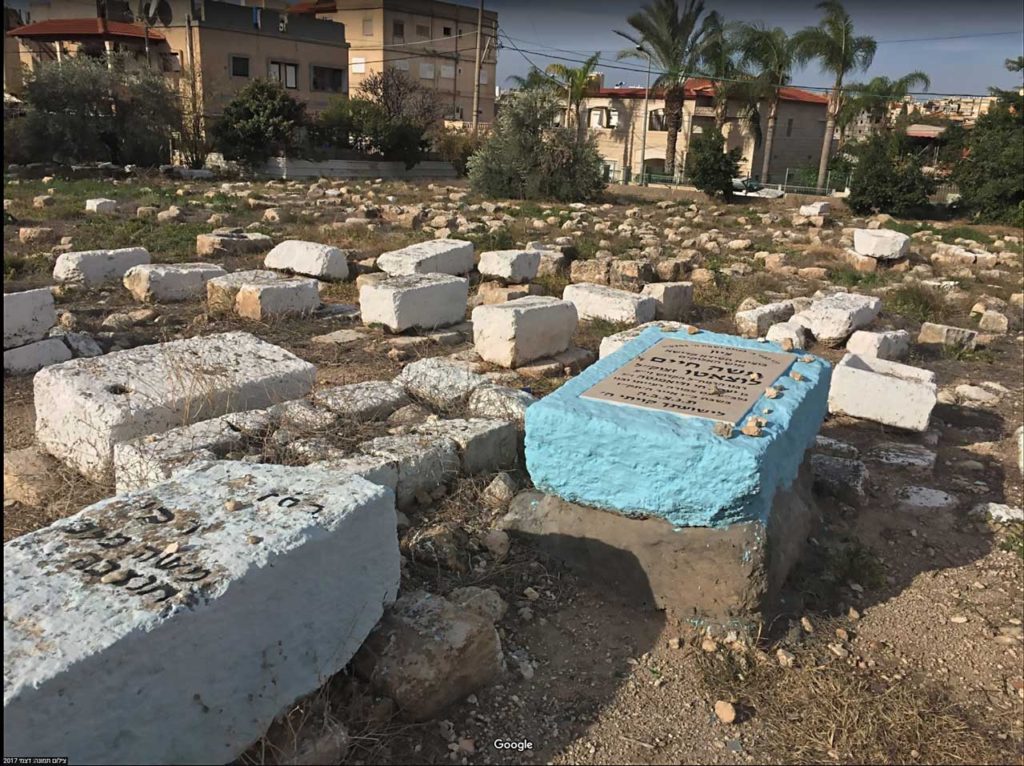
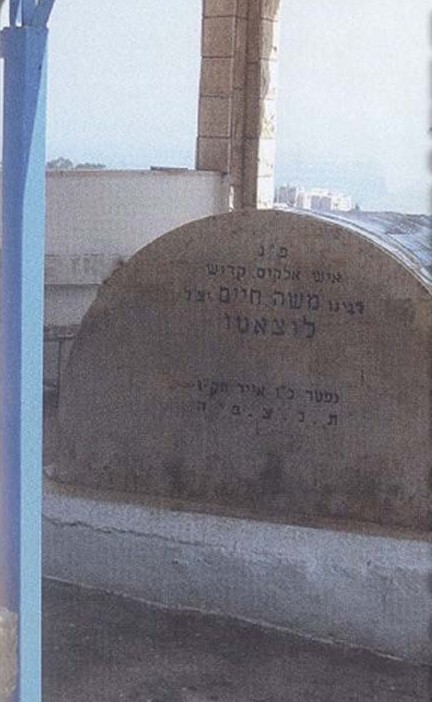
Rav Moshe Chaim Luzzatto zt"l
Author of Mesilas Yesharim
Son of Rav Yaakov Chai and Diamenta (Margalit) Luzzato
Born around ה'תס''ז 1707 in Padua, Italy. He was a child prodigy and his father hired the best teachers and tutors to teach him.
After bar mitzvah, he studied in the Yeshivah of Rav Yehuda Mintz (Mahari Mintz) in Padua where his uncle, Rav Yashaya Bassan, author of Shut Lachmei Todah, served as Rosh Yeshiva. Rav Yitzchok Chaim HaKohen Katz Cantarini (min ha’chazzanim) served as his rebbe and teacher. He taught him dikduk and lashon, grammar and rhetoric. The Ramchal became a master poet and authored at least two poems that survived, titled, Tefilah v’Shir al Geulas Mitzrayim for leil Pesach, and, Tefillah v’Shir L’Matan Torah for Shavous. He mastered Shas, Zohar, and all the kisvei Arizal by age fourteen. By age seventeen, he authored the sefer, Lashon Limudim about Hebrew poetry, grammar, and rhetoric.
In תפ''ו at around age eighteen/nineteen, he received semicha alongside his friend, colleague, and disciple, Rav Moshe David Valli, whom he met when he joined the chevra of Mevakshei Hashem known as Meitivei Tza’ad in Padua. There he also met and befriended the great Rav Yaakov Chazak—later, Rav of Padua-- regarding whom the Chida writes that he never saw keri his entire life, he was so pure and righteous!
Rav Yeshaya Basan left Padua for Reggio in תפ''ב due to the request of his father-in-law, Rav Binyamin Kohen, that he succeed him in this position since Rav Binyamin was of advanced age and his health was failing. The Ramchal took over the yeshiva in Rav Yeshaya’s absence. At the same time, he continued his spiritual growth in the aforementioned chevra where he advanced his studies in the secrets of Torah, eventually mastering them on a level that was above all his colleagues.
The Ramchal testified before Rav Binyamin Kohen that on Rosh Chodesh Sivan ה'תפ''ז, he fell asleep while he was engaged in a kabbalastic yichud, and when he awoke, he heard a voice saying “I have descended to reveal deep secrets from the Holy King.” The voice said that he was a maggid sent from Heaven on High to reveal to the Ramchal secrets and then proceeded to teach him further yichudim so that he might merit the revelation of Eliyahu HaNavi. Another voice then taught him the secrets of Koheles. Eliyahu told him that the archangel Metatron would also visit him and Rav Moshe Chaim eventually learned to discern between the three of them whenever they visited and taught him. Additionally, many holy souls descended and revealed themselves to him in the form of men. (Igros Ramchal 15) One particular maggid was revealed as Shemaiel (Igros Ramchal 29).
At age twenty-five, the Ramchal married Tzipora, the daughter of Rav Dovid Pinchi of Mantuba. She bore him his only son named Dovid Chaim after his father and grandfather.
Eventually, he settled in Amsterdam where he taught only the revealed Torah in the yeshivah. This is where he published his sefer, Mesillas Yesharim.
In תק''ג, he fulfilled his dream to settle in Eretz Yisroel. He set sail for the Holy Land and eventually settled in Akko. Eventually, he brought over his wife and son. Unfortunately, he perished in a plague together with his son and wife at age thirty-nine on 26 Iyar תק''ו in Akko near Tiveria and was laid to rest in Eretz Yisroel near the Tanna, Rabbi Akiva.
Stories of Rav Moshe Chaim Luzzatto zt"l

After seeing the Mesilas Yeshorim, the Vilna Gaon said that if the Ramchal were still alive he would travel across Europe by foot to learn from his wisdom. Unfortunately, the Ramchal, who lived a short life, filled with persecution and suspicion, was niftar when the Vilna Gaon was just seventeen and the two never met. About Mesilas Yeshorim, he said, “This book is witness to the greatness of its author, and his extraordinary vision of the human potential for elevation…”
*****
There are certain lives that are inherently captivating, and Rav Moshe Chaim Luzzatto’s was certainly that. Born in Padua, Italy in 1707 to wealthy parents, he took to literature and Torah studies early on. In fact, that early interest in literature served his writing style well throughout his life, and his Torah studies formed the basis of his literary output.
He obviously mastered all of Tanach, Talmud and all sorts of rabbinical commentaries and halachic codes, as one can see by his profuse and authoritative quotations from traditional sources throughout his writings. And he also acquired a profound command of Kabbola since he was known to have memorized all the writings of the Ari when he was fourteen.
Rav Moshe Chaim Luzzatto was a talmid of one of the greatest Rabbonim and Mekubolim in Italy at the time, Rav Yeshaya Bassan, from early on to age fifteen, when Rav Bassan left Padua to fill his father- in-law’s rabbinical position. Rav Bassan’s father-in-law was the great Mekubol Rav Binyomin HaKohen, who was himself a talmid of the famous Mekubol, Rav Moshe Zacuto. So Ramchal’s teachings clearly followed the path of a well-known kabbalistic tradition. Ramchal himself some profound meetings with Rav HaKohen at the end of the latter’s life in which he discussed his own kabbalistic insights. We will cite one of Ramchal’s revealing letters to the elder Mekubol shortly.
At age seventeen, Ramchal joined a small, clandestine group of pietists known as Mevakshei Hashem (“Seekers of Hashem”). Among the things they demanded of their members, aside from devout and altruistic allegiance to Torah study and mitzva observance, was that each member commit himself to a set and inviolable study schedule that was solely dedicated to the well-being of the Jewish Nation and to Tikkun HaShechina (the rectification of the Divine Presence in the world). The entire group especially concentrated on an around-the-clock study of the Zohar, with each member taking his turn, and the next in line starting his course of study some fifteen minutes before the previous member ended his (as the one following him started his study session fifteen minutes beforehand) to ensure a smooth flow of study. Ramchal received semicha (formal ordination) at age nineteen, while yet a member of Mevakshei Hashem.
The phenomenon that most especially defined his life was the series of occasions that a Maggid (a Heavenly Agent) appeared to him and provided him with direct instruction, starting at age twenty. While the experience itself was personally uplifting and enlightening, and allowed Ramchal the sort of profound insights that affected his works (and even provided the very wording in several instances), it also led to the great and terrible polemic that plagued him for years and nearly closed off his works from us.
We will now quote from the remarks of a talmid of Ramchal, Rav Yekusiel Gordon, made in a letter about some of these appearances to a leading Italian Rav, when the Ramchal was twenty-two:
“There is a young man here, tender in years, (who) is a holy man: my master and teacher…Rav Moshe Chaim Luzzatto. For these past two and a half years a Maggid has appeared to him…who reveals wondrous mysteries to him… With the approval of the Holy One, blessed be He and His Shechina, the Maggid ordered him to compose a Book of the Zohar, called in Heaven ‘The Second Zohar’…
“This is what happens (when the Maggid, referred to here as “the angel”, appears): The angel speaks out of Ramchal’s mouth but we, his talmidim, hear nothing. The angel begins to uncover great mysteries to him. Then my master orders Eliyohu to come to him, and he comes to uncover mysteries of his own. Sometimes, Metatron, the great prince, also comes to him, as well as the Faithful Shepherd (Moshe), our forefather Avrohom, Rav Hamnuna the Elder,…the Moshiach, and Odom…
“To sum up, nothing is hidden from him. At first, permission was only granted (from Heaven) to reveal to him the mysteries of the Torah, but now all sorts of things are revealed to him. But no one outside our circle knows of it… As he has demonstrated to all, no one before him has had this kind of merit since the time of Rav Shimon bar Yochai (the mechaber of the Zohar).”
Ramchal himself spoke of the revelations, among other things about himself, in one of his letters to Rav Binyomin HaKohen, whom we cited above.
“Hashem, who is righteous and who searches all hearts, is my witness in Heaven and my testimony on high as to why I have kept (my revelations) secret from your honor… But now that the matter is public knowledge… I am very pleased to hear that you know of it… (and) I am especially glad to know that your honor, in his goodness and integrity, accepts it as true and reliable… “G-d-fearing people come to me every day to hear the new things that Hashem tells me. Many young men who had once walked in the vain ways of young people have now, thank Hashem…returned to Hashem, and come to me to receive Tikkunim (rectifications) for their (past) deeds.
“At this time Hashem…wished to reveal a new light (to the world) in the category of the Zohar… He chose me for this in His mercy. If you were to ask me about the kind of preparations (I engage in to deserve this), what could I say? The truth is that it has come about through Hashem’s love alone and has little to do with my preparations for it. Nonetheless, it is also true that I have been zealous for years about reciting Yichudim (mystical recitations of particular Divine Names). I perform a different Yichud practically every fifteen minutes, and I do this even now, thank Hashem… And the Creator now uses me as the instrument for the fulfillment of His purpose.”
He then went into further detail as follows:
“On the first of Sivan in the year 5487 (1727), as I was reciting a certain Yichud, I fell into a trance. When I awoke, I heard a voice saying, ‘I have descended in order to reveal the hidden secrets of the Holy King.’ For a while I stood there trembling, but I soon took hold of myself. The voice kept on speaking and revealed a particular secret to me.
“At the same time on the second day I made sure to be alone in the room, and the voice reappeared to reveal another secret to me. One day he revealed to me that he was a Maggid sent from Heaven and he gave me certain Yichuddim that I was to recite in order for him to appear again.
“I never saw him but I did hear his voice as it spoke through my own mouth. He then allowed me to ask him questions. After about three months he revealed to me the Yichuddim I would have to recite to be worthy of having Eliyohu reveal himself to me. He then charged me to compose a work on Koheles on the basis of the mystical meaning of its pesukim that he had revealed to me, and Eliyohu came and imparted his own secrets to me. (The Maggid) said that Metatron, the great prince, would be coming to me and that I would know that it is he because of what Eliyohu had said. From then on I came to recognize each of my visitors. Souls whose identity I know are also revealed to me. Each day I write down the new ideas each of them imparts to me. All these things happen while I lie prostrate, with my face to the ground, and I see the holy souls in human form as in a dream.”
Word of these revelations came to the Rabbonim of the time, and while many of them were effulgent in their praise of the young Mekubol, some others (of great prominence) were flabbergasted by the idea of so young a person being privy to such revelations, and they did all they could to stifle him.
As dumbfounding as the thought of denying Ramchal’s brilliance and the level of his revelations appear to us now, it was rooted in something quite rational. For only some hundred years previously, the false Messiah, Shabbesai Tzvi (d.1676) had wreaked havoc throughout the Jewish world, and nearly undid the foundations of Yiddishkeit, G-d forbid. The entire Jewish community was still reeling from the experience in Ramchal’s time and beyond. The whole matter is a subject unto itself, but suffice it to say that the leaders of Ramchal’s generation were rightly leery about a new false Messiah and any more subsequent threats to our people.
Some rather unkind things were said about Ramchal, though his defenders did laud his trustworthiness as well as his piety. A great deal of Ramchal’s correspondences from that time and later have survived, and it is thus evident that despite and throughout it all, he defended his experiences stoutly while maintaining his lofty perch. In any event, threatened with excommunication, Ramchal swore not to transmit the Maggid’s revelations or teach Kabbola.
He left Italy for Amsterdam in 1735, and while passing through Germany he appealed to the rabbinical authorities there to advocate for him to the Italian Rabbonim. They refused and instead forced him to sign a statement denouncing his own experiences. Most of his writings were burned, though some did survive.
He was able to pursue his studies of Kabbola relatively unhindered while in Amsterdam, and was accepted as a great man there. Earning a living as a diamond cutter, he continued writing but refused to teach. It was in this period that he wrote his magnum opus, Mesilas Yeshorim (Path of the Just), as well as Derech Hashem (the Way of Hashem), Da’as Tevunos (Knowing the Reasons) and more.
A major rabbinic near-contemporary, who praised Ramchal’s writing was Rav Eliyohu of Vilna, the Vilna Gaon (1720-1797), the most authoritative Torah sage of the time who was also a great Mekubol. He is reported to have said after reading Mesilas Yeshorim, that were Ramchal still alive, he (the Gaon) would have walked from Vilna to learn at his feet. The holy Maggid of Mezritch (Dov Ber, the successor to the Ba’al Shem Tov) also praised the “Chassid of Padua” and his works to the Chassidim. And to this day, Ramchal is praised from all corners of the Jewish world as a great mystic, moralist, teacher, Tzaddik and writer.
He left Amsterdam for Eretz Yisrael in 1743 and settled in Acco. A few years later, he and his family died tragically in a plague, and he was buried near Rav Akiva in Teverya.
May the memory of the righteous be a blessing for us all!
Text Copyright © 2007 by Rav Yaakov Feldman and Torah.org.
Rav Yaakov Yosef of Ostrog testified that he heard from the Maggid of Mezritch about the Ramchal that, “His generation did not understand him or appreciate his great righteousness.” (Printer’s Introduction to Kelach Pischei Chochmah Koretz)
The Rav Simcha Zisel, the Alter of Kelm testified that the Vilna Gaon said: “I saw a great light descend to this world in the form of the sefer, Mesilas Yesharim.”
In his introduction to the Mesilas Yesharim, the Mahari Maltson wrote that when the sefer first came out, the Vilna Gaon said: “A new light had come into the world. If the Ramchal was still alive, I would walk on foot to see him and meet him face to face.” He wrote further that the GR”A reviewed the sefer often. When the Gaon received the Ramchal’s sefer, Adir BaMarom, a commentary on the Rashbi’s Idra Rabbah, he dressed in Yom Tov clothes to celebrate.
It is known that the GR”A said if he had been in the Ramchal’s generation he would have walked 12 milin to meet him. Also, it was known that the Kohznitzer Maggid studied Mesilas Yesharim as a prerequisite to any effort to ascend spiritual levels. (Rav Michel Yehuda Lefkowitz in his haskama to Mesilas Yesharim Mevuar)
The Kohznizter Maggid once said that any of the lofty spiritual levels that he himself attained were all thanks to the sefer, Mesilas Yesharim. (Dor Deah)
There is a tradition that the Apta Rav, author of Ohev Yisroel, said that his entire spiritual direction in life and his primary chinuch (education) came first and foremost from Mesilas Yesharim (Mesilas Yesharim HaMevuar Yakrus v’Chavivus Toras Ramchal p. 13)
I received a tradition from my holy forefathers that the mother of the heilige Ropshitzer commanded him in his youth to study Mesilas Yesharim, and he did so all the days of his life. He testified regarding himself that “mein mahus is Mesilas Yesharim – My entire being is Mesilas Yesharim.” (kisvei Rav Chacham Tzvi Halberstam)
Rav Moshe Teitelbaum, author of Yismach Moshe, testified: “I received a tradition from the Mezritcher Maggid in the names of Rav Yosef of Mezritch and Rav Pinchos Koretzer that the sefer, Kelach Pischei Chocmah is bahir v’tahor – luminous and pure!” (Avkas Rochel Moadim p. 91)
When Rav Shlomo Halberstam of Bobov taught his talmidim in his yeshivah in Vishnitza, he opened each shiur with a study in Mesilas Yesharim and other mussar seforim. (Kerem haChassidus vol. 2)
The Vizhnitzer Rebbe shlit”a, Rav Yisrael Hager writes in his haskama to Mesilas Yesharim haMevuar that the sefer, Mesilas Yesharim was known to Rav Chaim Meir, the Imrei Chaim, by heart and that his own father, Rav Moshe the Yeshuos Moshe of Vizhnitz, compelled the yeshiva students to study it as part of their daily mussar regimen.
The rebbe of Pinsk-Karlin recalled how in his youth, one Elul, he and several other yungeleit came before Rav Moshe Mordechai of Lelov and asked him which sefer they should study to prepare themselves during Elul towards the approaching days of selichos and the Yomim Noraim? He thought for a few minutes and answered them: “During these days, it would be proper for you to study Mesilas Yesharim every day for about ten minutes before you eat.” (From his haskama to Mesilas Yesharim Mevuar)
I remember in my youth how I once entered the inner sanctum of the Imrei Chaim of Vizhnitz and I asked him which mussar sefer I should study on a constant basis. He answered me immediately: “Mesilas Yesharim is what you should study and attach yourself to, and then vesti zany a erlicher yid – then you can become an erlicher, pious Jew.” (Rav Naphtali Moskowitz, the Meilitzer of Ashdod, in his haskama to Mesilas Yesharim Mevuar)
I saw how my father [the previous Pittsburger Rebbe] was especially fond of the sefer, Mesilas Yesharim. From the day he set his mind to it, the holy sefer never left his hands. He himself testified to me that in his youth he had memorized it by heart and I saw how until his last days on this earth, he studied it intensely and added his own comments and ideas as he reviewed it. He had the custom to purchase a brand-new copy each time he completed the sefer. In the new copy, he would enter further comments and novel insights for himself--all this in order to increase his enthusiasm as if it was the very first time he had even studied the sefer. Happy are the eyes that saw this! (Pittsburger Rebbe zt’l of Ashdod in his haskama to Mesilas Yesharim Mevuar)
It is said in the name of the founder of the Mussar Movement himself, Rav Yisrael Salanter, that he used to say, “It is easier to author the entire Shas-- the whole Talmud-- than to write even just one chapter of Mesilas Yesharim.’ (Mesilas Yesharim HaMevuar Yakrus v’Chavivus Toras Ramchal)
Rav Yosef Weinstock, the mekubal, had a custom to study Mesilas Yesharim every day. When his daughter passed away from illness on Yom Kippur, he was supposed to sit shiva until the 14th of Tishrei (Sukkos), but his pain at giving up his daily Mesilas Yesharim shiur was so intense that he asked and received permission from the Minchas Yitzchok to continue his the shiur as usual! (Mesilas Yesharim HaMevuar Yakrus v’Chavivus Toras Ramchal)
The Ramchal also authored Tehillim--see: www.HebrewBooks.org/56107 --as well as a daily regimen of pesukim on trust in Hashem and hope for the ultimate redemption. The latter was built on six foundations: Trust, Hope, Wish, Unity, Love, and Truth. See: Pesukei Kivui L’Ramchal www.HebrewBooks.org/56107 and another version here: https://ramhal.net/doc/Pesuka-Kivuy.pdf
Divrei Torah of Rav Moshe Chaim Luzzatto zt"l
yosef ruler over the attribute of yesod
And his brothers said to him, will you be king over us and rule over us? (Bereishis 37:8-10)
The tribes of Israel did not have bad intentions, heaven forbid, [by challenging Yosef’s rule. Rather their objections were based on the following concepts] Yosef’s spiritual level is the Divine Attribute of Yesod – foundation. This is what gave him the power to rule as viceroy [of Egypt]. This is because Yesod is a sefirah that is inclusive as is known – it is called kollel and a king or ruler must have a soul that is inclusive [of all Klal Yisroel] a neshama kolleles.
This is the secret of why Shaul was king since he too had the sefirah of Yesod. This is also the secret of Moshiach ben Yosef who shall rule one day in the future and he shall also be from the attribute of Yesod. Whoever is associated with the attribute of Yesod is given the power to rule since he has a neshama kolleles (and Yesod is called kollel, a ruler and king’s soul is all encompassing and inclusive therefore he can rule over such souls since he includes them within his own soul and yesod includes the other sefiros as a kollel).
The tribes thought that the time had not yet come for this [Yosef and yesod to rule.] This is because Yosef’s supernal attribute of Yesod was not yet rectified completely through the exile [and redemption] from Egypt. The attribute of Yesod was damaged and blemished by the sparks that fell – nitzotzos keri from the sin of Adam HaRishon as is known.
This is why the tribes – the shevatim told Yosef – “do you think you be king over us and rule over us?” What they were really asking was – do you think you can complete and rectify the light of the attribute of Yesod which is called the ruler or Moshel? This is impossible for you to do since it has not been yet rectified properly [through the exile and redemption from Egypt]. This is indeed what happened, since although Yosef did rule it was not a true kingship, he was a ruler beneath Pharaoh and only the viceroy of Egypt, second in command and subservient to the king as a secondary ruler, and he was still in the hand of the other side called the sitra achra.
the secret of reading parshas zachor - to remember amalek to cancel their power of forgetfulness
“You shall remember what Amalek did to you [on the way, when you went out of Egypt, how he happened upon you on the way and cut off all the stragglers at your rear,] when you were faint and weary, and he did not fear G-d.” (Devarim 25:17-18)
The Ramchal teaches us that Amalek represents the klippah that causes us to forget Hashem chas ve'shalom. Correspondingly, Hashem commanded us to remember Amalek, and to remember what they did to us, this conquers them and prevents them for causing us to forget, therefore we are commanded Zachor – Remember!
In order to rectify this, we are commanded to read Parshas Zachor annually from the Torah as Chazal say – Remember vocally with your mouth. This tikkun correspondingly defeats the klippah of Amalek because it directly repairs the kilkul and damage that they caused, their damage is that they caused us to be “faint and weary,” from Torah, this allowed them to grow strong and defeat us in battle, and against them to oppose them directly and defeat the, we therefore read vocally with our mouth from the Torah once a year to achieve this matter, and this helps us defeat and conquer their klippah.
“[Therefore,] it will be, when the Lord your G-d grants you respite from all your enemies around [you] in the land which the Lord, your G-d, gives to you as an inheritance to possess, that you shall obliterate the remembrance of Amalek from beneath the heavens. You shall not forget!” (Devarim 25:19)
Rav Moshe Dovid Walli teaches us further, from his rebbe the Ramchal, that it is well known that there is no more dangerous, powerful and difficult klippah than the klippah – the husk and shell of impurity of Amalek. The reason for this is that they grasp hold onto the inner essence the penimiyus of kedusha and prevents the attributes from uniting to achieve zivug.
rosh hashanna & sukkos rebuilding nukva & surrounding her with protective light
“When you build a new house, you shall make a guard rail for your roof, so that you shall not cause blood [to be spilled] in your house, that the one who falls should fall from it [the roof]. “(Devarim 22:8)
The Ramchal explains to us that the secret of the partzuf of Nukva is rebuilt anew on Rosh Hashanah is alluded to in our pasuk therefore all the residents of this world pass like sheep before Hashem on this day to be judged for their actions and to see how Nukva can be rebuilt to guide and lead them all year long.
As soon as she has been built up into a new structure and edifice, we must draw around her the surrounding lights called Oros Makifin in order that the external forces of darkness cannot grasp hold of her with their evil clutches.
Therefore, we build a Sukkah right after Rosh Hashanah [and Yom Kippur] to achieve this surrounding light and protect the partzuf of Nukva from the chitzonim. This final building is only completed on Shemini Atzeres.
Therefore, Chazal say the zman of Sukkah lasts all seven days since so long as the edifice is not finished being completely built we can draw around her the oros makifin of the Sukkah to surround her with protective light. Our pasuk says “when you build a new home,” which is the secret of rebuilding the Nukva and then immediately “make a guard rail for your roof,” the roof is the secret of the three supernal attributes the sefiros that have the primary protection, “so that you cause no bloodshed in your home,” and prevent the external forces of evil from entering the edifice so that no one “should fall from there.”
The Ramchal explains further on the pasuk “Bais Yaakov lechu ve'nelcha BeOhr Hashem,” in (Yeshaya 2:5): All the souls and celestial lights are all surely contained within the Shechinah, therefore She is known as Bais Yaakov since Hashem places all into Her hands and She guides them all the higher and lower beings – elyonim ve'tachtonim.
She is compared to a house, like a Bayis where people place within their homes whatever they need and want, so is the Shechinah like a Bayis – a home where Hashem places all the soul and celestial lights of the higher and lower beings. Everything is handed over to Her and She guides all the creations and creatures of all the worlds based on how man operates. . .
The Shechina leads and guides all of our souls to completion and perfection so we can all leave the exile and go out of golus and the redemption of geulah can arrive. As Chazal say: Ben Dovid – the Moshiach cannot arrive until all the neshomos of the guf cease arriving. They are called collectively known as Bais Yaakov since Yaakov alludes to katnus – immaturity and small-mindedness however our positive actions help them reach gadlus – maturity and expanded consciousness – that is why the pasuk says – Bais Yaakov lechu – go out of golus for redemption, leave katnus behind and be repaired through the tikkun of gadlus. Then once repaired we can walk together beOhr Hashem - in the light of G-d.
the secret of reading parshas zachor - to remember amalek to cancel their power of forgetfulness
“You shall remember what Amalek did to you [on the way, when you went out of Egypt, how he happened upon you on the way and cut off all the stragglers at your rear,] when you were faint and weary, and he did not fear G-d.” (Devarim 25:17-18)
The Ramchal teaches us that Amalek represents the klippah that causes us to forget Hashem chas ve'shalom. Correspondingly, Hashem commanded us to remember Amalek, and to remember what they did to us, this conquers them and prevents them for causing us to forget, therefore we are commanded Zachor – Remember!
In order to rectify this, we are commanded to read Parshas Zachor annually from the Torah as Chazal say – Remember vocally with your mouth. This tikkun correspondingly defeats the klippah of Amalek because it directly repairs the kilkul and damage that they caused, their damage is that they caused us to be “faint and weary,” from Torah, this allowed them to grow strong and defeat us in battle, and against them to oppose them directly and defeat the, we therefore read vocally with our mouth from the Torah once a year to achieve this matter, and this helps us defeat and conquer their klippah.
“[Therefore,] it will be, when the Lord your G-d grants you respite from all your enemies around [you] in the land which the Lord, your G-d, gives to you as an inheritance to possess, that you shall obliterate the remembrance of Amalek from beneath the heavens. You shall not forget!” (Devarim 25:19)
Rav Moshe Dovid Walli teaches us further, from his rebbe the Ramchal, that it is well known that there is no more dangerous, powerful and difficult klippah than the klippah – the husk and shell of impurity of Amalek. The reason for this is that they grasp hold onto the inner essence the penimiyus of kedusha and prevents the attributes from uniting to achieve zivug.
rosh hashanna & sukkos rebuilding nukva & surrounding her with protective light
“When you build a new house, you shall make a guard rail for your roof, so that you shall not cause blood [to be spilled] in your house, that the one who falls should fall from it [the roof]. “(Devarim 22:8)
The Ramchal explains to us that the secret of the partzuf of Nukva is rebuilt anew on Rosh Hashanah is alluded to in our pasuk therefore all the residents of this world pass like sheep before Hashem on this day to be judged for their actions and to see how Nukva can be rebuilt to guide and lead them all year long.
As soon as she has been built up into a new structure and edifice, we must draw around her the surrounding lights called Oros Makifin in order that the external forces of darkness cannot grasp hold of her with their evil clutches.
Therefore, we build a Sukkah right after Rosh Hashanah [and Yom Kippur] to achieve this surrounding light and protect the partzuf of Nukva from the chitzonim. This final building is only completed on Shemini Atzeres.
Therefore, Chazal say the zman of Sukkah lasts all seven days since so long as the edifice is not finished being completely built we can draw around her the oros makifin of the Sukkah to surround her with protective light. Our pasuk says “when you build a new home,” which is the secret of rebuilding the Nukva and then immediately “make a guard rail for your roof,” the roof is the secret of the three supernal attributes the sefiros that have the primary protection, “so that you cause no bloodshed in your home,” and prevent the external forces of evil from entering the edifice so that no one “should fall from there.”
The Ramchal explains further on the pasuk “Bais Yaakov lechu ve'nelcha BeOhr Hashem,” in (Yeshaya 2:5): All the souls and celestial lights are all surely contained within the Shechinah, therefore She is known as Bais Yaakov since Hashem places all into Her hands and She guides them all the higher and lower beings – elyonim ve'tachtonim.
She is compared to a house, like a Bayis where people place within their homes whatever they need and want, so is the Shechinah like a Bayis – a home where Hashem places all the soul and celestial lights of the higher and lower beings. Everything is handed over to Her and She guides all the creations and creatures of all the worlds based on how man operates. . .
The Shechina leads and guides all of our souls to completion and perfection so we can all leave the exile and go out of golus and the redemption of geulah can arrive. As Chazal say: Ben Dovid – the Moshiach cannot arrive until all the neshomos of the guf cease arriving. They are called collectively known as Bais Yaakov since Yaakov alludes to katnus – immaturity and small-mindedness however our positive actions help them reach gadlus – maturity and expanded consciousness – that is why the pasuk says – Bais Yaakov lechu – go out of golus for redemption, leave katnus behind and be repaired through the tikkun of gadlus. Then once repaired we can walk together beOhr Hashem - in the light of G-d.
rosh hashanna & sukkos rebuilding nukva & surrounding her with protective light
“When you build a new house, you shall make a guard rail for your roof, so that you shall not cause blood [to be spilled] in your house, that the one who falls should fall from it [the roof]. “(Devarim 22:8)
The Ramchal explains to us that the secret of the partzuf of Nukva is rebuilt anew on Rosh Hashanah is alluded to in our pasuk therefore all the residents of this world pass like sheep before Hashem on this day to be judged for their actions and to see how Nukva can be rebuilt to guide and lead them all year long.
As soon as she has been built up into a new structure and edifice, we must draw around her the surrounding lights called Oros Makifin in order that the external forces of darkness cannot grasp hold of her with their evil clutches.
Therefore, we build a Sukkah right after Rosh Hashanah [and Yom Kippur] to achieve this surrounding light and protect the partzuf of Nukva from the chitzonim. This final building is only completed on Shemini Atzeres.
Therefore, Chazal say the zman of Sukkah lasts all seven days since so long as the edifice is not finished being completely built we can draw around her the oros makifin of the Sukkah to surround her with protective light. Our pasuk says “when you build a new home,” which is the secret of rebuilding the Nukva and then immediately “make a guard rail for your roof,” the roof is the secret of the three supernal attributes the sefiros that have the primary protection, “so that you cause no bloodshed in your home,” and prevent the external forces of evil from entering the edifice so that no one “should fall from there.”
The Ramchal explains further on the pasuk “Bais Yaakov lechu ve'nelcha BeOhr Hashem,” in (Yeshaya 2:5): All the souls and celestial lights are all surely contained within the Shechinah, therefore She is known as Bais Yaakov since Hashem places all into Her hands and She guides them all the higher and lower beings – elyonim ve'tachtonim.
She is compared to a house, like a Bayis where people place within their homes whatever they need and want, so is the Shechinah like a Bayis – a home where Hashem places all the soul and celestial lights of the higher and lower beings. Everything is handed over to Her and She guides all the creations and creatures of all the worlds based on how man operates. . .
The Shechina leads and guides all of our souls to completion and perfection so we can all leave the exile and go out of golus and the redemption of geulah can arrive. As Chazal say: Ben Dovid – the Moshiach cannot arrive until all the neshomos of the guf cease arriving. They are called collectively known as Bais Yaakov since Yaakov alludes to katnus – immaturity and small-mindedness however our positive actions help them reach gadlus – maturity and expanded consciousness – that is why the pasuk says – Bais Yaakov lechu – go out of golus for redemption, leave katnus behind and be repaired through the tikkun of gadlus. Then once repaired we can walk together beOhr Hashem - in the light of G-d.