
Rav Yisrael Isserles of Mezhibuzh zt"l
הרב ישראל בן אליעזר איסרלש זצ"ל
Sivan 6 , 5520
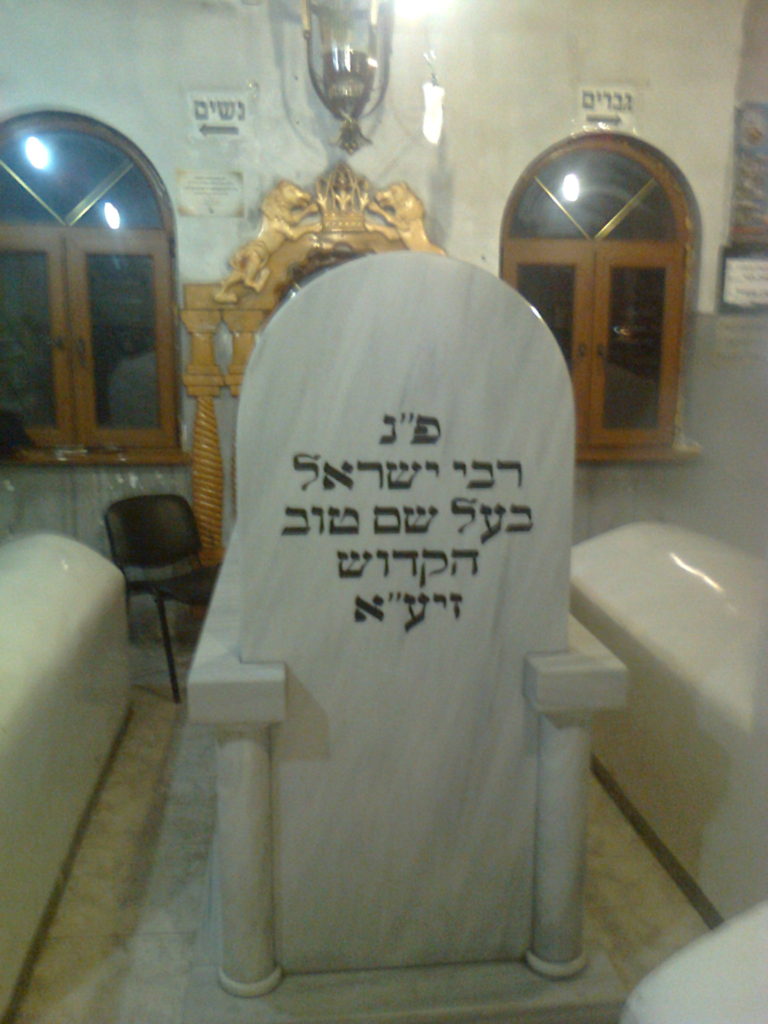
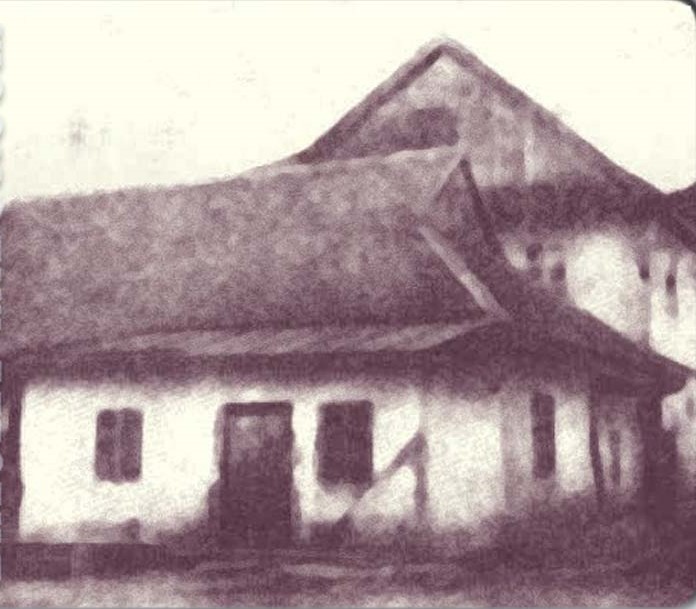
Rav Yisrael Isserles of Mezhibuzh zt"l
Rabbi Yisrael the son of Eliezer (1700-1760), popularly known as the Baal Shem Tov (Besht), was born in Okopy, Ukraine. His father, an honest and God fearing man, died when he was very young. The community considered itself obligated to provide him with an education and entrusted him to a teacher. With time, he became the shamash (sexton) of the synagogue where he spent the nighttime hours stodying Kabbalah. He married when he was eighteen years old, but his wife died a short time after their marriage. He wandered from place to place and settled in the area of Brody where he became the teacher of young children. With his honesty and wisdom, he also attracted the Jews of the region who utilized him to arbitrate their disputes. His personality impressed one of the local people, Efraim of Kuty. He became close to him and he even promised his daughter Channah's hand in marriage. R. Efraim died a short time later and his son, R. Avraham Gershon tried to convince Channah not to marry him but she chose to marry him despite her brother's objection. Yisrael wanted to spare his brother-in-law R. Avraham Gershon (1761), who was a noted scholar, any embarrassment, so he left Kuty with his wife and settled in the Carpathian Mountains. There, the couple lived in isolation and earned a meager living. Yisrael spent his time in prayer and meditation. While learning the healing powers of the various wild herbs, he tried his hand in assorted activities. He was a shochet, an innkeeper, wrote prescriptions and amulets, and spoke to the masses of people about the fear of God and the love of Torah. The family eventually moved to Medzhibozh. He not only attracted the simple people, but also over time both the educated and scholars drew towards him. However, only when he won the heart of R. Dov Ber (the family later used the surname Friedman), the Magid of Miedzyrzec [Mezritsh] (1704-1773), did his movement, Chasidism, begin to succeed and Medzhibozh became its center. The Baal Shem Tov brought to the Chasidic movement his experience of many years in the knowledge of nature in the wild and especially human nature.
It should be stated that with the development of a new movement, before it adopts standards of behavior and norms of practice, its fringes invariably attract those who toss aside any restraint, a mixed bag of people hitching a ride on the movement's wagon. We learn of this through a letter sent by R. Shneur Zalman of Lyady to R. Avraham of Kalisk in 1805 (Gross 1984) in which he reviews the poor rapport between them that began in 1772 when they went to meet with the Magid of Miedzyrzec. Among others he states:
"I went with him [R. Avraham, Y.K.] together to the room of our esteemed rabbi, may he rest in peace, and my eyes saw and my ears heard that he [the Magid of Miedzyrzec, Y.K.] spoke harshly about his poor leadership of our followers in Russia...where their conversation of the entire day was characterized by foolishness and clowning, mocking and scornful of all those who learn and making fun of them in all kinds of unrestrained ways. They are constantly leaping with their heads down and their feet up in the city markets and streets, and the name of Heaven is profaned in the eyes of the gentiles. They also engage in all other kinds of inanities in the streets of Kalisk. In the winter of 5532/1772, after the debate that took place in Shklov, he found no solution to this. The sages of the holy community of Shklov wrote to inform the late Gaon of Vilna, influencing him to, God forbid, consider them as rebellious [against God] applying the law of heresy for contemptuousness to scholars [B.T. Sanhedrin 99b, Y.K.], and concerning the tumbling with the feet in the air, he said that it was like Pe'or [B.T. Sanhedrin 70b, meaning the ritual of idolatry at Baal Pe'or, Y. K.]. They then wrote from Vilna to Brody and published there a vicious pamphlet that summer. This caused incredible distress for all the Chasidic leaders in Volhyn who could then no longer return to their homes. They all gathered in the holy community of Rovno at that time to consult with our holy rabbi of blessed memory..."
https://www.jewishgen.org/rabbinic/journal/hasidic1.htm
Stories of Rav Yisrael Isserles of Mezhibuzh zt"l

The Ba’al Shem Tov desired very much to go to Eretz Yisrael, saying that if he would meet the holy Rav Chaim Ben Attar, author of the famed sefer, the Ohr HaChaim, that together they could bring Moshiach. Unfortunately, in Shomayim they had other plans and the journey did not succeed. There are many stories regarding the journey that the Ba’al Shem Tov undertook together with his daughter Adel; here is one example:
On Chol HaMoed, the Ba’al Shem Tov hired a boat to take them to Eretz Yisrael from Istanbul, Turkey. The Toldos Yaakov Yosef relates how the Ba’al Shem Tov’s Rebbe and spiritual mentor, Achiya HaShiloni, appeared to him and demonstrated to the Ba’al Shem where his journey corresponded to the forty-two journeys and encampments of Bnei Yisrael in the Midbar.
While they were at sea, a great storm struck the ship, the tempest waves tossing it to and fro. According to some versions of the story, his daughter Adel was cast overboard and the ship itself was almost lost; according to other versions of the story, it was shipwrecked and smashed to smithereens, leaving only planks. Throughout all this chaos, the sailors turned to the Ba’al Shem Tov to save them.
Heaven decreed, however, that all of the Ba’al Shem’s powers would be taken away and his spiritual capabilities were reduced to naught! He could remember no tefillos, no Torah– not even the Alef-Bais! The Ba’al Shem was sorely distressed, until his Rebbe, Achiya HaShiloni, reappeared to him and showed him through which supernal worlds he was now traveling and which Divine names corresponded to his current place and journey. The Ba’al Shem Tov was comforted and Heaven began to sweeten the harsh decree.
Just then his son Rav Tzvi (others say it was Adel) turned and cried in distress that he too could remember nothing but the Alef-Bais. “Quick!” responded the Ba’al Shem Tov, “say them with me now!” Attaching his soul to the power of the Hebrew letters of the holy Alef-Bais, the Ba’al Shem Tov repeated them after his son, “Alef, Bais, Gimmel, Daled,” until slowly his powers and knowledge returned and he was able to save the travelers. The Ba’al Shem Tov never did make it to Eretz Yisrael; rather, he returned safely to Europe.
Rav Dovid Moshe of Tshortkov related that when the holy Baal Shem Tov passed through Istanbul on his way to Eretz Yisroel, he heard rumors regarding certain amulets that Rav Naphtali Katz, the Semichas Chachamim had written.
“How could he dare use Divine Names in amulets?” they challenged. The Baal Shem Tov asked to see one. When he opened the amulet, he saw that it was simply the handwritten name of the Semichas Chachamim.
Rav Dovid Moshe used to say that this story explains the statement of Chazal Sanhedrin 100a that whoever calls his rebbe by name is liable to the death penalty. We could wonder, asked Rav Dovid Moshe, why so harsh a sentence should be pronounced for seemingly so light a crime as calling your rebbe by his name? The answer is because just as when someone pronounces Hashem’s Divine Name, he is punished harshly (ibid 90a), we see--as illustrated by our story-- that one’s rebbe’s name is also considered like one of the holy Divine Names. This is true to such degree that we see that it can even be used as an amulet! (Eser Oros 10:16)
Many tzaddikim attended the wedding of Rav Avrohom Shimshon. The Baal Shem Tov himself was the guest of honor, and Rav Pinchos Koretzer was among the many notables in attendance. As was customary, the chuppah was held outdoors in the courtyard of the shul. On the windowsill, a bird stood merrily chirping. The Baal Shem Tov turned to Rav Pinchos Koretzer and asked him, “Do you hear what that bird is saying?” He continued, “The bird is saying the pasuk, “Le’eleh techalek ha’aretz (“Among these shall the land be divided”). Hearing this, many of the guests rejoiced, as they imagined that, during this couple’s lifetime, the great Division of Eretz Yisroel would begin – a sign of the imminent redemption!
However, years later, when Rav Avrohom Shimshon decided to move to Eretz Yisroel, his wife protested and refused to go. The couple appeared before Rav Pinchos of Koretz seeking a resolution to their marital strife. “What can I do?” Rav Pinchos exclaimed. “This case has already been decided by the holy Baal Shem Tov! At your wedding, he heard a bird saying “Le’eleh techalek ha’aretz” – and now I understand that you shall be divided because of the Land of Israel that lies between you.” The halacha states that, if a husband wishes to move to Eretz Yisroel and his wife refuses to accompany him, she may accept a get (legally divorce him) so he will be free to go. And so it was that Rav Avrohom Shimshon left for Eretz Yisroel alone. (Zechuyos Yosef)
The Yeshuos Moshe of Vizhnitz related how the Zaslover Chazzan who served as the chazzan for the holy Baal Shem Tov, arrived one erev Shabbos in Lizensk to spend Shabbos with the author of the Noam Elimelech.
Reb Melech’s talmidim were unsure of what to do: Should they honor the chazzan with the amud, allowing him to daven kabbalas Shabbos, or would this upset the holy rebbe’s kavannos and disrupt his devotions? Their hesitation was soon to become irrelevant when the rebbe, Reb Melech himself, honored the chazzan to lead the tefillos and begin kabbalos Shabbos.
“Please for the sake of the Baal Shem’s honor, would you be our chazzan?” asked the Rebbe Elimelech.
Rav Mordechai agreed.
The chazzan stepped up to the amud flanked by a choir that would accompany his melodious tefillos. As soon as the tefillah commenced, however, Rebbe Elimelech could not hold back. With great reluctance, the rebbe interrupted the chazzan and choir, “Please, I am sorry—it’s just too much!” complained Rebbe Elimelech. “I cannot contain the dveykus this brings on!”
The Yeshuos Moshe of Vizhnitz paused in telling of the tale to explain that the rebbe, Reb Melech couldn’t withstand it because “it opened up for him new vistas in the supernal realms, so much so, that the great light that came from it was too strong to absorb!”
“After kabbalos Shabbos,” continued the Yeshuos Moshe, “Rebbe Elimelech drew the Zaslover chazzan close but asked him to please not daven for the amud in Lizensk anymore.
“On Motzaei Shabbos as the Zaslover chazzan took his leave, the rebbe, Reb Melech asked him to relate some story about the holy Baal Shem Tov. The chazzan spoke of the Baal Shem’s love and awe in serving Hashem and specifically how his soul would experience an aliyas neshama – a state in which he would wander around supernal realms just we move around here below!”
“The Zaslover continued, ‘Another aspect of the Baal Shem Tov’s purity in avodas Hashem is his recitation of Hallel. We know that ordinarily, when we recite the Hallel HaGadol, each verse is recited by a specific angel. When the Holy Baal Shem Tov recited Hallel HaGadol, he waited first to hear how each malach recited each pasuk; only then would he himself repeat each pasuk after the angels had said them! ‘”
The Tosher Rebbe related how once after the the holy Ba’al Shem Tov had already passed away, he had revealed himself in a vision to his son, Rav Tzvi, . Rav Tzvi asked his departed father, the Ba’al Shem, “Please teach me how to serve Hashem properly.”
The holy Ba’al Shem Tov depicted for his son a tall mountain with a steep cliff; at the edge of the cliff, peering down, one could see a raging, roaring, deep body of water. “My son,” said the Ba’al Shem, “you should imagine that you are always standing at the top of this mountain at the edge of the cliff and then cast yourself from the mountain and plunge yourself deep into the river’s waters down below! That is how you must serve Hashem, always be prepared to be moser nefesh – be ready to give yourself and to sacrifice for Hashem in order to sanctify His Name!” (Avodas Avoda Sichos Kodesh I p. 87)
Rav Friedman cites the Bnei Yissoschor (Tishrei 4:2:6) who recounts the well-known story of the Baal Shem Tov who once observed a Jew desecrating Shabbos in public. The Baal Shem Tov was shocked; he realized that if he had seen this chillul Shabbos, it must mean that he was guilty of the same aveiroh in some way. Upon introspection, he remembered that he had once observed someone defaming a Torah scholar in public. Since the Zohar (III 29a) calls Torah scholars by the appellation “Shabbos,” the Baal Shem Tov realized that by failing to defend the scholar he too was guilty of some form of chillul Shabbos.
There are various traditions regarding how and when the Ba’al Shem Tov’s brother-in-law met Rav Chaim ben Attar, mechaber of the Ohr HaChaim, in Eretz Yisrael:
After the printing of the chumashim Ohr HaChaim in Venice in the year tov-kuf-bais, they reached the Ba’al Shem Tov, who greatly rejoiced in them. He found in them an author whose heart and soul were filled with emotion and excitement for Avodas Hashem. He sent his brother-in-law, Rav Gershon of Kitov, to Yerushalayim to visit Rav Chaim ben Attar’s Yeshiva. He told Rav Gershon that Rav Chaim ben Attar had two Yeshivos, one where they studied nigle (the revealed Torah) and one where they studied the hidden secrets of Toras HaKabbola. The Ba’al Shem warned Rav Gershon to try to attend the Yeshiva for nistar and not to reveal to the Ohr HaChaim who he was, hiding his identity until the Ohr HaChaim would feel it and understand for himself.
When Rav Gershon arrived he requested permission to hear a derosha from the Ohr haChaim. Permission was granted and he studied in Yeshivas HaNigle for about a week. Afterward, he requested admission to the other Yeshiva for Kabbola.
“Who revealed to you that I have a Yeshiva for nistar?”
He answered that his brother-in-law, the Ba’al Shem, had told him. The Ohr HaChaim did not know him, but he scrutinized Rav Gershon from head to toe and declared him fit and ready to study Kabbola. After studying there for three days, the Ohr HaChaim gave word to prevent him from coming back and Rav Gershon found his way blocked from entry. When Rav Gershon approached the Rav’s house to find out why he had been banned, the Ohr HaChaim saw him and said, “I am angry at you. Why didn’t you say your brother-in-law was the Ba’al Shem Tov? You just said, ‘Rav Yisrael Ba’al Shem!’ I don’t know any Rav Yisrael Ba’al Shem, but I know who the Ba’al Shem Tov is! I know him from seeing him in the supernal worlds!” and he no longer allowed Rav Gershon access to the Yeshiva, explaining that he needed no other Rebbe or Rav if he already had the Ba’al Shem Tov. (Doresh Tov Tshortkov, Acharon Shel Pesach p. 194)
Rav Yitzchok of Neshchiz related on Motzoei Shabbos Parshas Behaalosecha, tov-reish-kaf-zayin:
Rav Gershon of Kitov met the Ohr HaChaim in Eretz Yisrael and told him about his brother-in-law the Ba’al Shem Tov. The Ohr HaChaim replied that he had heard of him and that his name was Yisrael. Rav Gershon Kitover also asked the Ohr HaChaim why he kept a certain talmid in his Yeshiva whom Rav Gershon had seen behaving improperly, unbecoming for a Yeshiva student. “This is our way,” answered the Ohr HaChaim. “We draw closer those who are distant – we are mekarev rechokim.” (Zichron Tov p. 16 #8)
When Rav Gershon of Kitov traveled to Eretz Yisrael, the Ba’al Shem Tov told him to meet with the Ohr HaChaim. “If he doesn’t know of his greatness, send him regards from me and tell him I see him in Moshiach Heichal – the supernal palace, where Moshiach sits on a throne and studies the Ohr HaChaim.”
When Rav Gershon came to Eretz Yisrael, he arrived at the Ohr HaChaim’s Yeshiva and asked why he studied with talmidim who behave inappropriately; others say that he asked why he studied with people with lowly souls.
The Ohr HaChaim asked Rav Gershon from where he hailed. When he said that he was from Polnoy, the Ohr HaChaim responded that he should return the following day. The next day, the Ohr HaChaim told him, “I saw your Rebbe and he is a very great man.”
Rav Gershon then related his regards from the Ba’al Shem and relayed the Ba’al Shem’s message. The Ohr HaChaim responded, “I don’t know what favor he does me by revealing my greatness. Tell him I saw the Angel of Death and that he stands with one foot on Polnoy and the other on the entire world.” This was a hint at the danger facing European Jewry and that they would need mercy. He also responded that the reason he studied with people with lowly souls was because he sought to redeem holy sparks from places that they had been captured and held hostage. (Kisvei Ri Shuv of Brisk)
The talmidim knew that their rebbe always davened for a very long time. True, they were part of his minyan, but while he was davening the silent amidah, the Shemone Esrei, what need was them for them to just sit around? Each one of them had things to take care of. They figured that they had at least a good hour or so before he would be ready to hear chazaras ha’shatz, the chazan’s repetition. And so, each one went his separate way leaving the rebbe alone in his devotions. According to the time they estimated that the holy Baal Shem had ended his prayers they were all back in shul.
How surprised they were, when they returned well within the hour, and found the Baal Shem, not, as assumed deeply immersed in prayer, but instead, standing forlorn facing the door, awaiting their return.
“Why did you all leave me?” the rebbe asked. “Don’t you understand that I was relying on each of you? Let me explain,” The Baal Shem Tov then told them this story as a mashal:
In the winter, birds fly away to warmer climates. One season, as a great many birds came from afar, the king noticed one beautiful bird whose plumage was so dazzling that he decided he must capture it for the royal collection.
However, the bird landed atop a high branch on one of the tallest trees. It remained above the reach of the king’s men even with the use of ladders. The king had an idea. Each one of them was to stand on another’s shoulders, and together, they would form a human ladder that could reach to the top of the tree. At the peak, was the royal guard, only to be topped by the king’s most trusted advisor whose mission was to lay his hands on the prize bird and capture it for the king!
They began the climb--this one climbed up onto that one’s shoulders and so on until, indeed, the trusted advisor stood high in the clouds. He reached among the branches and was about to snatch the bird when . . . something went dreadfully wrong!
All those who made up the human ladder, came crashing down. The advisors, guards, and the rest of the king’s men ended up in one jumbled heap with bruised and broken limbs and torn clothing!
“FOOLS!” Thundered the king as he approached! The king was addressing the few stragglers who had wandered away and now returned to the site of the accident. These were the ones who made up the foundation of this human ladder. “Why did you leave? Where did you go? Didn’t you realize that everything depended on you?!”
It turned out that the foolish people on the bottom got tired, bored, and sore, and so some of them left, not realizing that they were the very foundation that everyone else depended on. They were an essential part of the structure and had been holding everyone else up!
“So too, my precious talmidim,” explained the Baal Shem Tov, “when I ascend to the supernal realms, I am relying on all of you. It is only when we are all connected that I can climb up so high. It is only when there is a hiskashrus, the tying and binding of us all as one rope, linking us as one chain, that forms a ladder whose rungs I can ascend. When you left me, I came tumbling down!”
The Baal Shem Tov once came to a beis midrash together with the townspeople as well as his followers and chassidim. “This beis midrash is full of Torah and tefillah!” he declared. The townsfolk were glad and proud upon hearing these words. They thought that the holy Baal Shem was lauding the fact that their beis midrash was so full of Torah study and davening!
However, their pleased expressions were in noticeable contrast to the tzaddik’s countenance which seemed sorrowful and pensive. The Baal Shem stood on the threshold and did not enter the beis midrash. He turned to the assembled and explained, “I cannot enter, for there is no room! This beis midrash is simply too full of all the Torah studied and tefillos recited here! The Zohar explains that Torah and tefillah that lack dechilu u’rechimu – fear, awe, and love, lack the means to rise heavenward. Any study and prayers that are insincere, that are lacking in fire, in emotion and devotion, simply sink and linger in place. For love and awe, ahava and yira, are like two wings. Our Torah and tefillah require these wings to fly and soar heavenwards! The Torah and tefillah of this kahal,” explained the Baal Shem to the disgraced congregants, lacks warmth, lacks fire and devotion. They have no wings to fly and so, remain grounded. That is what’s causing the lack of space in this beis midrash; it is so full of Torah and tefillah that I cannot get in!”
The Baal Shem once asked his disciples to join him on a journey. They all entered the carriage and soon were off towards some unknown destination. Journeys such as these were commonplace. The tzaddik knew where they had to go and why the journey was necessary, and his chassidim joined him without questioning the details of the outings.
This time, however, when they arrived, some of the talmidim suspected that their rebbe had taken a wrong turn. What other reason could there be for ending up at the frozen pond before them? It was the height of the gentile holiday season and the common practice was that the goyim went ice skating on the surface of the frozen lake. As they skated, they would often carve the pattern of what chassidim called the shesi ve’erev, the tzelem, or cross of the Christian faith. “Rebbe, please let us go away from here, the talmidim urged. But mysteriously, the Baal Shem told them to come closer. They stood watching this for a few moments, and then, just as mysteriously, the Baal Shem asked them to leave.
“What profound lesson did they just witness?” the talmidim sat in stunned silence and wondered. They didn’t have to wait long for an answer.
“For far too long, I wanted you to witness this scene,” explained their rebbe, “because it contains a lesson you need to understand. The Torah is compared to water. Water is vitality; water gives life. Without water, we all die. Without water there is no life; it’s mayim chaim! However, when water freezes, when it turns to ice, then, even those life-giving waters can turn into something that someone can come and carve a graven image of idolatry onto!!! The Torah is life; yet, avodas Hashem must be filled with fire, with devotion, with a bren, because if that Torah freezes, if it turns to ice, chas veshalom…
There was once a yungerman who was an ardent follower of the Baal Shem Tov. His father-in-law however was just as passionate a misnaged (counted among the opponents) of the Baal Shem’s derech. He lost no opportunity to mock and disparage the chassidim and their ways.
One day his daughter grew ill, and her sickness worsened daily. No treatment was effective, and the situation became precarious. Doctor after doctor was consulted in the search for an ever-elusive cure. With her life hanging by a thread, her brother-in-law desperately tried to convince his stubborn father-in-law to seek the holy Baal Shem’s help in finding a cure.
“Why do you pester me with your nonsense; don’t you know I am utterly opposed to such things?”
This was his father-in-law’s refrain until one fateful day when it became clear she was deathly ill. Once again, his son-in law urged, “Oh, why do you persist in leaving your daughter in such a pathetic state? Why don’t you seek the Baal Shem’s aid and save her life?”
The father-in-law finally relented. “Fine--whatever you want. I’ll try anything to see my daughter survive! Send a telegram and bid the Baal Shem come to us!”
The son-in-law left immediately and sent the telegram. When he returned shortly afterwards, the house was a flurry of erev Shabbos activity while the sick girl’s condition took a further turn for the worse.
Just then, a piteous howl was heard from the sick room. Her relatives came out wringing their hands in hysterical disbelief. “Woe to us! She is no longer alive! She has succumbed to her illness!” Suddenly shunted into mourning, the whole household was in turmoil that Shabbos.
It was motzaei Shabbos when the tzaddik arrived. Loud knocks interrupted the dismal silence. A messenger stood at the door and announced, “From the holy Baal Shem Tov; he has arrived and wishes to enter.” The father-in-law, head hung in low in sorrow, bade the tzaddik to come inside. But it was too late. What was left to do? The Baal Shem Tov seated himself in an adjacent room. “Please lower the body of the deceased and tend to her, as is customary and proper.” As they did so, smoke swept over the girl, emitting a fragrance like ketoros. “And now,” said the Baal Shem, “bring me some good wine--because fine wine, snuff, and spirits revive the soul!”
“What is this-- a tavern?” yelled the father-in-law. But his son-in-law insisted. The father-in-law relented and brought the Baal Shem a bottle of wine. After slowly savoring each glassful, the bottle was empty.
“Please bring more,” requested the tzaddik.
“What did I do, invite drunkards?” thundered the father-in-law. Still, he resigned himself to the circumstances and brought more liquor. And so, the scenario repeated itself three times.
The third time, the Baal Shem drank just one glass and then commanded the son- in-law, “Raise the girl’s body, give the rest of the wine to her to drink, and then lay her back in bed. Let her drink and be revived!”
In a state of disbelief, the family followed the Baal Shem’s instructions. Awestruck, they watched as the girl’s pale cheeks grew ruddy. Her lips parted as she somehow managed to swallow and then drink the wine! Her formerly lifeless body grew warm and she began to breathe. A collective gasp was heard as the girl’s eyes fluttered open.
“Now,” commanded the Baal Shem Tov, “ask her to get out of bed and cook us all a feast for Melave Malka!” Amazingly she did so. She was healed. It was a miracle, a nes techiyas haMeisim! (Devarim Arevim) Original Source: Kuntres Chai V’Kayam p. 117
“Who could be knocking on the door now?” thought the priest. “An annoying interruption!”
Just a few minutes ago he had welcomed guests--important officials who had come to discuss various matters of local politics. He turned to his seated visitors, excused himself, and hurried to see who could be knocking so early on a Saturday. When the priest opened the door, he was stunned to see the new local rabbi, dressed in his Shabbos clothes.
“What do you want?” asked the surprised priest curtly, thinking only of his waiting guests.
The rabbi smiled, and in voice full of sincerity declared, “I have seen the light! I have come to realize the truth in your religion!” The priest was doubtful of the rabbi’s intentions until the rabbi pronounced steadily and with conviction: “I have come to convert to Christianity!”
This was the sentence which every priest is yearned to hear; yet, the priest couldn’t believe his own ears. “What. . .what did you say?!”
“I have come to convert!” repeated the rabbi in a way that left no room for doubt as to his intentions. The priest’s attitude changed quickly from hostility, to growing delight at this amazing turn of events.
“Yes, off course; come right in!” smiled the priest clasping the rabbi’s hands. He shook them warmly and opened the doors wide and welcomed him inside.
“Salvatore, come quickly!” the priest summoned one of his attendants who led the rabbi to another room, “Salvatore, as you know I have a meeting with important messengers from the royal crown whom I cannot possibly leave. But our guest here needs attending to. He intends to convert, but I cannot officiate just now or conduct the ceremony while I have such guests to entertain. Please ply him with good food and drink until I can come back to him late tonight or early tomorrow morning!”
“Please rabbi follow me,” said Salvatore, as the priest hurried back with a new spring in his step.
“Just wait until the church fathers hear about my exploits! The local rabbi--my new convert; I just might make bishop!” He went back to the meeting where he boasted to the king’s men about who he had in the next room. Meanwhile, the local rabbi was led unsteadily to the next room.
“This rabbi already smells like he has had a few drinks,” smiled Salvatore to himself, “let’s keep him happily inebriated until the priest can come back and convert him.”
“Here rabbi, have a seat, help yourself to some of our best whiskey and some food while you wait for the priest to return.”
Salvatore quickly made his exit. The rabbi quaffed glass after glass and soon he was so drunk he could barely think straight. The strange turn of events of the previous Shabbos began to slosh through his mind...
He had awoken early as he had done every Shabbos since he became the rabbi of the town a few weeks ago. He went to the mikvah as usual and donned his Shabbos clothes and shtreimel. Then, as he was about to wrap himself in his tallis, he suddenly faltered. That was the first sign that foreign thoughts had possessed him.
He stared at the carefully set Shabbos table, but instead of contentedly appreciating its beauty, a strange compulsion swept through him. He thirsted for the contents of the wine and liquor bottles that were set out at the head of the table for kiddush and l’chaims.
“What is wrong with me?” he thought.
And then a new inconceivable thought began to form in his mind. “Why not leave all this behind? Why not convert?”
“What!” a counter voice screamed back. “What is this? Convert? Never!” But as strong as the protests began, they grew weaker and fainter against the onslaught of his sudden burning desire to convert. Conceding defeat in the battle that had just been waged within him, he cast off his tallis, grabbed the bottle of wine and began to drink. He then reached for the whisky, downing glass after glass.
Unaccustomed to such a deluge of alcohol on an empty stomach, and so early in the morning, inebriation came quickly. His compulsion to convert intensified by the overwhelming effect of the liquor coursing through his veins, propelled the rabbi to run all the way to the priest’s home.
And here he was, drunker than ever before. “What a strange day,” he thought just before he he vomited all over himself and then blacked out.
While this was going on, the congregants were shocked to discover that not only had their rabbi not come to shul that morning for davening, he was absent from his home as well. When they came in, they found his tallis cast off, and several empty bottles of wine and whisky lying on the floor. Just then one of the town’s gossipers ran in and declared, “A terrible thing has happened, I just saw the rabbi running to the priest’s house. When I drew near, I heard him say that he wanted to convert!”
“What? Liar! How can this be! Woe is to us! It cannot be true! There must be some other reason for his behavior! It’s unbelievable! It’s a lie--just nasty rumor! What will we do?” The congregants looked at each other with a mix of shock and outrage.
Meanwhile, in Mezibuz, as the sun made its way down towards the horizon, the talmidim of the holy Tzadik, Rav Yisroel Ba’al Shem clasped hands together and sang the zemiros of shalosh seudos. At the head, sat the holy Baal Shem Tov with his eyes closed in concentration.
Each Shabbos after mincha, the Baal Shem and the chevrah sat to eat shalosh seudos together like this. At such times, a wondrous thing happened. His soul soared upwards to the supernal chambers of Heavenly palaces. He would divest himself of his earthly form and visit all of his talmidim--wherever they were. Each talmid would be visited, regarded and appraised: What had he accomplished? What were his spiritual struggles? How could his rebbe, teacher and mentor help? And this Shabbos as the Baal Shem moved on to the local rabbi in our story, in faraway Lithuania, the Baal Shem was dismayed at what he discovered. His beloved disciple was shrouded in darkness and lying at the bottom of a deep pit. The Ba’al Shem saw that he was lost in despair and oblivion.
“How did this happen?” asked the Ba’al Shem. The answer came to him in the vision. First, what appeared, was the moment the talmid had been appointed to his new position as the town rabbi, and how he had set up a new charity fund. When the new rabbi reviewed the accounts, he noticed that one particular talmid chacham was receiving far more money than others. “This is unfair,” he concluded, and he had the gabbai stop his collection for the earmarked fund.
Meanwhile, from shomayim, the Baal Shem was shown the consequence of the new rabbi’s policy. The talmid chacham, who was already impoverished, was now destitute. His home was dark and cold; no food was cooking on the stove; the children were hungry. The vision continued. The mother wrapped herself in a torn shawl, trying to ward off the cold as she headed to the beis medrash.
“My husband, where is the money for this week’s expenses?”
“I am so sorry,” he said hanging his head low in shame, “I have nothing to give you.”
“What will we eat for Shabbos?” she cried. Seeing his wife’s suffering, he too, cried. And the heavens cried along with them.
Another vision appeared to the Ba’al Shem: Two litigants came before the new rabbis’ beis din to judge a case. “Rabbi, I have rented the flour mill for many years from the local poritz. Now Shimon here came and offered him more money, and the poritz cancelled my contract! I have no parnassa and no way of feeding my family!”
“I am sorry,” ruled the rabbi incorrectly, “but he seems to have outbid you.” The poor miller and his family cried that night in hunger--and the heavens cried along with them.
Now the Baal Shem saw the Satan prosecute the rabbi in beis din shel maalah and the sentence handed down was this: The Evil One has been given possession of the new rabbi. But the Satan decided that he didn’t want his body; he wanted his soul! And so, he injected poisonous thoughts of conversion into the rabbi’s mind, twisting his beliefs. And this is how the Ba’al Shem’s talmid reached this sorry state.
As the Ba’al Shem Tov and his circle of followers sang the words to the Arizal’s zemiros, and reached the stanza “Levatala bechol klifin – annul all the forces of darkness--the husks and shells of impurity,” the Baal Shem repeated these words over and over emphatically. His efforts, however, were to no avail. Nothing he did seemed to help.
After the zemer’s conclusion, the Ba’al Shem summoned a different student. He told him, “Here, take this slice of challah over which I said hamotzi, along with this loaf from the twelve loaves, and go!” He then took his own leftover shirayim from his challah, and the loaf from the twelve breads representing the show bread (the lechem hapanim from the Beis Hamikdash) and handed them to the talmid. The devoted talmid requested no details or explanations. He simply went!
As he continued walking along, the shadows grew longer as the sun’s last rays disappeared beneath the horizon. Soon dusk was followed by nightfall; stars began to peak their way out from among the clouds and the sounds of night creatures filled the forest. Crickets chirped, owls hooted, and animals darted about in the underbrush.
As the talmid crossed from woods to glade, and from one valley to another, he found himself surrounded by steep cliffs and impassable mountains. He plodded on relentlessly as he reminded himself over and over that he was on a mission sent from his rebbe, the holy Ba’al Shem; he must overcome all obstacles. Surely these mountains were simply an illusion--a trial from Satan himself, sent to obstruct his path and to prevent him from carrying out his sacred mission.
Straining every muscle and with sweat pouring down his brow, the talmid continued to climb. “Just like Avraham Avinu persevered against you and overcame your nisyonos!” he yelled, “so too shall I overcome and you!”
As soon as he reached the impossibly high peak, he saw that indeed, there were no mountains at all. It was all a test, an illusion to stop him. In fact, he saw before him a large stone compound with a cathedral at its center. He surmised that his destination lay straight ahead at the open door.
He stepped inside and found his colleague, the rabbi, lying on the floor in his Shabbos clothes, in a drunken stupor, covered in his own filth.
He sat his friend upright and tried to wash him off and wake him. Using some cold water, he revived the befuddled rabbi. However, as soon as he was awake, he headed straight for the drinks on the table!
“Oh no!” thought his friend, “this is even worse than I thought.” Then he had an idea.
“Look here my good friend,” he told the rabbi, “too much drink on an empty stomach will make you sick. Wouldn’t that whisky go down better after a nice meal? You will feel better and be able to hold down the drink if you eat something. Here, I happen to have some delicious bread here with me for you!” He removed the challah loaf and the slice from his rebbe from his sack, and showed it to the drunken rabbi.
Through his stupor, the rabbi’s foggy brain tried to make sense of all he had heard, yet only one thing demanded his attention: the question of whether to drink more. Off course he wanted to drink more! And in order to drink more this nice friend was offering to help him with some bread. How nice of him to help him to continue drinking!
“Now come and wash your hands for bread; I have brought with me challah from the Master, the holy Ba’al Shem. Make a beracha and fulfill the mitzvah of Melave Malka!” No sooner had the rabbi washed and pronounced the berachah, and tasted a morsel of the challah, had he snapped out of the strange trance. The evil one’s grip over his heart was released and he was back to normal.
When he realized what he had done, he was overcome with shame. Heaving sobs of remorse, the rabbi’s friend tried to console him.
“The rebbe sent me to you to help; there is no despair, and no reason to give up hope--ever! Nothing can stand in the way of teshuva and you can always return to our Heavenly Father. “Now come, take hold of my gartel and let us escape this place!” No sooner had they stepped out of the door when, by way of kefitzas haderech, they journeyed to Mezibuz within moments.
The two of them appeared before the Baal Shem who still sat at shalosh seudos with the talmidim. The Baal Shem’s shaliach was exhausted from his ordeal, and he lay down and fell into a deep sleep. The remorseful rabbi resumed sobbing until the holy Baal Shem calmed him, giving him a tikkun and path back to teshuva. And so, he became a righteous baal teshuva (Sippurei Tzaddikim #10; Kuntres Chai V’Kayam pp. 110-115 large edition pp. 101-106)
It was on Rosh HaShana before the blowing of the shofar and the holy Ba’al Shem Tov was made aware of a terrible judgment on high. No matter what the holy Tzaddik tried, still, the Ba’al Shem Tov was unable to cancel the decree or sweeten the harsh judgment. All his efforts were in vain; the prosecution’s case was too strong and the decree remained.
While the Ba’al Shem was closed in his room battling the verdict, the Ba’al Shem Tov’s holy brethren of Chassidim, known as the Chevraya Kadisha, waited outside, wondering as to the delay for blowing the shofar. They could sense that something was wrong and felt some kind of fear in the air.
One of the assembled congregants was a little off. His lack of sense and judgment caused him to wonder at the somber, tense air surrounding the Chassidim. He decided to act and to do something to dispel the air of fear. He went and dressed up in an animal costume and began to prance about. His silly antics caused great mirth and soon the Chassidim were laughing at his jokes and the air of fear was replaced with laughter and joy. No sooner had this happened when the Tzaddik’s door opened and the holy Ba’al Shem Tov entered for tekios, and he motioned to begin blowing the shofar.
Later, the Ba’al Shem Tov explained that it was possible to cancel the decree only through simcha. However, his own fear and the air of suspense and foreboding of the Chassidim together prevented the Ba’al Shem Tov from the needed simcha. Finally that act of silliness and mirth did what he had been unable to do and it caused them all to forget the fear and suspense; the simcha canceled the decree and sweetened the judgment. “This,” explained the Tzaddik, “is the meaning of the pasuk in Koheles 2:2: “For what kind of simcha is this?” The words ma zo, which usually translate as “what kind” and “what is this”, can also mean insignificant or trivial. Even a simcha which is trivial or insignificant, with no true inner depth can make an impression on high.” (Nesivos Sholom I Maamar 15:5 p. 288)
The holy Ba’al Shem Tov taught the following parable: There were once many ministers and servants who all assembled together before the king to praise and sing the royal anthem before him. Each one had his own appointed time to personally sing and praise the king, each according to his station of importance. This was all set to take place so long as the king was pleased and in a good mood. However, if the king were to become angry, heaven forbid, and his face would fill with fury, then they would fear to praise him at all as it says in the Kinnos (9 Av #7): “How can you praise the king at a time of anger?” Due to this fear, the servants and ministers each approached and quickly said their praise and quickly departed, before the king should get angry or his fury be kindled by some matter.
Now, when the king’s beloved son, the prince, entered to praise his father the king, then the king was filled with joy and his heart was filled with love and delight; his anger abated and there was no doubt at all that he would not be angered again, so long as his son the prince was in his presence. The prince therefore had nothing to worry about, so he could stay and praise as long as he liked, because he knew his presence only augmented his father’s joy.
The Ba’al Shem Tov then asked, “Where did the anger go?” If previously the king was angered and his son’s presence caused the anger to depart, where did it go to? Even if you answer that it is only natural that if the father delights in his son, his anger departs, nonetheless the question remains: where did it depart to? The answer is that when love and joy overcome anger, then this causes the anger and fury to rise until it reaches its root source and is sweetened above, as it is known that all judgments are sweetened at their root source.
Now returning to our parable, when we say that the prince can praise his father the king for as long as he likes, we can say he is so obligated for two reasons: First, he is obliged to praise him for he is both his father and his king; second, he must praise him for being allowed to stand there and praise uninterrupted for as long as he likes with no imposed limits, since this unique opportunity is solely his, unlike the other ministers and servants who have not been granted such an opportunity. (Tzavo’as HaRivash 132; same also in Ohr Torah #202 in the name of the Maggid)
There was once a Chassid who came to the Chortkover Rebbe seeking his blessing and a salvation. He had an upcoming trial with a life and death outcome and the verdict looked grim. The Chassid was greatly strained and his somber mood radiated defeat and sadness.
It was Motzo’ei Sukkos and the Yom Tov had just ended. The Chassidim in the Chortkover’s court were celebrating the spiritual heights and the great lights that the festival had left them with; they were on a great spiritual high and were dancing joyfully.
The Rebbe advised the hapless Chassid, “Join them, join the Chassidim and dance with them and you shall see your salvation.”
“Rebbe, how can I dance at a time like this?” asked the despondent Chassid.
“Let me tell you a story,” said the Chortkover, and this is the tale he told:
From on high it was made known to the holy Ba’al Shem Tov that if they were unable to sanctify and bless the new moon on Motzo’ei Yom Kippur it was to be taken as a sign that the coming year would be a difficult one, with harsh sentences and decrees against the Jews. Now it was Motzo’ei Yom Kippur and the new moon was nowhere to be seen. As torrential rains poured down, a thick layer of clouds covered the skys and even darker clouds clouded the Ba’al Shem Tov’s mind, as he wondered how it would be possible to sanctify and bless the new moon in such weather. What chance was there that the new moon would appear?”
Whatever spiritual methods the Ba’al Shem Tov tried, whatever yichudim and kabbalistic unifications and meditations the Tzaddik did were to no avail. Nothing helped. The skies continued their dark, cloudy raining and the tears flowed from the Ba’al Shem Tov’s eyes as he tried and failed to gain favor and reveal the reluctant moon.
Meanwhile the talmidim and Chassidim were oblivious to their master’s sorrow. As was their custom on Motzo’ei Yom Kippur, the Chassidim danced and danced, singing, praising, whirling, twirling in joy, celebrating the holy day and the atonement and forgiveness it granted.
Their joy broke all bounds! Their dancing was infectious and as it began in the outer courtyard despite the heavy rain, it continued to sweep up all the Chassidim indoors, in the house of study and tefillos, until every room was full of Chassidim dancing with boundless joy! Then the Chassidim burst into song and danced into the Rebbe’s inner sanctum. The doors flew open as the Chassidim in their excitement asked their Rebbe and master to join in their dance. The Ba’al Shem Tov acquiesced and soon he too was swept up in the rhythm of the dance and the song of the happy souls of the joyous Chassidim. As soon as the Tzaddik danced with them, his clouds parted – and then the message began to be relayed from outdoors inward that an amazing thing had happened. The rain had ceased, the clouds had parted and the moon was shining in all its resplendent glory. Said the holy Tzaddik, the Ba’al Shem Tov, to his talmidim, “What I was unable to succeed with my yichudim, you, my talmidim, have succeded in doing with your simcha, dancing and joy!”
The Chortkover concluded his tale, the Chassid understood the lesson, joined the dance and saw his salvation. (Nesivos Sholom I 15:5 p288)
In the year 5503 on Parshas Balak during Sholosh Seudos, the Ba’al Shem Tov suddenly told the talmidim, “I believe that the Ner HaMaarovi, the Western Candle, has been extinguished.” After Havdola the talmidim asked the Ba’al Shem what he meant. He explained to them, “The holy Tzaddik, the mechaber of the Ohr HaChaim, has left this world. The way I know this is because there is one secret regarding Netilas Yodayim (when we wash our hands before HaMotzi), and this secret is only revelead to one Tzaddik in each generation. Until today, this secret was given to the Ohr HaChaim – and now that secret has been revealed to me. I realized that if I have been given this secret I must be the only one who knows – and this must mean that the Ohr HaChaim is no longer with us in this world.” (Gloss Menachem Tzion to Shem HaGedolim Seforim Alef Siman 54)
Rav Pinchas of Koritz told: Once, the Ba’al Shem Tov was traveling together with Rav Menachem Mendel of Bar, when Rav Menachem Mendel grew very thirsty and the Ba’al Shem promised him that if he had true bitochon and trusted in Hashem, then Hashem would send him water to drink.
No sooner said than done, and a non-Jew appeared suddenly before them, searching for his lost horses. “I have been searching for my horses now for some three days. Have you seen any trace of them?” The Ba’al Shem and Rav Menachem Mendel replied that they had not and asked for some water, which the non-Jew supplied.
Afterward, Rav Menachem Mendel asked the Ba’al Shem that if Hashem had arranged this wandering non-Jew solely for his benefit, to quench his thirst, why did he wander for three days?
“If you had had bitochon and trusted in Hashem immediately before, then your water would have been ready three days ago,” explained the Ba’al Shem. (Imrei Pinchas p. 9 #45)
Rav Noach of Lechovitch taught that the Ba'al Shem Tov came down to this world to replace depression, sadness and frivolous cheer by implanting the roots of sincere humility and true simchah into the hearts of Bnei Yisrael.
(Toras Avos #11)
Rav Moshe Duvid Shtrum of Tarnov once told how Rav Shimeleh Zelichover HY"D the famed mashgiach of Yeshivas Chachmei Lublin once entered the beis medrash of Rav Aryeh Leibush of Sanz and he asked the yungeleit that were gathered there a question:
He asked them "why is that Rav Aryeh Leib does not recite LeDovid Hashem Ori, whereas in Shinuva (the son of tthe Divrei Chaim) they do recite it?! (the Divrei Chaim also did not recite it) they had no answer and he so told them "I will tell you a true story regarding Rav Eliyahu Baal Shem of Chelm:
"There was a decree of expulsion from the local squire, he was childless and he ordered all the Jews there to pray for him to have children and if they failed he would expel them all from his environs. Rav Eliyahu Baal Shem promised him a son within 12 months." The holy Rav Yisrael Baal Shem Tov retold this tale to his disciples and he told them "don't think that this came easily to Rav Eliyahu Baal Shem. At first Rav Eliyahu turned to the forces of holiness and when this failed he turned to the forces of darkness from the other side when this too failed, he laid his own life down on the line and turned to the leader of all the forces of evil himself," the Baal Shem Tov concluded "and as a punishment for forcing the hand of Heaven as it were, so to speak, don't assume that he was punished by sixty flames, instead he was told that he would lose all his nefesh, ruach and neshama, however since he laid his life down and self sacrificed himself to save the Jews, instead the heavenly decree was that two of the enacted prayers that he had instituted and they were: the recitation of LeDovid Hashem Ori and the second was the recitation of KeGavna."
Rav Shimeleh Zelichover concluded: "it is known for example the Rebbe Reb Meilech of Lizensk did not recite KeGavna whereas the Apta Rav the Ohev Yisroel did not recite leDovid Hashem Ori (in this manner the talmidei HaBaal Shem kept up the tradition of reciting these tefilos enacted by Rav Eliyahu Baal Shem while still the decree was fulfilled)."
(cited from Nezer HaKodesh Minhagei Ropshitz pg147)
During the time that the two Shapiro brothers of Slovita were imprisoned they were cast into a jail cell with many other prisoners. Due to the dirty, filthy state of the cell, they were halachically forbidden to daven. One of them said to the other: Let us sing a niggun! The niggun they sang roused the spirits of all the inmates and before long they all broke out in a dance. When the warden and guards saw this they ordered the Shapiro brothers separated from the other prisoners and as soon as they were in their own cell they breathed a sigh of relief! Here, they would now be able to serve Hashem properly. One brother said to the other: I now understand the meaning of a kameo amulet that the Baal Shem Tov once gave to a wealthy man that invited him as his guest.
The Baal Shem stayed with him, and all Shabbos he did not utter a word. on Motzaei Shabbos the wealthy man's wife requested that the Baal Shem daven that they achieve salvation and have children. The Baal Shem Tov made havdalah and called the wealthy man to look into the cup, where he saw in the reflection an evil harmful spirit seeking to harm and injure him! On the spirit were written letters Yud Shin Bais, Shin Bais. Until now I had no idea what this meant. However, now I think that perhaps it stood for the acronym Yehi Shalom BeCheilach Shalva BeArmonosayich (Tehillim 122:7). (Sippurei Maran HaRamach Baal Shem #15, Shemous veSippurim Volume I pg 244 as cited by Likkutei Imrei Pinchos Sha'ar Sippurim 122)
Divrei Torah of Rav Yisrael Isserles of Mezhibuzh zt"l
faith greater than miracles
Rav Moshe Chaim Ephraim of Sudilkov, grandson of the holy Ba’al Shem Tov and author of Degel Machane Ephraim writes:
“I crossed with my staff” (Bereishis 32:11).
My grandfather, the holy Ba’al Shem Tov, told how he once crossed the Dniester River without using any Divine Names; instead, he simply threw his gartel (the sash worn during tefilla) over and crossed the river. He said that he was able to do this using great emuna (faith).
ובני ישראל יוצאים ביד רמה ~ תרגום "בריש גלי"
The Degel Machane Efraim explains that the word בריש is an acronym for the four pillars of the world who will hasten the Geula and establish a new path in Avodas Hashem. Rav Shimon bar Yochai; Rav Shlomo ben Yitzchok (Rashi); Rav Yitzchok ben Shlomo (Arizal); Rav Yisrael Ba’al Shem Tov.
תהילים ע’’ח: - ויתן לשבי עזו ותפארתו ביד צר
Similarly, Tzaddikim have related a wondrous anecdote on this pasuk in Tehillim. The word שבי translates to “captives”. Tzaddikim have asked which captives we are talking about. That section of the chapter deals with the aftermath of our escape from Egypt and Matan Torah. The Medrash states that when Hashem gave us the Torah, all the Malochim brought gifts to Moshe Rabbeinu.
The Soton also felt compelled to give Moshe a gift. So he approached Moshe Rabbeinu and gave him four souls that Hashem had given to the Soton for safekeeping when He created the world, because the Soton had complained that if these four souls were to come down to earth there would be no more free will – only goodness would reign. However, at that time he gave over possession of those souls to Moshe Rabbeinu. Again, those four souls’ names are in the acronym of the word שבי.
mashal u'melitza
Everyone was dancing up a storm! One of the most accomplished musicians played his instrument and the music was exuberant. The dancers were practically dancing on the ceiling from their enthusiasm and excitement! The sweet sounds of music encouraged them to continue to twirl and swirl unceasingly. The ecstatic dancing lasted all night long.
A new guest entered and his mouth fell agape! What was this? Were these people crazy? Had they lost their minds? What were they all doing, twirling, jumping up and down, shaking, and moving in strange ways? The whole group had gone nuts!
These were his thoughts – because he was deaf. He could not hear a single note! And being unable to hear the music, the sight of all the dancers appeared bizarre and outlandish!
Explained the Ba’al Shem Tov, “Had he been wise, he would have surmised that even though he could not hear the music, the reason all these people were dancing was not because they had lost their minds, but because they could hear music and were dancing to its lively tune. Then, even though he was deaf and unable to actually hear the music. Surely, he too would have joined the dance!”
The Degel Machaneh Ephraim, the Ba’al Shem Tov’s grandson, uses his grandfather’s mashal to illustrate the pasuk in Parshas Yisro: “And all the people saw the sounds” (Shemos 20:15). When Hashem spoke the words of the Torah to the people, not all of them heard right away. Some of them were even deaf. Hashem healed all their blemishes and opened their eyes and ears. Even then, some were simply not on the level to hear and understand the sweetness of the Torah. But they saw the malochim (angels) dancing. Seeing the excitement and pleasure that others all around them were experiencing led them to understand that everyone was reveling in the pleasure of the sweet sounds of Torah. They too then “saw the sounds” – they witnessed a demonstration of pleasure flowing from the sweet sounds of Torah though they had trouble hearing it themselves. Their eyes were opened, and once they witnessed this delight, they too appreciated the sweetness of the Torah and joined in!
the sigh - krechtz of a jewish businessman in the marketplace before minchah
The Trisker Maggid (Magen Avraham Balak 22:2), said in the name of his father Chernobler Maggid, that the Ba’al Shem Tov once remarked: even a Jew whose entire day is spent in business and he is overburdened with buying, selling and trading in the marketplace and he might be so busy that he almost forgets that there is even a Creator, just then the day ends and the time for the Mincha prayers arrives, he suddenly remembers he has to daven! He moans and sighs deeply in his heart thinking, “How my day has has gone by, involved in worldly matters of no significance!?” He then runs off to some corner or side street and there, alone on the side, he davens mincha. Even if he doesn’t understand the words or what he is really saying - still, the Creator finds his prayers precious and dear and his sigh pierces the Heavens above!”
our journeys in life
“Moshe wrote down their departures, according to their journeys at the command of Hashem, and these are their journeys according to their departures” (33:2).
“I heard in the name of my grandfather, the Ba’al Shem Tov, that all the journeys together add up to forty-two. Every person in his life, from the day of his birth when he [begins the journey with a point of departure and] leaves his mother’s womb which is an aspect corresponding to the Exodus from Egypt as is known, afterward journeys from camp to camp, from destination to destination until he arrives at his destination in Eretz HaChaim in the upper, supernal worlds [after he passes on after his petira] as I wrote in my commentary to the pasuk (Bamidbar 9:20):‘According to Hashem they encamped and according to Hashem they journeyed forth.’ . . .Surely all these trips and journeys were recorded in the Torah to teach us how to conduct ourselves on our life’s journey on the proper path, for each Jew to know the correct way to go all the days of our lives from journey to journey, from destination to destination.”
Segulos of Rav Yisrael Isserles of Mezhibuzh zt"l
The Apta Rav used to say: when you speak and tell stories about the Ba’al Shem Tov, it is a segula for hatzlocha; about the Rebbe Rav Boruch, it is a segula for Yiras Shomayim! (Margenisa Dvei Rabbonon, page 131)