Rav Yitzchok Arye Zekel Leib of Worms zt"l
הרב יצחק אריה זעקל לייב בן מתתיהו מווארמש זצ"ל
Tishrei 3 , 5608
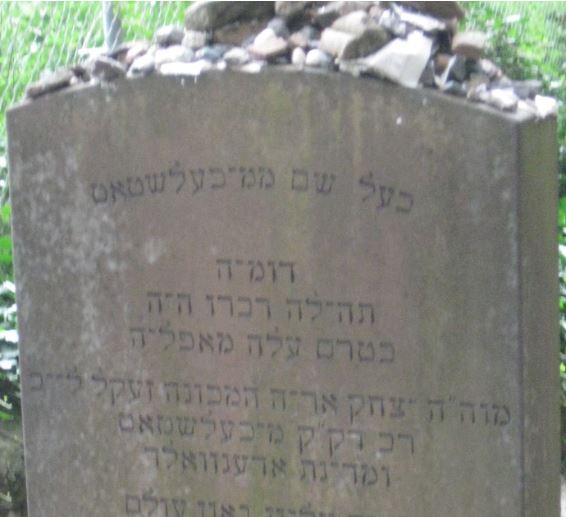
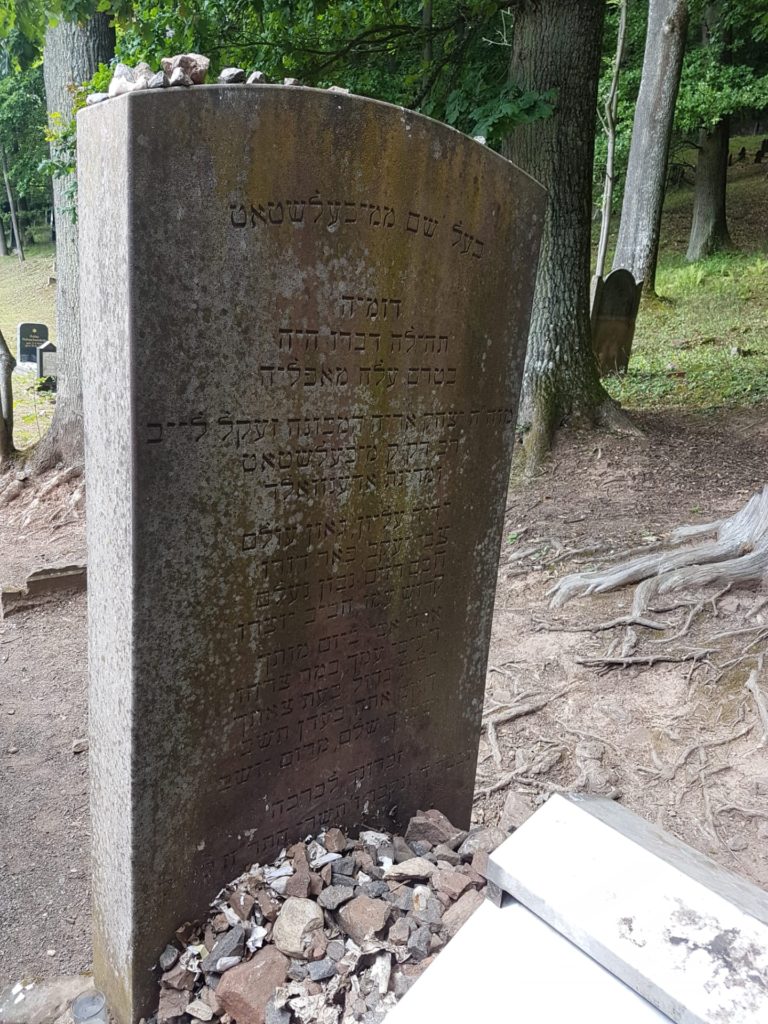
Rav Yitzchok Arye Zekel Leib of Worms zt"l
(Some say 4 Tishrei)
Rav Yitzchok Arye Zekel Leib was born in 5528 in Michelstadt, in the Erbach county of Hessen, Germany. A scion of the Luria Ashkenazi familes, he was a fourth-generation descendant of Rav Eliyohu Ba’al Shem of Worms (21 Tammuz), and descended from the Maharshal, Arizal, Rashi and Ba’alei Tosfos.
Rav Mattisyohu (5489/1729–5562/1802) was a cloth merchant in Michelstadt and his mother Sorel’eh was niftar in 5551/1791. Zekel Leib was the eighth of a family of ten children, boys and girls, some of whom passed away in childhood; he lived to the oldest age and survived them all.
FAMILY GENEALOGY
The family name was originally Mattes and was later changed to Wormzer by the government authorities in (1808) תקס"ח. The reason for this was that his great grandfather, Yitzchok Zeklin Eichel Luntsch, who passed away in the year (1710) ת"ע, lived for many years in Worms and served there as dayan. Rav Yitzchok Zeklin’s father was named Rav Moshe Baruch Elsass and perhaps the family originally came from Elsass (Alsace?), later moving to Worms and from there to Michelstadt.
Rav Zekel Leib’s grandfather was Rav Yaakov of Michelstadt. He passed away (1758) תקי"ח. His grandmother was Yettle. She passed away (1755) תקטו. She was the daughter of Rav Mattisyahu Ahrweiler who served as rav of Bingen and afterwards as rav of the kloiz in Mannheim and finally in Heidelberg. He passed away (1728) תפ"ח. Rav Mattisyahu’s father was Rav Hertz Ahrweiler, a dayan in Frankfurt. He passed away in (1678) תל"ח.
Rav Yaakov of Michelstadt was a descendant of Rav Eliyahu of Luntsch who was known as the Baal Shem of Worms (1564-1636) שכ"ד-שצ"ו. Rav Eliyahu served as rav in the following kehillos: Worms, Fulda, Hanau, Mainz, Friedberg and finally Worms again. He was a gadol in both the revealed and hidden aspects of Torah and authored a number of seforim including: Rinas Dodim on Shir Hashirim, Michlal Yofi on Koheles, glosses on the Semag, and Vichuch Yayin Im Mayim. Among his unpublished manuscripts was Aderes Eliyahu on the Zohar.
Rav Eliyahu Baal Shem’s grandfather was the famed Rav Yosselman of Rossheim (1478-1554) רל"ח-שי"ד. Rav Yosselman’s mother descended from the Luria family who traced their lineage back to Shlomo Shapira from Speyer-- (1375) קל"ה --and Rashi.
Stories of Rav Yitzchok Arye Zekel Leib of Worms zt"l

According to family tradition, Zekel Leib was born when Eliyahu Hanavi revealed himself to his father Rav Mattisyahu as a guest on the night of Simchas Torah with glad tidings. He said that he would have a son whose light would illuminate the world as a reward for Rav Mattisyahu’s mesirus nefesh for the honor and glory of Torah in his town and for ensuring that his own home was a bastion of Torah and kedushah.
By age five he was already a recognized illui. The local squire heard about the young genius and challenged him to a discussion. Young Zekel won the argument. When he was 15, he was accustomed to stay up all night and then continue his Torah learning by day. At age 16, in תקמ"ד (1783), he moved to Frankfurt. There, he studied with Rav Pinchos Horowitz, author of Hafla’ah. He continued on to the yeshiva of Rav Noson Adler in Frankfurt, and according to some traditions, he studied together with the Chasam Sofer. He remained there for five years. His rigorous daily regimen included long hours of intense Torah studied paired together with regular fasts and various forms of self-affliction in order to sanctify himself.
Rav Zekel Leib married at a young age, in תקמ"ט (1789) to Adelheid, the daughter of Rav Isaac Reiss, a wealthy Frankfurt merchant. Rav Horowitz, author of Hafla’ah served as mesader kiddushin. After 20 years of marriage, in תקסט (1809), his wife passed away leaving him with five orphaned children to care for. They were: Yaakov Hirsch; a daughter who married Shimon Mozes; and another daughter, Gertrude Genendel, the wife of Eliyahu Tzadok.
At age 18, he was already a master of Kabbalah. By age thirty he lived an ascetic life separated from all the delights of this world. He vowed to adhere to a Vegan diet-- not to consume any food that came from any living thing. This vow of refraining from eating meat, fish, eggs, milk, and butter etc. was undertaken for mystical Kabbalistic reasons. His diet consisted of bread, fruits, vegetables, black coffee and water. On Shabbos, he ate pea soup. Around this time, he also stopped shaving his beard.
During this period, he opened a yeshiva in his parents’ former home in which he lived (he inherited his childhood home in Michelstadt) and where there was a shul attached. Students flocked to the yeshiva from far and wide. They came from Baden, Bavaria, Bayern, Wurtemberg and Kurhessen until there were about seventy talmidim. The small, twenty family community in Michelstadt could not care for them all. Rav Zekel Leib therefore took care of all their needs, fed and housed them, and taught them both the revealed and hidden traditions of Torah. Some of his students known to us include: Rav Mordechai Ber, later Rav of Buttenhausen of Wurtemberg; Rav Eliezer Blumenthal; Rav Moshe Adler, a chazzan and shalich tzibur, and Rav Itzik ben Rav Chaim.
While the yeshiva flourished, Rav Zekel Leib met with vehement opposition from the maskilim. They libeled him regarding his asceticism and his involvement with the mysticism of Kabbalah, and even managed to have him jailed. They opposed his yeshiva and complained about the financial burden of sponsoring [de3] foreign students. With these challenges mounting, it became impossible for Rav Zekel Leib to continue serving as the rav in Michelstadt. His wife passed away, and a year later, following her yahrzeit in תק"ע, he left Michelstadt for Manheim. It was there that he effected a cure for his first mentally ill patient. This opened the door for him to help cure others and begin earning a living as a healer. Most of the monies that were gifted to Rav Zekel Leib for his services went to support his yeshiva and his talmidim. Likely, it was here that he became famed as a “Baal Shem.” He became engaged to seventeen-year-old Chana Benzinger and upon returning to Michelstadt, married her. They had ten sons whose names are known (at least three died in their parent’s lifetime: Yitzchok, Shmuel, and Meir). The other children were: Matisyahu, Yitzchok, Yidel, Michoel, Shimon, Wolf Raphael and Avrohom, a ben zekunim born when Rav Zekel Leib was sixty-one years old in the year תקפ"ט.
Upon his return to Michelstadt, he requested of the authorities in power to be appointed as the rav and Av Beis Din of Michelstadt and Erbach. His opponents, the misnagdim wrote to the Darmstadt government authorities and voiced their opposition to his installation as the official rav on the payroll. They noted that his Kabbalistic activities and folk healing were dangerous and they libeled him as a fraud.
He was renowned as a charitable donor and he fed and clothed the poor and indigent while he himself subsisted on a meager diet of bread and water. He also gained the reputation as being a fine physician. He was learned in the art of healing and herbal medicine and also cured the mentally ill by use of Divine Names and kameos that he wrote. Among the thousands of requests for prayers that arrived daily were, notably, those sent by Rav Yaakov Kopel Bamberger of Worms, Rav Yosef, son of Rav Akiva Eiger of Halberstadt, Rav Hirsch Traube of Manheim, Rav Gerschon Yehoshafat of Halberstadt, Rav Shmuel HaLevi of Weisbaden and Rav Kopel Levenstein of Gailingen. From outside of Germany, we find the Chasam Sofer and the Chiddushei HaRim and other gedolim who recognized Rav Zekel Leib’s greatness and wondrous abilities and sent him petitioners for help and advice as well.
He fasted for almost forty years. His son, Michoel, testified that from תקע"ז (1817), for three years straight, his father fasted all week long from Shabbos to Shabbos and did not sleep in a bed. All this was in order to cancel the negative decrees against Ashkenazi Jewry which he foresaw. Specifically, he revealed to Rav Zekel Leib and Dovid Meir and Meir Beerfelden predictions of impending pogroms. These calamities indeed came in the year תק"פ (1820). When violence did rage in the area, he told the Jews of Michelstadt not to worry and, in fact, the authorities managed to stem the onslaught and the Jews remained unharmed.
He lived with great self-denial while managing to feed the poor. He not only ensured that they had plenty of quality food but was also careful to treat them with great honor.
Many handwritten journals have been passed down through his family containing hundreds of names of petitioners, their locales, and their requests, for which he took upon himself hundreds of hours of special learning sessions and shiurim to help them. So, besides his use of use of kameos and segulas, and his reputation as a miracle worker, we can conclude that many were saved and delivered by Rav Zekel Leib’s powerful limud haTorah as well.
His journals are filled with advice and detailed shiurim in Torah. They also a repository of secular wisdom. His vast library in the yeshiva contained many German language volumes from which he imparted knowledge.
In his final years he became ill and was often confined to bed. Yet, despite being sick and weak, he continued to learn Torah and impart shiurim in order to effect merit for his petitioners.
On the final Rosh Hoshana of his life, as he lay in his sickbed aware that his end was near, he asked to hear Shofar. The baal tokeia, however, was unable to blow even a single sound! At this, the Baal Shem remarked, “If you cover my face, you will be able to blow.” And so it was! He passed away the next day on Tzom Gedaliah, the 3rd of Tishrei (others say the 4th), תר"ח. He was buried according to his tzava’a two days later. Some eight hundred people from far and wide attended the levaya, and among the mourners were Jews and non-Jews alike. Besides family and talmidei yeshiva, his levaya was attended by Rav Tzvi Binyamin Auerbach, the rav of Darmstadt who eulogized him with the first hesped, followed by the members of his kehilla. The large contingent of non-Jews who came --priests, a special delegation sent by the Graf of Furstenau–Erbach, and the local councilmen—is explained by the fact that the rav was recognized and respected by all for his charity and healing work with non-Jews as well.
Rav Zekel stated in his tza’ava that his aron be carried by hand-- and not as the Reform did which was by wagon—and that groups change places to allow many to merit carrying him. After Rav Auerbach of Darmstadt’s hesped, he was eulogized by two other rabbonim and teachers from Michelstadt followed by two priests. They all spoke of his middos and merits, especially his chesed towards Jews and gentiles alike.
Rav Zekel promised that whoever comes to daven at his kever, his tefillos will be answered. To this day, many people report yeshuos that have come about as a result of davening at his kever. When World War I broke out, both Jews and gentiles who had been conscripted to go off and fight, came to his tziyun to invoke merit for their wellbeing. According to accounts they all returned alive and whole.
One of Rav Zekel’s most well-known descendants was his son-in-law, Rav Eliyahu Strauss, whose son was the gvir, Rav Shmuel Strauss, a follower of Rav Simche Zissel Ziv of Kelm. Rav Shmuel purchased the Strauss compound in Jerusalem were many tzaddikim and baalei mussar resided. Rav Shmuel was also a great supporter of Batei Machseh and other charitable institutions in Jerusalem and the Holy Land. Rav Shmuel’s son-in-law was Rav Yaakov Rosenheim, whose grandson, Rav Elyakim ben Dovid Shlesinger, inherited Rav Zekel Leib’s otzar seforim and later publicized them through Machon Yerushalayim together with Rav Yitzchok Karniel of Zurich.
In תקפ"ה (1825), Rav Zekel Leib began to have a recurring nightmare that a fire consumed his home and burned all of his belongings. He told his son, his nephew, and childhood friend Berele Bernheimer about the dream, but since it was his childhood home that he inherited from his parents and had been in use as a shul, he did not want to sell it. Unfortunately, the dream came true. In Elul or Tishrei (September) of that year, most of his writings went up in flames in a fire that consumed his home. Most of his seforim and writings were lost in a conflagration that swept through twenty other houses. Thanks to monetary gifts and insurance Rav Zekel Leib purchased a new home to house both his family and the yeshiva. Rav Zekel continued writing after the fire and what little remains was published by Machon Yerushalayim in a single volume containing some chiddushim on Shas, Shulchan Aruch, teshuvos and derashos as well as a book of journaling, insights, and directives.
Rav Yitzchok Aryeh, the Baal Shem of Michelstadt, known to many as Rav Zekel Leib Wormser, had an extremely talented talmid who had been converted by missionaries to Christianity. The former talmid rose in high ranks as a priest until he was appointed a bishop in Austria. Nonetheless, the Baal Shem never gave up hope and stayed in touch with his former disciple, sending him letters of heartfelt rebuke and hoping that one day he would repent his ways and return to his people. And one day, that hope materialized.
A letter arrived from the penitent priest, expressing his regret over converting and his desire to come back to Judaism. Rav Zekel Leib immediately packed up his belongings and along with a trusted gabbai he travelled to Austria. They arrived when a holiday was taking place and the streets were filled with thousands of celebrating Christians . Their lives were now in danger, for any Jew caught in the streets during such a gathering was endangering his life.
Rav Zekel Leib sent the gabbai forward through the throngs of worshippers and presented a letter demanding that his former talmid meet with him. Despite the danger at the time, the Baal Shem was met with no interference or malice, and neither was his emissary. The missive bearing the warning for his former talmid was to step down from the podium and come see him at once.
“Tell the Baal Shem that I am about to conduct mass and after the prayer service I will come.” The Baal Shem heard the message and sent his emissary back with the demand that he appear immediately, with no delay. When the priest heard this, he paled. Claiming that he suddenly felt ill, and was unable to conduct the ceremonies, he excused himself, stepped down from the podium and followed the emissary away from the crowds.
After meeting with the Baal Shem’s at his lodgings, he vanished and all knowledge of his whereabouts vanished with him.
After the Baal Shem of Michelstadt passed away, his gabbai travelled across Ashkenaz and he would relate tales and wonders of the Baal Shem to all his hosts as the Baal Shem had requested of him. One day, he heard that in faraway Italy there lived a wealthy banker who would pay handsome sums for anyone who could relate a story about the Baal Shem. The gabbai having been the Baal Shem’s right-hand man made his way to Italy sure that if anyone could tell tales of his rebbe it would be him.
When he arrived, Menashe the banker welcomed him with open arms, smiling. After making him comfortable at the Friday night Shabbos table, he asked the gabbai to regal his family with tales. However, to his dismay, the Baal Shem’s gabbai suddenly could not remember a single story! His memory had been wiped clean by some strange phenomenon. “I apologize but somehow I cannot remember anything to tell.”
His host calmed him. “Don’t worry; you are surely tired from your long journey. Now rest up and tomorrow you will try again.”
Though the gabbai could not explain it, all Shabbos long he could not recall any story about his rebbe Rav Zekel Leib. On motzei Shabbos he apologized and prepared to leave. The banker was sorely disappointed, but nothing could be done. Still, the banker said, “Will you perhaps try once more to remember some small tale before you depart tomorrow morning?”
After Shacharis, as the gabbai was about to take his leave, it happened! The gabbai remembered one story --—the tale about the former Bishop. It was this tale that the gabbai told his host, Menashe the banker. Menashe’s face now shone with a curious delight, as if his soul was placated. “Here my good man; you have earned your reward, for I was that Bishop. It was me all those years ago who you and the Baal Shem rescued from apostasy in Austria.
“This is what happened after my clandestine meeting with the Baal Shem. He commanded me to and do teshuvah and to quickly escape. The Baal Shem explained to me that the indication that my misdeeds were atoned for would be the day when I would hear my own story told to me by another. This would serve as a sign that my teshuvah was complete. I have been searching for that special someone, sending out word, asking for tales of the Baal Shem, and offering my rewards--and then you came! When you arrived, I recognized you and thought my teshuvah had finally been accepted on High. But when I saw that you could neither remember me nor my story, I realized I had not tried hard enough. Apparently, my teshuvah was still incomplete. All Shabbos long, I strengthened my resolve to do true teshuvah. I spent all Shabbos and motzei Shabbos davening and crying out to Hashem. And, finally, the sign has arrived from your very lips; your mouth speaks my salvation!” (Baal Shem of Michelstadt p. 22)
Divrei Torah of Rav Yitzchok Arye Zekel Leib of Worms zt"l
peirush/commentary on chad gadya from haggadah shel pesach
In response to some who ridiculed the Chad Gadya poem, the Baal Shem of Michelstadt, Rav Yitzchok Aryeh Zekel Leib Wormser, wrote this commentary:
“Chad gadya d’zabin abba b’trie zuzei-- One goat that Father bought for two zuzim”
The gadya or baby goat refers to Am Yisrael who are hinted to in the midrash on Naso where twelve tribal leaders offer ten goats as a sacrifice to Hashem. The word gadya also stands for (the combined gematrios): gimel = 3 patriarchs; dalet = 4 matriarchs, yud = 10 commandments, alef = the Torah. The “Abba” is Our Father in Heaven, Hashem, as it says, “Are you not our Father?” And He acquired us, as Chazal say in Avos: “Yisroel--one acquisition as it says in Shemos (15:16) “This people You acquired.” The two zuzim are plural and symbolize the two luchos given to Moshe two times: once before the sin of the golden calf and once again afterwards.
“Vasa shunra v’achla l’gadya – And a cat came and ate the goat.”
The cat refers to the first of the four kings that Daniel mentions in his prophetic dream. That is: Nebuchadnezer, king of Babylon. The הוא נבוכדנצר מלך בבל" " –the Aramiac word for cat has the same numerical value as “He is Nebuchadnetzer, the king of Babylon.” The characteristic of cats is ingratitude--cats, as pets, behave ungratefully. Nebuchadnetzer was very ungrateful towards Hashem, despite all the miracles that occurred for him and despite the fact that he was granted success in conquering Israel. He was the first of four kings to do evil unto the Jewish people, destroying the First Temple and sending the Jews into exile. שונרא it can alternatively be spelled ending with either yud or hey and alludes to the nesher or aryeh – the vulture or lion, both of which Babylon is compared to (See Daniel, chapter 7). The word enosh is also included in shunra see the pasuk: “Kadmisa craye v’gapin d’nesher v’levav enosh yehavis leh.
“V’asa kalba v’achla l’shunra – And a dog came and ate the cat.” The dog refers to the second king that appeared in Daniel’s prophetic vision: Koresh the Persian who killed Belshatzar and all of Nebuchadnetzer’s descendants. He is called a dog because Kalba stands for: “Koresh lacham es Belshatzar and: Koresh lakad es Bavel-- Koresh fought against Belshatzar and Koresh captured Babylon.” Koresh appeared in Daniel’s vision as a gazelle or bear which is the gematria of kalba/ כלבא. The dog is a loyal pet known as “man’s best friend” and Koresh was loyal to G-d; he acted faithfully, urging the return of the exiles and the rebuilding of Hashem’s Temple (see Ezra 1) The word kalba also means “chaperon” as in Nechemia 2 ; there are legends that he was weaned by a dog (see Sefer Yuchsin p. 136b).
“Veasa chutra v'hika l’kalba – And a stick came and hit the dog.” This refers to Alexander the Great of Macedon, the third king seen by Daniel in his prophetic vision. He killed Koresh and captured the royal crown from him (see Daniel 8). He is called a stick or staff because his rule stretched over almost the entire civilized world (Daniel 11). He was a powerful and upstanding ruler like a staff or stick (see Avoda Zara 41).
The word חוטרא/stick also stands for the following sequence of events. Each beginning letter of each sentence in this narrative forms the acronym, א:
אלכסנדר טרח ויגע רוב חיותו. חכמת ופילוסופית טבעית רבו אריסטולס. אבל טרחות חקירתו ריק והבל. אנשיו וחיילותיו חרבו טירות רבות. ארצו טרם ראה חלה וימת. וימלוך טמא רשע אנטיוכס חריקיו.
“Alexander exerted great effort during his life, in that he studied natural wisdom and philosophy from his teacher Aristotle. However, all his efforts were in vain. His warriors and soldiers destroyed many cities, yet he died on the battlefield far from home and a wicked, king reigned after him named Antiochus.”
“V’asa nura v’saraf l’chutra – And a fire came and burned the stick.”
Nura, or fire, refers to Yehuda Maccabee who burned the stick by killing the Macedonian Greeks and their king and destroying their land. Thus, he saved Bnei Yisroel from the Greek’s dominion over them. Nura, together with the word itself, is equal to the gematria of “Yehuda Maccabee and his brothers the Kohanim.” נורא = יהודה מכבי ואחיו כהנים
“Veasa maya v’kaba l’nura – and water came and put out the fire.”
The maya, or water, refers to King Herod who killed all the descendants of the Hasmonean Dynasty and left no survivors. He wrested the kingdom from their grasp and took it for himself. He is symbolized by the water, maya/ מיא –which is the acronym of the following: מזרע אנטיפטר יהיה. מצד אמו ישראל. מי יהיה אחרון. אגריפס מלך יהודים. מי ימית אותו. מלך אפסינוס יקרא. את מלכותו יקח. את מקדשינו יחריב. מי יגאל אותנו. יונה מגזע אמיתי. מי יבוא אתו. אליהו משיח יחד. אימתי יבא משיח. משיתיאשו ישראל אותו.
“He will be descended from Antipater; his mother was a Jewess (Sotah 41). Who shall reign afterwards? Agrippas, the Jewish King. Who shall kill him? King Aspasyanus (Vespasian); he shall take his kingdom, destroy our Temple. Who shall redeem us? A dove from the true line. Who shall bring him? Eliyahu and Mashiach, together. When shall Mashiach come? When Bnei Yisroel despair of all hope of his arrival.”
“V’asa tora v’shasa l’maya – And an ox came and drank the water.”
The ox refers to Aspayanus (Vespasian) the Roman, and his son Titus. They are the Caesars-- the Greco-Roman title for king-- and they comprise the fourth king seen by Daniel in his prophetic vision. They destroyed the Second Temple and murdered the Herodian kings, ending their dynasty. They exiled Bnei Yisroel from their land. They are known as the “tora -- ox” whose gematria is the same as that of “Aspasyanus and his son Titus.” תורא=אספסינס ובנו טיטוס
Another reason they are symbolized by the ox is that the Roman leaders are called the ox or shor (see the Tikkunim ).
The fourth kingdom that Daniel sees is divided and split into two (see Daniel 2:41-42). The Romans are the first half; the second half are the Yishmaelite Muslim. The two cultures clash “as iron does not mix with clay.” (Daniel 2:43).
“V’asa shochet v’shachat l’tora– And a slaughterer came and butchered the ox.”
The shochet, or slaughterer, refers to the first Ishmaelite king named Mohamed who reigned in the year שע"ד of the אלף חמיש י. He captured the great city of Antioch and the entire Aramaic lands as well as Armenia, their holy city, and all of Asia Minor. There was none greater than he, and all Christians who refused to converted were slaughtered. It is said that on one day he killed 150,000 Christians. His reign has been a thorn in the side of the Romans till this day.
He is called שוחט because this gematria is equivalent to: המלך מחמוד נביאיהם" – The King Mohamed, their prophet.”
He is the king of Yishmael, the second of the two kingdoms, of the fourth reign, as seen in Daniel’s prophetic vision as mentioned above.
Another reason Yishmael is known as the shochet is hinted at by the four commandments that the Muslims religiously uphold more so than the other gentile nations. They are: (halal) ritual slaughter and (khitan) circumcision, (haram) refraining from eating pig’s meat and (wudu and Janabat ghusl) ritual immersion. שחיטה ומילה חזיר טבילה whose acronym spells: שוחט.
“V’asa malach hamaves v’shachat l’shochet – the Angel of Death came and killed the slaughterer.”
The angel of death refers to the King Gog from the land of Magog. He is prophesied by Yechezkel (Yechezkel 38:8, 16, 10). The togrema refers to Yishmael who shall kill many nations (see further Zechariya 11,12,13 and 14).
He is called the Angel of Death because the gematria of: מלאך המות is the same as: הוא המלך הגדול גוג מארץ המגוג.
“V’asa Hakadosh Baruch Hu v’shachat l’Malach Hamaves. And the Holy One came and killed the Angel of Death.”
Hashem, the Holy One blessed be He, shall kill Gog and all of his myriad minions. At that time, the following verses shall be fulfilled: “And they shall know that I am Hashem your G-d,” and, “I gathered them unto their land and I shall leave none of them there behind.” This did not occur after the Babylonian exile when, as stated in Nechemia 7, only 42,360 returned.
This fulfills the prophecy in Zecharia 13: “And on that day, said the Lord of Hosts, I shall cut down the idols from the land and their memory shall cease and their prophets as well, and the spirit of impurity shall I remove from the land; death shall be swallowed up forever and on that day Hashem and His Name shall be one.” Amen, may it be His will. (Baal Shem of Michelstadt citing Olas Chodesh Nissan תש"מ)